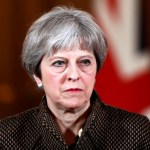
Theresa may

The Spectator Podcast: Mayday!

From our UK edition

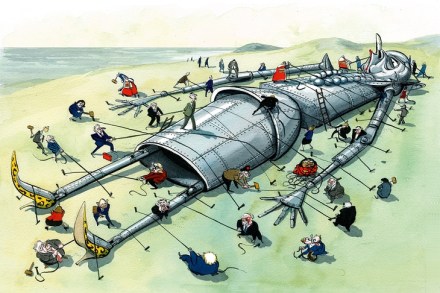
In this week’s podcast, we discuss Theresa May’s impossible situation - how can she get herself out of the bind created by the Brexiteers and the Remainers? We also discuss the hostile environment policy, and ask, will Ireland appeal its Eighth Amendment? First, Theresa May finds herself in a real dilemma. Her cabinet colleagues, the EU and her advisors are all pulling her in different directions over the question of the customs union. While Remainers argue that a ‘customs partnership’ is the only way to avoid a hard border in Northern Ireland, Brexiteers believe ‘max fac’ (a maximum facilitation agreement, which includes a technology based border in Ireland) is the only way forward.

Notes on a scandal | 3 May 2018

From our UK edition

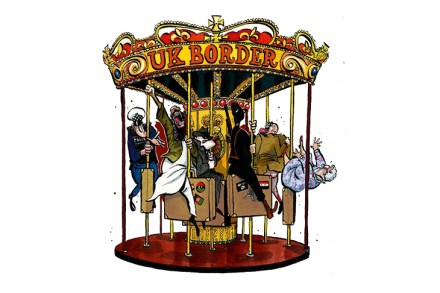
The idea that left vs right has been replaced by open vs closed is one of the most self-serving conceits of contemporary politics. I have never met anyone who wants to live in a closed society, but I have met plenty of people who think that the forms of openness of the past couple of decades have not served their interests. Factories and offices have moved abroad. EU free movement has brought a new workforce to compete with the one already here, and an extra four million people overall have arrived in the past 15 years, while wages have barely grown. Combine that with open public services and an estimated illegal migration population of at least 500,000 and you can see why so many people have not needed Nigel Farage’s help to worry about borders.

May’s Customs Partnership takes a hammering at Brexit cabinet meeting

From our UK edition

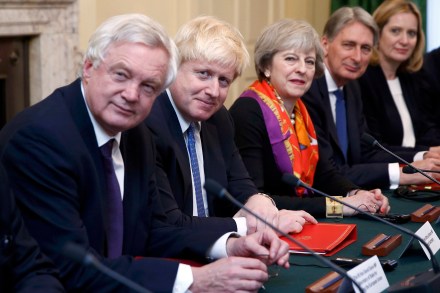
Theresa May will be wishing Amber Rudd was still Home Secretary tonight following a fiery meeting of her Brexit inner cabinet on the issue of the customs union. The Prime Minister convened a three hour long meeting of her senior ministers in a bid to finally thrash out a plan for a post-Brexit customs arrangement to put to Brussels. However, things did not go quite to plan – with a decision delayed after a number of ministers raising serious concerns with No 10's favoured option. The most revealing aspect of the meeting relates to the customs partnership that Downing Street wants to push. This hybrid customs model would in theory keep trade flowing freely by having the UK collect tariffs on the EU’s behalf.

London shows what happens to the Tories when homeowners become a minority

From our UK edition

Next Saturday had long been circled in Tory plotters’ diaries as the date on which the next effort to remove Theresa May would begin. But as I say in The Sun this morning, even May’s most ardent Tory critics now accept that next week’s local elections aren’t going to lead to her downfall. Why, because expectations are so low for the Tories that they are almost bound to surpass them. (May’s own position is also stronger than it was in January thanks to her handling of the Salisbury attack.) Tory insiders now believe that they are likely to hold one of their London flagship councils, Westminster and Wandsworth.

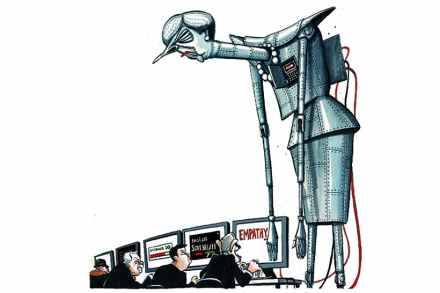
The Maybot returns at PMQs

From our UK edition

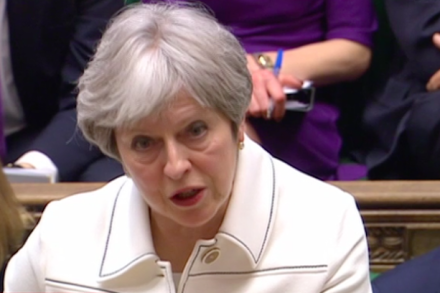
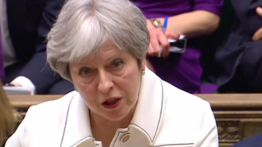
Today's Prime Minister's Questions saw the Maybot reactivated. Jeremy Corbyn decided to lead the session on the fallout from the Windrush row, widening out his questions to the flaws in the hostile environment policy on illegal immigration, and on who was to blame for these flaws being apparent but not fixed for so long. The exchanges very swiftly became a ding-dong between May and Corbyn as to whose fault the creation of a hostile environment policy actually was. Corbyn wanted to pin the policy on May, but also demanded that Amber Rudd resign for aiming to harden the policy. His questions were decent, but it was May herself who created the Labour win today, as her answers were terrible.

May and Boris in Cabinet clash over immigration amnesty

From our UK edition

At Cabinet today, ministers discussed the fallout from the Windrush scandal. I understand that Boris Johnson made the point that there needed to be a broader immigration amnesty for long-standing Commonwealth immigrants. He argued that this was necessary to prevent others from getting caught up in the same situation, having to produce overly onerous amounts of evidence to show that they have been living here for years. Obviously, this amnesty wouldn’t apply to those with a criminal record. I’m told that Theresa May then rather acidly remarked that Boris had previously called for an amnesty for all immigrants, which he did first in 2008 and then again in 2016 when he privately proposed one for those who had been here for over a decade.

The Spectator Podcast: The Wrong Brexit

From our UK edition

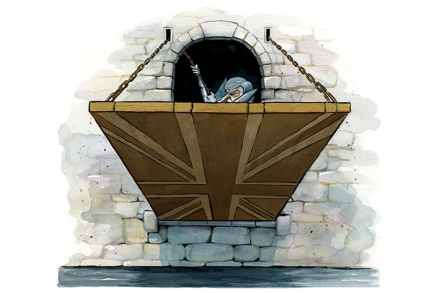
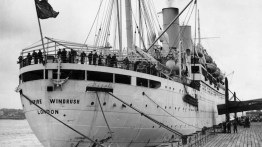
This week we ask why Theresa May is pulling up the drawbridge to Britain, exactly when she should be advertising Britain’s openness in a post-Brexit world? We also discuss why charities are working to shut down schools in Africa, and hear from Quentin Letts on his experience of being pursued by the Establishment. As Commonwealth leaders meet in London this week, Theresa May has been under fire for her government’s treatment of the Windrush generation. The government initially refused a meeting requested by Commonwealth leaders to discuss the issue, only to U-turn on it hours later.

Brexit blunders

From our UK edition

A few months ago, Britain’s most senior ambassadors gathered in the Foreign Office to compare notes on Brexit. There was one problem in particular that they did not know how to confront. As one ambassador put it, the English--language publications in their cities (it would be rude to name them) had become rabidly anti-Brexit: keen to portray a country having a nervous and economic breakdown. Their boss, the Foreign Secretary, later summed it up: many believe that Brexit was the whole country flicking a V-sign from the white cliffs of Dover. The job of his ambassadors is to correct this awful image. But how? Their plight has not been made much easier by the Prime Minister.

Government defeated on customs union in Lords

From our UK edition

And we're back to Brexit with a bump. After a brief pause in the negotiations and legislation, the government has this afternoon been defeated on a customs union amendment in the Lords. The defeat was by no means minor either – peers voted by 348 to 225 in favour of a plan requiring ministers to report on steps to negotiate a continued EU-UK customs union. This in itself isn't catastrophic for Theresa May. When the bill returns to the Commons it will most likely be thrown out – and besides it only binds the government to report on the steps being taken to negotiate a customs union so there is wriggle room regardless. However, the scale of the defeat points to a bigger problem with the government's strategy.

Watch: Corbyn’s PMQs attack backfires spectacularly

From our UK edition

Theresa May should have been on the backfoot at PMQs today as a result of the Windrush scandal. But, somehow, Jeremy Corbyn still managed to ensure the Prime Minister got the upper hand. The Labour leader started off the session by going on the attack; unfortunately, for Corbyn, it backfired spectacularly: JC: Yesterday, we learned that in 2010, the Home Office destroyed landing cards for a generation of Commonwealth citizens, and so have told people: we can't find you in our system. Did the Prime Minister – the then-home secretary – sign off that decision? TM: No, the decision to destroy the landing cards was taken in 2009, under a Labour government. Oh dear...

Theresa May now has authority for further military action

From our UK edition

Aside from the need to act swiftly and with an element of surprise when striking Syria's chemical weapons capability, it is still fair to say that Number 10's preferred option was not to have a vote before the strikes took place at the weekend. David Cameron's experience in 2013 of failing to get parliamentary consent for action has left institutional bruising which means everyone is now cautious of asking MPs for approval, despite the fact that the Commons has in fact consented to air strikes both in Syria and Iraq since that failed vote. Parliamentary recess did make it much more convenient to avoid such a vote, and there was certainly no appetite for the government to push for one retrospectively.

The Tories’ biggest problem at the next election? Generation Rent

From our UK edition

The government is currently busying itself trying to win retrospective Commons votes on Theresa May's Syria intervention and clearing up the Home Office's Windrush mess. But should they have time for some morning reading, today's Resolution Foundation research on millenials' property prospects ought to give cause for alarm. The think tank predicts that one in three millennials will never own their own home. Instead, they will have to live – and potentially raise families – in privately rented accommodation throughout their lives. And that's before we get to what happens when they stop working and rely on a pension. What's more, half of current UK 20-35-year-olds are expected to be renting in their 40s. This has big implications for the Conservative party.

How Theresa May could make future decisions on military action a little easier

From our UK edition

Though Theresa May, still responding to questions from MPs in the Commons on the weekend strikes in Syria, seems to have won support from a clear majority of MPs, her session has not been entirely comfortable. A large number of backbench Labour MPs made clear that they agreed with the Prime Minister's assessment that the chemical attack in Douma had been launched by the Assad regime, but they also expressed disappointment that there had not been a vote in Parliament beforehand. Lib Dem leader Vince Cable agreed with this, as did the SNP. But one striking intervention came from Ken Clarke, who asked May to consider setting up a cross-party commission examining the role of Parliament in such matters.

Theresa May explains herself to parliament

From our UK edition

Theresa May came to the House today to explain why the UK joined in the strikes on Syria’s chemical weapons facilities and why she had not consulted the House first. May argued, rightly, that there was no prospect of getting UN authorisation for action because Russia would simply veto anything that affected its client regime in Damascus. She also pointed out that if the democratic world had failed to act against Assad following these attacks, we would be slipping back to a time when the use of chemical weapons was regarded as normal. But, perhaps, the most controversial part of her statement was on why she had not consulted parliament first.

Government backtracks in Windrush row

From our UK edition

How did the government manage to create such a terrible row over the Windrush generation? The Home Office has told many people who arrived here as children in the late 1940s and 1950s that they are in fact illegal immigrants because they cannot produce documents from 40 years ago about their residence here. That in itself might have been a terrible cock-up, but Number 10's decision to then turn down a request from the representatives of 12 Caribbean countries for a meeting was totally bizarre particularly given those representatives are in London for the Commonwealth Heads of Government meeting this week. Inevitably, since the row about this broke, the government has decided it needs to wind back a little, announcing that Theresa May will meet those representatives after all.

Government wins first Commons vote on Syria

From our UK edition

The government has won the first of two expected retrospective votes on Theresa May decision to join French and American allies in targeted military strikes in Syria, she did so without seeking Parliamentary approval. MPs debated Alison McGoverns emergency debate late into the evening – with the SNP calling a vote on the motion that the House has 'considered the current situation in Syria and the UK government approach'. Labour – minus Dennis Skinner – abstained and the government won at 314 ayes to 26 noes It now looks as though a more testing vote looms. Jeremy Corbyn has won approval for an emergency debate on a motion reaffirming the convention that Parliament should have to approve military interventions.

Podcast: Will last night’s Syria strikes make any difference?

From our UK edition

The attack on Syria is now over, says the Pentagon - so where does this leave us? Last time 55 missiles were fired on the airbase from which Assad launched chemical weapons attacks. It was back in use days later, with jets flying off to bomb the same rebels. The United Nations estimated that Assad went on to deploy four more chemical attacks, and that he's carried out more than 30 (its graphic below). This is why Theresa May was overstating it in her press conference this morning, saying that the international ban on chemical weapons need to be upheld. It has not been upheld: the Syria conflict has established a new norm. That if you have the right backing (in Assad's case, Russia and Iran) then you can use chemical weapons.

What is Theresa May’s strategy in Syria?

From our UK edition

Happy now? The US-led air strikes against Syrian bases, notably chemical weapons storage facilities, near Damascus and Homs and reportedly elsewhere, has been, according to all the participants, American, Brits and French, a success. Or, as Donald Trump put it, 'the nations of Britain, France, and the United States of America have marshalled their righteous power against barbarism and brutality'. Well that’s good, if you put it like that. Unrighteous power would have been quite another thing. And no one wants to see chemical weapons used in Syria or anywhere else, no?

Theresa May’s Syria strikes statement, full text

From our UK edition

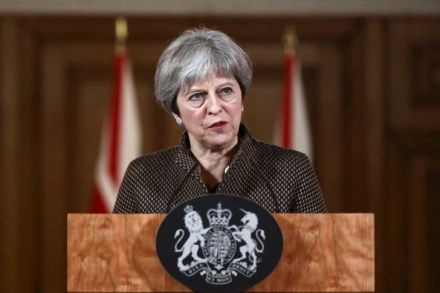
Last night British, French and American armed forces conducted co-ordinated and targeted strikes to degrade the Syrian Regime’s chemical weapons capability and deter their use. For the UK’s part four RAF Tornado GR 4’s launched storm shadow missiles at a military facility some 15 miles west of Homs, where the regime is assessed to keep chemical weapons in breach of Syria’s obligations under the Chemical Weapons Convention. While the full assessment of the strike is ongoing, we are confident of its success. Let me set out why we have taken this action. Last Saturday up to 75 people, including young children, were killed in a despicable and barbaric attack in Douma, with as many as 500 further casualties. We have worked with our allies to establish what happened.

Syria strike: the question for May is not ‘why’ but ‘what next’?

From our UK edition

Overnight, British, French and US forces took part in strikes against the Syrian regime as a punishment for the use of chemical weapons in Douma. In a statement released in the small hours, Theresa May described these as ‘co-ordinated and targeted strikes to degrade the Syrian Regime’s chemical weapons capability and deter their use’. The Prime Minister insisted that action had to be taken quickly ‘to alleviate further humanitarian suffering and to maintain the vital security of our operations’. But this action has had to take place without a vote in the House of Commons, which many in May’s own party, let alone those on the other side of the House, had been demanding.