Theresa may

A political showdown is on the way. Will Theresa May lose?

From our UK edition

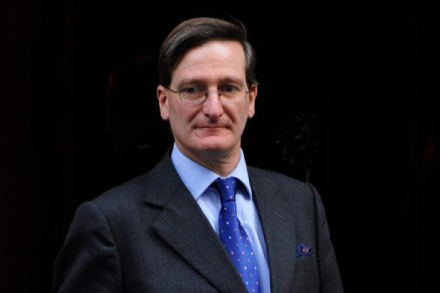
At 3pm yesterday afternoon, the Remainer rebels led by Dominic Grieve thought the government was honouring the PM’s putative commitment to draft an amendment to the EU Withdrawal Bill in the spirit of Grieve’s amendment. At 4.45, Grieve was told by an embarrassed solicitor general Robert Buckland that the deal was off. The Remainer rebels are not happy. And the scene is set for a final parliamentary showdown on the “meaningful vote” issue, in the Lords on Monday and the Commons on Tuesday or Wednesday. Here is what happened and what was at stake. It is complicated so please bear with me.

Beyond Brexit

From our UK edition

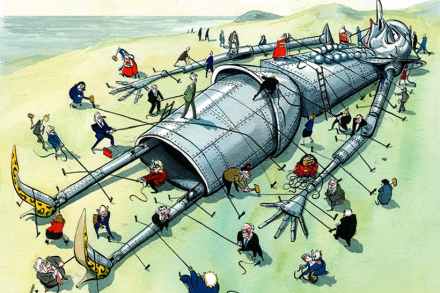
This week Brexit reached its Somme. The government has been bogged down in votes on amendments inserted into its Brexit bill by the House of Lords. Theresa May saw off the threat of cabinet resignations only to have a more junior minister resign, as he put it, in order to voice the concerns of his constituents (although, as has been pointed out, a majority of them actually voted to leave the EU). It all looks a mess. The Brexit process would have been unpleasant enough with the small majority which the Prime Minister inherited from David Cameron.

Change to visa rules shows May has learned from her recent immigration messes

From our UK edition

The government has finally climbed down on visa restrictions for foreign doctors and nurses, scrapping the cap on numbers who can be employed using the tier 2 visa route. This was costing NHS trusts shocking amounts of money in processing applications from overseas medical professionals which were in large part turned down by the Home Office. It is striking that the government decided this week to relax these restrictions, given they are part of the tough immigration policy introduced by Theresa May. Time was when the then Home Secretary would repeatedly upbraid David Cameron for handing her a net migration target to deliver which her Cabinet colleagues were frequently trying to flout.

Why Brexit will never end

From our UK edition

I hate to take issue with a fellow Spectator writer, but Robert Peston’s revelation that a “no deal” Brexit is now off the table strikes me as a prime example of Westminster’s ability to ignore the bleeding obvious for months on end then talk cobblers in an authoritative voice when finally forced to confront reality. Robert is far from alone in his conclusion about last night’s Commons vote. To be honest, I’m just taking issue with his post because the spectacle of Spectator writers disagreeing seems to interest some people, probably because they struggle with the idea of one publication publishing multiple and contradictory viewpoints.

Why Brexit will never end | 13 June 2018

From our UK edition

I hate to take issue with a fellow Spectator writer, but Robert Peston’s revelation that a “no deal” Brexit is now off the table strikes me as a prime example of Westminster’s ability to ignore the bleeding obvious for months on end then talk cobblers in an authoritative voice when finally forced to confront reality. Robert is far from alone in his conclusion about last night’s Commons vote. To be honest, I’m just taking issue with his post because the spectacle of Spectator writers disagreeing seems to interest some people, probably because they struggle with the idea of one publication publishing multiple and contradictory viewpoints.

Government avoids defeat on ‘meaningful vote’ – but is this a win?

From our UK edition

Given this morning's ministerial resignation, all looked set fair for an afternoon of high drama in the Commons over the EU Withdrawal Bill. In the end, though, the drama was rather quieter, with the government managing to persuade the Remainer rebels to stand down - temporarily - on the matter of a 'meaningful vote'. Chief Whip Julian Smith spent the majority of the debate buzzing about the Chamber, consulting with ministers and backbenchers and also beckoning MPs out of the room in little groups. It is since clear that Smith was negotiating the compromise that Solicitor General Robert Buckland started offering during the debate. Initially, Buckland offered the rebels 'structured discussions' on the matter.

In defence of ‘no deal’

From our UK edition

Imagine the industrial levels of brass neck it must require for EU-supporting MPs to present themselves as defenders of parliamentary sovereignty. That’s what they’re doing today, on ‘Brexit Super Tuesday’, as they start voting on the Lords’ amendments to the government’s Brexit Bill. They say they are backing the amendment that would give MPs a ‘meaningful vote’ on the final Brexit deal because they love parliamentary sovereignty that much. Pull the other. These are people who for years happily handed over huge swathes of law-making to Brussels bureaucrats and would still like EU law to enjoy supremacy over UK law. They support parliamentary sovereignty like an electric chair supports your back.

Philip Lee’s resignation shatters Tory Brexit truce

From our UK edition

Although Theresa May managed to unite her MPs briefly on Monday night and put off a customs union confrontation on today's EU withdrawal bill votes, not everything is going to plan. Philip Lee has this morning broken that truce and resigned as justice minister to fight Brexit. Speaking at a Bright Blue event, Lee said that he was returning to the backbench so that he could speak out on the government's Brexit policy – which, he says, threatens human rights: https://twitter.com/DrPhillipLeeMP/status/1006456465886973952 'Resigning as a minister from the Government is a very difficult decision because it goes against every grain in my soul. The very word resign conveys a sense of giving up, but that is the last thing I will do. I take public service seriously and responsibly.

How long before Tory backbenchers turn off Theresa May’s life support machine?

From our UK edition

Tomorrow marks a year since Theresa May sat her dejected parliamentary party down and promised that 'I got us into this mess and I'll get us out of it'. She was speaking amid the chaos of the snap election that she'd called, and it wasn't clear whether the Prime Minister was going to be able to form a government, let alone survive as leader for very long. Tonight, she's still here but still appealing to Conservative MPs for unity as the 'crunch stage' of the EU withdrawal bill arrives in the Commons. The briefing over the weekend did suggest that the Prime Minister was probably going to be ok, though in reality there are still a couple of votes that are going to be, at the very least, rather tight.

Tory MPs reluctantly unite behind Theresa May

From our UK edition

Unity is the buzzword in the Conservative party this week. With a series of crunch votes due on Tuesday and Wednesday over the EU withdrawal bill, senior Tories have been at pains to tell unruly colleagues it's time to put their differences aside and come together. Over the weekend, Amber Rudd and ex-leader Iain Duncan Smith warned that any Commons rebellions would be a win for Labour – and therefore bring Corbyn closer to entering No 10. It was a message echoed by David Lidington on the Andrew Marr show. No 10 are increasingly confident that this new comradely spirit will prove contagious. Within government, concerns have eased over the two most troublesome votes: the customs union amendment and the meaningful vote amendment.

Theresa May gives David Davis a backstop concession

From our UK edition

After a morning of high drama in Westminster, the UK government now has a backstop proposal to put to the EU. Last night, the backstop text said that it was time limited but didn’t specify an end date. In two meetings with the Prime Minister this morning, David Davis demanded changes. He has got some concessions: the text now talks about how ‘The UK expects the future arrangement to be in place by December 2021’. But there is no hard cut-off date in the text. Theresa May was acutely aware that if one had been included, the EU would have rejected it out of hand. We now wait to see what the EU says about it. Michel Barnier has already tweeted his three tests for it.

David Davis stays put – for now

From our UK edition

For the past 24 hours, there has been a power struggle between the Prime Minister and her Brexit Secretary, David Davis. Theresa May – or rather her officials – had been insisting that a backstop plan for keeping open the Ireland border would not be amended, to include a sunset clause and formal end date for the backstop. Davis said he would quit in the absence of an end date. She caved. According to sources close to Davis, 'the backstop paper has been amended and expresses, in much more detail, the time-limited nature of our proposal'. So to be clear, there is now a termination date in May's backstop proposal. That almost certainly means she faces a double defeat – because the EU will reject any plan that includes an end-date.

The Tories need to get over Thatcher

From our UK edition

A lot of attention has been given to the new think tank, Onward, that claims it will win back Britain for the Conservative Party by targeting disaffected Blairites and young people. There is, however, one part of society conspicuously missing from its remit: the poorest. The group's founder, Neil O’Brien MP, claims that Corbyn is 'crackers' and his policies, including nationalisation of infrastructure 'need deleting'. At no point does Onward – or any of the other right-wing think tanks that have launched – seem to question why Corbyn's policies are so popular throughout the country. Nor do they wonder whether any Conservative government has made them work before.

Is an early election really on the cards?

From our UK edition

Thanks to a weekend of nationwide jubilation over Prince Harry's marriage to Meghan Markle, politics has – for once - taken a backseat. However, there's one story in the Sunday Times that is still likely to cause mild alarm: 'Tory MPs prepare for snap autumn election as Theresa May hit by Brexit deadlock'. The paper reports that Conservative MPs have privately started to get ready for a snap general election. It's not that they fear Theresa May is about to go on a walking holiday and get over-excited about some better-than-expected polling. Instead, these Tories fear that the Brexit deadlock will soon become 'insurmountable for the prime minister'. This isn't the first time this month such a point has been made.

Why the Tory Brexiteers are swallowing May’s compromises

From our UK edition

This week, Theresa May got her Brexit inner Cabinet to agree that, in the event of no trade deal being in place by December 2020, the UK would continue to apply the EU’s common external tariff. In The Sun this morning, I try and explain why Brexiteers aren’t kicking off about this and the other concessions May is making, or preparing to make. One influential figure puts it to me like this, ‘it is all very unsatisfactory, but it is what it is’. In other words, given the mistakes that have been made—with the lack of proper no deal planning and the backstop--there isn’t really an alternative.

Theresa May’s tricky Turkish diplomacy dilemma

From our UK edition

Turkey's President Erdogan is in London this week, having tea with the Queen and praising Britain as a 'real friend'. As Robert Ellis says in his Coffee House piece about the way the Turkish regime is becoming increasingly brutal and censorious, a clear benefit for Britain in this friendship is post-Brexit trade with the Turks. But campaigners are asking at what cost this comes, given the human rights abuses of the current regime, and want Theresa May to condemn the practices of the Erdogan government. This presents a tricky dilemma for the Prime Minister. Turkish political culture - and that of many of the Islamic countries that Britain has strong diplomatic ties with - does not respond well to public shaming.

May briefs MPs on customs options as timetable for decision keeps slipping

From our UK edition

Tory backbenchers have been briefed today by the Prime Minister on the different options for Britain's customs arrangements with the EU after Brexit. There was a presentation on the two different plans, and a summary which one MP who attended described as 'everything is just going terribly well'. The expression on this MP's face suggested that he didn't necessarily agree with that assessment. These briefings are taking place as the two working groups in Cabinet meet to discuss the two options set before MPs today: the 'max fac' solution or the new customs partnership.

Why Karen Bradley is, for the next few days, the most important person in the government

From our UK edition

In the Brexit inner Cabinet meeting last week, it was clear that Theresa May’s main objection to ‘max fac’, the customs arrangement favoured by Brexiteers, is that it wasn’t consistent with her aims for the Irish border. So, Karen Bradley, the Northern Ireland Secretary, has been put on the Cabinet’s max fac working group to examine if it is compatible with the government’s position on the Irish border. As I say in The Sun this morning, if, at the end of this process, Bradley says that it could work in Northern Ireland then Mrs May would be able to climbdown with dignity. Bradley is a May loyalist—she was one of her junior ministers at Home Office.

No, Oxford students haven’t removed Theresa May’s portrait

From our UK edition

From the dreaming spires of Oxford this afternoon comes a potent combination of student censorship and fake news. A group of geographers had claimed victory on Twitter in a campaign to remove the portrait of Theresa May from the School of Geography and the Environment. May is an alumnus of that school, but the Not All Geographers campaign wanted to challenge this, and did so by sticking drawings and messages about the hostile environment around the picture until it was removed. 'We are pleased to announce that the @theresa_may portrait has been removed from @oxfordgeography!' the geographers announced.

Theresa May won’t abandon her customs partnership idea: but she should

From our UK edition

Theresa May has received a shot in the arm from the local election results. But, as I say in The Sun this morning, she still needs to deal with the whole customs partnership question. Even after the remarkable rebuff that the ‘new customs partnership’ received from the Brexit inner Cabinet on Wednesday, despite the Prime Minister putting her authority on the line by making clear her support for it, Number 10 won’t give up on the idea. It believes that with a few changes it can be made to work. Already, ministers are being told that what really matters is getting out of the EU. The case is being made that once Britain is no longer, legally a member of the EU all these problems can be ironed out.