Theresa may

Government’s not so cunning plan for an early summer break is scrapped

From our UK edition

The government suffered a defeat in the Commons this evening. The good news for Theresa May is that it wasn't the one No 10 were so worried about. Although Philip Lee's amendment for European medicines regulatory network partnership succeeded, the Tory rebel amendment calling for the government to join a customs union if it does not agree a free-trade deal with the EU was narrowly defeated, at 307 to 301. This means the government can breathe a little easier for now. They can still claim to agitated Brexiteers that they are negotiating a deal which would allow them to strike international trade deals.

Why is Theresa May so dependent on Angela Merkel?

From our UK edition

Why do the British turn to the Germans in their moments of European trouble? It never works. When Jacques Delors conceived his single currency plans, Mrs Thatcher over-relied on Karl Otto Pöhl at the Bundesbank to squash them. Dr Pöhl preferred to side with Helmut Kohl. When Britain was struggling to stay in the ERM in the late summer of 1992, the Major government put faith in what they thought were German promises to help them out. These failed to materialise. When David Cameron sought a new EU deal which would win him the 2016 referendum, he placed his greatest hopes in Angela Merkel, who offered him concessions so feeble that even he quickly gave up trying to sell them. Last week, Mrs May flew to Berlin.

Business should now get behind ‘no deal’ with the EU

From our UK edition

Both the Brexit and and Foreign Secretaries have resigned. The Chequers agreement, if that is the right word, looks about as enduring as the latest relationship on Love Island. The Prime Minister is staggering so uncertainly from one option to another that even Donald Trump’s advice over the weekend seemed almost sane. The UK’s strategy for leaving the European Union, insofar as we ever really had one, is in tatters. Big Business will no doubt respond to that with calls for a softer and softer Brexit simply in the hope of getting something in place before March next year. We will hear a lot about cliff edges, and the dangers of a collapse in the economy.

Theresa May’s big problem? Her ‘passion for what’s workable,’ says Tory MP

From our UK edition

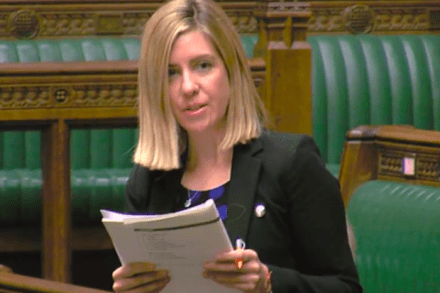
Andrea Jenkyns is regarded by many Tory MPs as a Brexit champion – after the Conservative MP for Morley pre-emptively quit last month as a PPS to fight for Brexit. Since then Jenkyns has become one of the loudest voices calling for a new tack from No 10 in the negotiations. However, Mr S can't help but wonder whether Jenkyn's latest intervention didn't land quite as she had intended. In an interview with the Telegraph, the Tory MP attempts to criticise the Prime Minister for not being a true Brexiteer – not because she's a Remainer but because her passion is... 'what's workable' 'It is time for her to go. I don't think she has passion for either Remain or Brexit, I think she has a passion for what's workable.

Will Theresa May make it to the summer recess?

From our UK edition

Will Theresa May make it to the summer recess? It's just over a week until Parliament breaks up for the long summer break yet the obstacles the Prime Minister must overcome before then are rapidly increasing in size. After May finally showed her Brexit hand, she has seen a growing Eurosceptic rebellion which shows no signs of letting up anytime soon. Over the weekend, her former minister Steve Baker accused No 10 of being part of a secret plot to render the Brexit department a 'Potemkin structure to [distract from] what the Cabinet Office Europe unit was doing for the prime minister'. Meanwhile, Jacob Rees-Mogg offered a memorable soundbite – telling the Sunday Politics that May was a 'Remainer who has remained a Remainer'.

Theresa May fights for her premiership – and reveals Trump’s advice

From our UK edition

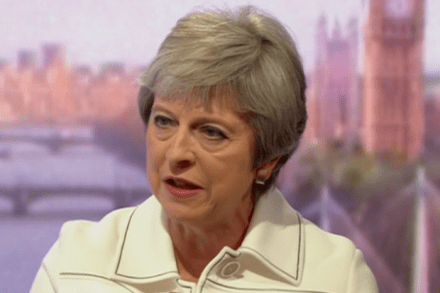
Theresa May appeared on the Andrew Marr sofa with her premiership at its most vulnerable point since the disastrous snap election. After a week of frontbench resignations, a US Presidential visit that resulted in humiliation, a growing eurosceptic rebellion and a downturn in the polls, May belatedly tried to sell her Brexit blueprint to the public. The Prime Minister began by attempting some honesty – she told Marr that she did accept that the position agreed at Chequers last Friday was different to what was set out in her Lancaster House speech. However, she insisted that the change was minimal and that competitive free trade deals were still possible – she refused to explicitly say that the common rulebook would make trade deals harder to forge.

Three things that Theresa May can do to try and avert a political disaster

From our UK edition

If Theresa May gets a Brexit deal and it can’t get through parliament, then we are heading towards the most dangerous political crisis in living memory, I say in The Sun this morning. For I very much doubt that the 80 percent of MPs who are opposed to no deal, would let Britain leave without an agreement. But disregarding the result of the referendum—either by abandoning Brexit or leaving only to make Britain, effectively, a non-voting member of the EU—would cause a democratic shock. 17.4 million voters would be, understandably, furious about having their vote ignored. So, what can Mrs May do to avert this disaster? Well, I think there are three things she should do. First, she should start treating voters and her own MPs like adults.

The Trump-May press conference was a comic masterpiece

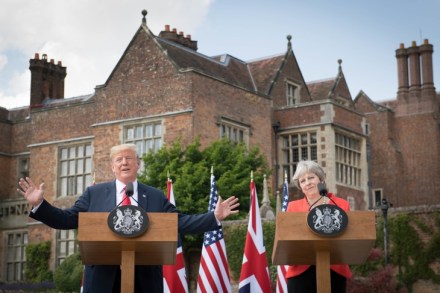
Donald Trump never fails to amuse. He is very, very funny. You can say that he should be no laughing matter – he’s the most powerful man in the world, his words and actions are deadly serious, and you’d probably be right. But then, I mean, just look at him -- listen to him. He reduces world politics to an amazing farce, and it’s impossible not to slightly love him for it. What sane person could possibly watch today’s press conference with Theresa May and not crack up? It was a comic masterpiece. Take, for instance, when he described the relationship between Britain and France as ‘in terms of grade, the highest level of special. So we start of with special …. I would say the highest level of special. Am I allowed to go higher than that?

Watch: Nigel Farage on winding up Team Trump ahead of UK visit

From our UK edition

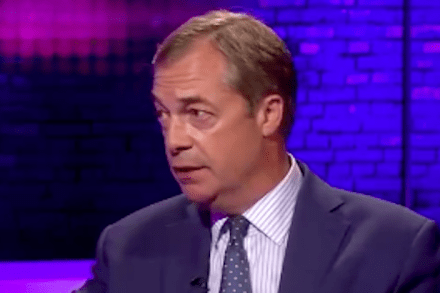
President Trump's official UK visit has turned into a nightmare for Downing Street after the US President used an interview with the Sun to suggest Theresa May had wrecked Brexit and a UK/US deal could be off the table. The comments are a gift to those Brexiteers pushing for May to change course and alter her Brexit blueprint. So, is it pure coincidence Trump has taken the side of May's Brexit critics? Mr S only asks after Nigel Farage last night set the cat among the pigeons on BBC's This Week. In an interview with Andrew Neil, the Ukip leader suggested that he had been winding up Trump and his team on Brexit and was a guiding spirit behind the Sun interview: https://twitter.com/bbcthisweek/status/1017545125050773504 AN: You've also been winding up Team Trump, haven't you?

Low life | 12 July 2018

From our UK edition

I flew from Marseille to Gatwick, rode the Gatwick Express to Victoria, and walked down the thoroughfare of Victoria Street eating a Marks & Spencer egg and tomato sandwich. In Victoria Street, I bought a shirt, pattern of flying ducks, from the House of Fraser selected menswear sale, to replace the sweat-soaked one I was wearing. Then I cut through the passage leading to Palmer Street and dropped in for an unpremeditated haircut at the Pall Mall barbershop. The chap who cut my hair was lively and talkative. Where had I come from today? France, I said. France? He didn’t like France. He’d tried it a few times but France didn’t agree with him. He just couldn’t get on with it. And what were my plans for the rest of the day?

Portrait of the week | 12 July 2018

From our UK edition

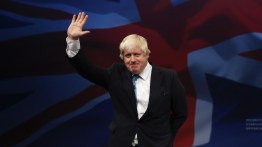
Home Boris Johnson resigned as Foreign Secretary the day after David Davis resigned as Brexit Secretary, both in reaction to a government plan for Brexit agreed by the cabinet after being held incommunicado at Chequers for 12 hours, their mobile phones confiscated. At Chequers, Mr Johnson was reported to have said: ‘Anyone defending the proposal we have just agreed will find it like trying to polish a turd.’ In his resignation letter he said that the Brexit ‘dream is dying, suffocated by needless self-doubt’, adding: ‘We are truly headed for the status of a colony.’ Dominic Raab, the housing minister, replaced Mr Davis; Kit Malthouse replaced Mr Raab.

Theresa May heads into uncharted waters

From our UK edition

The single most important fact in British politics, I say in the magazine this week, is that Theresa May does not currently have the votes to pass her Brexit plan even if she could get the European Union to accept it. ‘The numbers just don’t stack up’, one Cabinet Minister laments to me. May’s problem is that there’ll be a sizeable Tory rebellion against the Chequers deal. One Cabinet Minister predicts that 60-odd Tories will vote against it and it is hard to see how May can get enough opposition MPs to back the deal to make up for it. Compounding the situation for May is that both Tory Eurosceptic ultras and pro-European Labour MPs believe that they can get what they want by voting down her deal.

This is Brexit in name only to keep the plebs happy

From our UK edition

My wife has decided she likes Dominic Raab, the latest poor sap to be despatched from a hamstrung, spasticated government to negotiate our exit from the European Union before a plethora of sniggering pygmies from the Low Countries. I think it’s the sound of his surname, those consecutive vowels, because I’ve noticed she also likes aardvarks and once expressed a wish to visit Aachen. I can’t think of many other reasons to like the chap. He surely knows what we all know, Leavers and Remainers alike — that the route our Prime Minister dreamed up one night while out of her box on skag, presumably, is not Brexit at all and would leave us in a far worse position than if we remained within the confines of that increasingly totalitarian bureaucracy.

Can Theresa May count?

From our UK edition

It's day four of the Brexiteer rebellion and Theresa May appears to have shored up her position... for now. The eurosceptics who take the greatest issue with her Chequers blue print – thought to be around 70 Tory MPs – don't think they have the numbers as of yet to win a no confidence and, they say, this isn't even their preferred option. What they want is for the Prime Minister to change course – but No 10 insist that they won't budge. Unless she does, Guerrilla tactics have been threatened – so get ready for more resignations. However, as I say in today's i paper, the biggest problem from May's current predicament is that even if things go to plan, the end goal looks verging on impossible.

Poor Theresa May. In Trump-speak, ‘very good relationship’ means he can’t stand you

Uh oh – Poor Theresa.  You know that when Donald Trump, the most powerful man in the world, tells the media that you and he have a ‘very good relationship’, it means he doesn’t like you at all. It’s what he said about Theresa May this morning, just before he left for Europe. It’s also what he says about Justin Trudeau (‘good relationship’), Angela Merkel ('really great relationship’),  Mitch McConnell ('relationship is very good') and even Barack Obama (‘very good relationship’). In fact, in Trump-speak, ‘very good relationship’ means ‘I can’t stand him/her.’ Boris Johnson is a different matter. ‘Boris Johnson is a friend of mine,’ said the President this morning.

What Jeremy Hunt got right – and wrong – as Health Secretary

From our UK edition

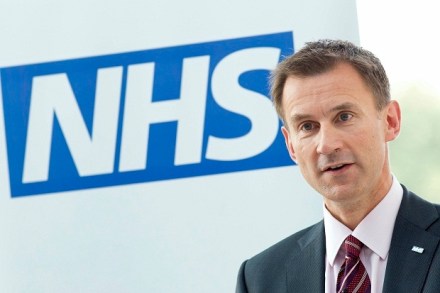
You couldn’t get a stronger contrast between the new Foreign Secretary and his predecessor. Jeremy Hunt is a minister who has earned the absolute trust of two Prime Ministers in an extremely politically charged job. He was brought in by David Cameron to clear up the mess after Andrew Lansley’s Health and Social Care Act disaster, and Theresa May kept him in place, quickly learning that he was one of the few ministers she really could leave to their own devices. This was a huge accolade from May, given her propensity to micromanage. Hunt earned that trust because he is a very loyal Cabinet minister. He does not style himself as an operator, unlike many of those he has served alongside.

What happened when Theresa May met with her MPs

From our UK edition

Having lost two of her most senior Cabinet Ministers, Theresa May went to address her MPs in a stuffy, hot room. But the occasion went off fairly-well for her. The vast majority of the questions were supportive and even the veteran Eurosceptic Edward Leigh made clear that the 1990s showed that a leadership contest wouldn’t achieve anything. Perhaps, the most hostile moment came towards the end of the session when Philip Davies asked if she regretted how Friday was handled given it appeared like a Remain coup. Other than Davies, most of the questions were fairly friendly. Former Cabinet Ministers Damian Green, and Patrick McLoughlin were supportive. Maria Caufield, a party vice-chair, was slightly more critical.

Theresa May faces the music in the Commons

From our UK edition

When Theresa May envisaged herself giving a statement in the Commons on the Cabinet agreement made at Chequers, she didn't expect to do so with her Brexit Secretary and Foreign Secretary no longer by her side. And so it was after a morning of high drama, a lonely Prime Minister this afternoon had to face questions from a divided party over a Brexit position she yesterday thought her Cabinet agreed upon. It wasn't a pleasurable experience for the beleaguered Prime Minister. Labour’s Kevin Brennan asked May whether the BBC's Laura Kuenssberg was right that 48 letters had been sent calling for a 'no confidence' vote. May simply said she was getting on with her job.

How much more unpalatable will the EU make this deal?

From our UK edition

From the flurry of joint op-eds from Cabinet Ministers today, you might be forgiven for thinking that the Chequers deal is the deal. But, of course, it is not. Rather, it is the UK’s government opening position in the negotiation on the future relationship. So, logically, you would expect the government to have to make more concessions. The problem for the ministerial Brexiteers is that what the EU is likely to demand will make the deal much more difficult to defend. Take, for instance, parliament’s role in having to pass any changes to the so-called ‘common rulebook’ between the UK and the EU. Number 10 likes to talk about this as a ‘parliamentary lock’ on any changes that could be detrimental to the UK.

How Theresa May trounced the Brexiteers

From our UK edition

Tory MPs and ministers have consistently under-estimated their leader. What Theresa May achieved at Chequers yesterday was extraordinary. She persuaded her cabinet to sign up for a Brexit plan that drives a coach and horses through what the Brexiters in her team – especially Boris Johnson and Michael Gove – said Brexit was all about, during that historic referendum campaign. What is more, at Chequers yesterday, Gove was a cheerleader for a plan that would enshrine in treaty what is supposedly anathema to his Brexit cause – that the UK now and forever would be subject to European Union rules and regulations governing the quality and safety of the goods we make and buy and also the food we produce and consume.