The rings of power

Bored of the rings: ‘wokery’ takes on Tolkien

From our US edition

"Woke” is a term much overused by those on both sides of the culture war but — a little like pornography — while it may be difficult to define, you absolutely know it when you see it. The capture of the entertainment industry by an ideology — perhaps more accurately described as a group of roughly consanguineous ideas that seem, superficially, to be the Right, Kind and Thoughtful beliefs to hold — seems now to be absolute. Fiction of all kinds has been affected, but heroic narratives have proved especially vulnerable, perhaps because of the size and dedication of their audiences. You will doubtless know the kind of thing I mean.
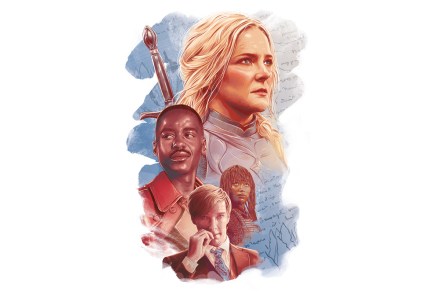
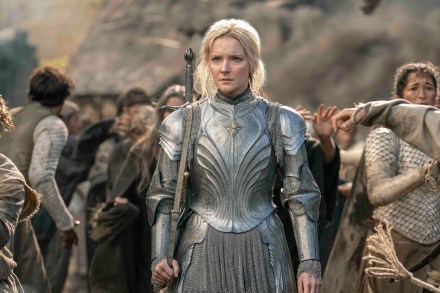
Rings

My Rings of Power remorse

As the credits rolled on the series finale of The Lord of the Rings: The Rings of Power, things got awkward. My partner turned to me to express his excitement for series two – just as I realised with absolute certainty that I couldn’t, in good conscience, watch the show again. My reaction came as a shock – to both of us. Hours earlier, I’d been champing at the bit to see the final instalment. Yes, the Amazon Prime programme has been widely panned by critics for everything from the CGI to the ‘colour-blind’ casting, but we’d loved it. In fact, it’s the first full series we’ve made it through as a couple, which only added to the disappointment of my decision. So, what led me here – to feelings of remorse so strong that The Rings are powerless?

This month in culture: August 2024

From our US edition

The Instigators In theaters August 2, Apple TV+ August 9 Boston crime movies are back! Starring Matt Damon and Casey Affleck — and produced by Ben Affleck, of course — The Instigators is a heist comedy-thriller about a robbery that goes wrong, causing Damon’s therapist to get dragged along for the ride. Affleck/Damon productions have consistently been solid — from the ultimate Boston crime movie The Town to last year’s Jordan 1 sneaker-origin story Air — and this is directed by one of the best working action directors around, Doug Liman, who was responsible for The Bourne Identity, Mr. & Mrs. Smith, Edge of Tomorrow and (the underrated) American Made.

culture

Bored of the Rings: the Tolkien industry has gone far enough

In 1969, Henry Beard and Douglas Kenney, future founders of National Lampoon, published a satirical takedown of J.R.R. Tolkien’s Lord of the Rings, entitled Bored of the Rings. It holds up remarkably well today as a closely observed parody of Tolkien’s more windy stylistic tics. One critic, David Bratman, remarked: 'Those parodists wrought better than they knew. I think it is highly significant how close Tolkien came to inadvertently writing the parody version of his own novel – and how completely, in the end, he managed to avoid it.

The resurgence of Dungeons & Dragons

From our US edition

You are stranded in the middle of an unforgiving desert, and must take refuge from a sandstorm before your Hit Points deplete any further. You find a rock outcropping — after a successful Perception check, a false wall reveals a sprawling cavern. Inside is a long-lost tomb. There are markings: could this be the dreaded Dark Speech of that necromancy cult the innkeeper kept warning you about? You have no idea, sadly. You spent your downtime trying to seduce the elven serving wench instead of reading the innkeeper’s copy of Desert Cults: Their Languages. Trying and failing, mind you — as a dwarven paladin, your Charisma score just wasn’t up to the job. No idea what I’m going on about? Count yourself among an ever-shrinking minority.

Dungeons & Dragons

The heart of The Rings of Power

From our US edition

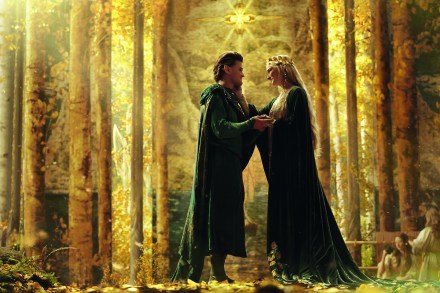
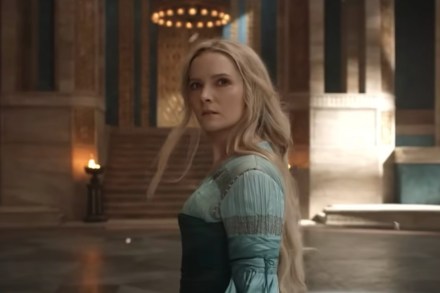
“Ours was no chance meeting. Not fate, nor destiny,” Galadriel says. “Nor any other words Men use to speak of the forces they lack the conviction to name.” The line is a bit pompous, but then so is the hotheaded elven warrior (Morfydd Clark) who speaks it in Amazon’s Lord of the Rings: The Rings of Power. Pomposity aside, Galadriel’s words reveal why the work of J.R.R. Tolkien is unique in a crowd of fantasy competitors. Anyone can give us elves and dragons and wizards. But few can match the anguished, longing note of hidden Providence in Tolkien’s Middle-earth. The Rings of Power has not yet achieved such depths of feeling — perhaps it will not be capable of doing so — but it has shown prudence in its stewardship of the story’s heart, which is encouraging.

lord of the rings of power

In defence of Amazon’s The Rings of Power

Why is Amazon’s new Lord of the Rings show taking so much flak? The way I see it, there are two (mostly separate) factors at play: Tolkien fandom and race. First, Tolkien fandom. Despite the best efforts of the Tolkien Society to 'queer' Tolkien studies, the Inkling’s biggest admirers tend to be Christians on the cultural and political right. Most of this crowd (aside from those who think hating universally beloved things is a good substitute for a personality) loved Peter Jackson’s Lord of the Rings trilogy. His adaptation of The Hobbit, which took plenty of liberties in order to stretch about 300 pages into three feature films, was less well received.

The Rings of Power just might turn Tolkien in his grave

From our US edition

By now, you’ve probably heard about Amazon’s new mega-series, aka "Jeff Bezos’s answer to Game of Thrones." There is probably no property more beloved in fantasy circles than JRR Tolkien’s Lord of the Rings trilogy, superbly filmed by Peter Jackson at the beginning of the millennium. But Hollywood — and its latest cousin, streaming television — finds itself unable to let go where there is the prospect of a hit. So first we had the endlessly protracted and deeply boring Hobbit series, and now we have Amazon’s new venture into Tolkien’s universe, the grandiosely titled Lord of the Rings: The Rings of Power.