The moon

A journey to the dark side of the Moon

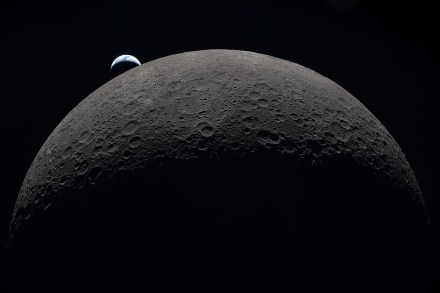
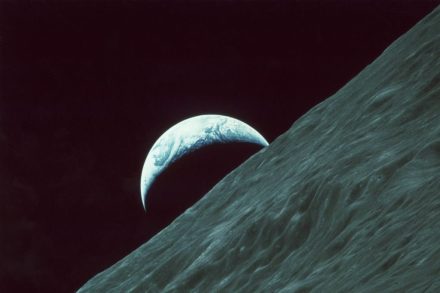
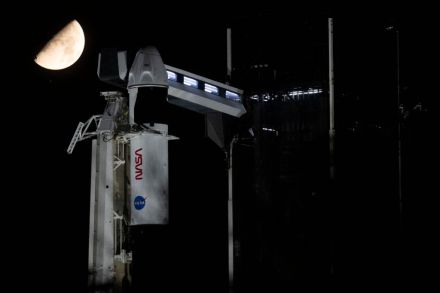
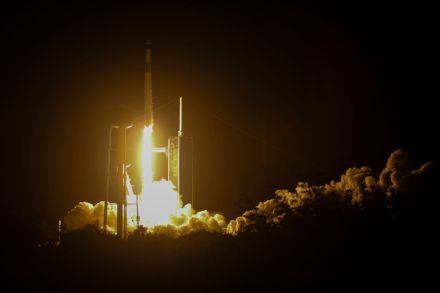
The climax of the Artemis II mission lasted just a few hours. The capsule, named Integrity, rounded the Moon, the crew becoming the most distant humans in history as they moved from its sunward side into its shadow. The familiar features of the permanently Earth-facing side made way for the more heavily cratered far side. This is not the Moon we know. The far side is different. It has a thicker crust, no major solidified lava plains and is more heavily cratered, like the aftermath of the final war. Before reaching it, the crew saw two Apollo landing sites: Apollo 12 touched down on Oceanus Procellarum (Ocean of Storms), and Apollo 14 landed on the plains of Fra Mauro, the target for the aborted Apollo 13 mission. There have been travelers here before, but not like this.

dark side moon

Reflections on the Moon

We Americans have been instructed to burst our buttons with pride over Artemis II’s drive-by of the Moon. But out here in cratering America, far from Mission Control, we remain buttoned-up. This is not due to our skinflint nature or lack of imagination; nah, it’s just that Big Science – “corporate socialism,” as the late parsimonious populist Democratic senator William Proxmire of Wisconsin termed the space program – is spiritless, mechanical and inhuman.

Is Britain losing its sense of fairness?

From our UK edition

49 min listen

Has Britain become a freeloader’s paradise, asks the Spectator’s economics editor Michael Simmons in our cover piece this week. Michael analyses ‘the benefits of benefits’, at a time when Britain’s welfare bill is burgeoning and most households are struggling with cost of living. For example, while a family of four can expect to pay £111 to visit the Tower of London, that is just £4 total on Universal Credit (UC), and for London Zoo it is £108 compared to £26. Michael is not arguing against the idea of helping those in need, but pointing out that – as the benefits bill continues to increase – this is another case of governments prioritising ‘welfare over work’ and ultimately squeezing the working poor.

Is Britain losing its sense of fairness?

Confessions of an unmanly man

From our UK edition

There’s a certain sort of chap who, when he hears you mention football, gets all earnest and starts talking about flat back fours. You try to stop him, attempting to steer the conversation away from tedious tactics and back on to the important stuff, such as the fact that there’s only one team in the top four English divisions whose name, when spelled in capital letters, contains no curves. He’ll look confused, disorientated, maybe even a little bit angry. Either he’ll persist with his talk of formations, or walk away completely. The correct reaction, of course, is to say: ‘Really? That’s brilliant. Let me try to work it out.’ This is when you know you’ve found a kindred spirit: an unmanly man.

The mission to mine the Moon

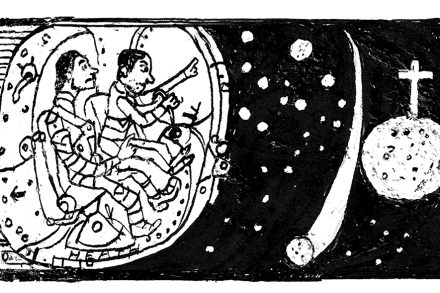
There will come a time when the richest people who ever lived will be those who control outer space, in particular the Moon and the asteroids. There are vast resources out there, bound in giant rocks hurtling through space, and in the lunar dust. But the first steps will be taken by the brave, and perhaps the reckless in pursuit of a space dream. If you dream of space, nothing can stop you. Not the disagreement of others or the judgement of experts, neither short-sighted investors nor government regulations. One such dream will happen on the Moon’s surface in just a few months.The space company Astrobotic will attempt to land at the Moon’s south pole – a region of extensive shadows where ice may have accumulated and the site of the next US human landing.

The moon

Why Trump must build a nuclear reactor on the Moon

Sean Duffy, the secretary of transportation whom President Trump appointed last month as temporary leader of NASA, has issued a directive to fast-track efforts to put a nuclear reactor on the moon. “To properly advance this critical technology to be able to support a future lunar economy, high power energy generation on Mars, and to strengthen our national security in space,” he says.A small nuclear reactor on the moon is a good idea, but the directive is about more than that: it is about renewing America’s leadership in space exploration that, with its magnificent achievements receding into the past, looks vulnerable. Bill Nelson, NASA’s last leader, didn't mince his words when it came to the new rivals, China. “It is a fact: we’re in a space race.

The Moon

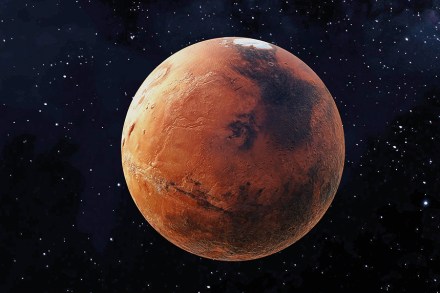
A piece of Mars to toy with

From our UK edition

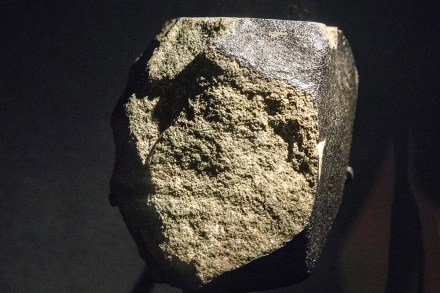
Since reading Helen Gordon’s The Meteorites, I keep catching myself in imaginary conversation with an Essex thatcher called Frederick Pratt. On 9 March 1923, he was working in a wheat field at Ashdon Hall Farm, near Saffron Walden, when he heard a strange ‘sissing’ sound and looked up to see ‘the earth fly up like water’. He later dug up, from a depth of two feet beneath the surface of the field, a stone weighing 1.27kg that had fallen from the sky. He took it to the police station, then on to the vicar, who shipped it off to the Natural History Museum. There we know it was classified as a stony chondrite meteorite, composed of feldspar, pyroxene and olivine, white specks of nickel iron and other oddments from which the solar system was formed 4.5 billion years ago.

Is it a ‘perigee-syzygy’ or a ‘supermoon’?

From our UK edition

My husband was so delighted with the new-found term perigee-syzygy that he kept repeating it, until the syllables merged into his regular breathing and he fell asleep in his chair. The compound word means what the vulgar press call a supermoon. A syzygy is the lining-up of the moon, Earth and sun, producing a full moon (or a new moon, which is invisible because only the far side is illuminated). The perigee is when the moon is nearest the Earth (its furthest being the apogee). The distance varies because the moon orbits the Earth in an ellipse. The funny-looking word syzygy, used in English since the 17th century, merely comes from the Greek for a yoke and is thus related to the grammatical term zeugma (‘straight home, in a flood of tears and a sedan-chair’ – The Pickwick Papers).

What would life on Mars actually look like?

From our UK edition

Just as extreme altitudes have notable effects on the human body and mind, so too does extreme wealth seem to have a particular effect on psychology. Or at least that’s how it appears when you look at the shared ambition of two of the world’s most prominent billionaires, Elon Musk and Jeff Bezos. Both men are fixated on the idea that humanity’s future lies beyond Earth and are funnelling fortunes into the vision that we will soon have significant human settlements off-planet, whether on the moon, Mars or elsewhere. It’s an argument grounded not just in exploration and discovery, but in survival. If humanity’s future on Earth looks to be in doubt, is living off-world not the ultimate insurance policy for our species?

Was JFK any ‘good’ as a president?

How should we assess the value of a US president? In the case of John F. Kennedy, who died sixty years ago, the box denoting youthful vigor clearly gets a checkmark. Kennedy was just forty-six at the time of his assassination, which makes him younger than Hunter Biden is now. The box denoting the “vision thing” gets checked as well, if only because Kennedy saw the potential for beating the Soviets in the race to put a man on the moon, famously declaring, “We choose to do this, not because [it is] easy, but because it is hard; because that goal will serve to organize and measure the best of our energies and skills.” Also to be considered is the collective trauma of the events of November 22, 1963.

jfk

What exactly is the new space race all about?

The recent spate of articles about attempts by different countries to land vehicles on the Moon make it clear that a new space race is on. Just last month, Russia launched its first mission there in forty-seven years. And although the automated Luna-25 spacecraft spun out of control and crashed at the last minute, India’s heavily-instrumented Chandrayaan-3 landed successfully just four days later. NASA itself aims to return humans to the lunar surface in 2025 with its Artemis program. Remarkably, more than eighty countries, including Israel and the United Arab Emirates, have thus far established some kind of presence in space.

space

A thoroughly modern 18th-century heroine: The Future Future, by Adam Thirlwell, reviewed

From our UK edition

Adam Thirlwell’s latest novel begins in revolutionary France and chronicles the travails of its embattled celebrity heroine, Celine, who is being subjected to a campaign of malicious gossip about her sex life. She resolves to cultivate a coterie of influential writers to wrest back control of the narrative – cue earnest meditations on power, misogyny and the ability of the written word to shape reality. Meanwhile, she finds solace in female company, reflecting: In a society made of words and images and circulating and recirculating, all devoted to disinformation, it was very difficult to find any personal safety, and one minuscule form might just be this intense form of friendship between two women.

Heavenly beauty: Doppelmayr’s Atlas Coelestis

From our UK edition

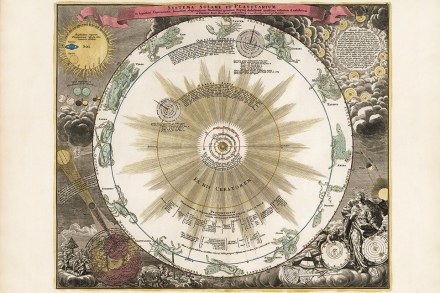
It seems something of a disservice to a work of this seriousness to say how beautiful it is, but that is what will first strike the reader. Open this book and if you can prise yourself away from its wonderful marbled end papers, with their swirls and drifts of deepest blue, brilliant flashes of rusty orange, rivulets of ochre, inky spheres and floating masses of fiery red, you will find yourself taken back to the Enlightenment world of Johann Gabriel Doppelmayr’s Celestial Atlas and an age in which Europe’s polymaths were as interested in the discoveries of science as they were in the literary and artistic culture of the day. The Atlas Coelestis, published in 1742, is an extraordinary work consisting of 30 plates illustrating everything that was known of the cosmos at the time.

Where is there water in the solar system?

From our UK edition

The Moon under water Nasa scientists using spectrometers claim to have found good evidence of water on the surface of the Moon. Where else in the solar system could you potentially go for a dip? — Signs of hidden oceans have been detected on Jupiter’s moons Ganymede, Europa and Callisto and on Saturn’s moons Titan and Enceladus. The latter is also believed to have icy geysers. Water is also believed to exist in craters on Mercury. — There are signs of ample water having been on Mars in the past, although most is believed to have been stripped away along with its atmosphere. The planet may, however, still have water beneath its surface and locked in ice caps at its poles. Free school meals How many children qualify for free school meals? In January, 15.