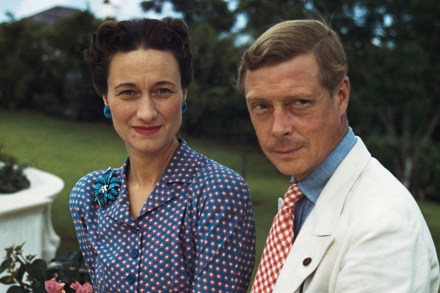
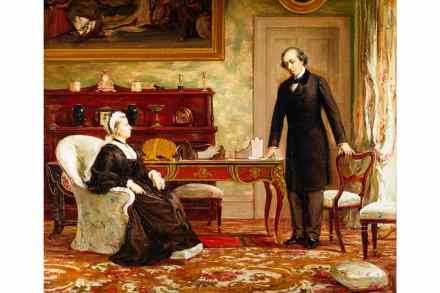
The abdication

Rifts and reconciliations: Adam and Eve, by Jeffrey Archer, reviewed

The old master of the airport bookstall novel has published for the last time. His fans will be delighted with this vintage Archer. The story concerns the lives of two children born on Armistice Day 1918 – Evelina to Charles, Earl of Brancaster, and Adam to a shepherd on the Brancaster estate.  The title echoes the blockbusting Kane and Abel with biblical resonance. The couple’s fortunes are charted to almost the end of the second world war. Adam and Eve fall deeply in love, Eve devoted to farming, Adam to the intellect. On the outbreak of war he is called to duty with the Royal Norfolk Regiment and is eventually awarded both the MC and the VC. Although the writing carries us along at a great pace with many twists and turns, both style and plot are clichéd.

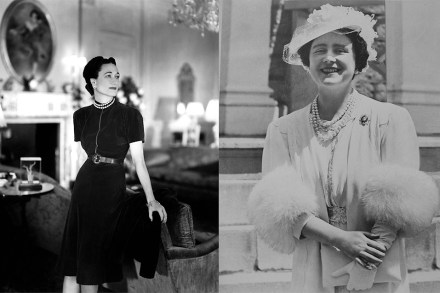
Streamlined chic or lacy froth: royal style wars of the 1930s

The semiotics of clothes, especially royal ones, can be fascinating, sending out powerful messages. Think of the jewel-studded, pearl-strewn portraits of Queen Elizabeth I or Princess Diana’s revenge-chic black dress. As a fashion queen herself (Justine Picardie was editor-in-chief of Harper’s Bazaar for more than seven years and has an acclaimed book on Chanel under her belt), no one is better placed to unpick the subtleties of royal public couture. So, judging by this book’s title, I was expecting a shrewd analysis of diplomacy dressing, with perhaps some behind-the-scenes vignettes. What happens if a royal lady unexpectedly gets a ladder in her tights at a crucial moment? Is there a colour code if three of them are out together? How do hats stay on in a gale?

Did the Duchess of Windsor fake the theft of her own jewels?

On 16 October 1946, the Duke of Windsor, the former Edward VIII, and his wife Wallis were visiting England for a short period. They were staying with their friends the Dudleys at Ednam Lodge in Surrey, and felt sufficiently comfortable not to store Wallis’s impressive collection of jewellery in the house’s safe room, but instead kept it – with almost breathtaking carelessness – under the bed. It is unsurprising, then, that an opportunistic thief was able to break into the house while the Duke and Duchess were dining in London, steal the jewels and make good his escape without detection. If this was all there was to the story, it would be diverting but inconsequential.

The Duke of Windsor had much to be thankful for

Once a King is trumpeted as ‘game-changing’, a ‘trove of never-before-seen papers which shed fresh light on the maligned Duke of Windsor’ and will ‘turn on its head long-accepted stereotypes’ about him. These are bold claims, but do they stack up? ‘The lost memoir of Edward Vlll’ actually consists of an early draft of the Duke of Windsor’s self-serving memoir, A King’s Story (1951), which Jane Marguerite Tippett found in the papers of the former king’s ghostwriter Charles Murphy in the Boston University archives. Far from being lost, the papers have been known to historians for 20 years and largely ignored in favour of more important collections elsewhere, not least the Murphy papers at the Virginia Historical Institute, of which Tippett seems unaware.

The delicate business of monitoring the monarchy

This very readable account of relations between the British intelligence services and the Crown does more than it says on the tin. Although subtitled ‘Spying and the Crown, from Victoria to Diana’, it quite properly begins with Queen Elizabeth I and the intelligence network masterminded by Francis Walsingham, whom MI6 regard as their historical progenitor. It also quite properly makes the point that ‘spies and royal statecraft were episodic and opportunistic partners’. Unlike other major powers, Britain had no permanent intelligence services until 1909. There weren’t even any permanent military intelligence organisations until the late 19th century.