Testing

Biden spent billions messing up rapid test distribution

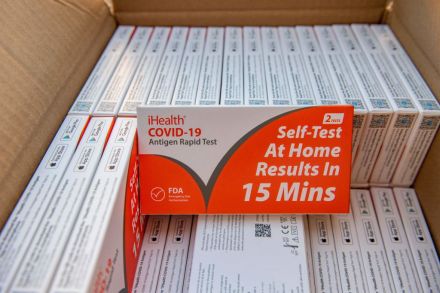
What happens when a government thinks it can distribute a consumer product more efficiently than normal retail channels? Boondoggle and failure come to mind. Two months ago, President Biden announced plans to buy 500 million at-home Covid test kits and mail them to anyone who wanted one. The Department of Defense put in orders for $1.275 billion of tests from iHealth, $340 million from Roche and $306 million from Abbott. How many tests those eye-popping figures bought from each company has never been disclosed, but Abbott, the largest test manufacturer, has a reported production capacity of 50 to 70 million tests. It is safe to assume that the quantities involved commanded an enormous portion of total manufacturing capacity.
at-home testing

I did everything wrong and still haven’t caught Covid

"I am vaccinated — two Moderna shots, then boosted with a Pfizer booster," Fox News's Geraldo Rivera said as he announced he tested positive for Covid two weeks ago. "I thought for sure that I was immune...I ate some humble pie." The View's Whoopi Goldberg expressed similar surprise when she caught the virus, saying, "It was a shock, because I'm triple vaxxed, I haven't been anywhere, I haven't done anything." "It's one of those things where you think, I've done everything I was supposed to do... Yeah, it doesn't stop Omicron," she added. There have been scores of high-profile people admitting over the past month that you can "do everything right" and still catch Covid-19.

massachusetts

Biden is failing the at-home testing test

After months of yelling about how important at-home testing kits are, Joe Biden forgot to buy them. Oops! In his address on Tuesday, the president told Americans, “We also need to do better with at-home testing. So, I’m announcing today: the federal government will purchase one half billion — that’s not million; billion with a 'B' — additional at-home rapid tests, with deliveries starting in January.” But according to the New York Times, the half billion with a “B” tests are some ways out: “Mr. Biden’s administration has not yet signed a contract to buy the tests, and the website to order them will not be up until January.” The president’s potential successor Pete Buttigieg once wisely said that there are two kinds of Christmas shoppers.

at-home testing

If we want herd immunity, we need mass testing

From our UK edition

At the start of the pandemic, we talked a lot about herd (or community) immunity. But talking about the journey to herd immunity became toxic as it was variously linked to high infection rates, sacrificing the elderly, and the NHS becoming overwhelmed. The debate on herd immunity was restarted last week by Professor Karl Friston, of University College London, who told the Daily Telegraph that the 73.4 per cent vaccinated reached on Monday meant that 'based upon contact rates at the beginning of the pandemic and estimated transmission risk, this is nearly at the herd immunity threshold.' This is an outlying view: other academics questioned this analysis. Matt Hancock said that the government will continue to watch the real-world data.

Should we be worried about another Covid spike?

From our UK edition

As the chief medical officer professor Chris Whitty suggested this week, the situation with Covid figures can change very sharply, very quickly. One moment infection numbers can be falling, like they were in late November, but the next moment, they can take off again — as they subsequently did in mid-December. That is why all eyes are now on the day-to-day Covid figures published by Public Health England and especially on the apparent deceleration in the decline in new cases over the past week. The numbers published on Wednesday still show a 20 per cent week-on-week fall in the seven day average but that constitutes quite a sharp change.

Is Boris Johnson opening the way for vaccine passports?

From our UK edition

The government's position on vaccine passports is a cause of continuing intrigue. Although Downing Street has insisted on several occasions that they will not be brought in domestically, there have been several statements that suggest otherwise. As well as looking at vaccine passports for international transport, Dominic Raab appeared to at least entertain the idea of vaccine certification when it comes to reopening hospitality. Speaking at Monday's press conference, Boris Johnson sought once again to offer assurances on the issue. Rather than domestic vaccine passports, he said that in terms of reopening the economy, mass vaccination and testing would be the go-to mechanisms.

Why did the ‘Florence Three’ keep testing positive for Covid?

From our UK edition

Worse tales have emerged during the pandemic than that of the ‘Florence Three’ – Rhys James, Quinn Paczesny and Will Castle, who have all now returned home to Britain after 61 days incarcerated in a hotel in the Italian city. Some might say a couple of months stuck in Florence could have been a blessing – and so it might have been, had they not each been stuck in solitary confinement and fed microwaved mush, with no more chance to go out to a trattoria than to visit the Uffizi. But what stands out about the story of the Florence Three is not so much their plight, but what it tells us about Covid-19 tests. The three men, who are aged between 20 and 23, met in Northern Italy while teaching English over the summer.

How worried should we be about a second wave?

From our UK edition

Now that we are two months past the peak of the UK coronavirus epidemic, many fear the emergence of a second wave of the disease and remain anxious about any evidence that reopening the country has gone too far. For this reason media headlines like ‘Germany's R number rockets again - from 1.79 to 2.88’ (Sky News) and ‘UK coronavirus cases no longer falling, ONS figures show’ (the Times) are amplified very quickly. But how worried should we really be by these headlines? By now, we have become familiar with the R number (the average number of people that each infected person will themselves infect) and are alert to the danger of it being greater than 1. However, we have likely spent less time thinking about how the value is found.

Three mistakes the UK made at the start of the corona crisis

From our UK edition

There are three areas where government policy now implicitly accepts that they made mistakes in their earlier handling of the pandemic. The first is the desire to increase testing to 200,000 tests a day. This suggests that the earlier decision to pull back from a test and trace strategy because the infection was being spread in the community was due to a lack of a testing capacity; something that could have been remedied if the government and Public Health England had adopted the collaborative approach to testing that they now have. The second is care homes.

Should we be testing everyone in Britain?

My friend ‘D’ is an instantly recognizable type in the Middle East: the middleman. He’s always chasing the next deal, always about to make millions. One scheme was to build a London Eye in a flyblown town in the Levant. Another was to buy a ‘Trump sex tape’ for $10 million. His latest scheme is to get the British government to buy coronavirus test kits from Turkey. This could be the big score: for biotech companies, testing is a new goldrush. And though there’s a touch of Del Boy about my friend, he’s right about the need for test kits. In fact, to get out of the crisis caused by the coronavirus, we might have to test on an immense, unprecedented, almost unimaginable scale.

testing

Why is Britain not using its testing capacity?

From our UK edition

The government's excuse for why it didn't engage in a comprehensive testing and tracking approach to contain Covid-19 after it started to spread throughout the community was that – unlike Germany and South Korea – it did not have the sufficient number of labs to process the tests. Well that excuse is almost exhausted, because testing capacity is increasing rapidly. Take for example the new super lab being built in Cambridge by AstraZeneca (AZN) and GlaxoSmithKline (GSK), using equipment and technology made in the UK by Primer Design, the molecular diagnostics division of Novacyt. AZN's chief executive Pascal Soriot tells me that tests will start any day now and that it will have the capacity to process 30,000 tests per day as soon as early May.

How Germany has managed to perform so many Covid-19 tests

From our UK edition

Over the past few weeks there has been widespread curiosity about the German healthcare system. Since the coronavirus outbreak, the infection curve in Germany has risen just as steeply as in Italy, and the measures it has imposed are quite similar to those elsewhere. Yet, its death rate is noticeably lower. Of 100,132 Germans who have tested positive, only 1,584 have died, as of this morning. Compared to fatality rates above 6 per cent in neighbouring France, Netherlands or Belgium, that seems remarkable. The most important reason for Germany’s rate is intense testing, using the South Korean model where widespread testing and isolation helped flatten the curve of new infections.