Tesla

Did energy secretary Jennifer Granholm lie to Congress?

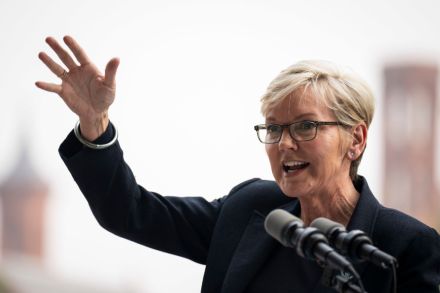
Energy secretary Jennifer Granholm has admitted to misleading Congress, in an apparent violation of the US Code that can carry a sentence of up to five years to prison. In a Friday news dump filled just hours after the news of former president Donald Trump’s indictment, Granholm confessed to making a false statement before the Senate Energy and National Resources Committee on April 20.  At issue is Granholm telling Senator Josh Hawley that she owns no individual stocks, “whereas I should have said that I did not own any conflicting stocks,” she wrote in a letter shared with E&E News.

jennifer granholm

Is Elon Musk’s war on remote work moral?

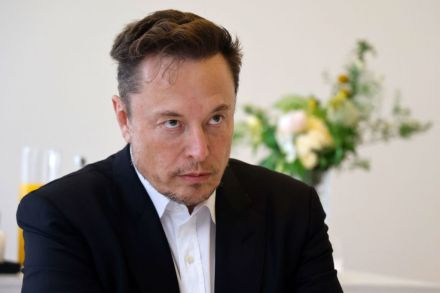
Remote work isn’t just killing productivity, according to Elon Musk: it's morally wrong. In an interview with CNBC on Tuesday, Musk accused at-home workers of hypocrisy for expecting those in service and manufacturing industries to go into work. The “laptop class” needs to get off its “moral high horse” with its “work-from-home bullshit,” Musk said.  "You’re going to work from home and you're going to make everyone else who made your car come work in the factory? You're going to make the people who make your food that gets delivered that they can't work from home? The people that fix your house — they can't work from home? But, you can? Does that seem morally right?" Musk asked. “That’s messed up.

elon musk remote work biometric data

How Elon Musk turned Twitter into the post-TV Fox News

Elon Musk has decided it's too much work for him to be the chief executive of Twitter, a fraying social network, in addition to running Tesla and SpaceX and a potpourri of other startups. He recently named Linda Yaccarino, an NBC ad executive, as the new CEO so that she could focus on business operations and he could focus on product design and new technologies. As an employee of Musk's, Yaccarino has an impossible mission — to stem the bleeding, appease the advertisers, and, of course, keep her new boss happy. Good luck to her, I say, for Twitter's current fortunes are going in only one direction — south. When Musk acquired Twitter, he paid $44 billion for a company that no one else wanted nearly as much. Since then, its value has fallen to almost $20 billion.

Elon Musk vs Ian Bremmer: who’s telling the truth?

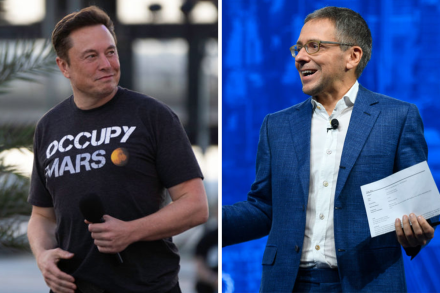
Cockburn wasn’t surprised to hear that Elon Musk had found himself in yet another spat, but he was somewhat shocked to hear that this one was a matter of national security. This week's he-said-she-said involved political scientist Ian Bremmer. In a newsletter sent to his Eurasia Group subscribers, Bremmer wrote that Tesla CEO Musk had told him that Putin was “prepared to negotiate,” but only if Crimea remained Russian, if Ukraine accepted a form of permanent neutrality — and Ukraine recognized Russia’s annexation of Luhansk, Donetsk, Kherson and Zaporizhzhia. So, not asking too much then. Musk hit back in response to a tweet asking whether Bremmer's statement was true, replying: “No, it is not. I have spoken to Putin only once and that was about eighteen months ago.

elon musk ian bremmer

The left’s great Twitter evacuation

The smell of Musk is in the air, and it’s causing Twitter’s left-wing users to clear the room — or so they say. Their threats to vacate cyberspace started a few weeks ago as free speech absolutist Elon Musk, in short order, became the largest shareholder of the social media firm, was offered a seat on its board, declined that seat, and made an offer to buy the firm outright. They rose to a fever pitch yesterday, as Musk’s $44 billion offer to take the company private was accepted. Twitter’s liberal users buckled under the fear of unmoderated political discussion and even, perhaps, the return of the famously suspended Donald Trump.

Beware the risks of tyrannical tech

“Just think about it. Our whole world is sitting there on a computer. It’s in the computer, everything: your, your DMV records, your, your social security, your credit cards, your medical records. It’s all right there. Everyone is stored in there. It’s like this little electronic shadow on each and every one of us, just, just begging for someone to screw with, and you know what? They’ve done it to me, and you know what? They’re gonna do it to you.” — Sandra Bullock as Angela Bennett, The Net, 1995 A few weeks ago, I called the local Domino’s. The man who answered asked whether my address is an apartment or a private residence. I live in a fairly remote Michigan community of about 8,000 people.

The stock market isn’t the success story Trump thinks it is

COVID-19 is still raging, with little sign of coming under control. The economy is already a tenth smaller than it was at the start of the year. Joblessness is soaring. And the budget deficit? Don’t even ask. But, hey, perhaps we shouldn’t worry about any of that. As the President of the United States keeps pointing out, the stock market is doing great, and, in his opinion, anyway, that means America, to borrow the kind of slogan that fits neatly onto a baseball cap, is great again as well. There is a problem, however, with Trump’s breezy 21-character analysis. It is not really true. The main equity indices reflect many different things, and the health of the economy is not always one of them. https://twitter.

stock market

The dream of driverless cars is dying

I was worried that going to the autonomous vehicle exhibition in Stuttgart would be tantamount to an atheist walking into St Peter’s while the Pope was conducting a mass. There is something religious about the fervour with which adherents to the driverless credo practise their faith and promise us a new kingdom. Their proselytising has indeed convinced many. Politicians are making outlandish statements, such as Jesse Norman’s two weeks ago, that ‘Our entire use of roads is to be revolutionised by autonomous vehicles’, and pouring large sums — a promised £180 million so far — into bizarre research projects such as the development of strange robot cars slower than a Reliant Robin and allowed only on pavements in Milton Keynes.