Terrorism

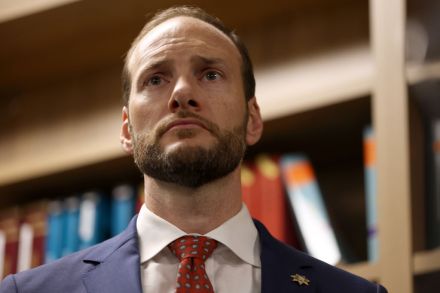
Chesa Boudin’s soft-on-crime policies will doom him

California’s ballots went out early this month, and the drawn-out mail-in primary election ends on June 7. Turnout looks to be low, as there are no competitive statewide races, and November elections are a lock for the Democratic incumbents. Governor Gavin Newsom has one eye on the camera and the other on the White House. Senator Alex Padilla — appointed last year by Newsom to fill Kamala Harris’s seat — is a reliable placeman for the ruling Democratic junta. The contest that politicos will be watching is an up-or-down recall vote for San Francisco’s district attorney Chesa Boudin. It would be a major upset if he kept his job. He might be deposed in a landslide, as was San Francisco’s zany school board, or lose more narrowly.

chesa boudin

Is Israel facing a new Intifada?

From our UK edition

Dizengoff Street is one of the busiest thoroughfares in Tel Aviv, a strip of bars, restaurants and Bauhaus architecture that is typically bustling with young people on a Thursday evening. Last night, it was the scene of the latest Palestinian terror attack when a gunman opened fire outside the Ilka bar, killing three and wounding nine. One of those killed was Olympic kayaker Barak Lopen, who represented Israel at Beijing 2008 and London 2012. In the past two weeks, 14 Israelis have been killed by a mixture of Palestinian and Israeli-Arab terrorists. For comparison, there were 17 terrorism-related fatalities in the entirety of last year. I asked on Coffee House last week if Israel was in the midst of another wave of terrorist violence. Dizengoff Street answers that question.

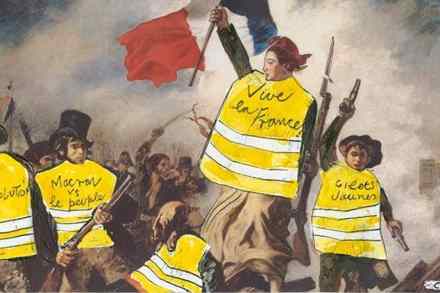
Will Macron surrender to the mob?

From our UK edition

It has been a torrid few days in France. In the early hours of Saturday morning, a former Argentine rugby international, Federico Aramburú, was shot dead on a chic Paris street after an altercation in a bar. The suspect is a notorious far-right activist who allegedly told Aramburú that he didn’t belong in France. On Monday Corsican nationalist Yvan Colonna died, three weeks after he was beaten into a coma by fellow prisoner and infamous extremist, Franck Elong Abé, an Islamist who was captured fighting for the Taliban a decade ago. It is alleged that Abé justified his attack on the grounds that Colonna ‘had bad-mouthed the Prophet’.

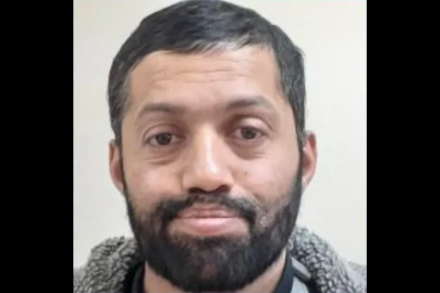
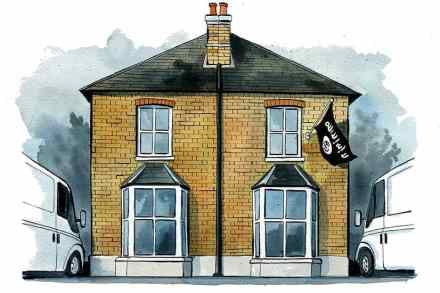
Malik Faisal Akram and our shoddy security state

It wasn’t so long ago that an official at London’s Heathrow airport, warned by the scanner through which my luggage was passing, uttered an Archimedean Eureka! (or words to that effect), pounced on my suitcase and abstracted an incriminating bottle of shampoo, which he confiscated. “Over the limit, Sir,” he exclaimed, as a colleague asked me to step aside and extend my hands to be tested for evidence of contact with explosive materials. It’s not only in England, of course, that functionaries subject the populace to their petty tyranny. It’s the same drill in the US. “Oh, but it’s to keep you safe, you know, that’s why we spend billions on our intelligence services and elite crime fighting units, equipping like armies so they can protect us from the bad guys.

malik faisal akram

I’m getting sick of the Tories

From our UK edition

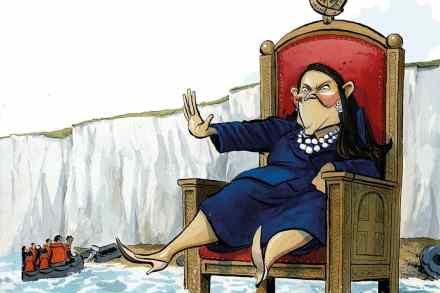
I suppose this happens to all of us at different speeds, but I am getting a little fed up of this government. In particular, I am getting fed up of the gap between its rhetoric and its actions. Most of the time this is most noticeable with the Prime Minister, who gives his base the occasional morsel of right-wingery only to then force-feed them great dollops of lefty-greenery. On a trip to Washington, Priti Patel has demonstrated that she is also no stranger to this tactic. So far we have had Patel (the DC version) talk about ‘the mass migration crisis’, as though she is merely an observer of the crisis in the Channel rather than one of the only people actually able to solve it.

How Britain and France learned to live with terror

From our UK edition

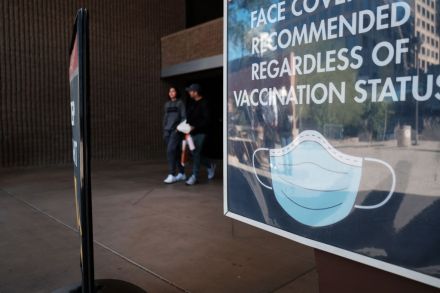
Emmanuel Macron told his people last summer they would have to learn to live with Covid. A year-and-a-half on, France is unrecognisable to the country it once was: Covid passports are in force and face masks remain mandatory in many places. The president of France is not alone among Western leaders in his uncompromising approach to the pandemic: Holland, Austria and Germany are re-imposing restrictions and Boris Johnson, who used the 'learn to live with it' line in July, has refused to rule out a Christmas lockdown. Yet while Europe's presidents and prime ministers appear ready to go to any length to protect their people from this virus, their approach to another threat – the danger posed by Islamist terrorism – is far more insouciant.

What the Liverpool attack means for Britain

From our UK edition

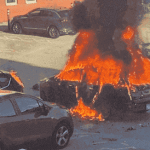
What’s happening in Liverpool? This morning police declared the detonation of a device in a taxi outside a large women’s hospital, and subsequent arrests of four people in the city, as a ‘terrorist incident'. It has just been announced that our terror threat level has been raised from ‘substantial’ to ‘severe’ meaning another attack is highly likely.  It appears the Liverpool incident involved a taxi passenger detonating an improvised explosive device outside the hospital, which was apparently its intended destination. The single passenger was killed as the car exploded and was engulfed in flames. The CCTV image is extraordinary, showing a blast of some force showering debris around.

Terror threat level raised to ‘severe’

From our UK edition

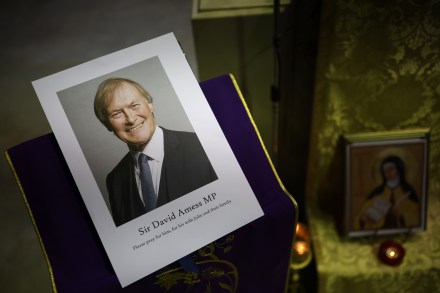
The Home Secretary Priti Patel has just announced that the terror threat level has been raised to 'severe' meaning that another attack is now considered 'highly likely'. The move comes after yesterday's explosion in Liverpool was declared to be a 'terrorist incident'. Speaking after a Cobra meeting, Patel confirmed that the Joint Terrorism Analysis Centre had raised the threat level following the Liverpool attack.  https://twitter.com/spectator/status/1460185050797035525?ref_src=twsrc%5Etfw The Home Secretary said that the decision had been taken because two terror attacks had been confirmed in the last month, the former being the murder of MP Sir David Amess.

Liverpool terror attack: what we know so far

From our UK edition

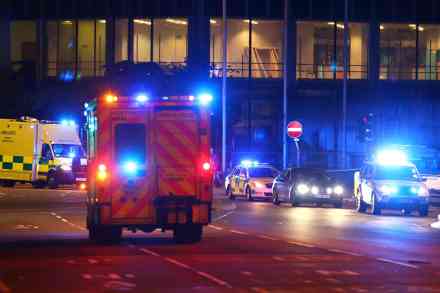
Britain has been subjected to another terror attack, just as the nation fell silent for yesterday's annual Remembrance Sunday memorial. An explosion occurred in a taxi outside the Liverpool Women's Hospital on Sunday morning, killing the passenger and leaving the driver in hospital. Police have now confirmed that the incident is being treated as a terror attack.  Reports suggest that the driver, David Perry, noticed that his passenger had a device and locked himself in the car alongside the bomber. The as-yet-unnamed passenger was declared dead at the scene. Boris Johnson has hailed Mr Perry's 'incredible presence of mind and bravery'. He was discharged from hospital last night after receiving treatment for cuts and burns as well as stitches to his ear.

The enduring power of Japan’s doomsday cults

From our UK edition

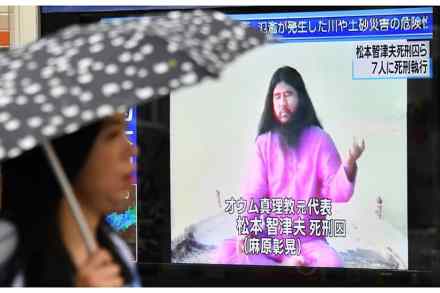
 Tokyo It is now 26 years since the doomsday cult known as Aum Shinrikyu (‘supreme truth’) carried out the worst domestic terrorist attack in Japanese history. Led by their leader Shoko Asahara, Aum released sarin gas on to the Tokyo subway, killing 13 and injuring 6,000. It remains the only time a weapon of mass destruction has been deployed by a private organisation. The details were sickening: one woman had to have her eyes surgically removed because the nerve gas fused her contact lenses on to them. Despite Asahara’s execution in 2018, the death cult has (somehow) survived, changing its name to Aleph and spawning two splinter groups. Aleph is small but appears to be in rude health, with 1,650 members, considerable cash reserves and several properties.

Rethinking MPs’ safety is not a victory for terrorism

From our UK edition

Whenever a killing is investigated as an act of terror, there is always a tendency to think that any changes made are a victory for terrorism. While a few MPs have called for changes to how constituency surgeries are held, many more want them to carry on as they were.  But as I say in the magazine this week, given the circumstances, the rethink of MPs' safety should be a practical exercise, not a philosophical one. In response to IRA bombing campaigns, Margaret Thatcher put a gate across Downing Street. Without it, an IRA mortar would have killed the war cabinet in 1991. That was not a ‘victory’ for the terrorists but a wise security measure. The same applies to the protective cars for US presidents: open-top vehicles were ditched after John F.

Britain’s fatal unwillingness to confront Islamic extremism

From our UK edition

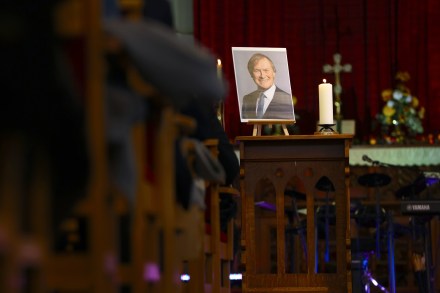
More than any other country in the West, Britain has become practised in the arts of self-deception and subject avoidance. If a politician in France had been butchered by a Muslim of Somali descent, the French media and political class would have gone through a cycle of debate about the ideology that propelled the killer. Government and security sources would have talked about the networks surrounding the suspect. And the whole society would have learned a little more about what might have led to such an outrage. In Britain the situation is otherwise. David Amess was stabbed to death in a church while holding a surgery for his constituents. The man apprehended for his killing is a 25-year-old of Somali descent named Ali Harbi Ali.

Free speech didn’t kill David Amess

From our UK edition

Every decent person was horrified by the senseless slaying of David Amess. And everyone will want to know what can be done to prevent similar atrocities from occurring in the future. But I fear that in the haze of anger and concern that has descended on the country following Amess’s death, we are coming to some questionable conclusions about the causes of such violence, and coming up with some iffy ideas for how to ensure that such a horrific attack on a public servant never happens again. Right now, the finger of blame is primarily pointed at the shouty, divisive nature of political discourse in the 21st century. The horror visited upon Amess is what happens, apparently, when political rhetoric is so heated and public life so polarised.

Is this the beginning of the end of the Biden administration?

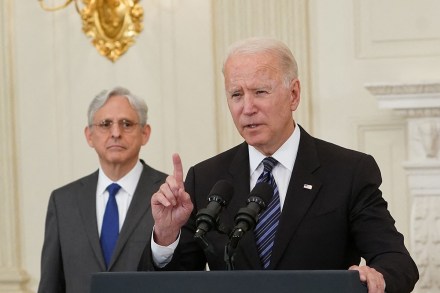
When future historians congregate to conduct their postmortem of the short-lived Biden administration, what date will they pick to mark the crisis that signaled the beginning of the end? I’d like to offer October 4, 2021 for consideration. In the weeks before, it is true, Biden’s approval rating had been in free fall. (Fun pastime if you’re bored: enter ‘Biden’ and ‘free fall’ into your favorite search engine). There was the world historical disaster of our evacuation of Afghanistan, the nearest parallel to which was not America’s ignominious departure from Saigon in 1975 but William Elphinstone’s disastrous evacuation from Kabul in 1842. There was the unfolding crisis at our southern border.

administration

The Bataclan trial is forcing France to confront some difficult questions

From our UK edition

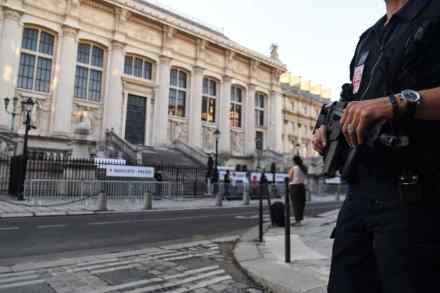
It's a stroke of good fortune for France that Salah Abdeslam is a coward. Had he not been he would have died with the other nine members of the Islamist terror cell (one of whom was his brother) when they attacked Paris on the evening of 13 November 2015. Instead of detonating his suicide vest, Abdeslam dumped it in a dustbin and then called a friend in Belgium and asked to be collected. He spent the next four months hiding in a suburb of Brussels before police tracked him down. It's rare for a potential suicide bomber to be taken alive. In most cases all we have to judge them by is a theatrical video message filmed shortly before their death. The capture of Abdeslam therefore has been a boon. The trial is now in its third week and is expected to last until May.

The view from the Paris bus — an appreciation of everyday life

From our UK edition

Many would say the commute was one thing they didn’t miss in lockdown. But when Lauren Elkin was ‘yanked out of the public sphere and resituated, inescapably, in the private’, she felt nostalgic for the bus’s incidental intimacy. The Franco-American writer and translator revisited notes made on her iPhone between September 2014 and November 2015, after she pledged to ‘observe the world through the screen of my phone, rather than to use my phone to distract myself from the world’. The diary entries record biweekly journeys between her home in Paris’s fifth arrondissement and the university where she taught in the seventh. These private jottings take shape as No.

The West’s Islamist capitulation

From our UK edition

On Monday, Tony Blair addressed a military think tank in London and stated that the West should continue to intervene in countries under threat from Islamist extremism. According to the former PM, who led Britain as it joined the American invasions of Iraq and Afghanistan, an isolationist policy would serve no purpose because:  Islamism, both the ideology and the violence, is a first-order security threat and, unchecked, it will come to us even if centred far from us... Its defeat will come ultimately through confronting both the violence and the ideology, by a combination of hard and soft power. His declaration was along the lines of the one he made in October 2015 at the 9/11 Memorial Museum in New York City.

Kabul airport rocked by Isis bomb attacks

From our UK edition

At least 60 people are feared dead from two explosions near Kabul Airport, in what appears to be a sophisticated bombing campaign and suicide attack carried out by Islamic State. Two explosions took place around Abbey Gate near Kabul airport – where US and UK forces have been stationed – with the second blast near or at the Baron Hotel. Twelve US servicemen were killed in the attack. Videos being shared online show piles of bodies on the streets of Kabul – it is likely that casualty figures will rise.  In the past week, thousands of Afghans have been gathering at the airport every day in a desperate attempt to flee the country.

9/11

After Afghanistan

The 20th anniversary of 9/11 will come in a matter of days. It will be marked by the victory of the Taliban in Kabul and the humiliation of America. The war in Afghanistan was one of the largest-ever undertakings of any major country, in any era. Adjusted for inflation, the Apollo Moon landing program cost the United States close to $300 billion. The Manhattan Project cost $30 billion. The Interstate Highway System, about $500 billion. Those three mammoth projects are dwarfed by the cost of 20 years fighting in Afghanistan, which will well exceed a trillion dollars when all is said and done. The amount spent on Afghan nation-building surpassed the cost of the Marshall Plan in 2014 and kept rising inexorably for seven years more.