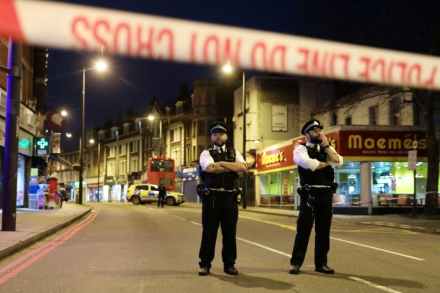
Terrorism

Northern Ireland is still plagued by terrorism

From our UK edition

It’s slow business for global terrorists these days with all the targets banged up under Covid house arrest. But there’s one place in the United Kingdom where it has been pretty much business as usual for violent extremism. Northern Ireland’s police service has just released its security assessment for 2020. This contains some startling information for a place with roughly the same population as Hampshire. Last year there were 39 shooting incidents and two security related deaths, the same number as in 2019. The number of bombings – which include viable devices defused by the army – actually rose year on year to 17, with 8 happening in Belfast. Imagine this happening in Southampton.

The problem with deradicalisation

From our UK edition

Is it possible to 'deradicalise' terrorists? Jonathan Hall QC, the government's terror watchdog, doesn’t think so. He may have a point, but it’s complicated. One of the institutional problems we have is a sort of misplaced arrogance based, in part, on the historic experience of counter-insurgency against violent Irish republicans. Until quite recently, the Ministry of Justice press office referred to our prison deradicalisation processes as ‘world-class.’ Hall himself only recently began looking at our distinctly Heath-Robinson terrorist risk management ‘system’ after London Bridge killer Usman Khan ran rings around it.

Are we any closer to stopping the next Usman Khan?

From our UK edition

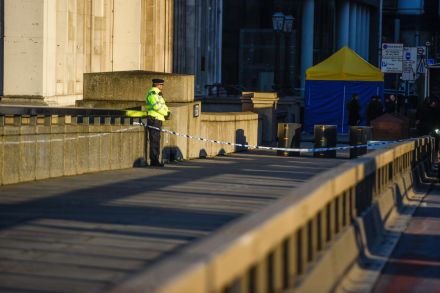
This weekend is the first anniversary of the London Bridge attack. Usman Khan murdered two young people at an event he was invited to, run by the ‘Learning Together’ scheme, which is part of the University of Cambridge. The conference was designed to celebrate the achievements of people like Khan who had joined the course while serving in high-security HMP Whitemoor. Saskia Jones and Jack Merritt were stabbed to death by the dedicated Islamist, supposedly on community supervision nearly a year after being released from prison for terrorism crimes. Twelve months later, are we any closer to understanding that fatal convergence of perpetrator and victims?

Is The Undoing properly great or just a run-of-mill thriller with a brilliant casting director?

From our UK edition

There must be some people somewhere who vaguely know their own spouses — but if so, they don’t tend to appear in domestic-based thrillers. Last week when Sky Atlantic’s The Undoing began, Jonathan and Grace Fraser (Hugh Grant and Nicole Kidman) seemed to have the happiest of middle-aged marriages. They still laughed at each other’s jokes. They still kept each other fully informed about the kind of day they’d had at work: he as a kindly child oncologist, she as an unfailingly wise therapist. Not only did they still have sex, but when they did, it wasn’t always in bed. True, they weren’t wholly without their problems. Their loving son Henry, for example, sometimes didn’t clean up after making smoothies.

The mix of slapstick and sermonising is certainly original: In Bad Taste reviewed

From our UK edition

In Bad Taste is a slapstick comedy about five female terrorists who murder the governor of the Bank of England. They chop him to pieces, cook him in a casserole and devour the lot. Their plan is to ‘eat the rich’, literally, and to trigger a worldwide revolution. After this grimly hilarious opening the script takes a sharp U-turn when one of the women makes a speech denouncing misogynists. The others agree to drop the revolt against the wealthy and to hunt down nasty men instead. Each woman suggests a candidate for execution: a male colleague who works too sluggishly, a father-in-law who makes judgmental comments, a drunkard who gropes barmaids. The killing begins. Nine victims are axed to death and their bodies cannibalised. The police launch a manhunt.

Will the Beirut blast change Britain’s foreign policy?

From our UK edition

What should the British government do to help Lebanon recover from the Beirut explosion? Ministers say they are working to provide the Lebanese government with technical support and financial assistance, but they are coming under pressure from senior Conservative colleagues to use the disaster as a turning point in the way Britain approaches the Middle East generally. Tobias Ellwood, chair of the Defence Select Committee, and Tom Tugendhat, chair of the Foreign Affairs Committee, have both called for Britain to take a more active role in the region, or risk seeing hostile states such as Iran and terrorist groups filling a 'vacuum'. These two MPs have been instrumental in pushing Boris Johnson to toughen his approach to China in recent months.

The Begum Appeal is a fundamental error of logic

From our UK edition

There has been an emotional response to the case of Shamima Begum, quite rightly. It is not clear to me that lawyers are better equipped than politicians to navigate such emotions, but sadly we live in an age which is increasingly demanding legal answers to political questions. What is perhaps surprising is that, with uncharacteristic vigour, our Court of Appeal have jumped headfirst into the maelstrom. The Special Immigration Appeals Commission (SIAC) – created to consider cases like these – found against Ms Begum in February, which seemed largely uncontroversial at the time.

After the virus, the tedium

A few days ago, the French novelist Michel Houellebecq rubbished the idea that the world would change after the pandemic. He wrote: ‘We will not wake up after the lockdown in a new world. It will be the same, just a bit worse.’ The virus, according to him, was ‘normal’, even ‘banal’. As always with Houellebecq, his brand of pessimistic candor made a change from the rolling stream of predictions issued by pundits and academics, who’ve glimpsed in this virus the dawn of everything from renewed hope for a Green New Deal, to the onset of neo-feudalism.Still, it is worth thinking about what a ‘bit’ worse means.

tedium

The bloody decade: think America’s divided now? Try the 1970s

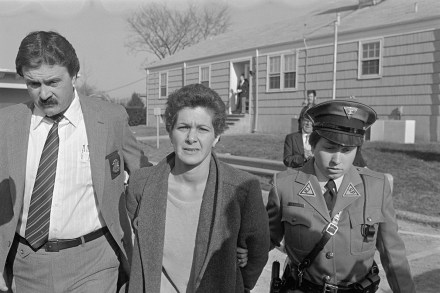
Late on the afternoon of November 29, 1984, Susan Rosenberg and Timothy Blunk were loading boxes into a blue Oldsmobile Cutlass sedan and a U-Haul trailer parked at a self-storage facility in Cherry Hill, New Jersey, not far from Philadelphia. The boxes were heavy, so despite the autumn chill and the wind, Rosenberg and Blunk were working up a sweat. Both wore glasses as part of their disguises. Blunk had an ill-fitting wig that he barely managed to keep on his head. An FBI wanted poster called Rosenberg armed and extremely dangerous, and the Bureau wasn’t wrong. On the front seat of the Olds, purses held semiautomatic pistols — an Interarms Walther PPK .38 caliber and a Browning Hi-Power 9mm. They were both fully loaded.

susan rosenberg

How will the government try and deal with the terrorist threat?

From our UK edition

Next week, the government will introduce emergency legislation to stop anyone convicted of terrorist offences from being automatically released half-way through their sentence. But, as Whitehall sources acknowledge, this only tackles one vulnerability in the system. So, as I write in The Sun today, a broader plan to deal with the jihadi threat is being drawn up. One idea under discussion is for a sex offenders’ register for terrorists. This would enable the state to place restrictions on terrorists long after they have completed any prison sentence. These restrictions could include who they are allowed to meet with, where they are allowed to travel to both at home and abroad and a requirement to show the police their phones, laptops and internet and social media use.

Boris’s terrorism crackdown is a mistake

From our UK edition

Boris Johnson has responded to the Streatham attack by vowing to crackdown on convicted terrorists, introducing retrospective legislation to end the automatic early release of such prisoners at the halfway stage. But this is the wrong approach. Instead, the fault lies within a dysfunctional and ineffective probation service that attaches insufficient weight to protecting the public. And the probation service is under the Government’s direct control. Justice secretary Robert Buckland says that the proposed law will not increase the ‘penalty’ element of the sentence, only the administration. But if that’s true, there is no need for a change in the law. He can alter the administration immediately.

How the crackdown on terrorists can avoid the Human Rights Act trap

From our UK edition

Some human rights lawyers have warned that emergency legislation to prevent automatic early release of convicted terrorists – confirmed by Boris Johnson at Prime Minister’s Questions today – may be unlawful and will be challenged in the courts. But the warning should not deter Parliament from enacting this legislation. It is for Parliament, not the courts, to decide how best to protect the public and how to treat convicted terrorists fairly. In the wake of Sunday’s terrorist attack in Streatham, attention has rightly turned to the scandal of automatic early release of highly dangerous terrorists. Sudesh Amman, the Streatham attacker, had been released from custody in late January, having served half his sentence of three years and four months.

How the Streatham terrorist exploited a loophole in our knife laws

From our UK edition

When I worked at Lidl, there were a few products that we took extra care with. Some of these were high-value goods at risk of being stolen (like the £100 laptop we once sold, causing biblical scenes of chaos in the middle aisle). Others were to comply with laws on selling dangerous goods. Knives were always locked up behind the till. In Lidl's Tooting branch, in a relatively rough area near Streatham, the knives were all taken out of their boxes and locked up in the managers’ office. To purchase, you’d have to show ID and wait at a till as a manager brought back the knife. So how was it possible that Sudesh Amman, barely out of his teenage years, was able to swipe a knife from a local high street shop?

Emergency terror laws set to end early prisoner release

From our UK edition

The government has this afternoon unveiled its response to the Streatham terrorist incident on Sunday – which saw a man recently released for terror offences stab civilians in south London. Speaking in the Chamber, Justice Secretary Robert Buckland said that the government will table emergency legislation to end automatic early release for convicted terrorists. Under the plans, terror offenders will only be considered for release if they have served two-thirds of their sentence rather than half and then it will be subject to the approval of the parole board. Crucially, this will retrospectively end automatic early release for 220 convicted terrorists who are currently behind bars.

The Streatham terror attack reveals a failure within our prisons

From our UK edition

The Streatham attack, again, highlights the problem of what to do with those convicted of terror offences. Longer sentences are, obviously, part of the answer. One of the purposes of prison is to keep those who are a danger to the public off the streets. Letting those convicted of terror offences out early doesn’t fit with that. It is absurd that someone can plead guilty in November 2018 to possessing and disseminating jihadi materials and then be released in January 2020. But the other issue is what is going on inside our prisons. It is all too clear that Suddesh Amman did not come out of prison deradicalised. Neither did the London Bridge attacker.

Streatham terror incident: what we know

From our UK edition

A terrorist recently released from prison has been shot dead by undercover police in Streatham, south London, after stealing a kitchen knife from a shop and stabbing three people, one of whom one is in a critical condition. Sudesh Amman, jailed for distributing terrorist materials two years ago, was wearing a fake suicide vest when he was shot by the undercover officers who had been following him. There are reports that Amman, 20, kept a notebook where he wrote of his ambition to “die as a shuhada [martyr]”: he seems to have struck days after his early released. He had served half of his three-year sentence. https://twitter.com/metpoliceuk/status/1223987448742666241?

The trouble with designating ‘incels’ a terror threat

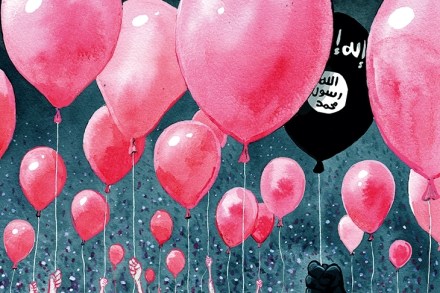
The Texas Department of Public Safety has designated incels, or ‘involuntary celibates’, as an ‘emerging domestic terror threat’. What began online with what the Department’s report calls a ‘a personal grievance due to perceived rejection by women’ may already, the report claims, have morphed into ‘allegiance to, and attempts to further, an Incel Rebellion’.Incels have quickly become one of the few groups whose mockery and derision is deemed universally acceptable. The term has become a go-to insult for men who are merely undesirable or unpopular. The idea that some men are misogynists, embittered because they can’t get women’s attention, is now used to explain all manner of male behavior.

Six weeks is too long for an election campaign

From our UK edition

The number of parties represented in national election debate multiplies. There are now seven crowding on to television podiums and local hustings. Yet this impression of diversity is, like the current public policy use of that word, misleading. Five of the parties — Labour, Liberal Democrats, Greens, SNP and Plaid Cymru — are essentially the same. They see achieving Remain, growing the state and destroying the Tories as the most important causes. The Brexit party is merely an epiphenomenon of Tory Brexit weakness and is therefore passing into history. So it is the Conservatives vs the rest, and ‘the rest’ includes all the broadcast media.

Portrait of the week: Terror in London, Trump in London and a resignation in Malta

From our UK edition

Home Usman Khan, aged 28, out of prison on licence after serving eight years of a 16-year sentence for preparing acts of terrorism, stabbed to death Jack Merritt, aged 25, and Saskia Jones, aged 23, at Fishmongers’ Hall and wounded three others before being stopped on London Bridge by members of the public and shot dead by police. A Polish kitchen worker called Lukasz Koczocik tried to disarm him with a pole; another man grabbed a narwhal tusk from the wall at the hall where Khan had been attending a conference on rehabilitation while a third let off a fire extinguisher to distract him from further bloodshed. One man who pursued the killer was said to be a murderer present at the conference.

Who are we kidding – of course terror is a political issue

From our UK edition

It was pleasing to see that old clip of Gerry Adams endorsing Jeremy Corbyn re-emerge, just before the acts of carnage were carried out at London Bridge. It reminded us all, should we have needed to be reminded, of Jeremy’s genial relationship with terrorists who murder British citizens (or indeed Israeli citizens). The question, I suppose, is: will it sway any opinions? You would doubt it, such is the kind of deranged certitude in which the his supporters bask, where everything bad about Mr Corbyn has actually been made up by Boris Johnson, or people like me. Even as the first reports of the atrocity were coming in, Corbyn’s Momentum acolytes were all over social media suggesting that it was an establishment plot to scupper Labour’s chances at the election.