What high-school history books teach about 9/11
Have you ever wondered what American schools teach about 9/11? Here is a partial answer. I’ve reviewed five of the most popular American history textbooks for high school.
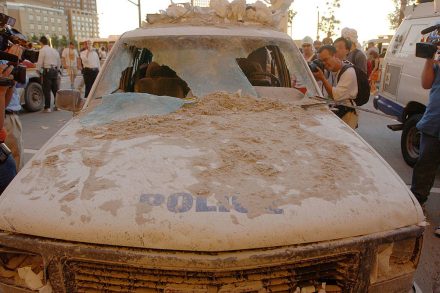
Have you ever wondered what American schools teach about 9/11? Here is a partial answer. I’ve reviewed five of the most popular American history textbooks for high school.
From our UK edition
Many would say the commute was one thing they didn’t miss in lockdown. But when Lauren Elkin was ‘yanked out of the public sphere and resituated, inescapably, in the private’, she felt nostalgic for the bus’s incidental intimacy. The Franco-American writer and translator revisited notes made on her iPhone between September 2014 and November 2015, after she pledged to ‘observe the world through the screen of my phone, rather than to use my phone to distract myself from the world’. The diary entries record biweekly journeys between her home in Paris’s fifth arrondissement and the university where she taught in the seventh. These private jottings take shape as No.
From our UK edition
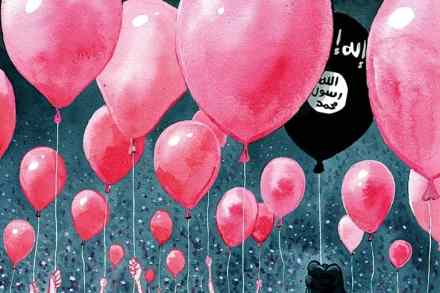
On Monday, Tony Blair addressed a military think tank in London and stated that the West should continue to intervene in countries under threat from Islamist extremism. According to the former PM, who led Britain as it joined the American invasions of Iraq and Afghanistan, an isolationist policy would serve no purpose because: Islamism, both the ideology and the violence, is a first-order security threat and, unchecked, it will come to us even if centred far from us... Its defeat will come ultimately through confronting both the violence and the ideology, by a combination of hard and soft power. His declaration was along the lines of the one he made in October 2015 at the 9/11 Memorial Museum in New York City.
From our UK edition
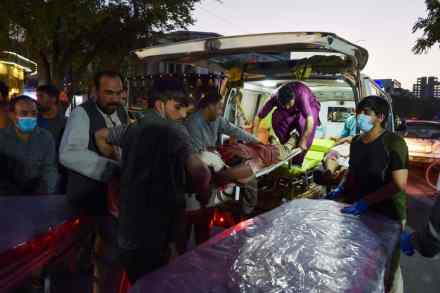
At least 60 people are feared dead from two explosions near Kabul Airport, in what appears to be a sophisticated bombing campaign and suicide attack carried out by Islamic State. Two explosions took place around Abbey Gate near Kabul airport – where US and UK forces have been stationed – with the second blast near or at the Baron Hotel. Twelve US servicemen were killed in the attack. Videos being shared online show piles of bodies on the streets of Kabul – it is likely that casualty figures will rise. In the past week, thousands of Afghans have been gathering at the airport every day in a desperate attempt to flee the country.
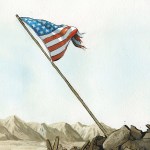
The 20th anniversary of 9/11 will come in a matter of days. It will be marked by the victory of the Taliban in Kabul and the humiliation of America. The war in Afghanistan was one of the largest-ever undertakings of any major country, in any era. Adjusted for inflation, the Apollo Moon landing program cost the United States close to $300 billion. The Manhattan Project cost $30 billion. The Interstate Highway System, about $500 billion. Those three mammoth projects are dwarfed by the cost of 20 years fighting in Afghanistan, which will well exceed a trillion dollars when all is said and done. The amount spent on Afghan nation-building surpassed the cost of the Marshall Plan in 2014 and kept rising inexorably for seven years more.
From our UK edition
The security services in Britain have been concerned about the rise of the Taliban for many months. In government briefings they have been telling ministers that it was almost inevitable the Taliban would gain some role in the government of Afghanistan once Western forces withdrew – it was just a question of how much. It is easy to ignore, after the sudden collapse of Afghan forces, the fact that the national army had been losing ground to the Taliban over several years and bloody attacks have remained a constant in the centre of major cities in the country. The Taliban killed 16 people and injured 119 in a suicide bomb attack on a residential compound in the capital just days before the leadership was due to meet President Trump at Camp David in September 2019.
From our UK edition
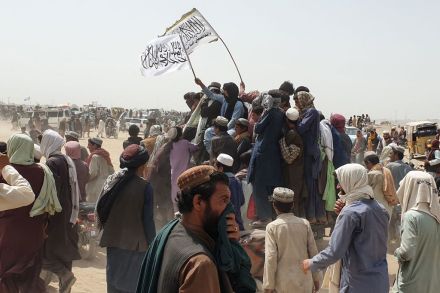
The Taliban retaking Kabul has been inevitable for almost the entirety of the 20 year war, and certainly since Barack Obama announced the US troop withdrawal from Afghanistan in 2011. And yet the manner in which Kabul has fallen, with images of despair and the Taliban’s unopposed march to the presidential palace, heralds a global tectonic shift. For Islamist militia, regardless of their orientation, it signifies jihad’s biggest win of the decade. Jihadist outfits from Africa to the Middle East and South Asia, including groups that have been facing off against the Taliban in Afghanistan, will bask in the ‘triumph of Islam’.
From our UK edition
Claire Booth was put in the impossible position of having to decide whether to care for her sister or her daughter after the Manchester Arena attack. She understandably chose to look after her 12-year-old daughter, Hollie, but the decision still haunts her. More than anything, she wishes that emergency help had arrived quickly, in whatever form, and that the three of them had been taken to hospital for proper care. Kelly Brewster, her bubbly, music-loving sister did not survive the bombing. The speed of the emergency response may not have made a difference to Kelly but it may be that two others among the 22 victims could have been saved – eight-year-old Saffie-Rose Roussos and 28-year-old John Atkinson.

From our UK edition
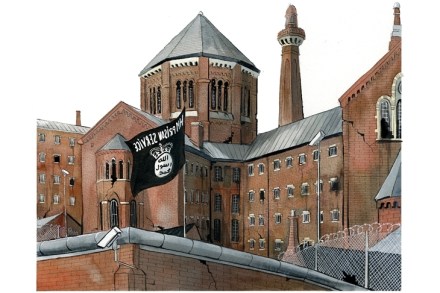
Watching last night’s ITV report from inside two of Britain’s highest security jails was an odd experience for me. The focus on terrorist offenders at HMP Frankland gave us a unique (although much pixelated) glimpse inside the separation units I urged the government to create back in 2016. I’ve had virtually no formal contact with HM Prison Service since. I sense this is in no small part due to the embarrassment I caused my former senior colleagues by revealing their corporate approach to counter terror –mired at that time in a culture of complacency, arrogance, denial and ineptitude. https://www.youtube.com/watch?
From our UK edition
To its huge credit, ITV has managed to find perhaps the last two television celebrities who’ve never before been filmed travelling around Britain while exchanging light banter and using the word ‘iconic’ a lot. In Craig and Bruno’s Great British Road Trips, the Strictly judges are driving a Union flag-bedecked Mini through such telegenic staples of heart-warming TV dramas as the Lake District, the Yorkshire Dales and the Scottish Highlands. For the opening episode, the choice fell on the Cornish coast, which certainly helped the programme achieve its primary aim of looking lovely. But this, as it transpired, was just as well — because for a fair amount of the time, not much else happened.

From our UK edition
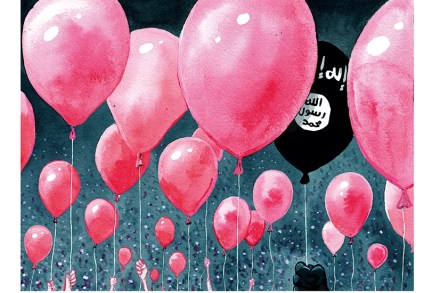
The official review into the Manchester Arena bombing was published this week. Four years after 22 mainly young people were killed at a pop concert, the review by Sir John Saunders reveals a catalogue of failings, as such reviews always do. Yet one failing stood out in particular. On the night in question the bomber, Salman Abedi, had been standing around the exits to the stadium for over an hour and a quarter. You would have thought that in that time, the sweaty young man with a rucksack might have attracted some attention. And you would be right. A number of people, including security guards hired to protect the venue, expressed alarm about the man struggling to walk because of the weight of his rucksack, which was packed with a 32kg bomb.
From our UK edition
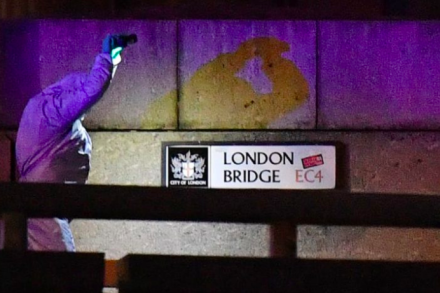
The inquest into the murder of Saskia Jones and Jack Merritt by Islamist terrorist Usman Khan has revealed a collision of arrogance, hubris, naïveté and incompetence from which the two graduates arguably paid with their lives. Saskia and Jack were attached to a prison education programme supported by Cambridge University called ‘Learning Together’. The scheme, which appears not to have been formally evaluated, inspected or risk assessed by its creators – and had no clear rehabilitation purpose – placed criminology students from the university alongside prisoners on a study programme. In late 2017, at High Security HMP Whitemoor, Khan – an active threat to prison staff – was allowed to join this group.
From our UK edition
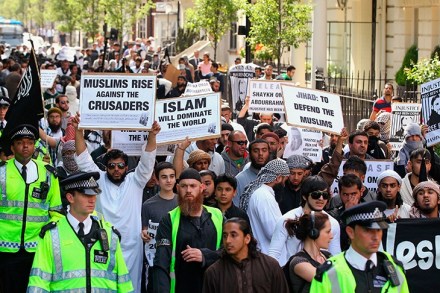
A few months ago, William Shawcross was asked by the government to lead an independent review into its anti-terrorism strategy, Prevent, and to ‘consider the UK’s strategy for protecting people vulnerable to being drawn into terrorism’. Ever since his appointment was announced, Shawcross has been attacked by an array of activists who want to minimise any scrutiny of Islamist organisations. The campaign against him has been vicious but it has also been deeply instructive. The opposition has been so intense that it has led some to believe that the UK Muslim ‘community’ is outraged by the independent review. There is a significant difference, however, between Muslims and Islamists. Shawcross is an exceptionally talented man whom I know well.
From our UK edition
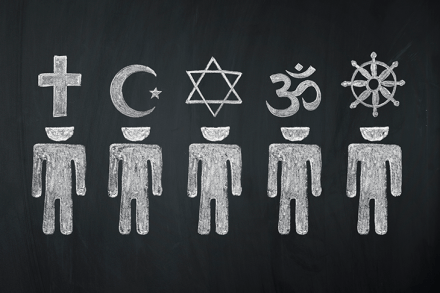
There should be more ‘religious literacy’. So says the All-Party Parliamentary Group on Religion in the Media, chaired by Yasmin Qureshi MP. Amen to that. Religious ignorance is now virtually universal, so errors appear in news stories every day. But the APPG report seems less concerned with facts, more with attitudes. It wants news to concentrate more on ‘lived experience’, less on doctrine and ritual; it asserts that ‘religious literacy also incorporates respect for religion and belief as a valid source of guidance and knowledge to the majority of the world’s inhabitants’.
From our UK edition
British-Mexican national Claudia Uruchurtu Cruz disappeared on the night of Friday 26 March in the town of Nochixtlan, Oaxaca State, Mexico. Claudia had been seen attending a rally protesting the beating of a local labourer, allegedly by security elements linked to the local municipal president. Unconfirmed witness statements claim she was grabbed and pushed into a red car. Claudia never arrived home and her family and friends have not heard from her since. What is the right response for the British government? The most debated issue is whether to pay ransoms. Some governments refuse, others pay, or at least turn a blind eye to families that do. In Mali, where British troops are now operating, France has paid millions of dollars to Al-Qaeda in the Islamic Maghreb.
From our UK edition
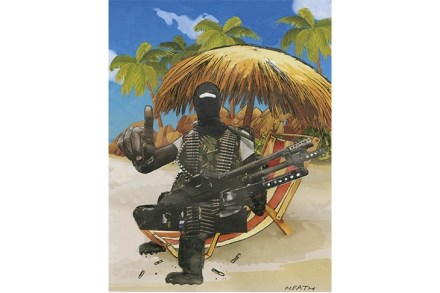
A political storm has swept France in recent days. It follows the publication of an open letter by twenty retired generals to Emmanuel Macron. In their declaration, originally published on an obscure website and then reproduced in conservative magazine, Valeurs Actuelles, the officers warned that Islamist terrorism was pushing France towards civil war. The reaction among the political class was predictable. Marine Le Pen invited the signatories (1,000 in total) to join her National Rally party, while the government condemned the letter as 'irresponsible'. It promised action if any serving soldiers or gendarmes have put their name to to it. Some on the left want a criminal investigation launched, accusing those behind the letter of 'provocation and disobedience'.

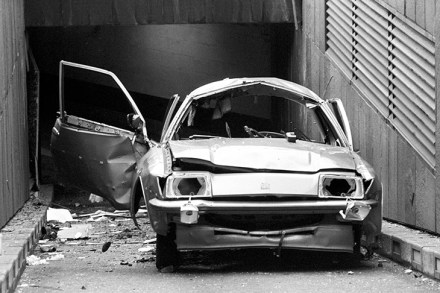
Not long ago, a group of psychologists analysing data about national happiness discovered that the British were at their unhappiest in 1978. Reading Anthony Quinn’s enjoyable novel set in that year and early 1979, it’s not difficult to see why. In case you’ve forgotten, strikes were spreading like wildfire. The National Front were reaching a peak of popularity. Most alarming of all, the Provisional IRA were expanding their bomb attacks on mainland Britain. There were compensations. Kate Bush’s whiny lament ‘Wuthering Heights’ was released in 1978, and there was a new Pinter at the National Theatre (Betrayal). Punk rock was going commercial.
From our UK edition
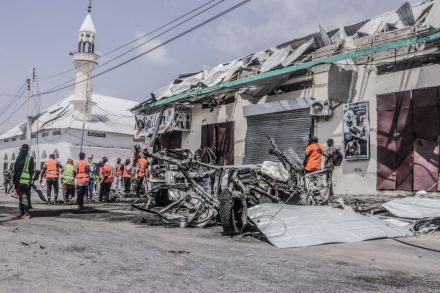
Eight law enforcement officials, including three policemen and five members of a local anti-jihadist force, were killed in a jihadist attack in Burkina Faso on Tuesday. Jihadist raids on two military bases in Somalia, using suicide car bombers, killed 23 on Saturday. On Friday, South Africa decided to deploy its troops in bordering Mozambique, days after Islamist militants took over the town of Palma, killing dozens of locals and forcing thousands to flee. The past week is only a sample of the jihadist peril currently engulfing Africa. These terror attacks reaffirm the growing strength of the world’s deadliest jihadist groups, including al-Shabaab, Isis, al-Qaeda, Boko Haram and their affiliates.
From our UK edition
As coronavirus swept the globe a year ago, Isis began issuing pronouncements. ‘God, by his will, sent a punishment to the tyrants of this time and their followers,’ said one such; ‘we are pleased about this punishment from God for you.’ With the world on lockdown, Isis followers were urged not to sit around at home but to ‘raid the places’ of the enemies of God. ‘Don’t let a single day pass without making their lives awful.’ The virus might have begun as God’s punishment to China for persecuting the Uighurs but, as one Isis video put it, the pandemic was a chance to attack Americans, Europeans, Australians and Canadians. For a moment, the jihadis toyed with the idea of sending infected volunteers to sicken the enemy.

From our UK edition
Arrests for terrorist-related activity give a worrying insight into the rate at which young people are being targeted and radicalised. All age groups witnessed a fall in terror-related arrests for the year ending September 2020, except for one: those under eighteen, which doubled to account for eight (and subsequently 10) per cent of all such arrests. This is the highest proportion ever seen in any annual period to date. We also know that, all too often, the friends and relatives of those who are in danger of becoming radicalised are failing to act on their concerns. Referrals to Prevent, which aims to 'stop people becoming terrorists or supporting terrorism', saw an overall increase of 10 per cent in the year to March 2020.
