Terrorism

Where next for the US and Pakistan?

From our UK edition

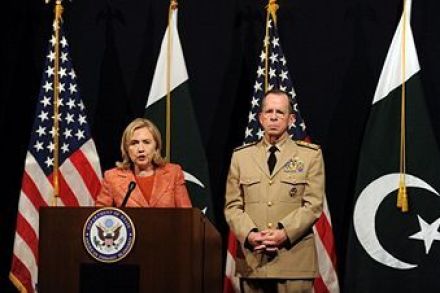
The US-Pakistani relationship is fast deteriorating. In May, I argued that unless President Asif Ali Zardari took decisive action against the ISI, the country's military would continue to undermine relations with the West. Last week, the New York Times reached the same conclusion, calling for the removal of Lieutenant-General Ahmed Shuja Pasha. As President Zardari did nothing — probably fearing a military coup if he did act — the situation has merely been aggravated. What's more, Secretary of State Hillary Clinton has warned that the US could suspend military aid to Pakistan unless it took unspecified steps to help find and fight terrorists. And the White House has since confirmed that it is doing just that.

Britain’s ill-defined counter-terror strategy exposed by America’s clarity

From our UK edition

In a post over at the Staggers, defence and security expert Matt Cavanagh has compared and contrasted Barack Obama’s review of US counter-terrorism policy and the coalition’s recent update of the Prevent strategy, together with David Cameron’s professed ‘muscular liberalism’. Here are his insights: ‘The new (American) strategy contains a fairly detailed discussion of the Arab Spring, arguing for applying "targeted force on Al Qaida at a time when its ideology is under extreme pressure" from events in North Africa and the Middle East.

No paramilitary link to last night’s riots in East Belfast

From our UK edition

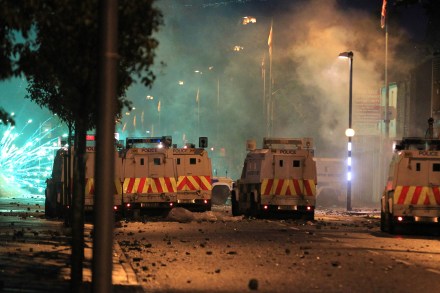
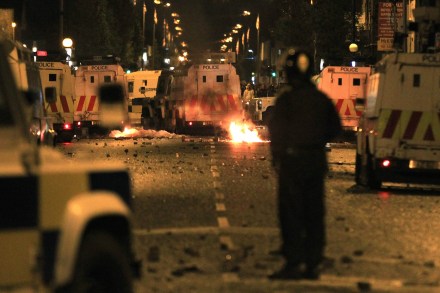
The PSNI is clear that last night’s riots on Castlereagh Street, East Belfast, were not linked to sectarian paramilitary activity. Rather, this was a ‘spontaneous demonstration’ against the police. As I wrote last week, gangs on both sides of the Ulster divide have been targeting the police in recent months; and they rely on exploiting current economic hardship and ancient sectarian divisions to further their criminal ends. The continued violence is a test of Stormont’s ability to govern without the close supervision from Westminster.

What will emerge from the ashes in Afghanistan?

From our UK edition

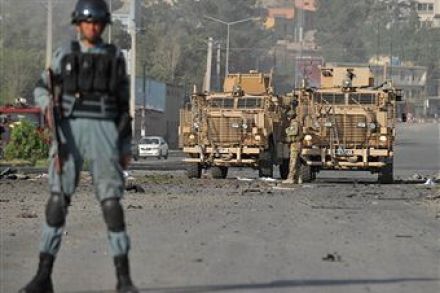
On Monday, James drew attention to Dexter Filkins' stark assessment of the situation in Afghanstan and of the strength of the Taliban. Today, the attack on a hotel in Kabul gives that assessment a fresh and tragic resonance. What we seem to be witnessing is the Taliban, or at least elements of them, flaunting their murderous intent as the West prepares to leave the country. From the assassination of General Daud to this Mumbai-style raid, their methods are becoming more ambitious, more headline-grabbing. Around ten innocents are said to have been killed this time around, along with six to seven of the Islamist militiamen.

Afghanistan: The worries mount as the West prepares to drawdown

From our UK edition

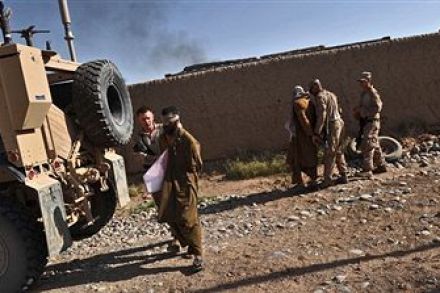
Dexter Filkins is one of the great war correspondents of the post 9/11 world. So it is particularly sobering to read his assessment of the Afghan situation as the West prepares to drawdown. Filkins reports that: "According to American officers, the level of violence in Afghanistan this year is fifteen per cent higher than it was at this time last year. The insurgents, far from being degraded, appear to be as resilient as ever. And their sanctuaries in Pakistan, where the Taliban leadership resides mostly unmolested, remain more or less intact." Compounding this problem is that the levels of corruption in the Afghan government are continuing to alienate the population.

Looking behind the negative aid polls

From our UK edition

There are, as the old adage goes, "lies, damned lies and statistics". I'm beginning to think the same about polls. Take the polls that Britons are not as keen on overseas aid as the Prime Minister. Some of the headlines attached to them are prone to exaggeration. For example, on the back of the poll, the Mail claimed that "one in four people say they will no longer give money to charities such as Oxfam and Save the Children." People may say that but they don't seem to mean it. For it turns out that the British public has actually increased its giving to Save the Children by nearly 10 per cent in the last year. And earlier this year, the public gave over £100 million to the Comic Relief Red Nose Day appeal – the largest sum raised to date.

Why Belfast is ablaze

From our UK edition

I live three miles away from where the rioting was happening in East Belfast last night, and heard the helicopters whirring overhead. It was the kind of sound that anyone living in the city hoped never to hear again. As a child, I'd lie in bed and hear bombs and sirens and helicopters — and we had all hoped that dark chapter had been closed. A tipping point of violence has now been reached. A press photographer has been shot, another given a fractured skull after a second night of riots. And in the aftermath, the blame game cacophony begins: Who started it? It was them. No it was them … ad infinitum on BBC Radio Ulster's Stephen Nolan Show. While the most important question in all of this is not addressed. Why is this happening? Why now?

Obama draws down his forces

From our UK edition

It is as Matt Cavanagh predicted in his article for Coffee House, a few weeks ago. Barack Obama has decided to pull 10,000 of the 30,000 American "surge" troops out of Afghanistan this year. The remaining 20,000 will be outtathere by next summer. "Drawdown," is the word that the US President used in his address last night, and it is happening at quite a pace. He presented this approach as a victory, suggesting that America has already achieved most of its goals in the country, and that "the tide of war is receding". But there were one or two revealing notes of concession. "We will not try to make Afghanistan a perfect place," quoth Obama. And he nodded towards the fiscal cost of the war, as much as its human cost.

Public opinion on international aid isn’t where Cameron thinks it is

From our UK edition

Andrew Mitchell was recently informed that the public is split 50:50 for and against increasing the international aid budget to £12 billion in 2013. A YouGov@Cambridge poll for Politics Home suggests that he should get some better advice. The poll shows that while the public is indeed split fairly evenly on the general principle of aid (41 per cent in favour, 38 per cent against), when it comes to the government's promise to increase the aid budget by a third, those against outnumber those for by more than 2 to 1. The policy is by no means a Cameroon brainchild. In 1970 the United Nations set the target for government aid at 0.7 per cent of GNI; in 2004 the Labour government pledged to meet it by 2013 and in 2006 David Cameron signed the Tories up to that pledge.

Will Pakistan’s politics help al-Qaeda’s new leader?

From our UK edition

Just as any major employer would, al-Qaeda released a statement earlier to confirm the identity of its new boss. "Sheikh Dr Ayman al-Zawahiri, may God guide him," it read, "assumed responsibility as the group's amir." And just in case you were wondering whether the organisation's attitude would change with its leadership, it added: "We ask God for this to be a new era for al-Qaeda under the leadership of Ayman Al-Zawahiri, an era that will purify Muslim land of every tyrant and infidel." Which is to say: new leader, same danger. The appointment of Zawahiri comes as little surprise, even if there has been talk of divide and dissent within al-Qaeda over the succession.

Attention shifts to Yemen

From our UK edition

Since last week’s attack on Yemen’s President Saleh and his subsequent flight, Sana’a has been on the cusp of anarchy. Perhaps as many 400 people were killed in riots last week and the killing continues. Western diplomatic services fear for the safety of their citizens in Yemen. The MoD has been preparing contingencies. Forces and materiel deployed in the Libya are moving east. Two fleet auxiliary ships, equipped with helicopters and landing craft, and 80 Royal Marines have been stationed off the Yemeni coast. Should the 800 or so British nationals in Yemen need to be evacuated, the marines will secure a bridgehead. A further detachment, currently on exercises in Albania, is poised to join the task force.

The need for a strong man to strong-arm the new counter-terror policy

From our UK edition

If the counter-terrorism strategy the government is announcing today is to succeed, it will have to overcome bureaucratic opposition and institutional inertia. As Dean Godson writes in The Times today (£), senior civil servants in the Office of Security and Counter-Terrorism are highly reluctant to accept the government’s new, more muscular approach to this issue and will go back to the old, failed way of doing things if given the chance. If the Prime Minister’s writ is going to run across government on this issue, he is going to need someone working from the centre with Cameron’s explicit backing whose sole role is to supervise the implementation of the policy — the Home Secretary has too much on her plate to expect her to do this task alone.

Preparing for a post-Gaddafi Libya

From our UK edition

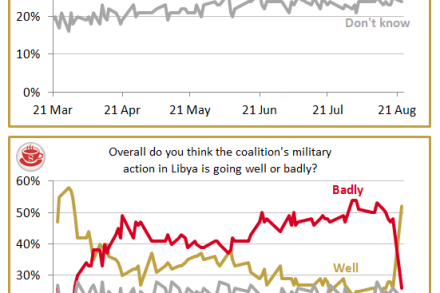
The Libya intervention has been in operation for a few months and the rebels have been making gains, most recently in Yafran. But progress remains slow and perhaps it is time to look again at how the lessons of Bosnia, Iraq and Afghanistan might have a bearing on Libya. The first lesson is simple: assume the worst. If you think that a regime will collapse quickly, plan for it to last a long time. If you expect a peaceful transition, plan for a violent one. And if you hope that unarmed monitors will be enough once hostilities are over, prepare for a well-armed peacekeeping force to be deployed. Optimistic predictions of the post-Saddam Iraq encumbered the planning process and meant the US-led coalition was unprepared for the contingencies that arose.

Counter-terrorism means stopping dealings with extremists

From our UK edition

The coalition’s counter-terrorism strategy will be published tomorrow. This rather delayed review has been the subject of some semi-public wrangling, Cameron and Clegg have given speeches setting out very different visions for it. But one thing to remember is that the test of the review's robustness isn’t just whether it stops government money going to extremists groups. It also has to lead to government, at all levels, stopping dealings with these groups, denying them the oxygen of recognition. Today’s Telegraph notes that 20 groups will lose their funding because the views they espouse are antithetical to British values. This is to be welcomed.

Trouble in Golan

From our UK edition

In a clear move to distract attention from his own problems, Syrian president Bashir Assad has allowed people to march from the Syrian border toward the Israeli-controlled Golan Heights, in the hope it will lead to a violent reaction from the Israelis. It did. Israeli forces opened fire on the people, wounding several. There are reports of at least four people killed and 13 wounded but these have not been verified. There can be no doubt that the incursion is part of a Syrian plan. The protests coincide with the 44th anniversary of the Six-Day War, when Israel captured the Golan from Syria, as well as the West Bank and Gaza Strip. The border area is a military zone and people will have been bussed or waved through Syrian checkpoints 50 kilometres before they reached the border.

So long, Saleh?

From our UK edition

The Middle Eastern merry-go-round takes another turn with the news that President Ali Abdullah Saleh has fled to Saudi Arabia. He has been promising to depart his role, if not his country, for some time now — but the wounds he allegedly sustained after an attack on his compound may have forced the issue. There's always the possibility that he could return to Yemen after his treatment across the border, although it's an unlikely prospect. The Saudis have already gone out of their way by granting this brutal dicatator some degree of clemency, without foisting him back upon his country. And Saleh will already have lost power and influence by accepting their help.

Obama re-affirms the special relationship

From our UK edition

The speech was not a classic but Barack Obama's address to both Houses of Parliament covered the bases today. He started with a winning line, remarking that the previous three speakers in Westminster Hall had been the Pope, the Queen and Nelson Mandela which is either "a very high bar or the beginning of a very funny joke."   As is traditional in these kinds of speeches, Obama paid tribute to the special relationship, lauding it as the embodiment of the values and beliefs of the English-speaking tradition. He went on to say that both the British and the Americans knew that the "longing for human dignity is universal." Indeed, at times Obama sounded remarkably like the last president as he proclaimed his own freedom agenda.

From the archives: The Good Friday Agreement

From our UK edition

On Sunday, it will be thirteen years to the day since the people of Northern Ireland voted in a referendum on the Good Friday Agreement. The result was one of overwhelming support: 71 per cent to 29. Here is Bruce Anderson’s take on the Agreement from his Politics column at the time:   Mr Blair was rough on Mr Ahern (and while Unionists were there), Bruce Anderson, The Spectator, 18 April 1998   Occasionally, one is glad to be wrong. In this column last week, I wrote about the imminent collapse of the Ulster peace process. It seemed then as if everything was unravelling; the gaps between the various sides had been narrowed and narrowed, but still seemed insurmountable.

When Dublin trembled

From our UK edition

On 17 May 1974 — 37 years ago today — I was a 19-year-old student at Trinity College Dublin, celebrating the end of term in the Pavilion Bar near the sports fields. The summer exams were still to come, but we were carefree; the main subject of conversation was whether we could organise a disco party later on. Then, a little after 5.30 p.m., everything changed. First, all about us seemed to shiver, as if there were an earth tremor. Then, just as it occurred to me that Dublin did not generally suffer tectonic stress, there was a deafening bang that seemed to go on for an age. Somebody shouted: ‘It’s a fucking bomb!

An historic moment

From our UK edition

There is something incredibly resonant about the images of the Queen arriving in the Republic of Ireland this afternoon. You have probably heard the facts by now — that she is the first British monarch to do so for 100 years, and the first since Irish independence — but they are no less striking. Against a backdrop of terror threats and of Britain's participation in the country's bailout, Queen Elizabeth II is making some kind of history today. It is also, as Ed West says in a thoughtful post over at the Telegraph, a time for remembrance. He suggests that we remember the 300,000 Irishmen who fought in the Great War — and rightly so.