Terrorism

Prevent strategy still needs political will

From our UK edition

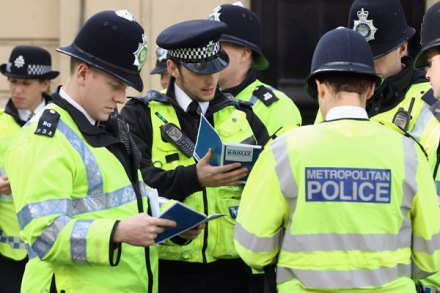
West Midlands Police have just announced seven arrests as part of an investigation into alleged terrorist activity. This follows the detention of six individuals on similar charges across London yesterday. Together, they reveal just how active the Islamist network in the UK remains and the potency of its ongoing threat. One of those arrested in London yesterday, a convert, Richard Dart (also known as Salahuddin al-Britani) first came to prominence last year when his step-brother featured him in a documentary called ‘My brother the Islamist’. It offered a rare observational view on the inability of one family to comprehend the militancy and millenarianism of their son.

The struggle to deal with foreign terror suspects

From our UK edition

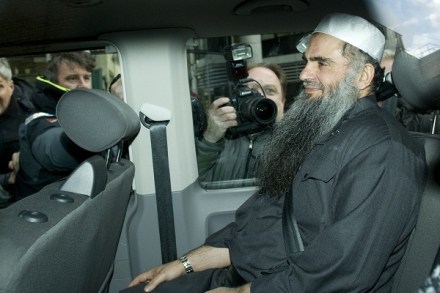
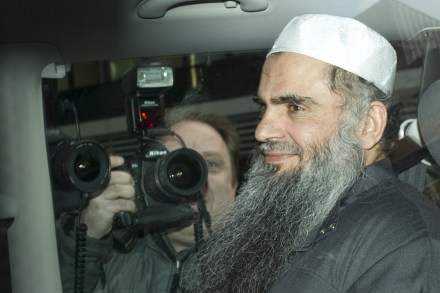
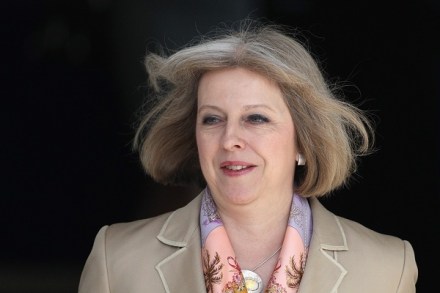
Abu Qatada, the Islamist cleric once branded ‘Osama bin Laden’s ambassador to Europe’, has dominated headlines in recent months as the government struggles to return him to Jordan. Theresa May wanted to take a hard line against foreign clerics operating from Britain but has found her hands tied by the European Court of Human Rights. Indeed, she pledged to deport Qatada, only to be overruled by the European courts. This setback took on added significance yesterday when the United Nations confirmed that it has removed Saad al-Faqih from the al-Qaeda sanctions list which freezes the assets of persons believed to be associated with the group.

A question for Martin McGuinness

From our UK edition

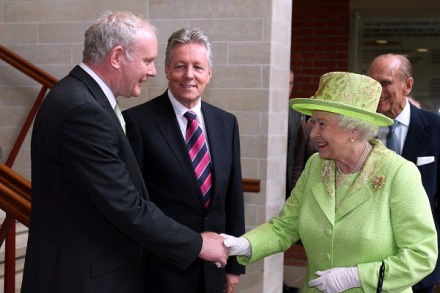
‘God speed’ was apparently what Martin McGuinness said to the Queen when they met a short time ago. I wonder what she, and the Duke of Edinburgh, would have liked to say to him? Of all the things that the Queen should be asked to do in her Jubilee year, perhaps the most cruel has been to expect her to shake the hand of the former IRA commander and now deputy first minister of Northern Ireland. Many people bereaved by the Troubles have made gestures of almost super-human forgiveness, but few can have been so pushed towards doing so. And McGuinness is a particularly difficult case.

When spring doesn’t turn into summer

From our UK edition

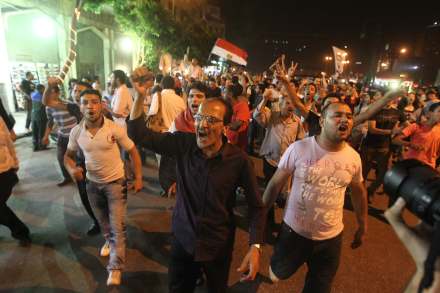
A high-ranking member of Hosni Mubarak’s disgraced government, or someone from the Muslim Brotherhood? It’s hardly an enviable choice — but that is the choice facing Egypt in next month’s Presidential election, after the official results of the preliminary vote were released yesterday. For obvious reasons, neither candidate much appeals to the freedom-loving younger generation that set the country’s revolution a-rolling in the first place. So, overnight, we’ve seen a return to protests, anger, fire, etc. This is still an immensely divided polity. As grim as the situation is, it will come as little surprise to Spectator readers (or to anyone, really).

What today’s Abu Hamza ruling means

From our UK edition

The European Court of Human Rights has ruled that five terror suspects, including notorious Islamist cleric Abu Hamza, can be deported to the United States — a decision welcomed by both David Cameron and Theresa May. Last year, Hamza and three of the other men appealed to the ECtHR against extradition to the US on a whole host of grounds — including that they might face the death penalty and that their trials would be prejudiced.

Replacing control orders: an unsatisfactory compromise 

From our UK edition

A small silver lining for David Cameron in the ‘cash for access scandal’: on a quieter day, today’s report on the coalition’s replacement of control orders with ‘Terrorism Prevention and Investigation Measures’ (TPIMs) might have got more attention. The report, published by the Independent Reviewer of counter-terrorism legislation, David Anderson QC, makes for difficult reading for ministers. Before looking at the detail of the report, it is worth remembering that control orders were always a second-best policy.

A man surrounded — and some assumptions exposed

From our UK edition

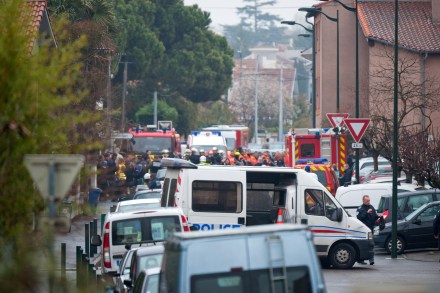
There was an element of bafflement in the early BBC coverage this morning of the welcome news that police have identified and surrounded the suspected killer of seven people, including Jewish children, in Toulouse. To some people's surprise, the BBC correspondent remarked in the early reports, the suspect turned out to be a Muslim, Mohammed Merah. So the entire tone of the Corporation's coverage of the killings turns out to have been misplaced. Ever since the dreadful news that a gunman had attacked a Jewish school in Toulouse after killing three French soldiers, the overriding assumption on the part of the Corporation was that, unless the killer was merely unhinged, the suspect must be a far-right extremist, animated by a hatred of minorities.

Defecting to what?

From our UK edition

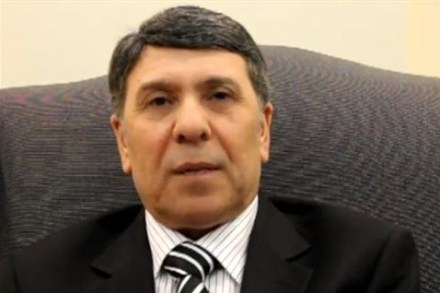
The wires are ablaze with the news that Syria's deputy oil minister, Abdo Hussameldin, has switched sides to the country's opposition. His is, after all, the most high-ranking defection so far, and he doesn't have any kind words for his former employers. As he puts it in a video that has been posted on YouTube, the current regime are ‘not friends of the Syrian people but partners in the killing of the Syrian people’. We shouldn't, however, get too excited just yet. This could be a significant moment, not least because it suggests that Assad's hold over his own government is beginning to weaken. But it's also worth remembering that Hussameldin is only one of dozens of deputy ministers in Syria.

What the Taliban want

From our UK edition

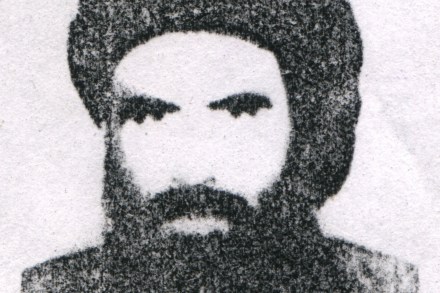
How go those talks with the Taliban in Doha? Quietly, that's how — although there's a report in yesterday's The Hindu that could reveal some of what's being said, and is worth the time reading because of it. According to the paper's diplomatic sources, the Taliban want Mullah Mohammed Omar installed as ‘supreme religious and political leader’ of Afghanistan. And, yes, that is the Mullah Omar who sheltered Al Qaeda when he actually was in charge of Afghanistan, and whose policy agenda included the death penalty for those converting to another religion, as well as the general subjugation of women, gay people, individuality, etc. He's currently wanted to the tune of $10 million by the US State Department.

Lockerbie: Megrahi Publishes His Defence

From our UK edition

The Lockerbie case is back in the news with the publication of Megrahi: You Are My Jury by John Ashton, a member of Abdelbaset ali al-Megrahi's defence team. That Megrahi remains alive, if only just, two and a half years after he was released on compassionate grounds is, plainly, an embarassment and all the evidence required to demonstrate that Kenny Mackaskill's decision to release him on license was mistaken. It has been contradicted by events. Worse for Mr MacAskill, however, is Megrahi's suggestion that MacAskill advised him that his chances of being released on compassionate grounds would be enhanced if he dropped his appeal against his conviction for the bombing.

Our enemy’s enemy

From our UK edition

It’s unusual for The Guardian and The Spectator to agree on anything, but Seamus Milne and our own John R Bradley are sceptical about these Syrian rebels whom we’re being invited to support. Bradley was alone in predicting the Egyptian revolution, and argues in today’s magazine that the conventional wisdom is once again wrong. Who’s backing the rebels? The Qataris, keen to depose the last secular regime in the Arab world. And the Saudis and Israelis, whose hatred of Iran eclipses all other considerations: this isn’t about the Syrian people, but about depriving the ayatollahs of an ally. Some in the West also take the view that the enemy’s enemy is my friend — so the rebels must be good eggs.

Ignore the European Court and deport Abu Qatada tonight

From our UK edition

The Al-Qaeda preacher Abu Qatada is a Jordanian national who is in the UK illegally (having come here in 1993 on a forged United Arab Emirates passport). The headache he has caused successive UK governments looks like finally reaching a peak. But there is a simple solution to the problem he poses. Last month, not only for the first time in the decade-long Qatada process, but for the first time ever in an extradition case, the European Court of Human Rights cited Article 6 ‘rights to fair trial’ to ensure that Abu Qatada could not be returned to Jordan. The Court had previously played around in the Qatada case only with Articles 2, 3 and 5.

We can’t ignore the persecution of Christians in the Middle East

From our UK edition

William Hague has transformed the Foreign Office in his 18 months in charge. He inherited a system hardwired with the dynsfunctionality of the Labour years, and it’s almost fixed. But not quite. It has not yet woken up to the wave of what can only be called ‘religious cleansing’ in the Middle East, which I look at in my Telegraph column today. Here’s a rundown of my main points. 1) The killing has begun, and could get worse. In Iraq, about two thirds of its 1.4 million Christians have now fled — being firebombed by the jihadis. Last year, gunmen entered a Baghdad church and killed 58 parishioners. To go to church in Iraq, which Christians have been doing for two millennia, now means risking your life.

Hammond: New front opening in Afghanistan

From our UK edition

Defence Secretary Philip Hammond was in the Commons this afternoon, discussing, among other things, the spate of attacks on Shia Muslims in Afghanistan. At least 59 people have been killed in sectarian atrocities over the last week or so, a chilling a new pattern of violence as Western powers begin to contemplate withdrawal. Hammond denied that there is a link between the forthcoming transition and these attacks. Instead a ‘new front’ is opening in Afghanistan. What is this new front? Hammond was vague, but Lahore-based journalist Ahmed Rashid explains, in tomorrow’s edition of the Spectator, that the sectarian attacks are the hallmark of a now desperate al-Qaeda.

Newt: Another 9/11 Would Have Concentrated Minds

From our UK edition

There are many, many, many reasons why Newt Gingrich will not be the 45th President of the United States (assuming, as I do not and actually think pretty unlikely, he wins the GOP nomination) but among them is his habit of saying stuff like this: That's from 2008. Here's my transcription of what he says in this clip: Why have we not been hit since 9/11? Good question. My first answer is I honestly don't know. I would have expected another attack, and I particularly thought, I was very, very worried and I talked to the administration when we had the sniper attacks because the sniper attacks were psychologically so frightening to the average person because of their randomness that I was amazed the bad guys didn't figure out how to send 10 or 12 sniper teams.

Two Cheers for Theresa May and her Passport Fiasco

From our UK edition

The obvious thing to be said about the pilot programme run amok that "loosened" border controls at a number of busy UK airports this summer is that said programme was both rational and reasonable. Obviously one is not supposed to say this and instead concentrate on the thousands of terrorists and other nasties who will have been "let in" to Britain as a result of the failure to "read" every "chip" embedded in every passport. Shockingly, officials were told that school parties and kids travelling with their parents probably wouldn't need the same level of scrutiny as other, more probably malevolent, types.

Beyond Gaddafi, America turns its attention to Pakistan

From our UK edition

It's hard to recall a more grisly complement of newspaper covers than those this morning. Only the FT refrains from showing either Gaddafi's stumbling last moments or his corpse, whereas the Sun runs with the headline, big and plain: "That's for Lockerbie". The insides of the papers are more uncertain. There are doubts about the details, such as what has happened to Gaddafi's infamous son Saif. And there are doubts about the general tide of events too. Several commentators, including Peter Oborne, make the point that the passing of Gaddafi is only the first phase in Libya's struggle towards democracy — and it is a struggle that might easily be forced off course by various factions, splinter groups and madmen.

Saving Private Shalit

From our UK edition

It's difficult for the outside world to understand the huge significance that Gilad Shalit's release, this morning, has for Israel. A soldier captured by Hamas five years ago, he has become a huge cause célèbre — to the extent that black cabs in London were even commissioned with his picture on it. Books that he wrote aged 11 were printed and bought in their thousands by Israelis. He was wanted back so badly that Israel has agreed to release 1,027 Palestinian prisoners, among them hardcore terrorists. Events stemming from the Arab Spring have made both sides eager to do a deal, which experts say might contribute — even if in a tiny way — towards that ever-elusive peace settlement.