Terrorism

Iran crosses a line

From our UK edition

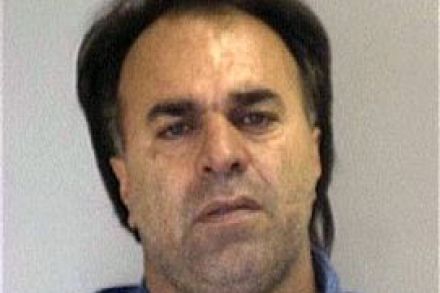
A flurry of news yesterday evening, among it Slovakia's rejection of the euro bailout and even more ado about our Defence Secretary. But nothing nearly as striking as the alleged Iranian plot to murder the Saudi ambassador to Washington. Drugs, money, geopolitics, potential mass slaughter — this is a web of the most tangled and terrifying kind. And, according to US officials, it all leads back to Tehran. Assuming that that's the case, there can few more alarming reminders of the threat posed by Iran. Here is a regime that is bent on terror and destabilisation — and bent, also, on acquiring a nuclear weapon. Little wonder why politicians from Tony Blair to, yes, Liam Fox are waving red flags about the situation. But what will it all come to?

Are You a Terrorist or Just a Paedophile?

From our UK edition

UPDATE: Strathclyde Police have responded to all this and their version of events is quite different. So much so, in fact, that they dispute every aspect of what's related here. Hark at this terrorist threat! The photograph above was taken by Chris White at Braehead shopping centre near Glasgow last Friday. It may look an innocent family snap to you because, well, that's what it is and that's his daughter in the picture. But that reckons without the blessed vigilance of the staff at this retail-hellhole who, wisely, considered Mr White a threat and duly called in Strathclyde police. The police duly hassled Mr White, reminding him that they were empowered to do so thanks to the provisions of anti-terrorism legislation. Cue much outrage on Facebook and amongst sensible people everywhere.

No, Martin McGuinness is Not a Fit and Proper Person.

From our UK edition

Since I've always thought Shaun Woodward a nasty little toad it's reassuring to discover the man will do nothing to earn a reassessment. Is anyone surprised he is entirely relaxed about Martin McGuinness's campaign for the Irish presidency? Of course not. why would ayone be surprised? As the dreadful Woodward made clear, speaking at a fringe event at the Labour conference, McGuinness's campaign is in some sense the next step in the "peace process". Yes, really, Martin McGuinness, mass murderer, is a "fit and proper" person to be Head of State.

Mullen adds to the tension between the US and Pakistan

From our UK edition

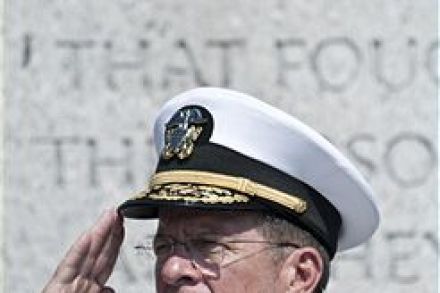
US-Pakistani relations will deteriorate even further following today’s claims by Admiral Mike Mullen, the outgoing chairman of the Joint Chiefs of Staff, that the Pakistani ISI aided and abetted the attack on the US embassy in Kabul. Mullen told a Senate panel that, "With ISI support, Haqqani operatives planned and conducted a truck bomb attack, as well as the assault on our embassy." This charge was part of broader criticism of what Washington sees as Pakistan’s strategy of exporting its internal problems.

Peter King Comes to Westminster

From our UK edition

From the Department of Irony Overload: Congressman Peter King says he admires the United Kingdom's counter-terrorism efforts: King also praised the United Kingdom’s government for its work on stemming Muslim radicalization, noting that its “Prevent” strategy “offers a candid assessment of the problem and a model for effectively addressing and countering this problem.” The Prevent strategy is one part of the UK’s Home Office counterterrorism program, and focuses on preventative measures to stop people becoming terrorists or supporting terrorism. Better late than never, I suppose and even a sinner such as Congressman King may be permitted a moment of repentance and all that. Still, the gall and the irony and all that.

The randomness of al-Qaeda’s evil

From our UK edition

After all the nerves and security in New York, Washington and London, the only attempted terror plot on the anniversary of 9/11 appears to have been foiled outside an arts centre in Gothenburg. The Swedish press says that the four people arrested on Saturday night are believed to belong to a cell linked to al-Qaeda. There are no more details yet, but it's a reminder that the al-Qaeda threat has not gone away. Its Arabian Peninsular division is still active, responsible for the underpants bomber and the bomb bound for Detroit, intercepted in London. This is also a reminder of how chillingly random its attacks are.

From the archives: “New York’s loss is also the world’s”

From our UK edition

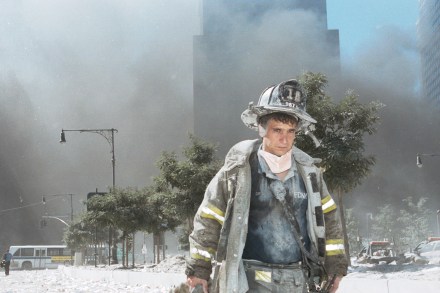
Today marks the tenth anniversary of the terrorist attacks on 11 September 2001. Here is the article Matthew Bishop wrote for The Spectator in response: Spirit of the Blitz, Matthew Bishop, 15 September 2001 New York People walk a lot in Manhattan. Its streets are always crowded. But never before like this. An hour after the attack on the World Trade Center, thousands of New Yorkers - refugees in business attire - trudged north as downtown evacuated. Many were covered from head to toe in white ash. Most walked in silence, contemplating the fact that somebody they know is probably dead, and that in the next 24 hours they will find out who. Others desperately tried to contact loved ones.

In New York, the whole world remembers

From our UK edition

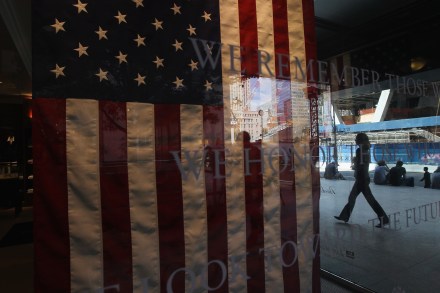
New York There's an eerie mood in New York right now, as the city prepares to commemorate the tenth anniversary of the September 11 attacks. Al-Qaeda, or what's left of it, likes anniversaries. The police have been on overdrive ever since a "credible" tip-off about an attempted truck bomb. Officers are everywhere. Armed guards patrol landmarks and cars from bridges and tunnels are being pulled over and checked. All this reinforces the sense of something alien to New Yorkers (and almost all Americans) until ten years ago: the threat of attack. A common threat has solicited a rather wonderful common response. Shop windows have displays of commemoration; companies take adverts in local newspapers. Exhibits and events have sprung up all over the city.

Department of Homeland Absurdity

From our UK edition

A telling admission from Janet Napolitano, heid-bummer at the ludicrous (though founded for obvious, understandable reasons) Department of Homeland Security: “We are moving towards an intelligence and risk-based approach to how we screen [people at airports],” Napolitano told Mike Allen during a morning forum at the Newseum. “I think one of the first things you will see over time is the ability to keep your shoes on. One of the last things you will [see] is the reduction or limitation on liquids.” In other words, current policy has nothing to do with intelligence or risk and is, by the US government's own admission, stupid.

From the archives: 9/11

From our UK edition

This Sunday marks the tenth anniversary of the terrorist attacks on 11 September 2001. Here is the article Stephen Glover wrote for The Spectator in response: "The terrorists want us to believe the world has ended. We must not fall into their trap.", Stephen Glover, 15 September 2001 As those who are old enough remember what they were doing when President Kennedy was shot, so we will all recall what we were doing when we heard about the attack on New York. I was reading the controversial new book about Tina Brown and Harry Evans, which I had planned to write about for this column. Then my elder son rang me. Immediately Tina and Harry and their New York lives seemed wholly irrelevant to what was going on there now.

Day of reckoning | 3 September 2011

From our UK edition

No one could say that we didn’t have warning of these events in the most specific terms. A month before 11 September 2001, the President’s daily intelligence brief was headed ‘Bin Laden Determined to Strike in US.’ Other official warnings from this time and earlier were so specific, and so specifically ignored, that a former National Security Adviser at the White House, Sandy Berger, would on four separate occasions in 2002 and 2003 abstract official top secret documents from the National Archives by stuffing them in his socks. (Because of Berger, we now don’t know what these warnings consisted of). There were any number of commentators, too, who saw exactly what was coming.

Cameron winning over the Libya doubters

From our UK edition

"They'll like us when we win," the West Wing's Toby Ziegler said of the Arab world. David Cameron might have said the same when public opinion was turning against the intervention in Libya. And, judging by today's YouGov poll, he'd have been right. Public support for military intervention has mirrored the public’s view of how well the action is going. In the first two weeks, when optimism prevailed, the public were largely in favour. However, as that optimism wore off and people increasingly doubted that the rebels could succeed, more and more began to oppose our involvement. Before the weekend, just 26 per cent thought the intervention was going well, and only 31 per cent were in favour of it.

Tensions rise in the Middle East

From our UK edition

The escalating crisis in Gaza and Sinai is worrying. Egypt is to recall its ambassador to Israel after 3 security personnel were killed in confused scuffles after an Israeli bus was bombed near the Sinai border; the Israeli embassy in Cairo has also been the scene of ill-tempered demonstrations and vandalism. Israel denies responsibility for the three deaths. Meanwhile, the Egyptian army is also conducting operations against Islamist militants in the increasingly lawless Sinai desert. Finally, the Arab League has called an emergency meeting after Israel retaliated to 30 rocket attacks by launching stiff operations in Gaza.

A black anniversary

From our UK edition

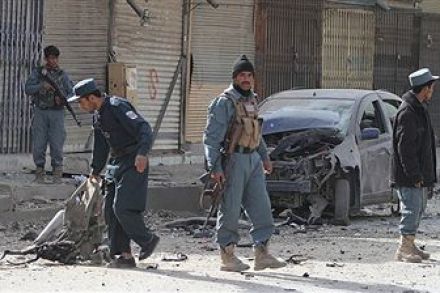
Even after 10 years, Afghanistan still has the capacity to shock. Details of the attack on Kabul are vague, but it seems that a posse of Taliban fighters dressed in “military garb” walked into the offices of the British Council and the United Nations; three people were killed in the ensuing explosions and fire-fights between security forces and insurgents. As I write, reports suggest that one Islamist is still alive and shooting in the British Council, while other explosions have been heard across the capital this morning. Taliban spokesmen have confirmed that they had carried out the attack to mark the 92nd anniversary of Afghanistan’s independence from Britain.

An Israeli Spring?

From our UK edition

Israeli politicians have been worrying that the Palestinians would join the protests sweeping the Middle East. So far, this has not happened. But now the Israeli leadership is facing something it probably never expected: an Israeli Spring.   Tens of thousands of Israelis took to the streets last weekend to protest against the high cost of living and demand that Prime Minister Benjamin Netanyahu conduct extensive economic reforms. Over 150,000 people are thought to have demonstrated in Tel Aviv, Haifa, Jerusalem, Beersheba and six other cities in left-wing protests against housing policy, but which seem to be morphing into a broader political movement.

Breivik and the right | 28 July 2011

From our UK edition

There's plenty to sate your thirst for politics in this week's issue of The Spectator (out today, you can buy it here, etc.), not least Tim Montgomerie's forceful cover article on how the Tory leadership has become detached from the wisdom of ordinary Conservatives. Here, though, is Douglas Murray's essay on the psychosis of Anders Behring Breivik, and whether the right has a case to answer for his crimes: Anders Behring Breivik believed himself a Knight Templar and awarded himself various military ranks accordingly. He also believed that he and other self-described racists had common cause with jihadis and that the USA has a Jewish problem.

Bomb blast near the Norwegian Prime Minister’s office

From our UK edition

  A reportedly enormous bomb blast has shaken the PM's office and the oil ministry in Oslo, the Norwegian police confirm. Reports have confirmed that the Norwegian Prime Minister is safe, but it's not clear if he's un-injured. Early reports suggested that this might be a gas explosion, but those were discounted because there is no mains gas supply in Oslo. Norway's state broadcaster has confirmed that one person has died, with more than 8 injured. Fortunately, it is the height of Norway's holiday season and there were few people about. The Norwegian police, however, warn that there are other casualties being treated. Details remain vague.

Quizzical eyes turn on Yates

From our UK edition

The phone hacking saga is now moving at such pace it threatens to engulf the political establishment (whether it is a sufficiently serious story to do so is another matter). After Sir Paul Stephenson’s theatrical resignation, timed to upset newspaper deadlines and plotted to embarrass the Prime Minister, attention has now turned to John Yates. Boris Johnson has said that Yates has ‘questions to answer’; and Brian Paddick argues that Yates should fall on his sword too. The Metropolitan Police Standards Committee meets this morning, and, as Laura Kuenssberg notes, it may discuss John Yates’ conduct.

Mitchell rejects allegation that UK aid is going to Islamists

From our UK edition

Yesterday, Andrew Mitchell was the toast of the broadcasters. They have turned on him to an extent today. The news that portions of the £52.25 million given in emergency aid to the starving masses in the Horn of Africa will be distributed in areas controlled by al-Shabaab has forced Mitchell onto the defensive. “We shall have no dealings with al-Shabaab,” he said, and then added that the aid will reach its intended recipients by means other than collusion with the jihadists. This is an embarrassing moment for Mitchell and, of course, it is vital that money and supplies do not fall into the hands of well-fed fighters. However, it is worth pointing out that Mitchell has always intended to distribute aid in al-Shabab controlled areas of Somalia.

Policing the Olympics

From our UK edition

The reputation of the police may be as black as mud at the moment, but the Met has a chance to atone during the Olympics. Security forces have been making their preparations as the Olympic construction site nears completion.  In May, police officers, counter-intelligence officials and the emergency services conducted their first major security exercise. Further stress tests are being undertaken on local transport routes and waterways. And permanent surveillance of Olympic venues is being established; in future, visitors to these sites will be subject to airport-style security and a number of armed officers will patrol the area. Nothing, it seems, is being left to chance. These operations are being delivered amid a background of spending cuts.