Terrorism

Attention shifts to Yemen

From our UK edition

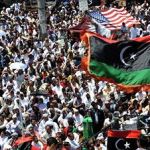
Since last week’s attack on Yemen’s President Saleh and his subsequent flight, Sana’a has been on the cusp of anarchy. Perhaps as many 400 people were killed in riots last week and the killing continues. Western diplomatic services fear for the safety of their citizens in Yemen. The MoD has been preparing contingencies. Forces and materiel deployed in the Libya are moving east. Two fleet auxiliary ships, equipped with helicopters and landing craft, and 80 Royal Marines have been stationed off the Yemeni coast. Should the 800 or so British nationals in Yemen need to be evacuated, the marines will secure a bridgehead. A further detachment, currently on exercises in Albania, is poised to join the task force.

The need for a strong man to strong-arm the new counter-terror policy

From our UK edition

If the counter-terrorism strategy the government is announcing today is to succeed, it will have to overcome bureaucratic opposition and institutional inertia. As Dean Godson writes in The Times today (£), senior civil servants in the Office of Security and Counter-Terrorism are highly reluctant to accept the government’s new, more muscular approach to this issue and will go back to the old, failed way of doing things if given the chance. If the Prime Minister’s writ is going to run across government on this issue, he is going to need someone working from the centre with Cameron’s explicit backing whose sole role is to supervise the implementation of the policy — the Home Secretary has too much on her plate to expect her to do this task alone.

Preparing for a post-Gaddafi Libya

From our UK edition

The Libya intervention has been in operation for a few months and the rebels have been making gains, most recently in Yafran. But progress remains slow and perhaps it is time to look again at how the lessons of Bosnia, Iraq and Afghanistan might have a bearing on Libya. The first lesson is simple: assume the worst. If you think that a regime will collapse quickly, plan for it to last a long time. If you expect a peaceful transition, plan for a violent one. And if you hope that unarmed monitors will be enough once hostilities are over, prepare for a well-armed peacekeeping force to be deployed. Optimistic predictions of the post-Saddam Iraq encumbered the planning process and meant the US-led coalition was unprepared for the contingencies that arose.

Counter-terrorism means stopping dealings with extremists

From our UK edition

The coalition’s counter-terrorism strategy will be published tomorrow. This rather delayed review has been the subject of some semi-public wrangling, Cameron and Clegg have given speeches setting out very different visions for it. But one thing to remember is that the test of the review's robustness isn’t just whether it stops government money going to extremists groups. It also has to lead to government, at all levels, stopping dealings with these groups, denying them the oxygen of recognition. Today’s Telegraph notes that 20 groups will lose their funding because the views they espouse are antithetical to British values. This is to be welcomed.

Trouble in Golan

From our UK edition

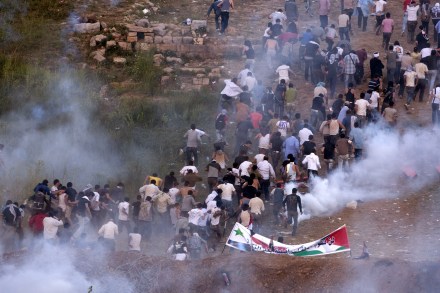
In a clear move to distract attention from his own problems, Syrian president Bashir Assad has allowed people to march from the Syrian border toward the Israeli-controlled Golan Heights, in the hope it will lead to a violent reaction from the Israelis. It did. Israeli forces opened fire on the people, wounding several. There are reports of at least four people killed and 13 wounded but these have not been verified. There can be no doubt that the incursion is part of a Syrian plan. The protests coincide with the 44th anniversary of the Six-Day War, when Israel captured the Golan from Syria, as well as the West Bank and Gaza Strip. The border area is a military zone and people will have been bussed or waved through Syrian checkpoints 50 kilometres before they reached the border.

So long, Saleh?

From our UK edition

The Middle Eastern merry-go-round takes another turn with the news that President Ali Abdullah Saleh has fled to Saudi Arabia. He has been promising to depart his role, if not his country, for some time now — but the wounds he allegedly sustained after an attack on his compound may have forced the issue. There's always the possibility that he could return to Yemen after his treatment across the border, although it's an unlikely prospect. The Saudis have already gone out of their way by granting this brutal dicatator some degree of clemency, without foisting him back upon his country. And Saleh will already have lost power and influence by accepting their help.

Obama re-affirms the special relationship

From our UK edition

The speech was not a classic but Barack Obama's address to both Houses of Parliament covered the bases today. He started with a winning line, remarking that the previous three speakers in Westminster Hall had been the Pope, the Queen and Nelson Mandela which is either "a very high bar or the beginning of a very funny joke."   As is traditional in these kinds of speeches, Obama paid tribute to the special relationship, lauding it as the embodiment of the values and beliefs of the English-speaking tradition. He went on to say that both the British and the Americans knew that the "longing for human dignity is universal." Indeed, at times Obama sounded remarkably like the last president as he proclaimed his own freedom agenda.

From the archives: The Good Friday Agreement

From our UK edition

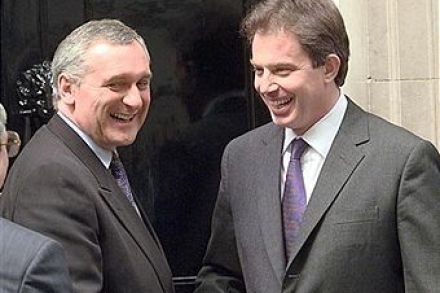
On Sunday, it will be thirteen years to the day since the people of Northern Ireland voted in a referendum on the Good Friday Agreement. The result was one of overwhelming support: 71 per cent to 29. Here is Bruce Anderson’s take on the Agreement from his Politics column at the time:   Mr Blair was rough on Mr Ahern (and while Unionists were there), Bruce Anderson, The Spectator, 18 April 1998   Occasionally, one is glad to be wrong. In this column last week, I wrote about the imminent collapse of the Ulster peace process. It seemed then as if everything was unravelling; the gaps between the various sides had been narrowed and narrowed, but still seemed insurmountable.

When Dublin trembled

From our UK edition

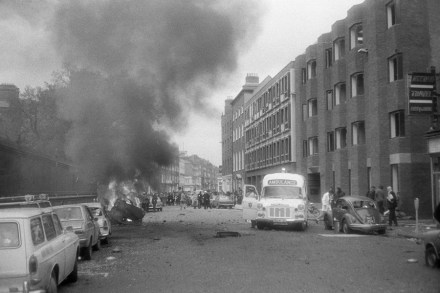
On 17 May 1974 — 37 years ago today — I was a 19-year-old student at Trinity College Dublin, celebrating the end of term in the Pavilion Bar near the sports fields. The summer exams were still to come, but we were carefree; the main subject of conversation was whether we could organise a disco party later on. Then, a little after 5.30 p.m., everything changed. First, all about us seemed to shiver, as if there were an earth tremor. Then, just as it occurred to me that Dublin did not generally suffer tectonic stress, there was a deafening bang that seemed to go on for an age. Somebody shouted: ‘It’s a fucking bomb!

An historic moment

From our UK edition

There is something incredibly resonant about the images of the Queen arriving in the Republic of Ireland this afternoon. You have probably heard the facts by now — that she is the first British monarch to do so for 100 years, and the first since Irish independence — but they are no less striking. Against a backdrop of terror threats and of Britain's participation in the country's bailout, Queen Elizabeth II is making some kind of history today. It is also, as Ed West says in a thoughtful post over at the Telegraph, a time for remembrance. He suggests that we remember the 300,000 Irishmen who fought in the Great War — and rightly so.

The threat of Republican terror

From our UK edition

The Metropolitan Police has released a statement saying that they have received a bomb threat for central London today from dissident Irish Republicans. There’s no information on where in the capital or what time today the warning relates to.   The threat, for which the spurious attempt at justification is presumably related to the Queen’s visit to Ireland tomorrow, may well be a hoax. But if it is real, it would attest to the growing reach of dissident Republicans whose previous operations have been confined to Northern Ireland itself. (The best book on dissident Republicanism is Legion of the Rearguard by occasional Coffee House contributor Martyn Frampton).

The ISI chief must be sacked

From our UK edition

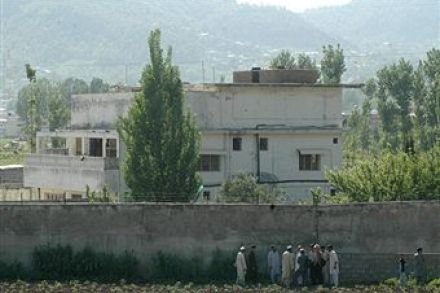
The US-Pakistani relationship has always been fraught, but it is particularly fractious right now. It is highly likely that the US will conduct more Abbottabad-type raids following the killing of Osama Bin Laden. According to sources in the US government, several locations were under surveillance alongside Bin Laden's compound. And that was before the CIA snatched the "motherlode" of information from the Bin Laden raid, which will give hundreds of new leads. People like Ayman al Zawahiri, Abu Yahya al Libi, and Saif al Adel will be sleeping a little less soundly these days. Regrettably, the Pakistani government has done little to prepare its population for the likelihood of new raids, preferring to blow off steam over the US violation of Pakistani sovereignty.

Bin Laden strikes from beyond the grave

From our UK edition

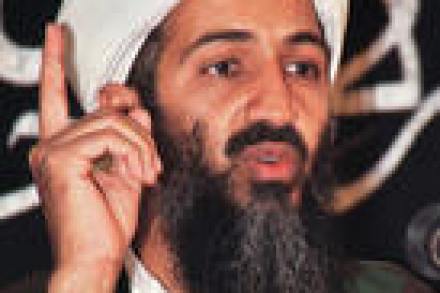
And so it starts. The news that suicide bombers have attacked the military base at Shabqadar, northern Pakistan, sounds a chilling note. The Pakistani Taliban has claimed responsibility for the attacks, committed in retaliation for the assassination of Osama bin Laden. Security experts and politicians warned that it would be so. It is, we are told, inevitable that similar atrocities will be attempted closer to home. There will also be concern that this may aggravate the already strained relations between the US and Pakistan, which would only strengthen the terrorists. Perhaps Bin Laden has become a more potent force since his death. The sight of a squalid man sitting in exile watching videos of his bygone glories was almost pitiful.

Osama bin Laden at home

From our UK edition

They may be mostly silent, and their content is rather mundane, but the five Osama bin Laden "home videos" released by the Pentagon today are still some of the most astonishing documents to emerge during the past week. The deceased al-Qaeda leader is shown watching himself on television; preparing his ranting-head diatribes against America and the West; and even with his greying beard dyed black all over. You can watch the full selection, with Al Jazeera commentary, above.

Osama bin Laden Was Not America’s Useful Enemy

From our UK edition

The Guardian is a great newspaper but, lord, does it ever print some claptrap. Via Messrs Geras and Worstall comes this dreadful piece by Adam Curtis. The headline, for which Mr Curtis is not responsible, is a warning of the nonsense to come: For 10 years, Osama bin Laden filled a gap left by the Soviet Union. Who will be the baddie now? From the off we're supposed to appreciate, I think, that bad as bin Laden certainly was, he was never as bad as you were led to believe and, gosh, certainly not as bad as the people for whom he was a useful, even necessary, enemy. The world, you see, is complicated and if you think al-Qaeda are the bad guys you've been duped my friend. Seriously.

After bin Laden

From our UK edition

In this week’s Spectator, on sale today, we have an outstanding lineup on bin Laden’s death and its aftermath. I thought CoffeeHousers may be interested a preview of what’s in this week’s mag. Our lead feature is written by Christina Lamb of the Sunday Times: she has been writing about Pakistan for 24 years and is now based in Washington — so is ideally qualified to write about the changing relationship between the two countries. Bin Laden’s urban lair fits a trend, she says: other jihadis have been found in similar urban compounds near the Pakistan military. The country is playing a double game, she says.

Stray Thoughts on the Execution of Osama bin Laden

From our UK edition

Just as it's difficult for death penalty opponents to be too upset by the verdicts of the Nuremberg tribunal, so it is hard to be upset by the assassination (let us not be coy) of Osama bin Laden. Nevertheless, it seems increasingly probable that al-Qaeda's titular leader was executed "after" a firefight not, rather tellingly, "during" a firefight. Capturing him was never an option. It's easy to understand why this "clean" end was preferable to capturing bin Laden with all the awkward questions about interrogation and trials and due process and torture and everything else that would have followed. Too much trouble. For everyone. That too is part of George W Bush's legacy. (See the depressing debate over "enhanced interrogation techniques" for instance.

CIA director blasts Pakistan’s intelligence service

From our UK edition

"It was decided that any effort to work with the Pakistanis could jeopardise the mission. They might alert the targets." There have been few blunter, nor more high-profile, condemnations of Pakistan's intelligence operation than that made by Leon Panetta, the CIA chief, in interview with Time magazine today. And there are plenty of other noteworthy nuggets in the article as well: among them, Panetta's claim that the US has seized an "impressive amount" of raw intel from Bin Laden's compound. And how about this: "Intelligence reporting suggests that one of bin Laden’s wives who survived the attack has said the family had been living at the compound since 2005, a source tells TIME.

Pakistan responds

From our UK edition

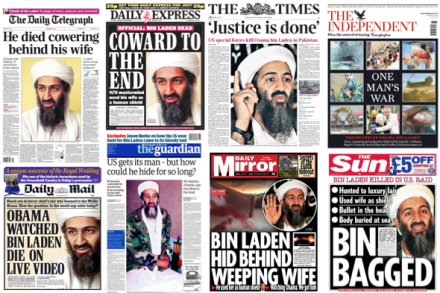
The covers of our newspapers are emblazoned with Bin Laden this morning — but it is an article in a US newspaper that really catches the eye. Pakistan's President, Asif Ali Zardari, has written an op-ed for the Washington Post that defends his country's role in the struggle against Al-Qaeda. It's a defence that has four components. 1) Sympathy: "Pakistan … joins the other targets of al-Qaeda in our satisfaction that the source of the greatest evil of the new millennium has been silenced." 2) Credit-sharing: "We in Pakistan take some satisfaction that our early assistance in identifying an al-Qaeda courier ultimately led to this day." 3) Defiance: "Pakistan has paid an enormous price for its stand against terrorism.

Bin Laden died in Cairo<br />

From our UK edition

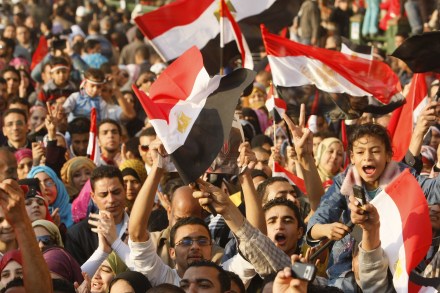
The world’s most wanted terrorist, Osama Bin Laden, was shot Sunday morning in Pakistan by US special forces. But in reality he had died months ago. On the 25 of January 2011 to be exact. Or that is at least when Bin Laden’s power ended. For on that day millions of protesters — predominantly young Muslims — took to the streets of Cairo and demanded the overthrow of the regime of Egyptian President Hosni Mubarak, and succeeded. With this act, they gave, for the first time since 9/1 and arguably for three decades, the Muslim world a more easily-understood and persuasive narrative than the one of anti-US resistance Al Qaeda had so successfully provided. After that, Bin Laden could carry out more attacks. He could kill more people.