Technology

The anxiety-inducing world of wellness tech

From our UK edition

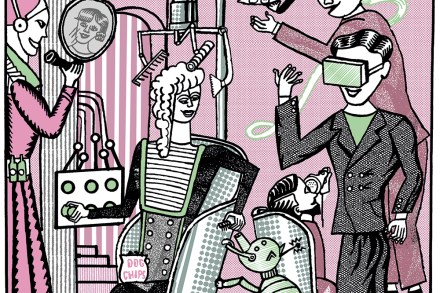
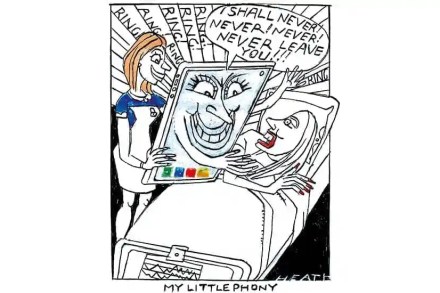
I first came across the Zoe programme when a bright yellow package arrived on my parents’ doorstep last year. My mother, like many, had been wooed by the TV personality Davina McCall into ‘living her best life’ by ordering a Zoe gut-health testing kit (at an upfront cost of £299, or £599 for the Plus plan).  Zoe is the invention of Tim Spector, the professor-turned-health guru who ran the Covid symptom-tracker app throughout the pandemic. It’s a personalised nutrition programme that promises to make you ‘feel’ healthier and improve your gut health, energy levels and even flatulence.
My night with the paedo hunters

From our UK edition

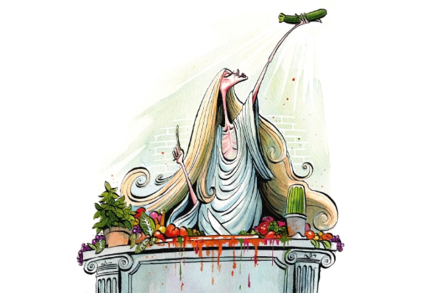
It’s a Wednesday evening, and I’m getting psyched up to go catch a paedophile with the boys. Playlist on, rocking down the A12 and chatting to my new mate, Nick, in his van. There’s a man not far from here who thinks he’s going to meet an underage girl tonight. He doesn’t know that we’ll be pulling up instead and that his sick fantasy – and his life as he knows it – will be over. Nick is a guy I met on Facebook who runs a team of paedophile hunters called London Overwatch. He says that he’s caught 300 paedophiles, and that tonight’s is one of the worst. This man believes he has been talking to a 14-year-old girl and has apparently been sending her obscene videos while he’s on holiday with his family. The ‘girl’ is really a woman on Nick’s team.

Why are Chinese students giving up on architecture?

From our UK edition

I recently convened an urban studies summer school in a top university in Shanghai and asked the assembled class of architectural master’s students: ‘Who wants to be an architect?’ Not one hand was raised. This was not the typical reticence of Chinese youngsters; this was a class of architectural students who have given up on architecture. They are all hoping to escape architectural education, so that they might progress to classes in AI, digital transformation or some other hi-tech sector where they believe jobs exist. For them, architecture is a dead end. As my Chinese students are discovering, there are too few jobs in the sector, the pay is low and the work is unappealing.

Keir Starmer’s parenting lessons

From our UK edition

Before he became Prime Minister, Keir Starmer admitted he was concerned about what life in Downing Street might be like for his children. It was, he said, the ‘single thing’ that kept him awake at night. What’s notable is that we aren’t even aware of Starmer’s children’s names. They are teenagers but that’s about all we know about them. They were not photographed when Starmer and his wife Victoria entered No. 10, nor have they been seen since. ‘We do try to protect them… we don’t use photos of them in any way,’ Starmer said. There seem to be no pictures in the public domain of Starmer with his children. A smartphone ban shouldn’t come from the government; it should come from parents I’d say that is quite an achievement.

Nothing beats a 1980s brick phone

From our UK edition

In the late 1980s, a story entered advertising folklore. A group from an ad agency had boarded an evening train from Newcastle to travel home from a client meeting. On boarding, they learned that the buffet was out of action, and they were hungry. Happily, one of them was carrying in his briefcase a wondrous new brick-sized device called a mobile phone. After a series of rebuffed calls, he managed to find a lone Indian restaurant in Peterborough willing to deliver to their train when it stopped en route to London; there our hero duly handed a wedge of cash through the carriage window before taking delivery of the food.

Portrait of the week: IT meltdown, riots in Leeds and the wrong kind of pandemic

From our UK edition

Home Britain enjoyed its share of the worldwide failure of 8.5 million computers reliant on Microsoft, through a faulty update of the CrowdStrike antivirus software. On the first day, 167 air departures were cancelled in the United Kingdom – 5.4 per cent of those scheduled. (Worldwide it was 5,078 – 4.6 per cent of those scheduled.) Doctors’ appointment systems stopped working and customers at Gail’s bakery could not pay for their pains au chocolat. BT was fined £17.5 million for a ‘catastrophic failure’ on 25 June last year that led to 14,000 999 calls not being connected. National debt, which fell from 251.7 per cent of GDP in 1946 to 21.6 per cent in 1990, had risen by June this year to 99.5 per cent.

Meet the techno-optimists hoping to save the world

From our UK edition

Future House is a weird private members’ club. There’s a mattress on the floor for napping, a bathtub designed to hold ice and bottled beers, a robot dog imported from China and a purple neon sign that reads: ‘Just F***ing Build Something.’ Around 9 p.m. on a Wednesday, the place is rammed. ‘I missed the dotcom era, I’m not missing this one,’ someone says. ‘People need to stop moaning about artificial intelligence,’ says another. Future House, in an old coaching house in Hackney, is described on its website as ‘London’s techno-optimist members’ club’. Techno-optimism? Adherents believe that technological progress is the best way to fix the world’s problems.

An AI visionary looks forward to the best of all possible worlds

From our UK edition

In 1993 Vernor Vinge popularised the notion of the Singularity – the point at which exponentially accelerating trends in multiple technologies move out of control in an endless positive feedback loop. Vinge was a science fiction writer; Ray Kurzweil is not. In 1993 he had already pioneered optical character recognition and synthesisers that could precisely mimic real instruments. His mission crystallised into making Vinge’s conceit a reality. He is principal researcher and ‘AI visionary’ at Google – and principal proselytiser, too, through any number of portentously titled books. The Age of Spiritual Machines (1999) set out his stall; The Singularity is Near (2005) staked a claim for human-level intelligence in computers by 2029 and a generalised apotheosis in 2045.

AI is both liberating and enslaving us

From our UK edition

Elaine Herzberg was pushing a bicycle laden with shopping across a busy road in Tempe, Arizona in 2018 when she was struck by a hybrid electric Volvo SUV at 40mph. At the time of the accident, the woman in the driver’s seat was watching a talent show on her phone. The SUV had been fitted with an autonomous driving system consisting of neural networks that integrated image recognisers. The reason Herzberg died was because what she was doing did not compute. The autonomous driving system recalibrated the car’s trajectory to avoid the bicycle, which it took to be travelling along the road, only to collide with Herzberg, who was walking across it. She became the first casualty of artificial intelligence.

What will we do when all our jobs are done for us?

From our UK edition

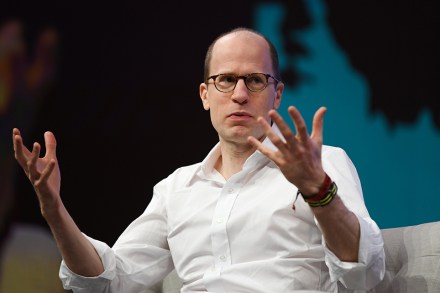
Laughs are in short supply in the academic world unless that world is serving as the victim of satire. So full marks to the Swedish philosopher Nick Bostrom for loading Deep Utopia – his reflections on life in a ‘solved world’, perfected by technology and science – with self-mockery and slapstick. Bostrom isn’t the first to fret about the travails of extreme leisure. John Maynard Keynes feared that economic abundance would produce more disgusting aristo-like behaviour. It’s nice to see how mighty minds can be so wrong. Bostrom cites John Stuart Mill being seriously depressed by the prospect, as humanity solved its problems, of there not being enough music to keep everyone happy all day.

Should you buy a folding phone?

Just five short years ago, Samsung released the first mainstream folding phone with their debut Galaxy Fold. It had some quirks — a small, slim, external display, thick bezels, an odd asymmetrical notch and an unprecedented $1,980 price tag — but what mattered most was the screen. Open the slim, TV-remote-shaped phone and you gazed upon a great, wide, 7.3-inch screen, bigger than any you could carry in your pocket before, with a folding crease in the middle. You could multitask, watch full-screen YouTube videos and browse the web as you would on a tablet. That is, you could do so temporarily. Early review units catastrophically broke at even the mention of a grain of sand, creating a run of viral tweets and videos.

folding phone

Inside the May issue: technology

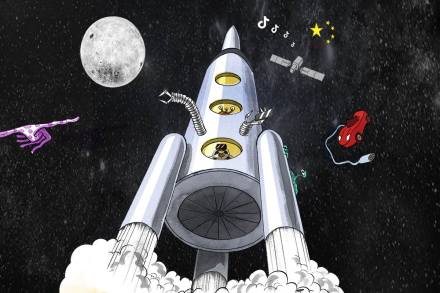
Western governments seem ill-prepared to grapple with rapidly advancing technology. Watch any congressional hearing where a crusty congressman tries to keep pace with Silicon Valley’s top “autists” if you need further evidence — and read Spencer A. Klavan’s analysis of the high-skill but low-status rejects uniting into a formidable social class. The Silent Generation and boomers simply cannot keep up. The Space Race is back on — and tycoons are eager to cash in on the final frontier. Shane Cashman dives into the new wild west of explorers and entrepreneurs commercializing the great unknown. Lionel Shriver brings us back to earth with a look at the electrical grid and our government’s push for green energy and electric vehicles.

technology

Is the West ready to face the challenges of advancing technology?

The theme of this month’s edition is technology. The advancement of space exploration, defense technologies, artificial intelligence and the like should excite us. Yet the geopolitical issues they present are great and Western governments seem ill-prepared to grapple with them. Watch any congressional hearing where a crusty congressman tries to keep pace with Silicon Valley’s top autists if you need further evidence — and read Spencer A. Klavan’s analysis of the high-skill but low-status rejects uniting into a formidable social class on p.12. The Silent Generation and boomers simply cannot keep up. The Space Race is back on, as tycoons seek to cash in on the final frontier.

space technology

The digital habit

In an era that claims to value the authentic, the direct and the natural, the word "processed" has negative connotations, as in “processed” food. Nevertheless, it describes exactly how perhaps nine-tenths of the human race — including, I imagine, the lost Indian tribes of the Amazonian wilderness — experience reality these days, which is to say processed through electronic media, social media and the oxymoronic smartphone.

digital

The tech I’m looking forward to in 2024

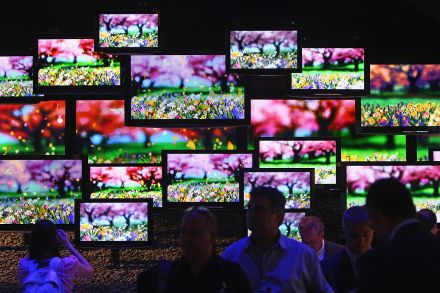
The Consumer Electronics Show in Las Vegas, the first and biggest tech convention of the year, took place earlier this month, where the strangest, newest products were shown off. As usual, there was a lot of fluff — pointless gizmos that work on a show floor but never make it to stores — but there were also core signs of the technology trends we’re going to see this year, and products I’m excited to try. Screens are always a strong point at CES, and this year proved no different, from pure quantum dot prototypes, translucent televisions and yet another laptop with a glasses-free 3D display; but it’s the arrival of great OLED screens to mainstream laptops that truly excites me.

tech

Bowling Alone reads like a nostalgic look at the good ol’ days

In the Phetasy.com book club, we recently read the famous social science tome, Bowling Alone, by Robert Putnam. In it he examines the decline of social capital across various facets of American life. Based on his 1995 essay of the same title, the book was groundbreaking when it appeared in 2000. Putnam had noticed a trend: Americans were spending more and more time alone. His book analyzed the data and contemplated what it meant for our democracy and humanity. Although his observations were a harbinger of the oft-cited “epidemic of loneliness” we are currently living through, in our post-Trump, post-pandemic pre-maggedon reality, Bowling Alone reads like a nostalgic look at the good ol’ days. Days when people still interacted at all.

bowling alone

The gap between technotopia and dystopia are never far apart

Broken Arrow isn’t just the title of a mediocre 1996 film, but the term for a serious accident involving a nuclear weapon. Over the last seventy years, the United States has officially experienced thirty-two Broken Arrows, where a nuclear weapon has been in a crash or fire, accidentally been dropped — or just disappeared. Incredibly, six have been lost and never recovered. Artificial intelligence (AI) pioneer Mustafa Suleyman tells one such story in his new book, The Coming Wave: Technology, Power and the 21st Century’s Greatest Dilemma. In 1961, a B-52 bomber carrying two live hydrogen bombs broke up in the skies above Goldsboro, North Carolina. One bomb disintegrated when it plunged into a muddy field.

Suleyman

My month using a tablet instead of a smartphone

Several years ago — long before Elon renamed it X, restricted most features behind a paywall and made it altogether less pleasant to use — I uninstalled Twitter from my phone. Then, on my laptop, I set the Minimal Twitter extension to hide all interaction counts. I still have no idea how many followers I have.  I wasn’t hopelessly addicted to the site, nor was it enraging me on a frequent basis. Put simply, though a Twitter-using liberal, I was not a “triggered lib.” But whenever I wasn’t doing something else, or waiting in line, or walking to make some coffee, I flicked through it. When I should have let the silence breath, I pulled out my phone and refreshed my feed.

tablet smartphone

The advent of AI-piloted planes

The US Air Force conducted the first flight test of the XQ-58A Valkyrie drone, from Kratos Defense and Security Solutions, piloted by artificial intelligence, on July 25. The test was part of a years-long effort headed up by the Air Force Research Lab designed to integrate advanced technology into the Air Force’s arsenal. The lessons learned and data gathered from the test will be applied to the Collaborative Combat Aircraft program, which seeks to procure an unmanned combat drone capable of working — collaborating — with manned systems, like a traditional fighter jet.  Bringing AI into the fold offers numerous benefits to the modern warfighter.

The Kratos XQ-58 Valkyrie ai drones

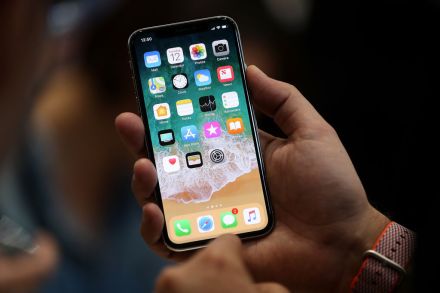
How I incurred the wrath of my iPhone

From our UK edition

As I sat down to dinner in a lovely old country pub my reservation was cancelled by my iPhone, which was having a tantrum. The owner of this restaurant was serving us with a smile, we had been shown to our table, drinks and menus had been brought. But the buzzing lump of metal in my bag was adamant this was not happening. My iPhone had packaged up a montage surprise, complete with a replay of our private conversation I was experiencing one of those moments where reality splits into two: the one you are experiencing and the one your phone claims you are. A lot of people obediently accept the phone’s version no matter what. This is presumably why drivers follow their satnavs into garden walls, or swerve along the motorway looking at pictures of dogs on Facebook.