Syria: How MPs voted
Here is a list of all MPs and how they voted - or did not vote - in last night's division on the government's motion on Syria.
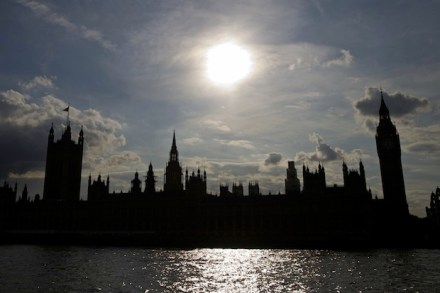
Here is a list of all MPs and how they voted - or did not vote - in last night's division on the government's motion on Syria.
A muddle and a cock-up. For all the talk of parliament reasserting itself, last night's vote on Syria showed a parliament that voted, twice, to oppose actions it actually supports. David Cameron has been humiliated but this was hardly a banner day for Ed Miliband either. The House of Commons has, for now, cut off its nose to spite its face. Perhaps surgery can repair the damage. Perhaps it can't. Because the longer and more deeply one contemplates yesterday's events the more evident it seems that there were no winners. The government motion was defeated. So was Labour's amendment. Since these motions were, in essence and in most practical respects, identical one wonders what on earth has happened.
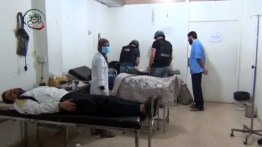
One of the lines doing the rounds this morning in the post-mortem of what this means for David Cameron's leadership is that it shows yet again that backbenchers do not trust the Prime Minister. This is true, but it is worth being as specific as possible. This rebellion was not like the other revolts over Europe and House of Lords reform, where it was as much about sticking two fingers to the leadership for not listening to MPs as it was about the issues at stake, serious though they are. The number of conversations I've held with backbenchers in the run-up to and aftermath of those votes made it quite clear that if they didn't hate Cameron so much, they might have calmed down. But this rebellion stuck more closely to principle than politics.
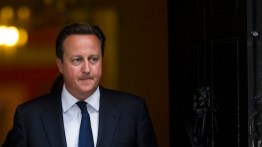
Following David Cameron's historic defeat on Syria in the House of Commons yesterday, the Spectator's Fraser Nelson and Isabel Hardman discuss why both the government's and Labour's motions were defeated, the implications for the Prime Minister and Ed Miliband's political standing and what this means for Britain's place in the world. You can subscribe to the View from 22 through iTunes and have it delivered to your computer every week, or you can use the embedded player below: The View from 22 — Syria special.

Are you ashamed of your country and depressed following last night's vote against intervening in Syria? David Aaronovitch the journalist is. I do not give a fuck what this means for Miliband and Cameron. It's the message it sends to Assad that counts. I am ashamed. — David Aaronovitch (@DAaronovitch) August 29, 2013 Tim Shipman of the Daily Mail is. Glad I'm in France today, a country that understands the responsibilities of being a military power — Tim Shipman (Mail) (@ShippersUnbound) August 30, 2013 So is Sarah Vine, the columnist, as well as, apparently, her husband Michael Gove. Paddy Ashdown says that Great Britain is plunging towards 'isolationism'.
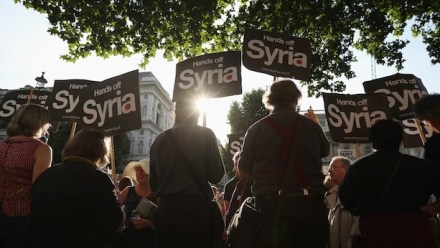
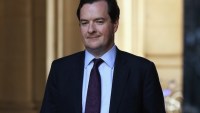
When will today's politicians be able to stop wrestling with Tony Blair's ghost? Not for a while it seems - partly because they don't want to. George Osborne decided to use the Kind of Spin as a means of spinning last night's terrible defeat for the Coalition government on Syria when he appeared on the Today programme. As well as referring to the shadow Blair and Iraq cast over the debate, yesterday, the Chancellor made clear that the Prime Minister had tried to shake off that shadow by conducting things 'in a different approach'. he said: 'The shadow of Iraq pervaded the whole debate yesterday both on the media and in Parliament and at times MPs on both sides of the argument actually by mistake used Saddam Hussein's name instead of Assad's name.
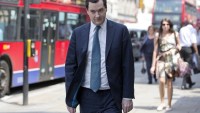
A sombre George Osborne has just popped up on the Today programme saying that parliament last night triggered 'soul searching' in the country. 'I think there will be a national soul-searching about our role in the world and whether Britain wants to play a big part in upholding the international system, be that big open and trading nation that I'd like us to be or whether we turn our back on that.
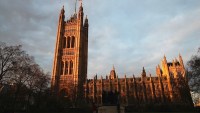
These are the names of the MPs who voted against last night's government motion on Syria: Conservatives (30): David Amess, Steve Baker, Richard Bacon, John Baron, Andrew Bingham, Crispin Blunt, Fiona Bruce, Tracey Crouch, David TC Davies, Philip Davies, David Davis, Nick de Bois, Richard Drax, Gordon Henderson, Philip Hollobone, Adam Holloway, Dr Phillip Lee, Dr Julian Lewis, Tim Loughton, Jason McCartney, Nigel Mills, Anne Marie Morris, Andrew Percy, Sir Richard Shepherd, Sir Peter Tapsell, Andrew Turner, Martin Vickers, Charles Walker, Chris White, Dr Sarah Wollaston.
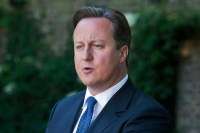
Having lost last night’s vote, David Cameron needs to spend today fighting back. There are quite a few ways he can do so. He can easily brush off the more excitable charges: that he faces a leadership challenge, or that Tories will come for him at party conference. They won't. Cameron was elected to fix Britain, not Syria, and he’s doing quite well with the day job. Employment is at a record high, schools and welfare are being reformed, crime’s down. Cameron has not been defeated on a cornerstone of his foreign policy, but on a plan to join an American missile strike that may not take place. It was a grave error for Cameron to put his reputation on the line and portray the Syrian missile strike as a moment that would define Britain for good and for ill.
They’re getting the rebuttals in early, have you noticed that? You might call them a pre-emptive strikes. Here’s William Hague, speaking to BBC Radio 4 about those chemical attacks in Syria... ‘To believe that anybody else had done it, you would have to believe that the opposition in Syria would use, on a large scale, weapons that we have no evidence that they have, delivered by artillery or air power that they do not possess, killing hundreds of people in areas already under their control.’ Pretty good, that. He must have practised it beforehand. ‘Have’ and ‘possess’ mean the same thing, after all, so you need a bit of preparation there. Better, certainly, than John Kerry, who gave a press conference at the White House and said...
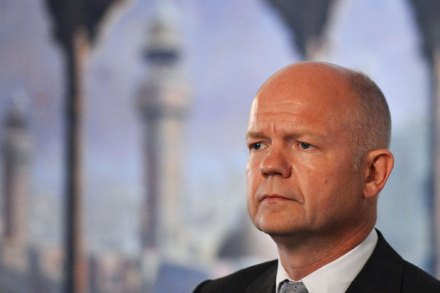
There are a number of serious implications of tonight's result. But it's worth briefly considering the whipping operation in the hours leading up to this vote. Firstly, there was no rebel whipping operation (as in, no backbenchers leading others to revolt, totting up numbers and issuing rebuttals of government claims) as there has been on other votes such as the Lords and EU budget and referendum rebellions, which means MPs were only being pulled away from the government position by their own instincts. Or they were being left to wander away from the government position. From the conversations I've had with MPs, the government whipping operation continued to be pretty low-key until the middle of today, when the whips started to panic.
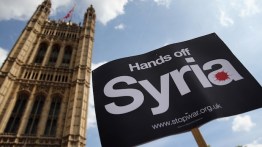
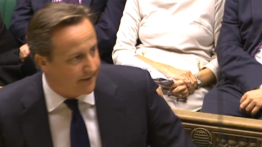
In a surprise result this evening, the government lost its motion on Syria, with 272 MPs voting for and 285 voting against. The Prime Minister responded to the vote in the Chamber, with MPs on the Labour benches shouting 'resign!'. He said: 'Let me say the House has not voted for either motion tonight, I strongly believe in the need for a tough response to the use of chemical weapons, but I also believe in respecting the will of this House of Commons. It is very clear tonight that while the House has not passed a motion, it is clear to me that the British parliament reflecting the views of the British people, does not want to see British military action. I get that and the government will act accordingly.
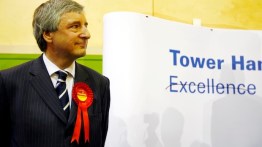
Labour MP Jim Fitzpatrick has tonight resigned from his party's frontbench over the Syria vote, his party confirmed. The shadow transport minister told the Commons this evening that he felt his party's amendment was still too open to military intervention. He said: 'I have problems - for the honourable gentleman's information - both with the Government motion and the Opposition amendment. I do not believe either is ultimately able to achieve the honourable ends that both sides of this house are trying to achieve. I'm opposed to military intervention in Syria, full stop. And to be honest with myself, and to be consistent on both questions, I will be voting in the 'no' lobby against the Government motion and against the Opposition amendment.
There are currently two debates raging in Parliament at the moment. One is a reasonably measured (and lengthy) exchange in the House of Commons chamber about the merits of intervening in Syria, and the merits of today's government motion and Labour amendment on Syria. The other is in the corridors of the Palace of Westminster, around the coffee tables of Portcullis House and on MPs' smartphones as Labour rages about the suggestion from a Number 10 source this afternoon that Ed Miliband had his colleagues are giving succour to the Assad regime. After the leaders had spoken in the Commons, a Downing Street source was asked by journalists whether Miliband was giving succour to the Assad regime. The source replied: 'Yes.

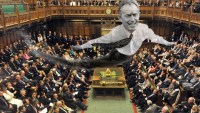
Tony Blair would have had less of a presence in today's Commons debate on Syria if he'd actually turned up to it. The former Prime Minister was threaded throughout the speeches, and no more so than in David Cameron's address to MPs. Cameron was keen to emphasise at every opportunity the difference between the government's response to the current situation and the Blair government's handling of the Iraq war. He was quick to refer to it, saying 'I am deeply mindful of the lessons of previous conflicts', and later said that Iraq 'poisoned the well' of public trust on military intervention.
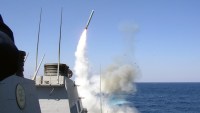
Today Parliament has been recalled to discuss and vote on the UK response to the alleged chemical weapons attack in Syria. We now know that we will not be called upon to authorise military action today - that vote will probably be held next week. But the Motion before the House tonight is clearly a stepping stone towards that action, and MPs are being asked to endorse the principle of military intervention in paragraph three of the Motion, which states that: '(This House)...agrees that a strong humanitarian response is required from the international community and that this may, if necessary, require military action that is legal, proportionate and focused on saving lives by preventing and deterring further use of Syria’s chemical weapons.
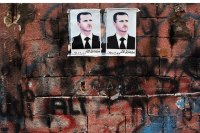
There has been lots of debate about our impending intervention in the Syrian conflict today. Many of my Coffee House colleagues have counselled against intervention, arguing against Danny Finkelstein’s piece in the Times yesterday. I’m in broad agreement with the general sentiment of the piece, but some of its subtexts need greater illumination. Leave aside Finkelstein’s argument about omission bias. For a moment, forget the ‘complexities’ of the conflict, imbibed as it is with sectarian differences, confessional rivalries, and great power posturing. Even the discussion of what should happen next in Syria can wait for another day. The use of chemical weapons against civilians is an affront to the very idea of civilisation itself.
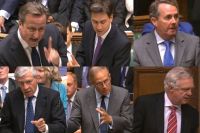
Welcome to Coffee House's rolling coverage of the Syria debate in the House of Commons this afternoon. We will be detailing the best speeches in favour of and against the motion below, with full quotes and audio clips. Jump to speeches: David Cameron, Ed Miliband, Jack Straw, Liam Fox, David Davis, Andrew Mitchell, Ming Campbell, Justin Welby Friday 9:10: Chancellor George Osborne was on the Today programme, discussing the government's defeat.
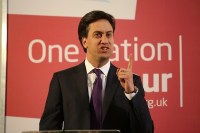
Even if you were wavering over whether Ed Miliband's decision yesterday to reject the government's motion on Syria (before it was published) was a political stunt, it's a little more difficult to see why the Labour leader plans to continue to oppose the rewritten motion when it comes to a vote in the Commons this evening. You can read the full motion here. Number 10 is in no doubt that Labour now opposes this motion on political grounds rather than out of principle. A senior source says: 'That just proves they are playing politics with this incredibly serious matter. They want to divide the nation on this matter and divide the House of Commons. 'Ed Miliband is playing politics when he should be thinking about the national interest and global security.
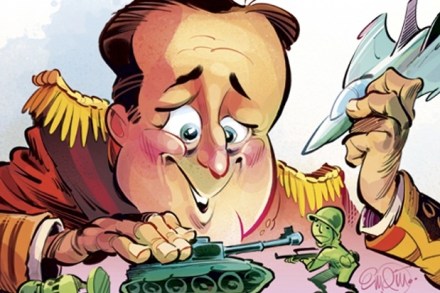
Is David Cameron pushing Britain into a war without a purpose? On the latest View from 22 podcast, the Mail on Sunday’s Peter Hitchens vigorously debates Alan Mendoza from the Henry Jackson Society on this week’s developments in Syria. Why should Britain increase its involvement in Syria? What benefit would it bring to our nation? And how has the Prime Minister evolved from a leader who once said ‘democracy should not be dropped from 40,000ft’ into a foreign policy hawk? Fraser Nelson and Isabel Hardman also discuss how this week’s parliamentary business on Syria will play out between the coalition partners. Are the Tories and Lib Dems united?