Sylvia plath

All the gossip about Lady Chatterley’s Lover

Lady Chatterley’s Lover was written in a villa outside Florence during the winter of 1927-28, two years after D.H. Lawrence was diagnosed with TB. Described by him as ‘a phallic novel, but good and sun-wards, truly sun-wards’, the tale is set in his native Nottinghamshire, which he left in 1912 when he eloped with his aristocratic wife Frieda von Richthofen, who was then married to his tutor. Frieda, who valued her freedom, was enjoying an affair with the Italian officer Angelo Ravagli, who became her third husband after Lawrence’s death in 1930. It is believed that Lawrence was impotent for the last years of his life. In the evenings he would read aloud his finished pages, in which the Lawrentian philosophy is expressed by Oliver Mellors, gamekeeper to Sir Clifford Chatterley.
Chasing happiness: The Daffodil Days, by Helen Bain, reviewed

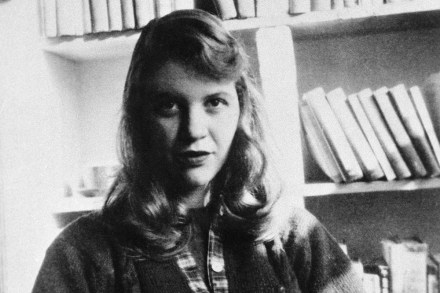
Is there anything more to be said about Ted Hughes and Sylvia Plath? I didn’t think so, but Helen Bain’s debut novel The Daffodil Days proved me wrong. I did not expect to be absorbed, on the first page, by a woman cleaning a house (Court Green in Devon), the home Plath had just vacated with her two young children for London, where a couple of months later, in February 1963, she would gas herself.               Working backwards from December 1962, the novel describes the last 18 months of Plath’s life, glimpsed through some friends – writers and poets such as Al Alvarez, Bill Merwin and Marvin and Kathy Kane – but mostly through local people in or near the small Devon town of North Tawton.

Everything and the girl: a lit-crit dissection of the Swifty world

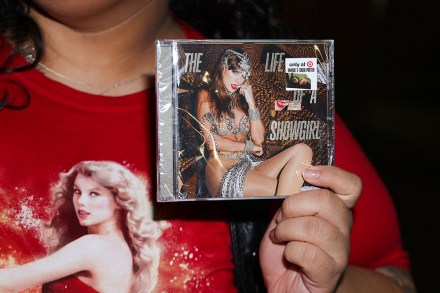
Stephanie Burt is a Harvard professor of English, a poet and a literary critic who recently created and taught a course on ‘Taylor Swift and Her World’. This not only attracted an unusually high degree of student engagement but also international media attention, with, one suspects, greater measurable benefits for Burt and Harvard than for Swift. Now Burt has produced Taylor’s Version: The Poetic and Musical Genius of Taylor Swift. The thesis is that Swift is a hugely successful artist because her songs are both ‘relatable’ and ‘aspirational’ The title suggests the sort of literary and musicological analysis that has been devoted to singers such as Morrissey (most brilliantly by Gavin Hopps) and Bob Dylan.

Turkish delights: the best of the year’s cookbooks

‘Recipes are like magic potions. They promise transformations,’ says Bee Wilson in her introduction to Sylvia Plath’s Tomato Soup Cake (Faber, £12.99), a collection of classic authors’ recipes. You have to pray that tinned tomato soup will indeed be transformed into something nice-tasting, or that Noel Streatfeild’s filets de boeuf aux bananas will not be as revolting as it sounds. Not much hope of that, I’m afraid – but this is more of a book to enjoy reading without tasting. Some of the writers confess to failing miserably in the food department. ‘I am a very bad cooker, as the children put it,’ warns Beryl Bainbridge, as she launches into a heartless recipe for violently boiled mince.

The sleepless lives of great writers

To sleep or not to sleep – that is the question the French writer Marie Darrieussecq asks in her latest book, which explores the insomnia that has haunted her for 20 years since the birth of her first child. From that date, she writes, it ‘has attached itself to me like a small ghost’. Darrieussecq is best known for her surreal novel Pig Tales (1996), but Sleepless is an account of her search for a cure to insomnia and the solace she finds in discovering writers such as Franz Kafka (‘the patron saint of insomnia’), Marcel Proust, Georges Perec, Sylvia Plath, Susan Sontag, Fyodor Dostoevsky, Mahmoud Darwish, Haruki Murakami, Aimé Césaire, Jorge Luis Borges and Tchicaya U Tam’si have all suffered from sans sommeil.

A magpie proves a troublesome pet

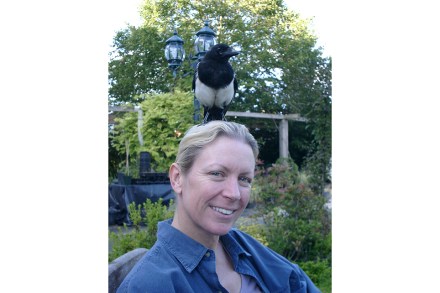
With his swashbuckling gait, ominous associations and garrulous demeanour, the magpie is the dandified razor boy of our avifauna and provokes ambivalent feelings (the ‘pie’ part signifies many a mixture). His pilfering reputation has inspired work from Rossini to the prog-rock band Marillion, and in lab tests he’s one of the few creatures brainy enough to recognise his own image in a mirror – even some Marillion fans can’t do that. But it’s hard to see how this corvid could be truly lovable. The artist and poet Frieda Hughes, however, fell for a little foundling Pica pica back in May 2007 when she was refurbishing her ramshackle new home. He was an unloved, unfledged orphan, and adopting him changed her life. George is a diary-based record of the sprightly saga that ensued.

Jonathan Bate weaves a memoir around madness in English literature

There is a trend for books in which academics write personally about their engagement with literature. Examples include Lara Feigel’s Free Woman, in which the author blends a memoir of her marriage break-up with a close reading of Doris Lessing’s fiction, and Sally Bayley’s Girl With Dove, which fuses an account of a traumatic childhood with sketches that focus on Bayley’s early love of books. Addressed to a wider readership, these works combine autobiography with literary criticism. They are carefully crafted, confessional and ask why literature matters.