Surgery

Another heroic freethinker is wiped from Russian history

It sometimes seems that those people chosen to be subjects for biographies are drawn from a strictly limited cast. Every few years, another book about Tolstoy, Dickens or some other great literary figure comes along to make library shelves groan further. At a recent talk given for a new biography of George Orwell, I asked the author why he had felt a need to add to the pile, given the plethora of perfectly good existing ones. ‘Because OUP commissioned me,’ was the answer. I didn’t buy the book. So how refreshing that Miranda Seymour should choose an absolute unknown to write about, whose life was genuinely interesting and surprising.
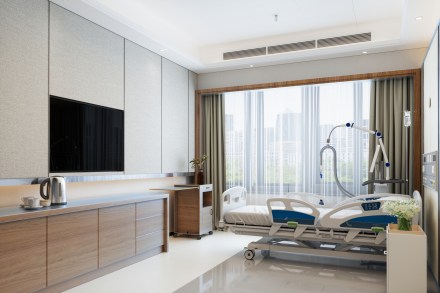
Nothing beats a posh hospital room 

The private hospital room in Chelsea was so relaxing I would have stayed for a week if it was affordable. It was more luxurious than the all-inclusive in Tenerife I went to last year, but sadly not in the same price bracket. One night in a hospital with designer soaps, a menu in Arabic and a gorgeous view of the London skyline nearly broke the bank, so I had to let them discharge me as planned the morning after my operation. There wasn’t really that much wrong with me, and certainly not enough to call it ‘a journey’, as all health crises are now termed.

What Trump told me in my hour of need

‘The two enemies of human happiness are pain and boredom,’ espoused German philosopher Arthur Schopenhauer. Having spent the past fortnight in the grip of both, after fracturing my femur so disastrously it necessitated a total hip replacement, I can confirm he’s correct. And given I did it tripping in a hotel restaurant, I would add ‘shame’ to the list. The pain was excruciating; the shame even worse. (History will record that the Free Solo daredevil Alex Honnold successfully climbed the 508-metre Taipei 101 tower, without safety ropes, in the same week I failed to navigate a six-inch step.) But the boredom’s been stupefying.

Are surgical museums such as the Hunterian doomed?

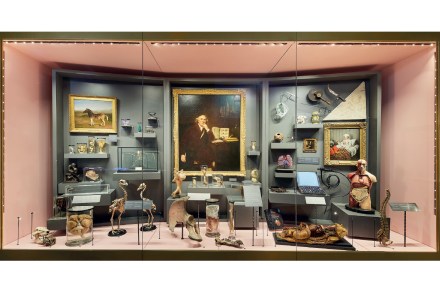
I have a soft spot for specimen jars and skeletal remains. Museums of natural history, surgical pioneering or anthropological oddities have always struck me as equally suitable for lunch breaks and first dates as for serious study and research. As far as public and casually accessible encounters with mortality go, these kinds of museums are the most straightforward way of confronting the realities of human nature. But whether we should have this kind of casual access is now increasingly being questioned. Telling history through displays of human remains presents a challenge for curators.

From Leonardo to Hepworth: the art of surgery

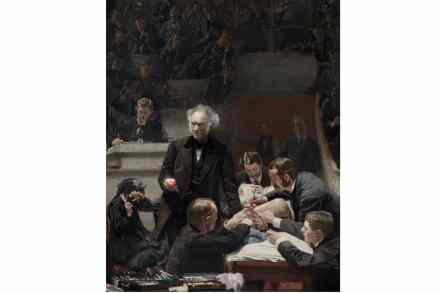
A doctor with wild grey hair and mutton chops holds a scalpel in his bloodied hand. He has paused for a moment, allowing one of his students to take his place and complete the incision. It’s a remarkably clean cut; the young man with the clamp has barely dirtied his shirt cuffs. Even so, the patient’s mother, if that’s who she is, weeps in the corner. She can see nothing but frock coats and a segment of open flesh. The 19th-century Philadelphia-based artist Thomas Eakins did not paint surgery as it was, exactly, but he did capture something of its veiled sterility. There may be no gowns or masks in his earlier medical pictures, but the wool coats and shirts worn by the doctors only do so much to soften the atmosphere of the operating theatre.

The tyranny of the visual

In 1450, the Duke of Urbino, Federico da Montefeltro, became monocular after losing vision in his right eye following a jousting accident. In order to improve the peripheral vision of his left eye, he had surgeons cut off the bridge of his nose. In Piero della Francesca’s 1472 portrait, the Duke is depicted in profile, so we can see that an equilateral triangle of flesh and bone has been chopped from what must have been an elegant aquiline beak. I have been more fortunate. In the past year I’ve had four operations at Moorfields Eye Hospital in London to repair a detached retina that made me blind in one eye. I didn’t have to cut off my nose to spite my face and improve my vision. What was impossible in the 15th century has become routine in the 21st.