Strait of Hormuz

Trump’s fantasy of victory

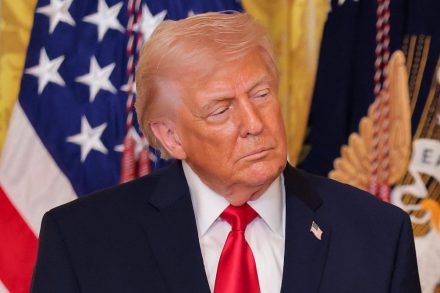
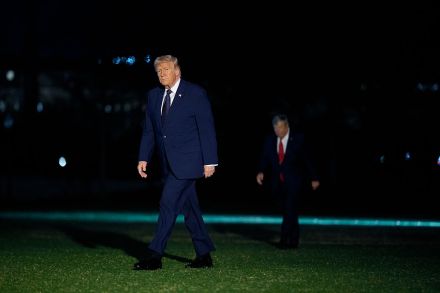
Among the many gifts the Watergate scandal gave us was Nixon’s White House press secretary declaring: "This is the operative statement. The others are inoperative." That was after months of sticking to increasingly threadbare denials. In Donald Trump’s White House, operative statements become inoperative from one day to the next. That’s especially true of Iran. In 24 hours, from Tuesday to Wednesday this week, Trump went from "a whole civilization will die tonight" to "this could be the Golden Age of the Middle East!!!" TACO: Trump Always Chickens Out, as the meme has it.  The two-week ceasefire agreed this week with Iran is a lesson that you can win every battle but lose the war. (This is the lesson the United States learned in Iraq and Afghanistan, only to forget it again.

Will Trump really obliterate Iran on Tuesday?

Was Donald Trump’s profane and threatening tweet, which included an F-bomb and an allusion to Iran’s leaders as "crazy bastards," on Easter Sunday itself a bunch of BS? Trump is riding high after the daring rescue of an American airman from Iran, but its leadership doesn’t appear to be overly impressed by his tweet threatening a major attack on Tuesday if the Strait of Hormuz is not reopened. On Saturday, Iran’s military leadership indicated that it had no intention of complying with Trump’s demands, dismissing his vow to destroy its infrastructure as a "helpless, nervous, unbalanced and stupid action.

Trump

A guide to Strait talking

I little thought in 2023, when writing about dire straits, that we’d so soon be pushed into them by trouble in the Straits of Hormuz. In discussions of these on the wireless, I find that even the best-informed commentators begin by referring to this geographical feature as the Strait of Hormuz but before long fall into calling them the straits. Insisting on the singular strait seems sterile pedantry. The Oxford English Dictionary has got the usage pretty straight: ‘When used as a geographical proper name, the word is usually plural with singular sense, e.g. the Straits of Dover, the Straits of Gibraltar.’ A pleasant piece of naval slang 100 years ago was up the Straits, meaning ‘in the Mediterranean’.

Iran and America’s new protection racket

"Whoever rules the waves rules the world" – Alfred Thayer Mahan. Would Donald Trump have attacked Iran on February 28 if the Supreme Court had not ruled against his tariffs on February 20? The two issues may seem unrelated. Yet, as a fascinating piece by Captain John Konrad has pointed out, a closer inspection of Trump’s international agenda reveals his administration’s intense focus on trade, energy and maritime control – and that might help explain the otherwise inexplicable folly of the situation in the Strait of Hormuz.  Trump is determined to bring about an American Golden Age. That involves controlling gas and oil, aggressively reducing China’s expanding control of shipping lanes, and establishing US dominance over key maritime chokepoints.

Strait of Hormuz

Which age group is most at risk of meningitis?

From our UK edition

Churchill insurance There was outrage that Winston Churchill is to be dumped from the £5 note in favour of wildlife. But was Churchill actually a good example with money? Shortly after he became prime minister in May 1940, he was faced with two crises: the capitulation of France to the invading German forces and the prospect of personal bankruptcy. He had an overdraft of £5,602 (£274,000 in today’s money), while his income from writing was to diminish as a result of his taking high office. The situation was only resolved when businessman Sir Henry Strakosch made an anonymous donation of £5,000, paid via his business partner – and Churchill’s friend – Brendan Bracken. It was one of several occasions when Churchill had to be bailed out by friends.

Iran and the crisis in the European mind

The politics of the Iranian war feature an observable gap between interest and action for nearly all parties. The Americans possessed overwhelming casus belli versus Iran for nearly half a century, and did not act upon it until three weeks past. The Iranians possessed none against America for just as long, but exerted themselves with religious fanaticism to bring this war upon themselves. The Arab autocracies of the Persian-Gulf region find themselves under direct attack from the Iranians, but do not respond in kind. The Chinese observe a core strategic proxy and key commodities supplier taken off the chessboard – for the second time in under 90 days – and refrain from direct engagement.

Europe

Should NATO help America defend the Strait of Hormuz?

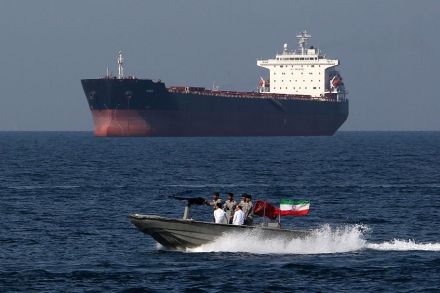
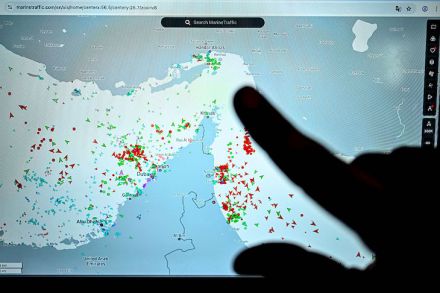
As soon as Operation Epic Fury, America’s latest campaign against the Islamic Republic of Iran, got underway on the last day of February, political, military and economic minds around the world should have turned their attention to the Strait of Hormuz. The waterway provided the only shipping route from the Persian Gulf to the Gulf of Oman and the open seas beyond. That has long made the strait the dagger Iran holds at the throat of the world. At its narrowest, it is less than 25 miles across, and Iran controls the northern shore; to the south is the Musandam Peninsula, shared by the United Arab Emirates and an exclave of Oman.

NATO STRAIT

What Signalgate tells us about Iran

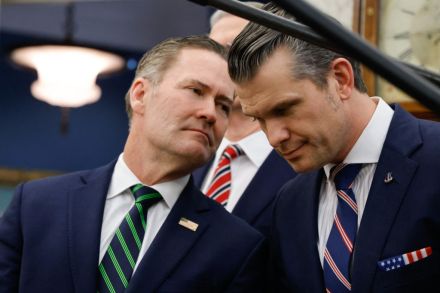
Remember Signalgate? It was quite the story, and worth revisiting now in light of Operation Epic Fury, the ongoing crisis in the Strait of Hormuz and its dire implications for the global economy.  In March last year, Donald Trump’s then National Security Advisor, Mike Waltz, somehow added Jeffrey Goldberg, the editor-in-chief of the Atlantic, to a Signal messaging group for senior government officials to discuss top secret military action against the Houthis in Yemen. The group included the Vice President J.D. Vance, Secretary of State Marco Rubio, Defense Secretary Pete Hegseth, Director of National Intelligence Tulsi Gabbard, White House Chief of Staff Susie Wiles and deputy chief of staff Stephen Miller, among others.

hegseth signalgate walt

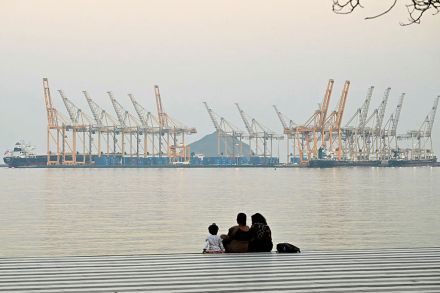
The Iran war has exposed the world’s maritime chokepoint

The war with Iran is exposing a vulnerability at the heart of the global gas market: the extraordinary concentration of liquefied natural gas supply in the Persian Gulf. Qatar alone accounts for roughly a fifth of global LNG exports, almost all of it passing through the narrow Strait of Hormuz. The conflict has illustrated how easily a single maritime chokepoint could interrupt a significant share of the world’s gas trade. Even if the war ends soon, the vulnerability it has exposed will not disappear President Donald Trump has suggested the conflict may soon end, describing the campaign as largely achieved and possibly over "very soon." The Gulf monarchies also appear eager for a quick resolution, even as they continue to face missile and drone attacks.

Trump has been caught flat-footed on Iran

Donald Trump has become something of a sole man. His cabinet members and White House visitors report that the president has developed a penchant for handing out $145 Florsheim shoes in an effort to up their sartorial game. In his Life of Johnson, Boswell reported that Dr. Johnson recoiled at an “eleemosynary supply” of shoes as an impecunious student at Christ Church, Oxford and threw them away with indignation. Trump’s followers have no such freedom of action. “All the boys have them,” one official told the Wall Street Journal, which ran a picture of his administration leaders obediently lined up and wearing the same shiny black leather numbers.

Will the war in Iran really weaken China?

Analogies in international politics are tricky and easily abused, yet they remain irresistible because they can illuminate patterns that are otherwise hard to see. Consider the present moment.  Just as Ukraine has become a growing burden for Washington and its Western allies, Iran is now a strategic burden for Moscow and Beijing. The US, particularly under the Trump administration, appears to be placing less emphasis on supporting Ukraine. Something similar may be happening in reverse with Iran.  Moscow continues to provide Tehran with assistance – most notably intelligence on US military targets – but the broader pattern suggests caution rather than deep commitment.

China Iran

The Iran war has exacerbated the failure of European energy policies

The history of the global trading system is a story of narrow and vulnerable waterways: the Suez and Panama Canals, the St. Lawrence Seaway, the Straits of Dover and the Skagerrak, which defends the entrance to the Baltic. But none has the power to seize up the global economy as much as the Strait of Hormuz. Barely 30 miles wide at the narrowest point and bounded on one side by the state of Iran, this passage is used for a quarter of the world’s oil supplies and a fifth of its liquified natural gas (LNG).

energy