Space

Scientists’ strange offering to the final frontier

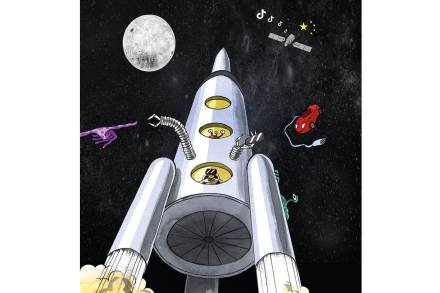
Dr. Jonathan Jiang dreams of beaming an easy-to-read message into space before civilization collapses. He’s run the simulations to test humanity’s self-destruction rate. According to his computers, there’s a 0.1 percent chance that humanity destroys itself in the not-so-distant future. He’s even more pessimistic than Stephen Hawking, who bowed out of public life saying, “I don’t think we will survive another 1,000 years without escaping beyond our fragile planet.” Jiang, who works for NASA’s Jet Propulsion Laboratory, co-authored the 2022 paper “A Beacon in the Galaxy,” which argues for the importance of streamlining the communications we send into space hoping they might be intercepted by an interplanetary species.

space

Farewell, Voyager 1

From our UK edition

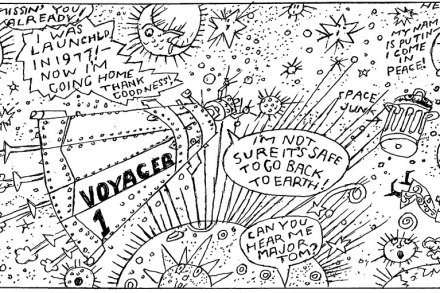
Some time soon we will have to say farewell to our most distant emissary – the Voyager 1 spacecraft. After almost 50 years in space, it’s 15 billion miles away and showing signs of wear and could soon stop transmitting. Late last year, Voyager 1 began to decline, sending back spools of gibberish to its handlers on this planet. A few days ago, Nasa engineers finally traced the problem back to a single chip but it’s clear that Voyager 1 will shortly have to cut contact and make its way out across the universe on its own. It’s strange to think that it will be exploring on out into deep space long after its makers – humans – have become extinct.

Dune, an enduring monument to cultural appropriation

One of the Ukraine war’s minor celebrities is Ramzan Kadyrov, a Russian politician and Islamic hardliner who rules his native province of Chechnya as a personal fiefdom. Kadyrov and his combative underlings have been active on social media from the beginning of the conflict, posing with guns and trophies and boasting about their martial prowess.  Before they became villains in the Western press, tarred by their association with Russian aggression and Islamic fundamentalism, the Chechnyan mountain clans’ struggle for independence was a Victorian cause celebre, akin to Western support for Ukraine today.

dune

A bird’s-eye view: Orbital, by Samantha Harvey, reviewed

From our UK edition

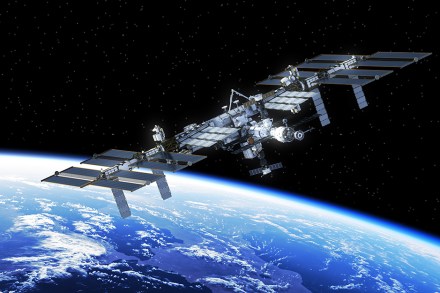
This slender, gleaming novel depicts a day in the life of six astronauts at the International Space Station – but a day isn’t a day for a crew orbiting Earth at more than 17,000 miles an hour. Space ‘takes their 24 hours and throws 16 days and nights at them in return’. Weaving a line of philosophical enquiry through her luminous prose has become something of a trademark for Samantha Harvey, who probed the elasticity of time through a portrayal of Alzheimer’s disease in her prize-winning debut The Wilderness and, in All is Song, transported Socrates to the 21st century.

Now imagine a white hole – a black hole’s time-reversed twin…

From our UK edition

There are many ways to measure the course of human history and each will give an insight into one or more of the various qualities that have made us the most successful great ape. Every major advance, whether in war or art or literature, requires imagination, that most amazing of human capacities, and the ability to ask ‘What if?’ – to take the world from a different perspective. Nowhere is this more apparent than in the history of science. While there is an inherent provincialism in revolutions in art and literature, progress in science is universal, and moves, like Dante’s Hell, in concentric circles of ever deeper understanding.

What exactly is the new space race all about?

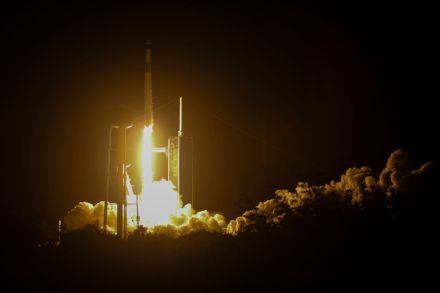
The recent spate of articles about attempts by different countries to land vehicles on the Moon make it clear that a new space race is on. Just last month, Russia launched its first mission there in forty-seven years. And although the automated Luna-25 spacecraft spun out of control and crashed at the last minute, India’s heavily-instrumented Chandrayaan-3 landed successfully just four days later. NASA itself aims to return humans to the lunar surface in 2025 with its Artemis program. Remarkably, more than eighty countries, including Israel and the United Arab Emirates, have thus far established some kind of presence in space.

space

Andrew Pontzen: The Universe In A Box

From our UK edition

53 min listen

My guest in this week's Book Club podcast is the cosmologist Andrew Pontzen. His The Universe In A Box: A New Cosmic History describes how we have learned to simulate first the weather, and then the universe itself – and how we discovered that those simulations don't just mimic reality but allow us to learn new things about it. Dark matter, the Big Bang and the scientific importance of suboptimal pizza: it's all here.

UFOs

The return of the UFOs

By the time you read this, Uncle Sam’s latest ‘definitive’ report on UFOs (it’s not the first) will have been made widely available, with the exception of a classified annex (there’s always room for a sequel). If the leaks are to be believed, we will have learned that there’s a lot more out there that we don’t know. Some of the material may well be impossible to explain, but inexplicable is not a synonym for extraterrestrial. Could we instead be catching glimpses of something the Russians or the Chinese have dreamt up? E.T., though, will neither be ruled in, nor, crucially, ruled out. For their part, ufologists will take what they can get.

When the moon brought America together

The Artemis rocket is back from the moon. Within a couple of years, if all goes to plan, it will bring men to the moon’s surface. It is a great loss that a bigger deal hasn’t been made of this expedition. I was only three when John F. Kennedy died, and his famous 1962 pronouncement that we would go to the moon not because it was easy but because it was hard was already history. The picture books I got on birthdays always included him in the history of space exploration. Those books made sure every kid knew how “we” were going to get to the moon. They changed us, and with us, America. We started with Mercury, baby steps mostly proving we could launch men into space. Then Gemini, a long proof-of-concept program to try out the technology of docking.

America is forgetting how to make stuff

Articles about the future and “progress” have been popping up a lot lately, with conversations revolving around the inevitable advancements in technology and automation. Where we should head next is the collective theme. To the metaverse? To outer space itself? But instead of setting our sights on colonizing Mars or creating a perfect alternate reality, we should slow our roll, focus on the here and now and consider whether the frenzied “progress” we’re in such a rush to make has demonstrated any benefit to real-life people. Manufacturing is a good place to start. Let this startling reality sink in, reported in 2017 by the Organization for Economic Co-operation and Development: Between 2000 and 2010, US manufacturing experienced a nightmare.

How humans may populate the universe in the billions of years ahead

From our UK edition

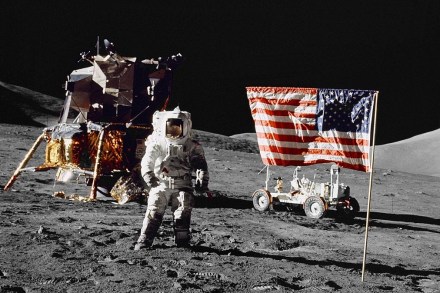
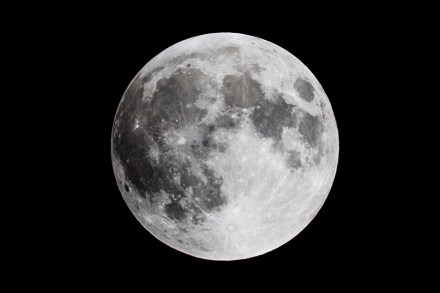
I’m old enough to have viewed the grainy TV images of the first Moon landings by Apollo 11 in 1969. I can never look at the Moon without recalling Neil Armstrong’s ‘One small step for a man; one giant leap for mankind’. It seems even more heroic in retrospect, considering how they depended on primitive computing and untested equipment. 20 July 1969 (NASA/AFP via Getty Images) Once the race to the Moon was won, there was no motivation for continuing with the space race and the gargantuan costs involved. No human since 1972 has travelled more than a few hundred miles from the Earth. Hundreds have ventured into space, but they have done no more than circle the Earth in low orbit.

What Jeff Bezos should have learnt from Neil Armstrong

From our UK edition

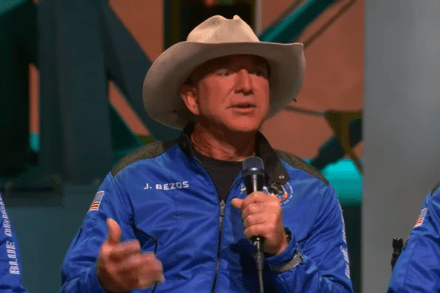
Amazon founder Jeff Bezos joined the billionaire space race today in his suitably phallic looking New Shepard rocket. Bezos successfully travelled to just beyond the Karman Line: the official boundary between the earth’s atmosphere and the rest of the universe. So what sage words did the billionaire have for the rest of us as he looked out of the window at a sight that only 556 other humans have had the privilege to witness? A philosophical thought perhaps? A rumination on our planet’s beauty or fragility? Or maybe an assertion of mankind’s technical prowess? Alas, we were given none of this. According to the entrepreneur, as he descended on a rocket-powered air cloud, it was the ‘Best. Day. Ever.

Branson vs Bezos: In praise of the billionaire space race

From our UK edition

They are rich boys with some very expensive toys. As Richard Branson completes his first space flight, it would be easy to dismiss the race between the Virgin founder and Amazon’s Jeff Bezos to be the first billionaire in space as the self-indulgence of a couple of tycoons with too much testosterone and too much money.  The competition will be seen by some on the liberal left as a symbol of widening inequalities. They will view it as the emergence of a plutocratic class separated from the rest of us, and as proof of the argument that space should be left to the public sphere. Of course there is an element of truth in all of those complaints.

Why Elon Musk should fly me to the moon

From our UK edition

I have just applied to fly around the moon. My chances of being selected are slim, but is it impossible? Hopefully the explosion of Elon Musk’s test rocket shortly after landing in Texas last week may have winnowed down the competition for a place on Yusaku Maezawa’s flight to the moon and back, scheduled for 2023. That Texas landing was in fact a success, proving it’s possible for a rocket of this size to launch and return intact: third time lucky, the first two rockets tested having exploded on impact.

Bezos vs Musk: who will win the new space race?

From our UK edition

While the West gets itself into a lather on a weekly basis about the evils of past colonialism is anyone paying attention to the new empire builders in our midst? Although their ideas for space travel often read like the pages of an Arthur C Clark novel, Jeff Bezos and Elon Musk have done little to disguise the colonising instincts of their space projects. Both have outlined competing intentions to mine the moon and put humans on Mars. And, with Bezos stepping down from Amazon to devote more time to his space venture Blue Origin, we could be witnessing the beginnings of a galactic power struggle - executed not by States but by corporations. Bezos and Musk are far from the only billionaires to follow this route.

NASA’s multi-billion dollar Mars reality TV show green-lit for another season

The American businessman and astronomer Percival Lowell first popularized the notion of life on Mars in 1906 when he described vast canals observed on the planet, some spanning the equivalent distance of Boston to San Francisco. He believed an intelligent Martian civilization was in peril, their world drying out and dying, and they had constructed as a planet-wide irrigation system to move water from Mars’s polar ice caps to the rest of the planet.American folklore has it that the idea of Martian intelligent life was so pervasive that a 1938 radio drama of H.G. Wells’s War of the Worlds, about a Martian invasion, ignited mass panic when millions of people believed it was a real newscast.

mars

Space is the place — for war

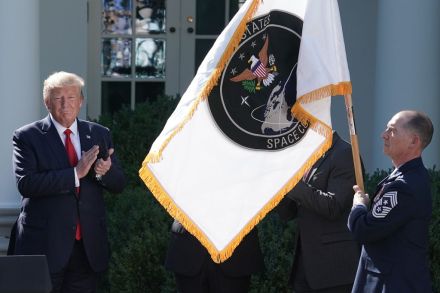
This article is in The Spectator’s inaugural US edition. Subscribe here to get yours. You have no phone service, no television, no GPS for the car and no road atlas because you threw it out in 2009. Planes aren’t flying, and that spinning sound you can’t hear is the sound of space hardware floating out of our control. So dependent have we become on satellites for everything from communications to traffic control that a day without them would mean catastrophe. In the new space race, victory won’t mean landing on the moon or sending a rocket to Mars, but developing a new arsenal to wage and win war in space.

space force

Apollo 11 was nowhere near woke enough

If you do ever find yourself in Moscow with a spare morning or afternoon to discharge, might I recommend a visit to the Museum of Cosmonautics? Roosting below the grandly named ‘Monument to the Conquerors of Space’, the frigid, rather shabby rooms of this museum contain exhibits that are as moving as anything that’s ever been placed in a glass box for tourists to gawp at. When you consider that Soviet Cosmonauts ‘touched the face of God’ using crude, dangerous technology that contained less processing power than the average contemporary fridge – when you consider the sheer bravery of men like Gagarin, Belyayev and Komarov – the major response is (and ought to be) pride. Pride on a human level, that is to say, a species-level pride.

apollo 11