Space

How we wage war in space

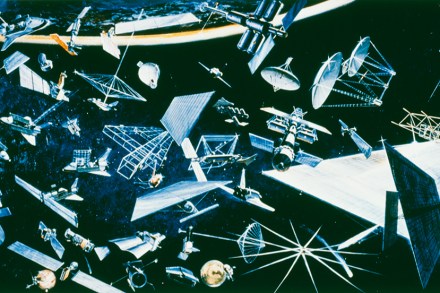
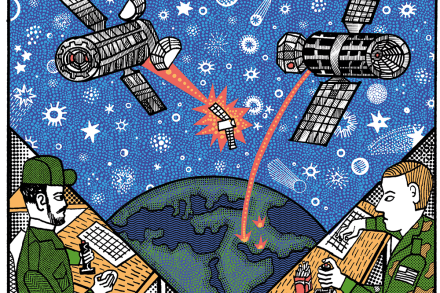
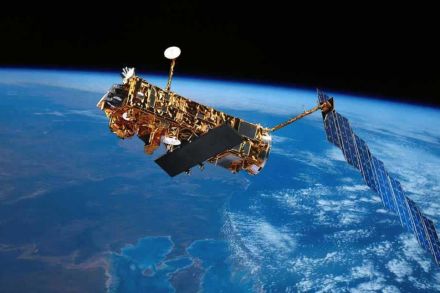
Operation Epic Fury marks a turning point in the art of war. The key to 20th-century battles was air power. In the past, space and cyber activities have traditionally played supporting roles as so-called force multipliers. But this is no longer the case. In this conflict they have become mainstream, carving out new fronts for the wars of the future. The use of space is no longer something that is just nice to have, because everything from comms to intel to navigation uses space and cyber assets. Along with the National Reconnaissance Office, which manages US spy satellites, the US Space Force uses a global sensor network of ground-based telescopes

Inside the race to build AI data centers in space

In the 1966 novel Colossus by British author D.F. Jones, a supercomputer (which goes by the name of Colossus) is given control and decision-making power over the US’s nuclear arsenal – a logical and unemotional computer being better placed, it is assumed, to make unemotional decisions than a human. Eventually, Colossus discovers the existence of a similar supercomputer in the USSR and begins communicating with its Russian counterpart in mathematical languages about technological advances beyond human comprehension. Frightened by the possibilities this presents, scientists sever the connection – only for Colossus to threaten to launch nuclear weapons if it isn’t reconnected. Colossus and its newfound Russian friend begin monitoring and controlling their

Will Bezos beat Musk to the Moon?

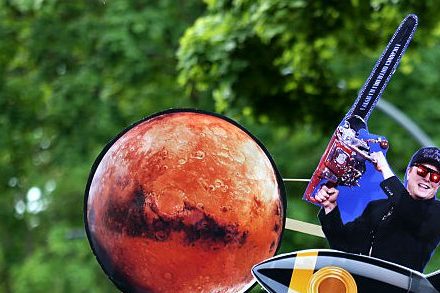
Even Elon Musk has to face a dose of reality every once in a while. Technology and politics have forced him to turn his gaze away from Mars, for the moment at least, to put Americans back on the surface of the Moon before China gets there. But it might already be too late. If America has any chance of beating China, it now seems inevitable that the next American human landing on the Moon will not be by Musk’s Starship but using a craft being developed by his rival Jeff Bezos. Announcing the pivot, Musk wrote on X: “For those unaware, SpaceX has already shifted focus to building a

Bezos

The Artemis II mission is an exercise in wonder

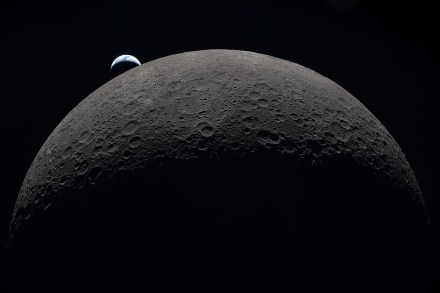
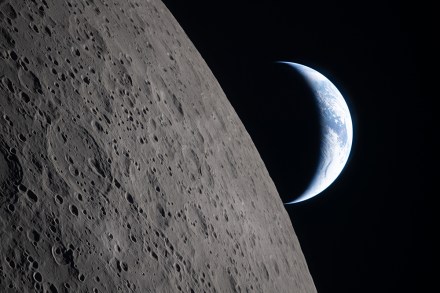
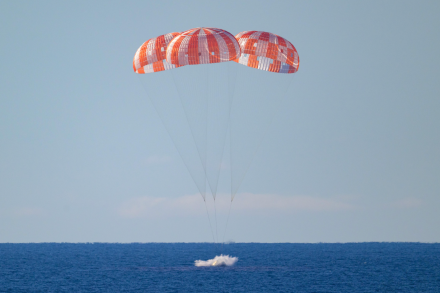
When the Artemis II mission eventually blasts off, it will take humans back to the Moon for the first time in more than 50 years. Americans Reid Wiseman, Victor Glover, Christina Koch and Canadian Jeremy Hansen will travel further out into space than anyone before when they loop 4,700 miles beyond the Moon, seeing parts of it never before glimpsed by human eyes. The flight is designed to put the powerful Space Launch System rocket and the Orion capsule, with its European-made Service Module, through their paces. Three hours after launch, the crew will monitor a procedure not performed since 1972, so-called TLI – Trans-Lunar Injection. Only five of the

The inside story of how America got to the Moon

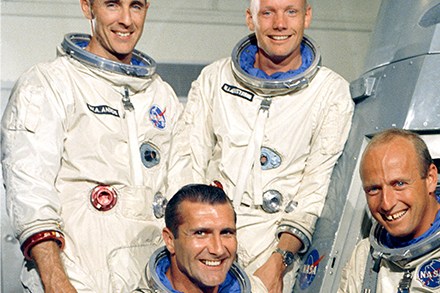
On March 16, 1966, Neil Armstrong and David Scott became the first astronauts ever to dock with another spacecraft when they linked their Gemini 8 capsule to the uncrewed Agena target ship. However, the cheers had barely died down at Mission Control Houston when Scott realized they had a problem. The conjoined spacecraft had begun a gentle leftward pitch. Armstrong and Scott watched in horror as the capsule’s gentle pitch became a tumbling motion that increased, turning the craft into a centrifuge. In desperation, Scott undocked the two ships before gravity ripped them apart. But Gemini 8 continued to spin faster. At 60 revolutions per minute, the astronauts began to

Greenland and the new space race

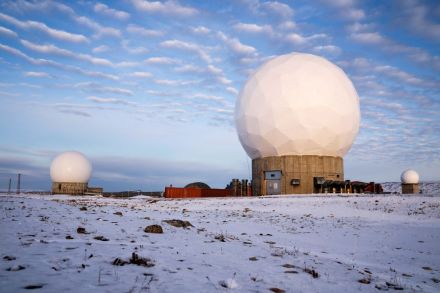
Donald Trump’s desire for Greenland is not just about access to oil, minerals and control of the new strategic and commercial corridors opening in the region. It’s also about data. Specifically, the most important data in the world. For decades, Pituffik Space Base – formerly Thule – in Greenland has been central to US space defense and Arctic strategy. It’s the US military’s only base above the Arctic Circle and their most northerly deep-water port and airstrip. It’s home to the 12th Space Warning Squadron. Its massive AN/FPS-132 radar has 240 degrees of coverage surveying the Arctic Ocean and Russia’s northern coast, especially the Kola peninsula where it has concentrated

greenland

An interview with the physicist David Deutsch

The Amazon reviews for David Deutsch’s The Beginning of Infinity don’t alert you to the fact that this is a book on theoretical physics. They sound more like a weepy divorcé’s YouTube comments below a Mark Knopfler guitar solo. “I didn’t so much read it,’ says one. “It read me.’ ‘I was honestly sad when it was over,’ writes another. “This book changed my way of seeing the world, politics, science and, most importantly, of seeing what I will understand as containing some truth.” When I talk to Deutsch – one of the most sensationally interesting theoretical physicists of our age – on Zoom, I see two beady eyes peering