Soviet union

Death metal

From our UK edition

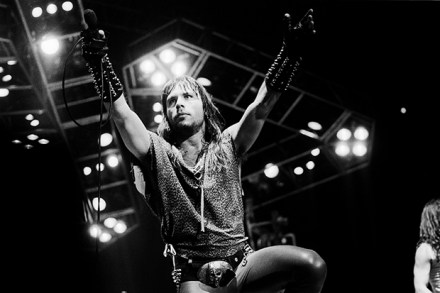
With its loud guitar riffs and even louder fashion, heavy metal has always been ripe for ridicule. In its mid-1980s heyday, it was epitomised by the fictional rock group Spinal Tap prancing on stage next to an 18-inch polystyrene model of Stonehenge while clad in ball-crushingly tight trousers and floor-length capes. In some parts of the world, however, metal is no laughing matter. In the Middle East, for instance, the potential punishment for wearing all black while wielding an electric guitar is death. These days, against a backdrop of authoritarian suppression in countries such as Iran and China, heavy metal’s trademark theatrics and widdly guitar solos have become less an opportunity for gentle mockery than a rallying cry for artistic freedom.

The kids are all right

From our UK edition

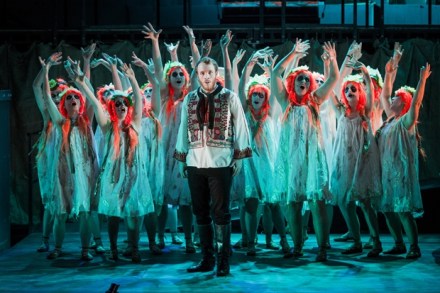
In a remote fishing village a lone figure confronts an unexplained death, standing tormented but unbroken against fate, the community and the elements of sea and wind that surge through every note of the score. No, not Peter Grimes: this is Vaughan Williams’s 1932 operatic setting of Synge’s Riders to the Sea. But Vaughan Williams’s operas are undramatic, runs the received wisdom. There were no great British operas between Purcell’s Dido and Aeneas and the premiere of Grimes in 1945, we’re repeatedly told. This student production of Riders to the Sea didn’t just refute those assumptions: it threw them into a riptide and watched them being dragged under and swept away.

Communism kills

From our UK edition

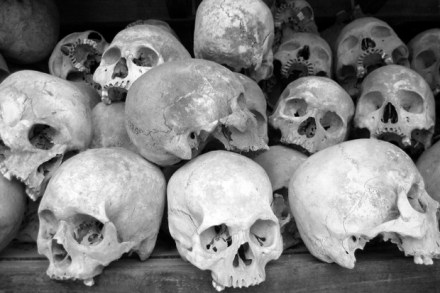
I went to Budapest last year and did the usual touristy things. I climbed up the hill to the fantasy castle walls in Buda. I took a boat ride. I went to the Turkish baths — edging cautiously into scalding hot water and then summoning up the courage to tip a bucket of cold water over myself. Finally, I reached the grim end of the tourist trail: the so-called House of Terror. On the outside, it looked like every other Hungarian house on the boulevard. Inside, it was a museum set up in the actual place where first Nazis, then communists, inflicted imprisonment, terror and murder. Visiting it was a powerful emotional experience. You see the actual basement cells where prisoners were tortured or hanged.

Lessons from Utopia

From our UK edition

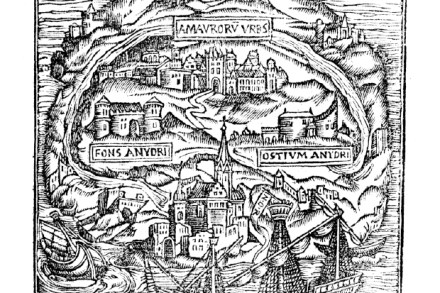
As anniversaries go, the timing could hardly be more apt. As Europe braces itself for the next Islamist attack, the next assault on our civilisation, a season of events marks the 500th birthday of a book that outlined an enlightened vision of the ideal society. Utopia 2016 is a year-long celebration of Thomas More’s Utopia at London’s Somerset House, where the Royal Society and the Royal Academy used to meet. Somerset House is a building that encapsulates the free-thinking values of the Enlightenment, and More’s Utopia is a book that encapsulates the Renaissance sensibilities that built it. We all know what sort of society Isis wants (the clue’s in the name), but what sort of society do we want? What rights are we defending?

Why did a Russian ballet dancer throw acid in his boss’s face?

From our UK edition

The 16th June 1961 and 17th January 2013 are two indelible dates in the annals of Russian ballet. Two events that left the world gobsmacked — the escape of a Cold War fugitive and an acid attack by a subordinate on his boss — all enhanced in strangeness and sensational interest because they came out of the ballet world, a world largely closed to the rest of us. By a coincidence that’s as informative as it is lucky, two gripping documentary films emerge right now which tell these stories with dramatic effect, but also suggest a cultural link between the defection of the Kirov’s bad boy Rudolf Nureyev and the ghastly assault upon the Bolshoi Ballet artistic director Sergei Filin.

Stars in their eyes | 24 September 2015

From our UK edition

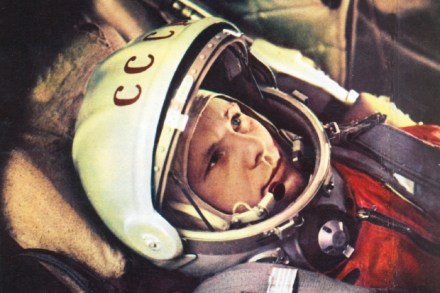
‘The dominant narrative of space,’ I was told, in that strange language curators employ, ‘is America.’ Quite so. Kennedy stared at the moon and saw a promotional opportunity. Nasa’s logo was designed by the flamboyant Raymond Loewy. A PR man wrote Neil Armstrong’s unforgettable lines. Every event at Cape Canaveral (later the Kennedy Space Center) was televised, while, in the USSR, Star City was built in furtive secrecy just outside Moscow. Tom Wolfe glorified the US space programme in The Right Stuff, his boisterous 1979 masterpiece of reportage where the cowboy mentality of the fly-boys co-mingled with the technical marvels of California aerospace, myth-making the while.

Dick at his trickiest

From our UK edition

In the more than 40 years since Richard Nixon resigned as president — disgraced as much by his inveterate lying as by his actual crimes related to Watergate — history has been relatively kind to him. Compared with Ronald Reagan, Bill Clinton and George W. Bush, Nixon in retrospect can seem statesmanlike, thoughtful and liberal-minded. He established diplomatic relations with communist China, took the US off the gold standard, negotiated the wind-down of the Vietnam war, and created the Environmental Protection Agency — accomplishments that generally prompt even Nixon-haters to pause before they condemn Tricky Dick to perdition. But now comes Joan Brady with a bracing reminder of what indeed was so hateful, so villainous about Nixon and his political ascent.

Waiting for Utopia

From our UK edition

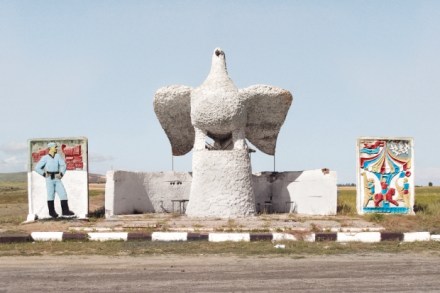
The Soviet Union was a nation of bus stops. Cars were hard to come by, so a vast public transport network took up the slack. Buses not only bore workers to their labours, but also breathed life into the ‘union’ itself by taking travellers from town to taiga to desert to seaside. In remoter parts of the country, bus shelters mattered even more than buses, providing convenient places for people to gather, drink and socialise. They were caravanserai for the motor age, and while the empire they served no longer exists, most of them stand right where it left them. If they are in various stages of ruin now, they are all the more attractive for it.

Conspiracies, hookers and bombs – welcome to the Odessa Film Festival

From our UK edition

Odessa, the pearl of the Black Sea, is one of the most charming port cities you can imagine, the centre of the city mainly 19th-century Italian and French architecture. Like a run-down Riviera, but with the exchange rate gone from 8 grivnas to the pound to 34, it’s fabulously cheap for visitors. At my favourite Azeri restaurant, which doesn’t sell wine, they offered to go to the supermarket and buy me a bottle of red. £1.50 for perfectly drinkable Ukrainian plonk. The rate has dived due to the unrest and war in the East of course. On the surface things are somewhat calmer than last year when a fire killed dozens in a trade union building. There’s enough instability and sporadic bombing, however, to keep people on their toes.

Dedicated follower of fascism?

From our UK edition

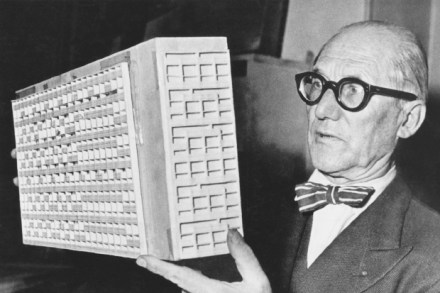
The ‘revelations’, 50 years after he drowned, that Le Corbusier was a ‘fascist’ and an anti-Semite are neither fresh nor startling. Indeed they’re old hat. And it defies credibility that the authors of three recent books about this tainted genius were ignorant of what anyone with even the frailest interest in architects’ foibles and tastes has been aware of for years. Not that this has deterred them; nor has it deterred newspapers from filleting the books for supposedly sensational titbits. What next? The hot news that the cuckold Carlo Gesualdo murdered his wife and her lover? That Jean Genet has been discovered to have been, you know, on the light-fingered side?

Former Communist spy: KGB created Catholic liberation theology

From our UK edition

The respected Catholic News Agency has published an interview with Ion Mihai Pacepa, a former general in Romania's secret police who was one of the Eastern Bloc's highest-ranking defectors in the 1970s. In it, he says that Soviet Union – and the KGB in particular – created liberation theology, the quasi-Marxist movement that flourished in Latin America from the 1960s to the 1990s and is still a powerful influence on the Catholic Left. The interview provides fresh evidence of the infiltration of liberation theology by Russia – a subject Catholic liberals would much rather not discuss, just as they don't want to know about the heavy Soviet investment in CND. But first, some caveats.

Why Putin is even less of a human than Stalin was

From our UK edition

LBC likes to tell us it’s ‘Leading Britain’s Conversation’, though in the case of weekday pre-lunch presenter James O’Brien you’ll have to sit through a series of bombastic monologues from the host before any punters get a word in edgeways. O’Brien knows everything, and he doesn’t mind telling you. Still, I understand that running a talk show is no job for timid introverts who might burst into tears if callers start giving them a hard time. The trick is pretending to listen sympathetically while being ready to drop the guillotine without compunction (after all, these people aren’t your friends, they’re just statistics for the business plan).

Classical music’s greatest political butt-kissers: Dudamel, Gergiev and Rattle

From our UK edition

On 8 March 2013, Gustavo Dudamel stood by the coffin of the Marxist autocrat Hugo Chavez and conducted the Simon Bolivar Symphony Orchestra in the Venezuelan national anthem. He assumed, like everyone else, that the coffin contained a fresh corpse: the president of Venezuela was reported to have died from cancer on 5 March at the age of 58. Not so, it is now claimed. According to his former head of security, Chavez died on 30 December 2012. The news was kept secret while his lieutenants panicked. The funeral — covered with ludicrous sycophancy by the BBC — was, at least in part, a masquerade. Whatever the truth, Dudamel — who’d recently taken up residence in America as music director of the Los Angeles Philharmonic — had to be there.

Want to understand the conflict in Ukraine? Compare it to Ireland

From our UK edition

What seemed this time last year to be a little local difficulty in Ukraine has metastasised to the point where a peace plan drafted in Paris and Berlin may be all that stands in the way of war between the West and Russia. Over the months, many of those watching, appalled, from the safety of the side-lines, have combed history for precedents and parallels that might aid understanding or offer clues as to what might be done. Last spring, after Russia snatched Crimea and appeared ready to grab a chunk of eastern Ukraine too, the favoured comparisons were with Nazi Germany’s 1938 annexation of Sudetenland. It was a parallel that seemed all too plausible, given the Kremlin’s statements about the need to protect Russian 'compatriots' wherever they might live.

Russians made the theatre space the most liberating imaginative device ever invented

From our UK edition

You have to hand it to the Russians. They beat us into space, beat us to sexual equality, and a small display of early Soviet avant-garde theatre and film design, tucked away in the V&A’s ‘Performance’ area, proves that they beat us hollow in matters of the dressing-up box too. When you arrive (that is, if you arrive — it is a labyrinthine trek to find it) at Russian Avant-Garde Theatre, you should make straight for the little screen. It shows the amazing 1924 sci-fi film Aelita, in which an engineer living under ‘Military Communism’ builds a spaceship and flies to Mars where he falls for Aelita, Queen of Martians.

Maya Plisetskaya and Rodion Shchedrin: ‘The KGB put a microphone in our marriage bed’

From our UK edition

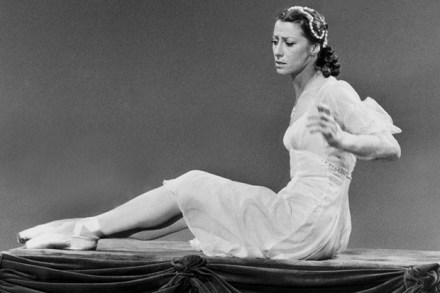
‘People in the West don’t understand nothing. Even the new Russian generation don’t understand anything at all. You don’t know, and it’s better you don’t.’ Maya Plisetskaya scrutinises me with her beautiful, kohl-rimmed, 88-year-old eyes, a gaze made wary in childhood, when her father was shot as an enemy of the Soviet people, her mother jailed, and her Jewish family broken by persecution. ‘Can anyone understand how if you took a single carrot from the collective farm, just one carrot, you could get ten years’ prison? Who could understand that?

Ambridge recovers its sense of humour — finally

From our UK edition

‘Isn’t that charming!’ Carol declares at the height of the great Home Farm cocktail party, after being subjected to Jennifer’s somewhat over-enthusiastic description of her wine storage unit. Just three words but such a lot of meaning. Carol Tregorran’s resurrection in Ambridge after decades of silence is a stroke of genius by The Archers team (led by Sean O’Connor), and almost, but not quite, makes up for the absurdity of the Elizabeth/Roy storyline, still not resolved and likely to linger on for weeks yet, Elizabeth struggling to put Roy back where he belongs, Roy transformed from a cheery family man into a lovelost shadow of his former self.

The traitor Melita Norwood should have been prosecuted

From our UK edition

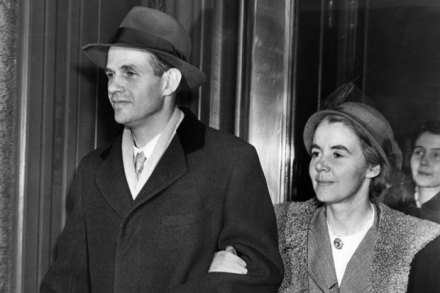
Today brings a fresh reminder of a national disgrace, the failure to prosecute Melita Norwood for treason. Newly released files from the Mitrokhin archive make clear how vital a KGB source Norwood was; Moscow regarded her as an even more valuable asset than Kim Philby. Norwood's treason was exposed in 1999 when she was still alive. But she was, absurdly, not prosecuted. This was a failure of national nerve. She might have been an old woman by the time her spying was revealed, but she was an agent of one of the most unpleasant authoritarian regimes in history and one which this country was involved in a decades-long struggle against. She should, as a matter of principle and honour, have been subject to the full force of the law.

Vladimir Putin knows what he stands for. Do we?

From our UK edition

Possibly because his oratory is no match for his much-displayed pectoral muscles, the speeches of Vladimir Putin are seldom reported at length in the West. But as a means of understanding the manoeuvres in eastern Ukraine this week, there is no better starting point than the speech he made to the Duma when the Russian parliament annexed Crimea. Lest anyone thinks his words have been enriched by an over-imaginative reporter, the translation is provided by the Kremlin itself.

Remembering the decimation of Crimea’s Tatars

From our UK edition

Crimea’s Tatars are nervous after Russia’s annexation of the territory. The Tatars, Sunni Muslims who account for 12 per cent of Crimea’s population, boycotted Sunday’s referendum worried that the Russians would impose repressive and discriminatory laws on them. Reading Bohdan Nahaylo’s 1980 article, Murder of a Nation*, you can see why. First, Stalin deported the entire Crimean Tatar nation. ‘In the early hours of 19 May 1944, some 238,000 people were abruptly awoken by units of the Soviet security forces and within minutes herded into cattle trucks. Sealed in without food or water, they were transported several thousand miles eastwards and eventually dispersed in Soviet Central Asia.