Soviet union

Pearls and swine

From our UK edition

The best booers, in my experience, are the Germans. There’s real purpose and thickness to their vocals. Italians hiss. The English grumble. The French? A bit of this, a bit of that. I approve of booing — or feedback, as I like to think of it. It’s galvanising and exhilarating, even when infuriating. Are you with them or not? One caveat: save it till after the performance, please. The French do not hold to such niceties. One piggy old Parisian thought it appropriate to shout at the stage during Sunday’s performance of Opéra Bastille’s new Troyens. And not once. But three times. On that third cry, he got on to his trotters to hurl his abuse. Was it feeding time?

Apocalypse Dau

From our UK edition

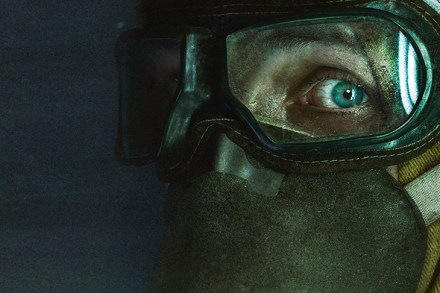
Dau is not so much a film as a document of a mass human experiment. The result is dark, brilliant and profoundly disturbing. For three years up to 400 people, only one a professional actor, lived for months at a time on a city-sized set specially built for the shoot near Kharkov, Ukraine. Modelled on the real Kharkov Institute of Experimental Physics between 1938 and 1968, every detail on the set was scrupulously in period, from the light fittings to the lavatory paper. The participants — who included a real-life Nobel Prize winner and famous orchestra conductor as well as real former KGB and prison officers — were required to live in role 24 hours a day, eating Soviet food, wearing Soviet underwear and undergoing Soviet-style total surveillance.

The saddest music in the world

From our UK edition

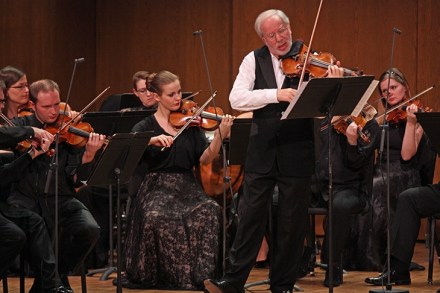
It’s a strange compliment to pay a composer — that the most profound impression their music makes is of an absence. I can’t claim much prior experience of the composer Mieczyslaw Weinberg, who died in 1996: a vague sense of a Shostakovich-like figure who had a bad time of it under Stalin, and the composer of an opera, The Passenger, for which great claims are made by people whose judgment I respect but who probably, on balance, spend too much time with their heads in Eastern Europe. By the end of the first evening of this ‘Weinberg Weekend’, devised by Mirga Grazinyte-Tyla and the City of Birmingham Symphony Orchestra, I felt slightly ashamed about that. Gidon Kremer played his own violin transcription of Weinberg’s 24 Preludes for solo cello.

Betraying bandits

From our UK edition

Spy stories, whether the stuff of fictional thrillers or, as in the case of Sergei Skripal, the real deal — often leave a question nagging. For all the tales of tradecraft and tension, double agents and drama, what difference did one person’s decision to spy really make? That is not the case with Oleg Gordievsky. Gordievsky’s story is remarkable because it has all the drama of a fictional tale and yet also conveys why a single person’s choices can make a difference. Gordievsky was a rising star in the KGB, but one who became disillusioned with the regime he was serving — particularly as he watched the crushing of the Prague Spring by Soviet tanks in 1968.

Back to the USSR

From our UK edition

Is it me, or is business becoming a teeny-weeny bit Stalinist? Common features include 1) Paranoia about political ideology; 2) Snitching; 3) Fatuous targets and metrics; 4) Unquestioning faith in technology; 5) Huge, economically unproductive bureaucracies; 6) Overinvestment in education; 7) Preference for theory over experience; 8) An obsession with rockets. An acquaintance in the US has been denounced for racial insensitivity for asking whether a colleague was Jewish. (Funnily enough, I was asked this all the time when I visited New York in the 1990s. I had to explain that my curly hair originates in a country that’s the same size as Israel, and with slightly annoying neighbours, but it’s called Wales.

Books Podcast: How totalitarianism reclaimed Russia

From our UK edition

In this week’s Spectator Books Podcast, I’m talking to Russia’s most prominent dissident journalist, Masha Gessen, about her National Book Award-winning new book The Future Is History: How Totalitarianism Reclaimed Russia. In the book, which she calls a “non-fiction novel”, Masha attempts to give a properly rounded sense — from high politics to the everyday lives of Russian citizens — of why post-Soviet Russia, rather than embracing Western liberal democracy, took a darker turn. We talk about how she put the book together, what went wrong, whether there’s any hope for the future — and what it was like to meet one on one with Vladimir Putin.

The art of persuasion

From our UK edition

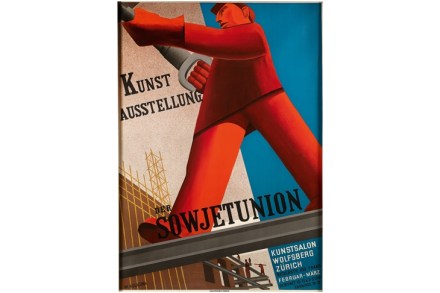
It’s hard to admire communist art with an entirely clear conscience. The centenary of the October revolution, which falls this month, marks a national calamity whose casualties are still being counted. When my father-in-law comes to visit, I have to hide my modest collection of Russian propaganda: he grew up under the Soviets and has few fond memories of the experience. He can’t work out why old agitprop is so popular today. But the simple fact is, for all the disaster they wrought, the Bolsheviks did leave a legacy of images so striking that, even now, they can draw thousands into a museum. As Tate Modern is about to demonstrate. Its new exhibition, Red Star Over Russia, showcases one of the greatest collections of Soviet propaganda posters.

Comedy of terrors

From our UK edition

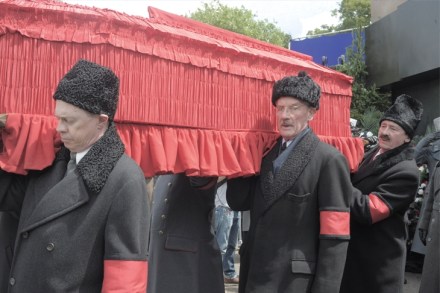
Armando Iannucci’s The Death of Stalin is nearly two hours of men in bad suits bickering, but if you have to sit through nearly two hours of men in bad suits bickering you would want it to be written (and directed) by Iannucci. So there’s that, but it’s still not up there with his previous film, In the Loop. It’s funny but not as funny, misfires in places, and by the end you are rather thinking: come on, one of you seize power, so we can all just get out of here. On this outing, Iannucci has substituted Whitehall and White House backbiting (The Thick of It, Veep) for Russia in 1953, the sudden death of Stalin, and the fierce scramble to succeed him.

High life | 24 August 2017

From our UK edition

When the Germans smuggled arguably the world’s most evil man into Russia 100 years ago, they did not imagine the harm they were unleashing on the human race. Once Lenin had prevailed, he decided to forge a new consciousness, New Soviet Man, as the Bolshies called it, someone who would overcome ‘the antinomies of subjective and objective, body and spirit, family and party’. Leave it to a horror like Lenin to design a new human being (although a certain Austrian tried to emulate him less than 20 years later) and you get Yakov Sverdlov, who ordered the murder of the Tsar and his family, and the hanging of their dogs. We hear a lot about the Nazis nowadays, and very little about monsters such as Lenin and Sverdlov, and their enablers.

Kissin in action

From our UK edition

Is Evgeny Kissin, born in Moscow in 1971, the most famous concert pianist in the world? Probably not, if you stretch the definition of ‘concert pianist’ to encompass the circus antics of Lang Lang, the 34-year-old Chinese virtuoso who — in the words of a lesser-known but outstandingly gifted colleague — ‘can play well but chooses not to’. But you could certainly argue that Kissin has been the world’s most enigmatic great pianist since the death of Sviatoslav Richter in 1997 – though, unlike the promiscuously gay Richter, his overwhelming concern with privacy does not conceal any exotic secrets. He has recently married for the first time, but chooses not to publicise the fact.

Secrets and spies

From our UK edition

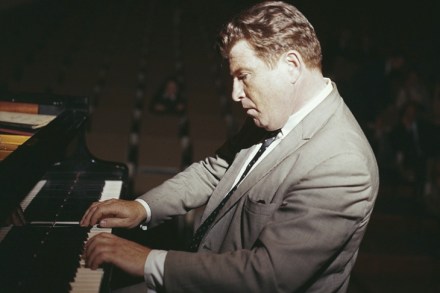
Spare a thought for Emil Gilels, still revered today by Russians as the foremost pianist of the Soviet era. The first to win a competition abroad (Brussels, 1938), Gilels was also first to be let out after Stalin died to reconnect cultural ties and earn hard dollars for the state coffers, of which he got back a few cents. Universally acclaimed, Gilels made countless recordings, among them an unsurpassed pair of Brahms concertos on Deutsche Grammophon and a transcendent set of Grieg’s Lyric Pieces, a performance so revelatory I use it to demonstrate the inexpressible difference between an interpreter of genius and all the rest. Gilels, abroad, played the role of Homo Sovieticus. At home, he was a haunted man.

The good, the bad and the ugly

From our UK edition

Vladimir Putin notoriously declared the collapse of the Soviet Union in 1989 to be one of the greatest disasters of the 20th century. However, as Revolution: Russian Art 1917–32 — an ambitious exhibition at the Royal Academy — helps to make clear, the true catastrophe had occurred 82 years earlier, in 1917. Like many of the tragedies of human history, the Russian revolution was accompanied, at least in the early stages, by energy, hope and creativity as well as by murderous cruelty and messianic delusion.

Precious metal

From our UK edition

Who could resist School of Rock? For me it was a chance to see a heavy-metal musical written by the best-known headbanger in the House of Lords, Julian Fellowes. The movie features Jack Black as a failed rock guitarist who bluffs his way into a private school and turns a class of robotic snoots into a prize-winning band. It’s one of the most joyous stories ever filmed. This version, faithfully scripted by his lordship, rises to the same level and delivers a night of sheer rapture. The thing is like a drug. Every performance sends skyrockets of happiness zinging up and down your spine. David Flynn has an echo of Jack Black about him but he brings added stores of charm and humour to Dewey. Preeya Kalidas is wonderfully nasty as Ned’s hideous girlfriend, Patty.

High life | 3 November 2016

From our UK edition

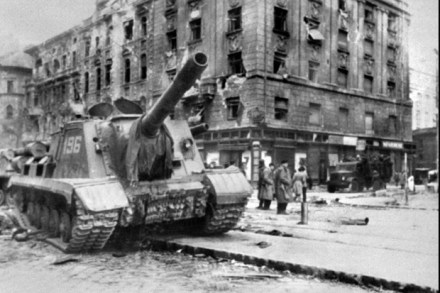
Sixty years ago this week all hell broke loose: Soviet tanks rumbled into Budapest and put down a nationalist uprising in a very bloody manner. Down south Anglo-French paratroopers jumped into the Sinai and, in cahoots with the Israelis, took over the Suez Canal in a last gasp of colonialism by the Europeans. And in Washington DC a very peed-off President Eisenhower ordered the Anglo-French to go home or else. They went home and only the Israelis howled that Ike was an anti-Semite and many other things. And where was your intrepid foreign (future High life) correspondent while all this was going on? On an aeroplane flying from New York to Bermuda for a tennis tournament.

Stop the sabre-rattling

From our UK edition

I have been wondering these last few weeks whether it would be cheaper to excavate a basement and buy a Geiger counter and iodine tablets, or emigrate to New Zealand. Call me frit, but I don’t like the way things are heading. Probably the second option is easier: Armageddon outta here, etc. I can re-enact Nevil Shute’s On the Beach from some rocky cove near Dunedin, waiting for the fallout to arrive. I was sentient only during the latter stages of the Cold War but from what I can remember, the two sides, them and us, behaved for the most part with a degree of rationality and common sense. (I like my politicians to be pragmatic rather than charismatic, which is why, if you were to ask who my favourite Soviet despot was, Brezhnev would always be the answer.

Putin’s next move

From our UK edition

The old KGB headquarters in the Lithuanian capital, Vilnius, is a sinister place, full of ghosts. It is a solid 19th-century neoclassical building with walls thick enough to have muffled the screams of those under interrogation. The cells in the basement are as cold and damp as they were in Soviet times and there are stone steps down to an airless, claustrophobic chamber where prisoners were executed, a thousand of them, the wall still pock-marked with bullet holes. You can imagine people hurrying by on the other side of the road in the old days, not daring to look up at the pale grey façade, knowing what took place behind it.

Brackish as old Brylcream

From our UK edition

Kenneth Branagh’s obsession with Larry Olivier’s career is becoming such a bizarre act of theatrical necromancy that it deserves to be turned into a drama. Sir Ken and Lord Olivier could be played by the same actor. The Entertainer, written for Larry in 1956 by John Osborne, presents us with a washed-up music-hall star, Archie Rice, who is supposed to symbolise Britain’s post-colonial decline. This version, directed by Rob Ashford, opens with a tap-dancing routine so ponderously executed that it leaves one wondering if Branagh is a lousy hoofer trying too hard, or a master of the art impersonating a lesser practitioner. This difficulty permeates the piece. By making the central character a useless comic, Osborne has sabotaged the play as an act of entertainment.

Poetry in motion | 4 August 2016

From our UK edition

For almost 60 years, whatever the political weather, Russia and Britain have maintained mutually assured respect as far as ballet is concerned. In October 1956, the Soviet Union finally allowed its Bolshoi troupe to appear in the west, in London, a state cultural exchange that should have entailed the debut of the comparatively green Sadler’s Wells Ballet in Russia within weeks. Owing to the inconvenient appearance of Soviet tanks in rebellious Hungary, it wasn’t until 1961 that the renamed Royal Ballet turned up in Moscow. (Khrushchev gushed admiringly, ‘Look at those girls — they might be Russian!’) I looked up The Spectator’s October 1956 review of that Bolshoi debut: some things really haven’t changed. A.V.

Enemies of history

From our UK edition

At the start of the 21st century, no one felt the need to reach for studies of ‘third-period’ communism to understand British and American politics. By 2016, I would say that they have become essential. Admittedly, connoisseurs of the communist movement’s crimes have always thought that 1928 was a vintage year. The Soviet Union had decided that the first period after the glorious Russian revolution of 1917 had been succeeded by a second period, when the West fought back. But now, comrades, yes, now in the historic year of 1928, Stalin had ruled that we were entering a ‘third period’ when capitalism would die in its final crisis. As the Wall Street crash was only months away, this was not as fanciful as it seemed.

Refuge from the referendum

From our UK edition

A brief encounter with Radio 4’s Any Questions to gauge the measure of opinion in the shires after the referendum result was enough to convince me we are entering even more torrid times than during the campaign. For some mysterious reason both Harriet Harman and Alex Salmond, billed in Radio Times to appear on the panel alongside Ken Clarke and Chris Grayling, had reneged on their promise and been replaced by Emily Thornberry, the Labour MP who got into trouble in 2014 for her white van man tweet, and Steven Woolfe, an oxymoronic Ukip MEP.