South africa

My new discoveries from South Africa

When I heard that Minnesota Representative Ilhan Omar had gotten into the wine biz, I thought “Hot dog! If she is as good at wine as she is at investing, this should be spectacular.” I mean, talk about creatio ex nihilo. Just a few years ago, Omar had a net worth of about $1,000. Now she is said to be worth some $30 million. Perhaps only Nancy Pelosi, the world’s most successful investor, is better at conjuring something out of nothing. In 2022, eStCru, the winery Omar’s husband had invested in, was touted as a “hot brand” by Wine Business Monthly. There was chardonnay from the Willamette Valley, cabernet from Mendocino and more.

Southern Africa is full of surprises

Picture yourself lying in bed in a restored vintage railroad car parked on a bridge overlooking the Lower Sabie River in South Africa’s Kruger National Park. Outside your window, there’s a gigantic herd of elephants, ranging in size from pint-sized babies to Brobdingnagian behemoths marching purposefully by as though auditioning for a National Geographic documentary. The first herd has perhaps a dozen members, but more of them, attracted by the riparian setting, will stomp by until you can see perhaps 50 of them from the comfort of your bed – or, if you prefer, the bathtub. It’s almost time for afternoon tea and cakes. Later, during your drive, a leopard will amble so close to your vehicle that you could grab his tail.

Trump was right to snub Johannesburg’s G20 summit

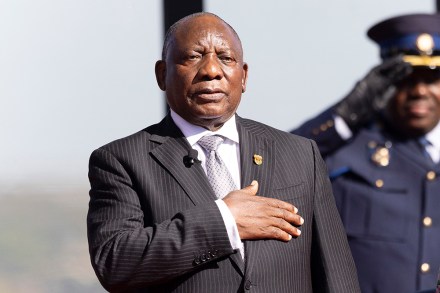
The rule of the African National Congress (ANC) in South Africa since 1994 has been marked by a widening chasm between poor black people, the majority and a tiny black elite, who get richer and richer. A quarter of our children are so badly malnourished that their brains are stunted for life. Amid this terrible hunger, President Cyril Ramaphosa lives in fabulous splendor. He is said to be worth 6 billion rand (around $350 million). He has mansions in the rich parts of South Africa. He has a fleet of luxury cars. He owns a game farm of 11,120 acres. Yet before the G20 meeting of international leaders in Johannesburg, he wrote in his newsletter, “Inequality is one of the most pressing global issues of our time.

south africa

Tariffs and the psychodrama of Trump diplomacy

A bleached white conference room, somewhere near Jeddah in Saudi Arabia. On one side sits Volodymyr Zelensky, the Ukrainian leader, in his soldier-boy outfit. On the other, Russian President Vladimir Putin in dark suit and tie. And in the middle, a beaming President Donald J. Trump. "People said this could never happen," he says, as Zelensky and Putin stare awkwardly at the floor. "But it’s a beautiful thing." A White House memo lands in inboxes across the world: "THE PEACEMAKER-IN-CHIEF..." Pure fantasy, perhaps, but Trump does have an almost cosmic ability to get what he wants – and he really wants to end the war in Ukraine. Last night, having spent weeks telling the world how "disappointed" he was with Putin, Trump abruptly announced "great progress" in US-Russia dialogue.

trump Steve Witkoff and Vladimir Putin shake hands (Getty)

Inside the struggle for technological control in South Africa

In the dawn light of a South African savanna, a team of rangers huddle around a satellite dish aimed skyward. Their phones spring to life with a signal – an unthinkable result just months earlier in this remote, off-grid conservation zone. The source is Starlink, Elon Musk and SpaceX’s satellite internet service, offering encrypted, high-speed connectivity far from state-controlled networks. But in South Africa, this signal didn’t just connect – it disrupted. And that disruption provides some subtext to the extraordinary “Wild West Wing” showdown between Donald Trump and South African President Cyril Ramaphosa in May, which played out in the Oval Office – with Musk looking on.

South Africa

The $20 million hunt for the Democrats’ Joe Rogan

Who will be the Democratic party’s Joe Rogan? That is the $20 million question facing the party, as Democrats try to recover from the last election, when the podcasters had the power. Setting aside Rogan’s status as a longtime backer of both the Democrats and Bernie Sanders, the party’s plan to win back heterosexual, cisgender young men reads like a Barnard gender studies thesis. The plan’s codename, SAM, stands for “Speaking with American Men: A Strategic Plan” and sets out to “study the syntax, language and context that gains attention and virality in these spaces.” Some free advice from Cockburn: normal young men don’t use words such as “syntax” in their everyday speech.

How Biden became Trump’s useful political milksop

It turns out that Joe Biden is one of the best things ever to happen to Donald Trump. Sure, Trump was so peeved by his loss to Biden in 2020 that he inspired an abortive insurrection against Congress, but his defeat gave him a grace period of four years to prepare for a fresh term. If the rapidity with which he is upending the federal government is anything to go by, Trump benefited immensely from his protracted exile in Mar-a-Lago, not to mention the welter of court cases, federal and state, that he endured. Now Trump is exploiting Biden once more to provide a further fillip to his political fortunes.

Donald Trump – the Orange Mandela?

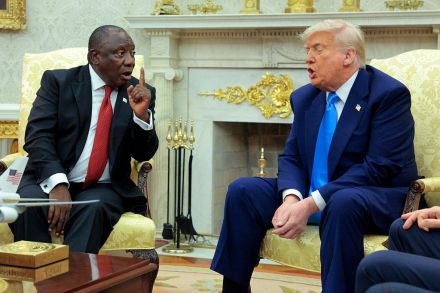
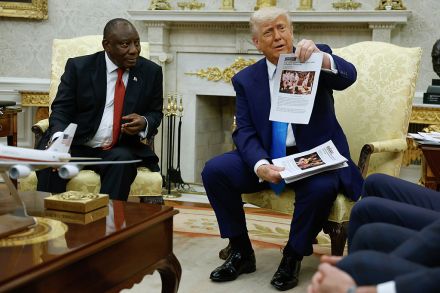
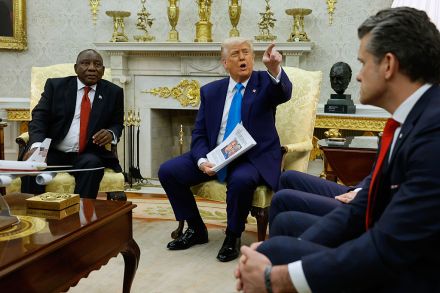
Diplomatic heads are still spinning following Donald Trump’s extraordinary Oval Office press conference with South African President Cyril Ramaphosa yesterday. The media has taken to using the word “ambush” to describe the way Trump sprung his evidence on Ramaphosa to make the point that white South Africans are being violently persecuted. The scene turned into gemors, as they say in Afrikaans, or chaos, and reminded many observers of the wild meeting between Trump and Volodymyr Zelensky in the same room back in February. Ramaphosa had wanted to perform the usual niceties, flanked by a delegation including three white South African golfers, Elon Musk, some of his officials, his minister for agriculture John Henry Steenhuisen and the luxury goods billionaire Johann Rupert.

Exclusive: my son Elon and Trump are right about the ‘white genocide,’ says Errol Musk

Elon Musk stood silently in the Oval Office, eyeballing the South African President while Donald Trump tore into the ANC leader for permitting “white genocide.” The exiting Department for Government Efficiency (DoGE) chief said nothing as the President dimmed the lights and required an unsuspecting Cyril Ramaphosa to watch a short film about white farmers being targeted and South African politicians chanting “kill the farmer.”As Donald Trump berated Ramaphosa, Trump didn’t call on Musk, standing just a few feet away. He didn’t need to intervene: according to Elon’s father, Errol Musk, his son – an outspoken critic of Ramaphosa's government – had already briefed the President about what he agrees is “white genocide”.

The sorry farce of Afrikaner ‘refugees’ fleeing ‘white genocide’

The worst victims of South Africa's African National Congress are not white Afrikaners, even if they are a vulnerable group. The worst victims are poor black people, the majority of South Africans, who have been deliberately impoverished by the super-wealthy ANC elite. These blacks live in stinking squalor with 42 percent unemployment, with water and sanitation failing, terrorized by violent crime and stricken by malnutrition. If any South Africans should be welcomed into the US as refugees, it is they. So it was a sorry farce when 49 Afrikaner “refugees” were greeted as heroes by senior US officials at Dulles Airport in Washington Monday. Trump is talking nonsense about “white genocide” in South Africa.

Afrikaners

The Karoo has seen so much, but changed so little

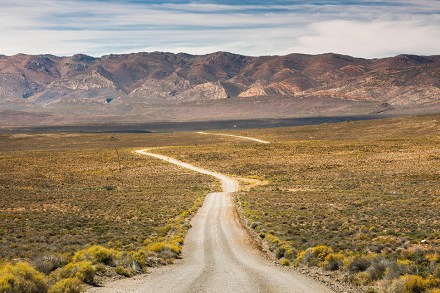
It’s an incongruous name for a wilderness, “the Karoo.” The nursery-like sound belies the harshness of a vast, arid hinterland separating South Africa’s littoral from its grassland interior. For South Africans, the name is synonymous with bone-dry air, scented heathers, great rock formations, vast skies and even vaster sunsets. The scrubland here is so inhospitable that for centuries it insulated the southern tip of Africa from the rest of the continent. A single people — the Khoi bushmen — were adapted to its desicated conditions: Karoo is their word for “waterless land” that has come down to us as its modern name. In the nineteenth century, the pressures of the outside world began to weigh on this hardy time capsule.

karoo

South Africa’s international decline

South Africa’s recent foreign policy has both surprised and dismayed Western diplomats and strategists. Many of these entered their careers during the era of the “end of history” when the Soviet Union had collapsed and with it, or so the thinking went, the last serious threat to the Western liberal order. Western democracy had triumphed, and policy doctrines of hard power and deterrence could give way to strategies of acquiescence and engagement. In South Africa, the African National Congress Party of Nelson Mandela was coming to power. Given that its key ally the Soviet Union had collapsed, the ANC took a sufficiently circumspect view of the new unipolar global order for Western diplomats to conclude that it had become their ally.

South Africa

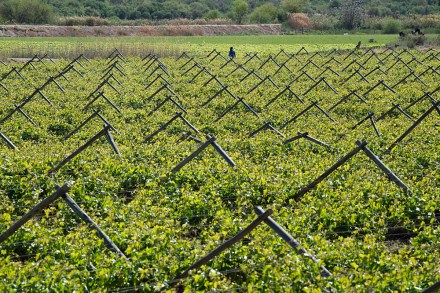
The secrets of South African wine

What do you suppose the grandest wine was in the early 1800s? The wine that populated the sideboards and dining tables of the courts and palaces of Europe? That consoled Napoleon as he moldered on St. Helena? That John Adams judged among “the most delicious in the world?” That Baudelaire apostrophized along with his lover’s lips in Les Fleurs du Mal? That Queen Victoria quaffed nightly after dinner as a digestif? That Hugh Johnson says many kings and consorts preferred to Yquem, Tokay or Madeira? If you said “Constantia, the sweet wine from the eponymous town southeast of Cape Town,” go to the head of the class and collect a golden star reminiscent of the honey-colored, late-harvest Muscat Blanc à Petits Grains that today makes up the wine.

South Africa

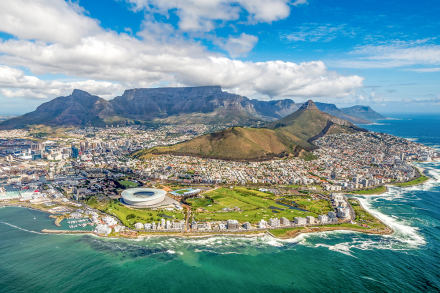
Where to eat, drink and stay in Cape Town

Setting an early alarm while on vacation never comes easily to me, but making time to wander Babylonstoren’s fruit and vegetable garden before the day’s searing heat took hold was no problem. One of the oldest Cape Dutch farms, set at the foot of Simonsberg in Cape Town’s Franschhoek wine valley, it’s a sprawling, fantastical, technicolor utopia — positively Eden-like, with a lot more than apples to tempt you. Scarecrows made from terracotta plant pots wave from fields teeming with 300 edible crops, fat pomegranates growing alongside tangy tamarillos, willow trees swaying in the breeze.

cape town

How game ranching protects endangered species

Game ranching in Africa is big business, farming wild animals that unlike regular livestock have evolved there and don’t need much care. What they do need is space. South Africa’s most famous reserve, Kruger National Park, is an 8,000-square-mile chunk of wilderness on the border with Mozambique, but private land stocked with wildlife covers almost ten times that area. Ranchers stock their property at game auctions where animals are sold to ranchers who either want to introduce a species or add a new bloodline. In 2019, American cattle breeders were delighted when an Angus bull sold in North Dakota for a record $1.51 million. But in 2016, the winning bid for a stud buffalo in South Africa was close to $10 million.

game
BRICS

Nixing BRICS: how to counter the China-led alliance

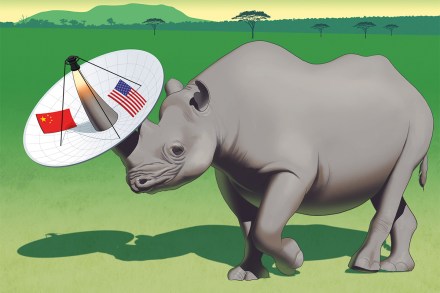
Americans are used to exercising influence through international entities such as NATO, the World Trade Organization or the World Bank. Each of these groups was set up with American leadership or at its instigation; all have been used to advance Washington’s vision of global liberal-democratic capitalism. No comparable international organization or collection of nations has been influential since the Soviet Union’s collapse. That may be changing. The so-called BRICS alliance (its founding countries were Brazil, Russia, India, China and South Africa) recently added new members Iran, Ethiopia, Egypt and the United Arab Emirates.

Swimming with sharks is nothing to be scared of

The small South African coastal town of Umkomaas hosts many scuba diving operations and resorts; its local reef system, the Aliwal Shoal, is one of the top fifty dive sites in the world. It contains the usual attractions like schools of tropical fish, turtles, rays and a few shipwrecks. The real attraction though — the reason people come from all over the world to this sleepy town — is to dive with sharks. Without a cage. For up to sixty minutes at a time. The Blue Ocean Dive Resort, where I stayed for a week, specializes in these dives, employing several experts to maximize the shark sightings. During my time there, I must have seen over fifty different sharks, including oceanic blacktips, bull sharks and tiger sharks.

sharks

Musk wades into South Africa’s ‘white genocide’ spat

It may be hard to trust many of the storylines pushed by the media, but Cockburn must admit that looking to new Twitter — now X — isn't likely to solve any problems either. The owner of that troubled platform, Elon Musk, illustrated Monday exactly why. The SpaceX and Tesla CEO, who has over 150 million followers, replied to a series of tweets asserting that white genocide is on the verge of erupting in South Africa.  One response came to Benny Johnson, who posted a video of Julius Malema, the firebrand head of South Africa’s far-left Economic Freedom Fighters Party, singing the apartheid-era anthem “Dubul’ ibhunu,” or “Shoot the Boer” at a political rally.

elon musk white genocide

Two days in Johannesburg: the city with a heart of gold

Sunrise in Johannesburg, blazing a brighter red than I can recall seeing before. The orb seems unnaturally huge; burning my retina as it flashes through the thick canopy of leaves covering the largest manmade park in the world.  I’m looking out over the Koppies (“small hill” in Afrikaans) at one of Joburg’s most spectacular views, from Melville suburb’s highest point. Albeit, from behind a laptop. I’ve got a second coffee on the go at Pablo Guest House while attempting to carve out an itinerary for this last-minute jaunt. I’d jumped on a plane from Cape Town with Ashlee, a friend who grew up here. Her father lives in a looming school house stuffed with antiques, which she has the grand job of sorting through and selling on.

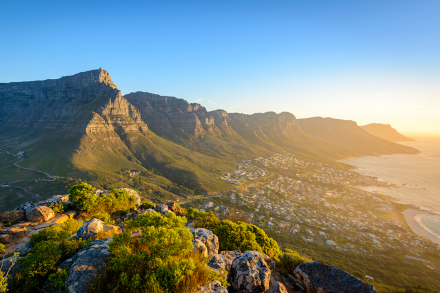
Tears, tangles and tremendous views in Cape Town

Thirty feet underwater, somewhere on the False Bay coast near Simon’s Town in the Western Cape, South Africa. I’m getting battered by a strong current, deep in a kelp forest. I squint upwards and spot a pair of flippers. Kicking... upwards. My friend Abie is in a pickle. First of all, she’s vertical — not desirable in diving gear — and I can see now, she’s tangled. Brown kelp fronds the girth of beer cans shoot up all around us, forming a confused mass. I panic but try not to show it. Being buddied up with an old mate for a genuinely dangerous sport — you’re expected to know what you’re doing — has its downsides. I realize we are the responsible adults I’m looking around for.

Cape Town