Society

Class is melting on the ski slopes

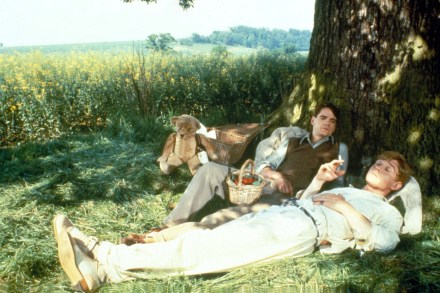
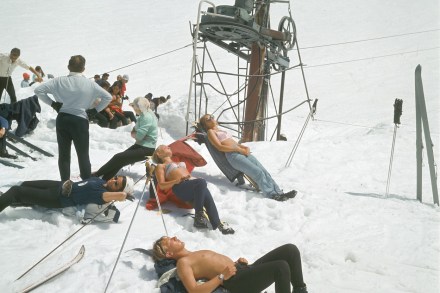
It’s that time of year again. No sooner have you recovered from Christmas than the posh start talking about their skiing jaunts planned for the February half-term. But let’s use the term posh advisedly, because – make no mistake – skiing is now anything but. Where once flinging yourself down the Cresta Run may have been a solid-gold toff signifier or ‘the Sloanest sport’, according to class anthropologist Peter York, now it simply means that you’re rich. No snow cannon pumping out snow on the low slopes can fool anyone. The fact that ski resorts are now melting before our eyes seems to be where this social morality tale ends. Skiing and British class have long been caught in a complicated embrace.
The Sloane Ranger is in dire straits

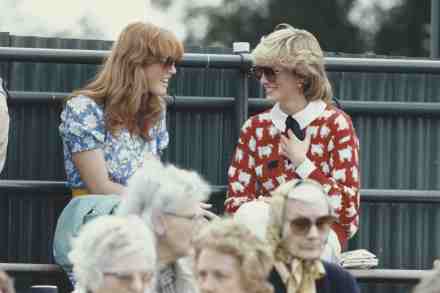
Every few years, an obituary for the Sloane Ranger appears. In 2015, the Telegraph proclaimed their death. In 2022, Peter York himself, co-author of The Official Sloane Ranger Handbook, wrote a devastating piece in the Oldie on the ‘End of the Sloane Age’. In it, he cast existential doubt on the species altogether: ‘By 2021, there seemed to be every possible shade of Sloane around in London. But were they really Sloanes at all? It looked as if the only way for a Sloane to succeed was to UnSloane themselves.’  You might think that if York himself had called time, then the death knell must have well and truly sounded. But no.

Why DC loves to hate Partiful

From our US edition

If you’re under 50, you may have noticed that Partiful has quietly annexed the American social calendar over the past year or two. The event-planning app, founded by former Palantir employees, began as another Silicon Valley toy, but it didn’t stay regional for long. Its loud dashboard aesthetic spread quickly through the Bay Area and then achieved escape velocity in Washington, DC. I wouldn’t be surprised if the strong cultural current between tech and defense is what created near-perfect conditions for a social revival in nerd world. While I understand a bit of snobbery over the aesthetics, I’ve been surprised by the constant performative disdain I’ve observed accompanying its rise. Everywhere I go, I hear people say they “hate” Partiful.

partiful

Beautiful interiors can’t guarantee a beautiful marriage

From our US edition

I remember poring over the photos when they first appeared in Architectural Digest in early 2023. Even back then, before Lily Allen wrote what Rolling Stone called “the most brutal album of the year,” I knew in my gut that her marriage to that actor guy she met on Raya – whatshisface? David Strangerbeard? – wouldn’t last. Because looking at the pictures of their house made me feel queasy. There was something off about it. It just wasn’t right. It didn’t bode well. It’s not that the house wasn’t gorgeous. It was – and still is – spectacular. A double-width brownstone in the slouchiest artisanal urban village on Earth: Carroll Gardens, Brooklyn.

Against flakes

A new drinks-party-shirking method has taken hold in society. I call it “Lastminute.non.” Previously, the way of not going to someone’s party was to write a polite message of refusal at least a week in advance, giving the host or hostess ample time to absorb the sad but inevitable fact that various friends would not be able to attend – usually for copper-bottomed reasons, such as that they had other plans for the evening or would be away on holiday. The new trend seems to be to accept an invitation, and then, mere hours before, to duck out of it. This means that from breakfast time onward throughout the day of the party, the host will receive a steady stream of apologetic messages. It happened to me last month, on the day of the launch of my debut novella at a bookshop.

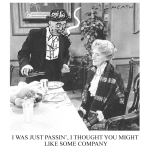
dr strangelove

The Dr. Strangelove taxonomy of DC types

From our US edition

I tweeted the other day that my social life in Trump’s DC is just getting dinner or drinks with a different Dr. Strangelove character every week. It sounds like an exaggeration, but it’s not. Not really. Every week brings its own apocalypse – and the cast of characters responds accordingly. Find here a taxonomy of DC types: Dr. Strangelove (The theorist) The end of the world approaches and only the strong will survive it. Hands trembling slightly from too much caffeine and suppressed grandeur, he (it’s always a he) declares his grand theory of the world in so many words. Women, of course, will be spared. Perhaps you, too, will be counted among the lucky ones. Oh, you’re over 30? If you just read a little more Spengler. Learned a little more about semiconductors.

The rise of the on-the-day party drop-out

A new drinks-party-shirking method has taken hold in British society. I call it ‘Lastminute.non’. Previously, the way of not going to someone’s party was to write a polite message of refusal at least a week in advance, giving the host or hostess ample time to absorb the sad but inevitable fact that various friends would not be able to attend – usually for copper-bottomed reasons, such as that they had other plans for the evening or would be away on holiday. The new trend seems to be to accept an invitation, and then, mere hours before, to duck out of it. This means that from breakfast time onwards throughout the day of the party, the host will receive a steady stream of apologetic messages.

Humans are more than just apes

From our US edition

Revolutions in science happen like Mike’s bankruptcy in Hemingway’s The Sun Also Rises: slowly, then suddenly. For the past two decades, neuroscientists have been interested in the ways that the human brain differs from those of other primates. The prevailing assertion among primatologists was that our genome is only 1 to 2 percent distinct from chimps’. Then in April, a team of more than a hundred of the world’s top geneticists published an article in Nature revealing that it’s actually ten times as different. This has enormous implications. After all, if humans aren’t just souped-up chimps – as primatologists have often suggested – then many widely accepted ideas about our nature must be reconsidered.

apes

Trick or treating is vital life experience

I first got a door slammed in my face in 1987. Looking back, I can’t help but feel that moment, at the age of eight, was my first bit of training as a journalist. I wasn’t seeking a scoop back then, of course. For eight-year-olds a scoop is something you get two of with your cornet from the ice cream van. Rather I was after a Chomp bar or a bag of Bensons crisps, and all the while hoping beyond hope that I (and my accompanying gaggle of friends) wouldn’t be palmed off with a satsuma. Such was the freewheeling Friedman-esque world of trick or treating – a custom that has dwindled into what, these days, is considered by many parents to be either rude, dangerous, immoral, paganistic or a combination of all four. The ritual clings on in diminished form.

The irreplaceable Lady Annabel Goldsmith

During Jane Austen’s time, their roles would be reversed. Lady Annabel Goldsmith, who left us last week at 91, would be Darcy, with Mark Birley and Sir James Goldsmith as Elizabeth Bennet. Both her husbands were womanisers, well-born, but of inferior birth to her. I met her around 60 years ago, and she was as aristocratic as they come, and as down to earth as her puckish irreverence would take her. A quick smirk, a raised eyebrow would turn into something prurient and funny. Wonderfully mischievous, she enjoyed revving it up when the Austro-Australian Princess Michael would complain about me at Annabel’s annual summer party. Annabel would listen to the Austrian, then seek me out, come very close and whisper: ‘The Kents simply adore you.

Banish the B-word!

The SS Californian deserves more than mere footnote status when it comes to its role in the story of the RMS Titanic. For that was the name of the ship that sent repeated messages to the crew of the doomed cruise liner, all of them warning of ice ahead. But the Titanic’s wireless operators weren’t interested – to the point where one employee dismissed the Californian’s communications with a reply that read: ‘Shut up, I’m busy.’ Of course, the Titanic wireless crew weren’t really busy at all. They were simply spending their time sending private telegrams on behalf of the first-class passengers on board. A few hours later, well, we all know what happened. But we haven’t yet gone public enough with the overuse of what was, back in 1912, an absolutely deadly adjective.

What makes a gentleman?

The venerable magazine GQ, or Gentlemen’s Quarterly, has issued some 125 diktats about what it takes to be a gentleman in this world of Zoom calls and equality. GQ is, however, no longer quarterly, and some might say it hasn’t been read by gentlemen for some time. Ought we, then, to listen to it? Many of its ‘expert’ pronouncements are baffling: what is ‘popping a Zyn’? Most of the suggestions are about bringing fancy olive oil or luxury candles to parties. (Note to readers, though you won’t need it: don’t.) It also suggests that gentlemen should beclothe themselves in ‘loungewear’, a word which ought to make anyone shudder. Well, I’m sorry, but unless it’s a silk dressing gown from Jermyn Street, I think not.

Robin Westman and the unstoppable tide of ‘slop violence’

From our US edition

On Wednesday, doing my laundry, I decided to turn on the TV for the first time in decades. Breaking news: a school shooting in Minnesota. It’s been years since a story like this made me cry. How could you cry at every mention of gun violence when you live in a place like the Midwest? I have been aware of gun violence in schools since I was a child myself. I remember first hearing about a school shooting when I was six years old. A little boy had shot his sister. I cried and cried and cried – I cried for the child that died, and I cried for the child who’d killed her. It remains one of my most traumatizing memories. The last shooting that made me cry was Sandy Hook. I was at dinner when a friend showed me Adam Lanza’s photo on his phone. Twenty first-graders dead.

robin westman

Taylor Swift: queen of the normies?

From our US edition

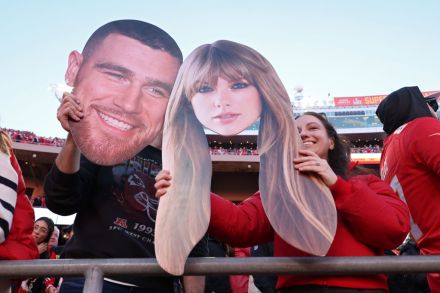
Politicos used to know how to take the temperature of the nation. They could talk to their cab driver. They could sidle up to the man fixing their toilet. There was the Iowa farmer, the diner waitress. There was Walter Cronkite.  Now there is only Taylor Swift. In a society that increasingly consists of mutually unintelligible niches – like multivolume works of Sonic the Hedgehog erotica or reenactments of the War of the Austrian Succession in Roblox – Swift can still fill huge arenas at short notice. Her fans cut across every social and economic class. To a political nation that's often baffled by this new society, Swift has become the great barometer.

Taylor Swift

The lies of the land

You can gauge the fragility of an ideology by the blind fury with which it reacts to questioning. So it is with neo-liberalism. Teacher Simon Pearson, for example, was sacked for suggesting that the jailing of Lucy Connolly – who said very nasty things about asylum seekers – was an example of two-tier justice and that, while her words were indefensible, she should not have been sent to prison. One could counter that opinion, but only at the risk of coming into collision with hard facts concerning sentencing – hence the sacking. Best to get shot of your political opponents, especially when he or she is demonstrably correct. Only by doing that can the ideology cling on.

The ballad of broken Britain

In my corner of Bristol, alongside drug dealers, shoplifters and street drinkers, we now have our very own pyromaniac. They started small – an abandoned office chair, a clothing bank and an old telephone box – before moving on to bigger things. Half a dozen cars have been torched over the past few months, including two on my road, and, most recently, a derelict pub. The other Saturday, hearing a commotion outside, my wife jumped out of bed and flung open the curtains. The scene that greeted us was apocalyptic. In daylight, on a narrow suburban street, the arsonist had set fire to three motorbikes parked in a row, which in turn had set alight a car and a hedge. It was pandemonium.

How AI will reignite woke

From our US edition

Ever since roughly 2010, politics on both sides of the Atlantic has been dominated in large part by the ‘Great Awokening’, a sudden upsurge among graduate professionals of a kind of radical identitarian politics usually called ‘wokeness’. It has come to define most of the left while the right has reactively defined itself by its opposition. This radical politics appears to be detached from economics and material concerns (a point made forcefully by old-fashioned socialists in places like Jacobin magazine). However, the rise of cultural radicalism among both public and private sector managers has a material cause. That cause is elite overproduction.

Woke

Don’t mourn the death of TV

From our US edition

The online American right is positively obsessed with the nineties. It’s easy to establish the cause here: a surfeit of Gen X and early millennial users, many of whom are fresh converts from within the last decade. Social-media posts by conservative users depicting America’s cities, beaches, and nightclubs from this era regularly achieve staggering virality. The memorialization of these things is justified by presenting them, perhaps not wrongly, as evidence of the cultural homogeneity that America has lost in the past quarter century. There is one tendency among these that I find particularly troubling – lamenting the death of American network television.

Television

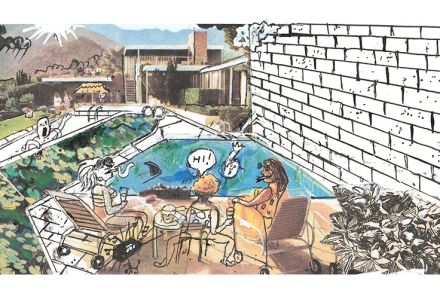
Is it ever acceptable to ask to swim in a friend’s pool?

I’ve always loved English swimming pools. I can’t help it – I am a pool-fancier. The lumpy feel of the blue lining beneath pale feet; the peculiar, chlorinated smell of the pool hut where you do the knicker trick; the scratchy pool towel, the near-collapsing deckchair by its side; the greying sky overhead. There’s the swimming, too, but that’s not what gets me. No, the English pool is a particular social idea, a knowing nod to vulgarity, a paradis artificiel in our rainy climes. Chips Channon, an early adopter, knew it when he insisted on putting in a pool at Kelvedon in 1937, as did Viscount Astor when he went against his mother Nancy’s wishes and did the same at Cliveden.

I’ve reached zero tolerance on zero tolerance

I know an astonishing 89-year-old who climbs mountains, uses a chainsaw and has the muscular, vice-like grip of a gym-built thirtysomething. He refuses pills and painkillers and considers it vital to embrace life’s most horrifying experiences. Last week the astonishing 89-year-old tore his Achilles tendon (leaping into a moving car), was driven to A&E and referred for an ultrasound. On the way to the scanning room, helped along by a male nurse, he put his injured leg down by mistake and yelled: ‘FUCK!’ At this, the nurse turned on his heel and walked off, saying: ‘I don’t have to put up with this.