Social media

Why I hate WhatsApp

From our UK edition

‘My phone says I can’t go out until Tuesday, so I can’t come and meet you,’ said my friend. And she repeated this down the line several times, as I insisted I did not understand. I had nipped outside the hairdresser with my hair in highlighter foils to take her call and was standing on the street, phone tucked under the silver-paper flaps, a stiff wind blowing. I assumed she must be saying something else and I had misheard. ‘It’s the app on my phone,’ she explained. ‘I’ve counted the days myself and I should be able to go out today, but my phone says I have to stay in for another day, so I’ll do that.

The problem with ‘David’s law’

From our UK edition

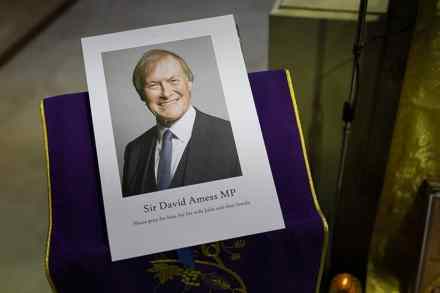
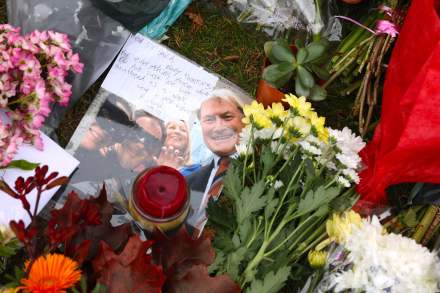
Two members of parliament have been killed in the past five and a half years. This, one long-serving MP laments, is the kind of statistic you would expect in a failing state. One of the shocking things about Sir David Amess’s murder is that many MPs weren’t surprised by it. Parliamentarians are acutely aware that when they are away from the Palace of Westminster, with its armed guards and security scanners, they are a soft target. Their job requires them to mix with the public and that involves a certain level of risk. One senior Tory MP points to how during the Troubles in Northern Ireland, MPs who were thought to be in particular danger were offered a firearm for personal protection, and argues that an offer like this should be extended to all MPs today.

Social media is nothing like heroin

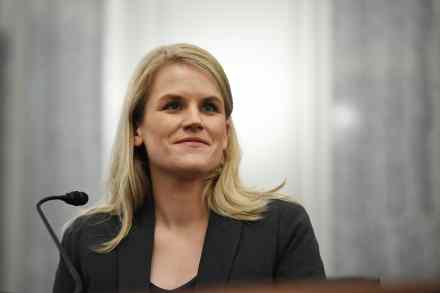
On Tuesday, Frances Haugen, speaking to the Senate Commerce Subcommittee on Consumer Protection, compared Facebook to tobacco and opioids while pushing for similar regulations. Haugen, a 'whistleblower' who came forward after Facebook dissolved her team and who admits she never worked on child safety during her time at Facebook, told a terrifying story about an app that harms young girls. Social media is like a drug. We hear this all the time. We’re powerless addicts in the face of its influence. We need to keep the kids safe from it. But is it? And do we? I used to call myself a Twitter addict. It’s the first thing I check each morning and the last thing I look at at night.

social media heroin

The death of David Amess and the narcissism of the discourse

From our UK edition

The speed with which tragedy turns into farce these days is quite something. Within minutes of Sir David Amess’s death being announced, social media was filled with sizzling hot takes. The back-and-forth centred on whether the decline in 'civility' and the use of dehumanising language in politics was to blame for the murder of an MP. It recalled nothing so much as the recriminations after Jo Cox’s death, except that the teams here had, as it were, swapped shirts at half-time. Back then, the left more or less directly attributed Jo Cox’s murder to the language used by the partisans of Brexit: 'traitors', 'saboteurs' and so on. Back then, the right accused them of playing politics with a tragedy.

Facebook’s empire is beginning to crumble

From our UK edition

When empires crumble they slide slowly at first, then the temple walls come crashing down. Facebook is not quite at the latter stage yet, but you can hear the creaking in the pillars and lintels. This week, the social media giant suffered two blows: an outage which took down its platform, along with Instagram and WhatsApp, and an expose by a disillusioned ex-employee who accuses the company of saying one thing about social responsibility in public – while behaving quite differently in private. Many of us might not notice if Facebook suddenly wasn’t there. But it is a different story for the many businesses which have built their model on the back of selling via Facebook or Instagram.

I miss life before Big Tech

From our UK edition

Do any of you remember the time when everything took place on the terraces and in outdoor cafés? Before everyone retreated into laptops and mobile telephones and Twitter? When the streets thrummed with possibility and the potential for new encounters was everywhere? Well, that’s all gone now, thanks to some pretty ugly-looking fellows with names such as Dorsey and Zuckerberg. But we’re the ones who adopted their useless inventions and live by them as if they were the Sermon on the Mount. The social consequences have been devastating — the young make noises instead of articulating speech — and had Cassandra been around 20 or so years ago she would have warned us against the tech companies that have the power to change our way of life. Never mind.

Emma Raducanu’s victory is being spoiled by the usual suspects

From our UK edition

How do you take the pleasure out of something so marvellous and joyful as Emma Raducanu’s US open victory last night? Easy — turn on Twitter, which spoils everything including sport. Raducanu’s victory is truly a great triumph; the most breathtaking sporting feat by a female British athlete in our lifetimes. Emma is 18 and beautiful, just did her A-levels and got A* marks, had been 400/1 to win the tournament, never dropped a set — all these facts make her achievement even more delightful. I’ll stop the adulation there, because an entire industry of sports commentators already exists to make these points over and over. We don’t all need to join in. Yet for some reason it’s expected that we do.

Technology is robbing us of the power to forget

From our UK edition

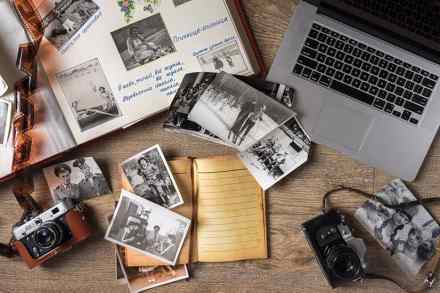
Two years ago, Lauren Goode, a senior writer at Wired magazine, cancelled her wedding and it was awkward. These things always are, but you get over it because the brain slowly learns how to skip over painful memories. Or it did, before social media. Goode has made a career out of wittily stripping away the pretensions of consumer tech, and when her wedding plans blew up consumer tech had its revenge. She ended her eight-year relationship in 2019 — but the internet didn’t get the message and kept confronting her with ‘a cyborg version of me, a digital ghost, that is still getting married’.

I was held to ransom by hackers

From our UK edition

I’m the owner of two small galleries which sell 20th-century ceramics and artworks. One of the ways we’ve become known is through Instagram. We’ve got almost 50,000 followers and sell a lot of work through there. In May, I was away for the weekend with friends in Somerset. On Saturday morning, I saw an email in our shared work account (purporting to be) from Instagram. It was congratulating us for getting a blue tick — verification that confirms the account is an ‘authentic presence’. Thrilled, I clicked the link in the email to confirm. It took me to an official-looking Instagram page where I entered our login details. I was then met with a landing page thanking me for confirming our account’s status.

Mesmerising and monstrous: @zola reviewed

From our UK edition

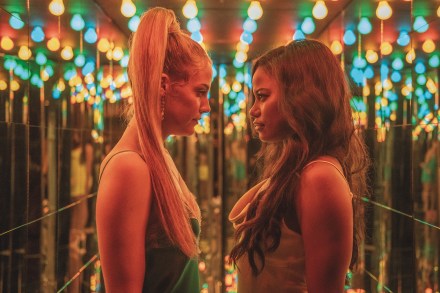
The distinction between on and offline life blurred long ago. The greatest spats, sexual self-fashionings and mad soliloquies now unfurl on social media. The splenetic rhythms and fundamental shallowness of this medium make it a questionable source for art, but Janicza Bravo’s @zola — the first film ever released based entirely on a series of viral tweets — makes a tight, original fist of such material. @zola is A’Ziah ‘Zola’ Wells King, who in 2015 as a 19-year-old exotic dancer and stripper living in Detroit unleashed a 148-tweet thread, billed as #thestory, which detailed a chain of nasty but fascinating events during a surreal trip to Tampa.

The FBI has lost the plot

Whom the gods would destroy, they first make ridiculous. Consider the Federal Bureau of Investigation. That once-respected institution has been busy wiping (or, more to the point, not wiping) egg off its face at least since the moist tenure of James ‘higher loyalty’ Comey. For those wondering why it is that Comey is cashing fat royalty checks instead of stamping out license plates at Club Fed, the answer is part of my story. There is the Elect, of whom James Comey numbers himself, and there are the Serfs, among whose number, Dear Reader, you probably belong. But I am getting ahead of myself. James Comey was plenty ridiculous, as were his jesters and factota, the love birds Lisa Page and Peter ‘Dracula’ Strzok, Andrew McCabe and the rest of that unlovely Brady Bunch.

FBI

Isn’t it time social media cracked down on racism?

From our UK edition

No sooner had Bukayo Saka’s penalty kick thudded into the gloves of the Italian goalkeeper than you could see it coming. Racists were not going to miss the opportunity to attack the England team. And sure enough, within hours the sewer that is Twitter (even at the best of times) had become a torrent of effluent. I don’t know a great deal about coding, but I can’t think it is really all that difficult to pick up certain words and remove them Yes, it does show there is still an underbelly of racism in English society — even if the charge that we are a country of ‘systemic racism’ left over from our days as a colonial power is wrong-headed and unfair.

The bogus business of stigma-busting

From our UK edition

Our society is bristling with social stigmas, we’re told, even in the progressive West, even in London. Life is so horribly stigmatised that celebrities are increasingly keen to raise awareness not of diseases or disabilities, but of the stigma that’s said to surround them. So: less campaigning for cancer research, more for breaking the stigma around talking about cancer. Less feeding the world, more brave standing up to the stigma attached to food poverty. Once you’re alert for stigma, it’s astonishing how much mention of it there is.

What makes Jason Miller’s new social media app different?

GETTR, a new social media app helmed by former Trump senior adviser Jason Miller, officially launched on July 4 to much fanfare, with more than 500,000 users creating accounts in just a few hours. The app was created in response to gratuitous censorship by Big Tech companies like Twitter, Facebook and YouTube and promises not to censor users for their political opinions. Then president Donald Trump was notably banned from these platforms in the wake of the January 6 riot at the Capitol Building. Miller told me during a phone interview the day before the launch that GETTR was 'founded on the principles of free speech, independent thought and rejecting the political censorship and cancel culture that we've seen in US politics in the US media’.

Jason Miller (/Getty Images)

Beware Boris’s sinister crackdown on free speech

From our UK edition

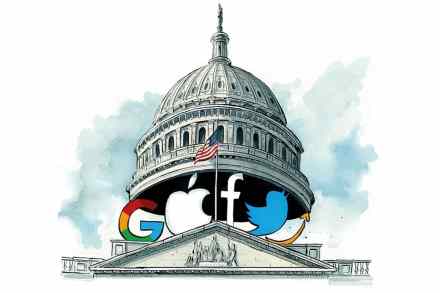
A Conservative government that boasts it is a defender of free speech against the attacks of 'the woke' is about to impose the severest censorship this country has seen in peacetime since parliament abolished press controls in the 1690s. In an extraordinary power grab – which is all the more extraordinary for the absence of opposition – ministers want to silence views that carry no criminal penalty. This is more than a much-needed crackdown on racial attacks on black footballers or incitements to violent crime or any other crime; it is an unmerited attack on free speech. The government’s draft Online Safety bill imposes a ‘duty of care’ on internet companies to remove content that may cause ‘psychological harm’.

Big Tech is turning into Big Brother

From our UK edition

The Big Tech social media giants are having to rethink their policy of censoring anybody who suggests that Covid originated from a lab near Wuhan, rather than through some local chowing down on sweet and sour pangolin testicles. This is because it now seems quite possible, if not probable, that the virus was kindly bestowed upon us by Chinese scientists. I don’t know either way, but I would suggest that a suspicion that the virus was man-made, given the proximity of the Wuhan Institute of Virology, scarcely qualifies as a lunatic conspiracy theory to be banned from public utterance. But that’s what the Big Tech companies decided — almost certainly for political reasons.

How TikTok can turn a book into a bestseller

From our UK edition

I have an American friend who loves reading, but is clueless about technology. The last time I visited him he was still using Internet Explorer, which even Microsoft has given up on. My friend was puzzled when he walked into his local bookshop and was met by a table of books with the sign ‘#BookTok made me read it’. Soon afterwards I received a bewildered WhatsApp message: ‘What is BookTok?!’ Until recently, I didn’t know. Before the pandemic, I was a working stand-up comic. I’ve never been on television and you probably haven’t heard of me, but I was happy. I worked six nights a week, made enough to pay the bills and was recognised occasionally by someone in Tesco. And then came lockdown.

A brilliant, tense, ragged slice of drama: Waiting for Lefty reviewed

From our UK edition

A Russian Doll is a monologue about Putin’s campaign to swing the Brexit vote in his favour. It stars Rachel Redford whose Borat accent becomes grating after a little. She plays Masha, a computer wizard and language expert, who works for a firm of hackers appointed to spread fake news ahead of the referendum. Masha uses two techniques. She poses as a British Facebook subscriber and drops scary comments on to her timeline. ‘If we don’t leave the EU, Muslim extremists will flood the country.’ Her other ploy is to share a quiz about bikinis with her female correspondents. If the offer is taken up, the bots can harvest data from the correspondents and from their followers too. These methods seem rather time-consuming and haphazard.

Is it all over for Clubhouse?

Have you any Clubhouse invites going? I have five, if anyone wants one. Or is it six? I have to admit I’m not sure — like many people I know, I haven’t looked at the app for some weeks now. Clubhouse seems painfully aware of the fact that decreasing numbers of people do. The wild party that is — was — Clubhouse is winding down. The iOS app, that opened up a members-only world of virtual real-time audio chatrooms is now struggling against falling audiences, increased fuss over mediocre, unmoderated, unpleasant content and the fact that companies such as Twitter and Facebook have neatly purloined the audio concept at its heart and refashioned it for themselves.

clubhouse

TikTok intifada: the role of new media in old conflicts

From our UK edition

In Israel last month, a video on the social media platform TikTok encouraged users to film themselves assaulting Orthodox Jews. That video became a spark that ignited outrage across the country. A band of Jewish extremists, Lehava, organised a march in response. They clashed with Arab groups at Damascus Gate. In a situation that was already a tinderbox, things escalated from there. Why did it happen? Why would any ordinary person get pleasure from assault? ‘There is a competition for likes and views,’ a 15-year-old victim told an Israeli news organisation. ‘A video of an Arab slapping an ultra-Orthodox man will get you both.’ A violent riot set off by teenage longing for likes. Welcome to the TikTokisation of global politics.