Snp

Alex Salmond Claims his Date

Since I was watching the House of Commons just now, I needed twitter to tell me that it seems as though Alex Salmond, ever the tweaker, has announced he wants to hold his referendum in the autumn of 2014. Hurrah. That's fine. No need, in my view, for Westminster to object to this. On the contrary all parties should welcome it. All that Westminster needs to do is make sure the referendum billl can survive any legal challenge. Then we can get on with the game. The most importat thing is that the principle of the thing is now agreed. The detail can be sorted out in due course. What larks, eh?
Michael Moore’s Quietly Sensible Consultation

Michael Moore's statement to the House of Commons on the question of how a referendum on Scotland's constitutional future may be held was clear, composed, sensible and modest. In other words it was everything that the last few days have not been. The Prime Minister in particular - as bemoaned here, here and here - has not distinguished himself in recent times. Perhaps it is fairer (it is certainly kinder) to presume this was just as innocent a cock-up as any Prime Ministerial cock-up can be; regardless is was a desperate piece of floundering that made Mr Cameron look something of a chump.

Can Scotland make it on its own?

What would an independent Scotland's public finances look like? ‘Good, actually,’ says the SNP as they present their ongoing case for independence. They like to claim that, discounting the rest of the UK, Scotland was in surplus for ‘four out of the last five years’ — it's Westminster, not Holyrood, that can't manage the public's money.  Which would be a powerful argument were it actually true. You see, the SNP are talking about the ‘current budget balance’, which excludes the £6.4 billion a year that Scotland spends on capital. When you include that spending — according to the Scottish government's own figures — there has been a deficit for every one of the last five years.

David Cameron has given Alex Salmond an opportunity to play the statesman

Shockingly, it is possible some of you did not see my appearance on BBC News this afternoon. Thanks to the wonders of Youtube and the baffling enthusiasm some people have for clipping and sharing these things, you can catch up with it now. As is always the case, I forgot half the things I wanted to say. Jon Sopel asked if it was really plausible for David Cameron to "do nothing". Well, of course it is. Indeed when you cannot offer anything useful it is best to offer nothing at all. The time - as a few of us argued back then - for Conservatives to back a referendum came and went in the last parliament. The Tories could have (nay, should have) supported Alex Salmond's referendum bill then.

Cameron’s Caledonian Gamble: Unwise and Unnecessary

So. it looks as though David Cameron is following the Spectator's advice not mine. What a nincompoop! But if the reports are correct then Cameron is playing us for fools. That is, there's nothing wrong with suggesting a referendum on Scottish independence be held sooner rather than later; adding conditions to it is a different matter. It matters little, really, whether a referendum is binding or advisory; a Yes to Independence vote would be impossible to ignore, politically and practically speaking, even if the referendum were only advisory. So, to this extent, Cameron's suggestion that a vote can be binding if held within 18 months but only advisory if held after that point is a futile distinction without a meaningful difference.

Cameron’s balancing act over Scotland

The Cabinet is meeting about 5 miles away from Downing Street today, at the Olympic Park in Stratford. But its collective mind will be on a patch of land another 270 miles further on still. Yep, Scotland and Scottish independence are the matters at hand today. According to the Beeb, David Cameron and his ministers will discuss their ideas for the referendum, its content and its timing. It's thought that they may allow a referendum that's binding on the UK government – but only so long as it takes place in the next eighteen months, and offers a simple ‘Yes’ or ‘No’ vote on independence.

Would you bet against Alex Salmond?

Alex Salmond has a soft spot for horse racing, and I've just seen some odds that could make the First Minister a very rich man: William Hill is offering 9/1 on Scotland being independent by the end of the decade. The SNP is traditionally bold in its predictions: ‘Free by '93’ being one of the more memorable. Salmond himself predicted that the Union of 1707 would not live to see its 300th birthday. But if he holds a referendum by 2015 then Hill's say a 'no' result is the 2/5 favourite. And 'yes' is 7/4. Money would be refunded if Salmond bottled out of holding a referendum within the next four years. So how seriously should we take the bookies? David Cameron may take the fight to Salmond, framing the argument in a different way: do you want to stay in the union?

Salmond’s Advantage Over Labour

A reader asks: What do you think about Johann Lamont winning the Scottish Labour leadership contest? Well, jings, far be it for me to intrude into these matters but it bears noticing that Lamont, doughty as she may be, relied upon the tame votes of Trades Union affiliates to secure her victory. Ken McIntosh - remember him, Mr Miliband? - actually won the most votes from individual party members. All Scottish Labour types now admit the party's "arrogant" belief Scotland would always be there for Labour; all claim to have learned from the chastening experience of this May's election. All say they must be "about" more than just Nat-bashing. All of which is all very well and good but I'll believe the Scottish Labour party has changed when it actually changes its attitudes.

Is Scotland a Nordic Country?

This is a question that meets the classic definition of John Rentoul's famous-to-them-that-ken series of Questions To Which The Answer Is No. That is, the people asking the question think the answer is Yes when in fact it is No. This question, like many of the SNP's other witticisms, is the brainchild of Angus Robertson, the MP for Moray who might be thought Alex Salmond's answer to Karl Rove. Like Rove, Angus sometimes gets carried away and this suggestion that Scotland is some long-lost Nordic appendage is one of those occasions. Not that he's alone in wishing Scotland could be redefined in this fashion. Lesley Riddoch had a piece in the Guardian recently making just this argument.

How To Lose An Argument: Jim Murphy Edition

Meanwhile, in more examples of sloppy Labour arguments here's a tweet Jim Murphy sent this afternoon: Oh dear. Murphy is usually better than this. I know and everyone else who pays any attention to Scottish politics (this includes Jim Murphy) knows that Alex Salmond has long admired the Republic of Ireland's low corporation taxes; he has almost never bothered talking about personal or consumption taxes. Furthermore, few sensible people think Ireland's boom and bust was fuelled by or made significantly worse by its low rates of corporation tax. To hint otherwise, as Murphy seems to here, is either foolish or dishonest. It is possible to think low business taxes a good thing while also supposing it might be a good idea to avoid the mistakes and excesses that led Ireland to bankruptcy.

1707 And All That

In the midst of a futile* call for partisans on either side of Scotland's great constitutional debate to avoid twisting history for their own ends, Professor Richard Finlay and Dr Alison Cathcart write: One feature of a mature democracy is the respect it accords to its past, which means accepting it in its entirety, warts and all. There are good points and bad points in all national histories and accepting both is vital to avoiding the pitfalls of narrow, triumphalist chauvinism or debilitating defeatism. Neither of which is healthy. One of the problems of using history to make the case for or against the Union is that it tends to polarise the debate towards these extremes. What often happens is that we throw our political prejudices back into the past where they do not belong.

Up with the IRA and Down with the Pope of Rome

Joan McAlpine's column in the Scotsman this week is uncharacteristically unpersuasive. Since she decided to defend the SNP's plans for so-called anti-sectarian legislation she was backing a losing horse from the start. Still, it speaks well of her loyalty. Nevertheless, her piece is useful since, in large part, it outlines a kind of consensus that is deemed to exist and from which it is unwise to deviate. Certainly it is hard to think of many opposition politicians who have distinguished themselves in this affair. Even those who question the SNP's plans do so on grounds of efficiency, not ethics or principle. If the government's plans are woeful; the opposition remains fearful. How can it be otherwise given they also subscribe to the dreary theory that Something Must Always Be Done?

The SNP hit the jackpot

Some political leaders might be a bit hesitant when it comes to approaching lottery winners in the hope of securing some of their dosh for the party cause – but not Alex Salmond. Back in July this year, when it emerged that a couple in Ayrshire – Colin and Chris Weir – had scooped a record £161 million on the EuroMillions, Scotland's First Minister reacted with astonishing speed. Within days Mr Salmond had written a letter to the couple congratulating them on their success and adding: 'When I heard the fantastic news that a Scot had landed the EuroMillions jackpot, I did wonder if this was the same Colin Weir who helped produce SNP party political broadcasts for a young party publicity vice-convener all those years ago.

Why are the SNP Talking Scotland Down?

These days "Talking Scotland down" is both the gravest sin imaginable and the standard SNP response to any suggestion there might be even the occasional or minor drawback to independence. Thus when Philip Hammond makes the obvious point that Rump Britannia might not build warships on the Clyde he's being "anti-Scottish". Thus too when George Osborne suggests some firms might want the constitutional questions - including EU-access - clarified to assist their long-term planning he too is guilty of "talking Scotland down". It is true, as Joan McAlpine says, that we have been here before and the sky did not fall.

Lessons in Leadership from the Eurocrisis

Paul Krugman has a good paragraph on the euro: [T]his incident exemplified something that was going on all along the march to the eurodebacle. Serious discussion of the risks and possible downsides was simply not allowed. If you were an independent economist expressing even mild concerns about the project, you were labeled as an enemy and shut out of the discussion. In a way, the remarkable thing is that it took until now for disaster to strike. This should be a warning to all political leaders. They each need someone whispering to them: What if we're wrong?

Euro crisis knocks Salmond off course

A few years ago, SNP strategists coined the slogan 'independence in Europe'. They don't champion it too much now, for obvious reasons. To put it bluntly: they are in a pickle over Europe. Scotland's progress towards independence, which had seemed to be serene and almost unstoppable just a few months ago, has hit so much euro-induced turbulence over the last few days that it could be knocked off course for good. The First Minister had to fend off question and after question at Holyrood this afternoon as opposition leaders – including a notable first performance by the Tories' new Scottish leader Ruth Davidson – tried to get Salmond to answer two very simple questions.

The Union needs a champion

The First Minister of Scotland v the Secretary of State for Scotland on the Politics Show today was a non-contest. Michael Moore was hesitant and failed to fill the screen. Alex Salmond was crisp and confident. This disparity between Salmond and his opponents is one of the biggest problems for the Unionist cause. Polls consistently show that most Scots don’t want independence. But every day Salmond is out there making his eloquent—if factually dubious—case for it. There is a real and growing danger that’ll he end up winning by default because no one of stature is countering him. What’s needed is a big figure, preferably a non-political one, to defend the union and take the fight to Salmond.

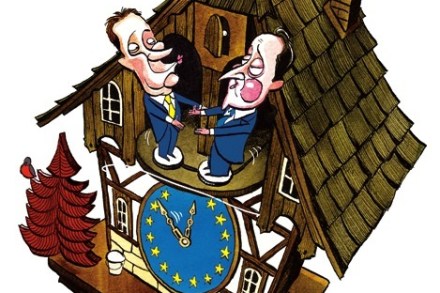
The government goes cuckoo

The government has, this morning, confirmed The Spectator's cover story: that it is considering supporting Rebecca Harris’s bill to move Britain onto Central European Time. As we argue in the magazine, such a move would be a huge mistake both practically and politically. Under the new regime, anyone living north of Manchester would have to endure two months of the year when it was dark when they started work at 9am. Any government that supported this move would look like a government of southerners, by southerners for southerners. The consequences for the Union could be horrendous too. Just imagine what a propaganda gift the new time would be for Alex Salmond.

Stephen Birrell’s Conviction Shames Scotland

Sectarianism, we are often told, is "Scotland's Shame" though there's also ample evidence it's actually "Scotland's Pleasure". For some at least. The prosecution and conviction of Stephen Birrell for comments he posted on a Facebook page entitled "Neil Lennon should be Banned" marks a new low. Not because of anything Mr Birrell wrote - his fevered outpourings being merely the ravings of a disturbed mind - but because Scotland now imprisons people for the crime of disliking other people and making that dislike apparent in any kind of public forum. This is a shameful moment that demeans the country far more plainly than anything said, sung or written at or about any damn football match.

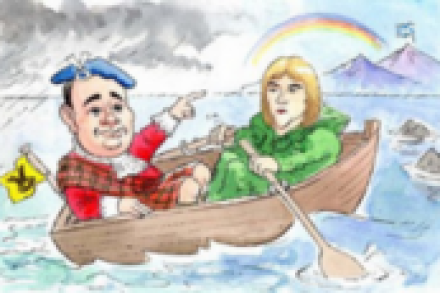
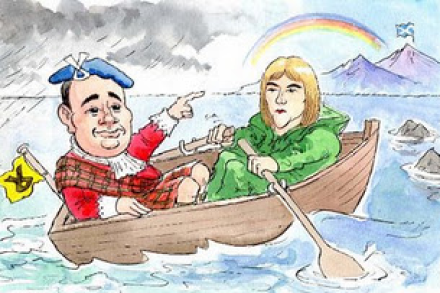
Salmond’s bonnie boat

Meanwhile, Alex Salmond's journey is going depressingly well. The SNP conference starts in Inverness on Thursday and a ComRes poll today suggests 39 per cent are in favour of independence, against 38 per cent against the idea. Not a freak: a poll last month by TNS-BMRB produced the same results. Hardly an overwhelming endorsement, but a reminder that the unionists are in trouble in Scotland. The Scottish Tories are in so much trouble that one leadership candidate is suggesting the party renames itself because its official title strikes so many as oxymoronic. For all his Scottish lineage, David Cameron leaves Scots cold – as the general election demonstrated.