Snp

Labour succeeds in slowing Salmond’s advance

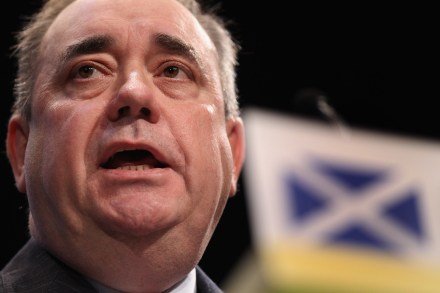
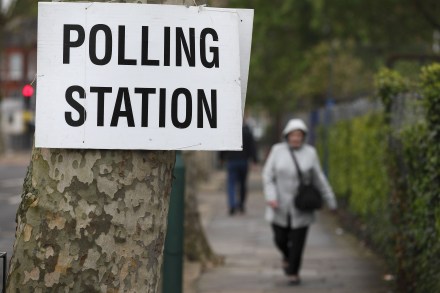
This was the election which was supposed to establish the SNP as Scotland’s new national party, replacing Labour as the default party of choice for Scottish voters. This was also the election which was expected show that last year’s extraordinary Scottish Parliament result was not a one-off and that the SNP could push on and defeat Labour in its town hall heartlands too. But none of this has happened. Not all the results are in from Scotland’s councils yet but the overall picture is already clear. Labour has recovered from last year’s Scottish Parliament shocker and halted the SNP momentum — at least in its core key urban areas of west and central Scotland.
15 (other) cities to watch

Forget London. Odds are that Boris will win re-election while Labour becomes the largest party on the GLA. There are far more exciting battles going on around the country. Here’s the state of play in 15 cities outside the M25: 1. Birmingham. After strong gains in 2011, Labour are looking to depose the Conservative-Lib Dem coalition and regain the overall majority they held here until 2003. They need just five gains to do so — and, with 18 Tory seats and 13 Lib Dem ones up, that shouldn’t prove too difficult. Both of the coalition parties are simply in damage limitation mode. 2. Glasgow. Labour held a majority here for three decades, but lost it just a few weeks ago through resignations.

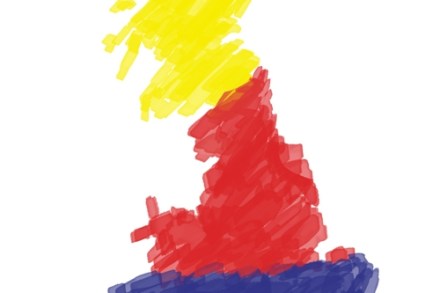
Tricolour Britain

With unionists getting grubbed in Scotland and Labour being driven to near-extinction in vast swathes of the south, a new map of political Britain is emerging. In my latest Telegraph column, I called it ‘Tricolour Britain’ — the SNP at the top, Tories at the bottom and Labour stuck in the middle (with Wales). Policy Exchange has today released research which throws more light on this slow-mo political segregation. I thought CoffeeHousers may be interested in what strike me as the top points.   1. Scottish Tory Syndrome is when a once-dominant party loses and doesn’t recover. The party has failed to capture the imagination of voters, so when its apparatus is knocked down there’s no political force to bring it back.

Does Ed Miliband Have A Clue About Scotland?

I'm not sure Ed Miliband's people will be altogether happy that James McIntyre's Prospect interview with the Labour leader devotes quite so much time to Miliband's leadership credentials. This is not, I think, generally considered helpful. Mr Miliband says he is "Labour's biggest critic" to which the obvious rejoinder is "Not while so many of us remain alive, you ain't". There's plenty to chew on in the interview but, as McIntyre suggests, it's worth paying attention to Miliband's comments on the Scottish Question: [W]hen I ask Miliband if he will help Cameron save the Union in what should be a cross-party campaign for the UK as we know it, he laughs again.

A pair of tycoons has put Salmond on uncertain ground

Alex Salmond may feel he got a lot from cosying up to both Rupert Murdoch and Donald Trump but, wow, is he paying the price. The front page of today’s Herald captures the First Minister’s problems perfectly. The entire first half of the front, above the fold, is covered with two pictures, one of Mr Trump and one of Mr Murdoch and the headline: ‘With Friends Like These.’ The strapline underneath states: ‘Salmond feels backlash from relationships with wealthy tycoons.’ The piece itself starts with the following: ‘One hit him with a verbal broadside, the other lavished him with praise. But, for different reasons, Alex Salmond was feeling the heat yesterday over his relationships with two powerful businessmen.

Salmond and the Murdochs: Shill, Statesman or Pragmatist?

Further to that last post, Leveson released more than 100 pages of News Corp correspondence this afternoon. Alex Salmond features in four emails sent by Fred Michel, the Murdochs' chief lobbyist and PR guy: 1. 1/11/10 - Libdem MP, former Sky employee, with major Sky customer centres in his constituency and around will contact Vince Cable to ask himm to bear in mind the economic/investment point of view rather than getting influenced by political games, especially in times of austerity and very difficult economic environment for those areas. He will also emphasise the opportunity for Cable to show the maturity of the Libdems as coalition partners, working for the long-term, and will draw from the Coaliton government experience lib-dems have had in Scotland.

Groundhog Day at Leveson: Dog Still Bites Man

One thing to be kept in mind as we consider the extent of the government's links to News International is that it helps explain why neither the Telegraph nor Mail groups are wholly in favour of David Cameron and his ministry. It is, I think, fairly clear that the Conservative leadership was happy to accede to Rupert Murdoch's attempts to purchase the shares in BSkyB that he did not already own. Following today's revelations at the Leveson Inquiry, Jeremy Hunt's jacket now rests upon a super-shoogly peg. Several bookmakers have ceased taking bets on the Culture Secretary being the next minister to leave the cabinet.

Alex Salmond’s Hampden and Murrayfield Strategies

I've written a column for Scotland on Sunday today looking at the SNP's transformation into a proper national party: [T]wo SNP approaches have helped the party attain its present supremacy. They can be labelled the Hampden and Murrayfield strategies. They are different but complementary, designed to appeal to different branches of the electorate. The Hampden strategy appeals to working-class and lower-to-middle-class voters. It is populist, Saltire-wrapped and keenly, proudly Scottish. The Murrayfield tranche of the electorate is older, wealthier and more likely to consider itself Scottish and British. Though outnumbered by the Hampden vote, its influence – especially in business and the media – is disproportionately powerful.

Today in Stupidity: Salmond is Hitler & the Economist is Racist

David Starkey's declne from competent historian to reactionary nitwit has been a sad business. I'm afraid it shows no sign of abating either. The Huffington Post has this: Historian Dr David Starkey has compared Scottish first minister Alex Salmond to Nazi German leader Adolf Hitler. "If you think about it, Alex Salmond is a democratic Caledonian Hitler, although some would say Hitler was more democratically elected," he said. "[For him] the English, like the Jews, are everywhere" he added to gasps from the audience. Starkey was speaking at a debate, hosted by the Bow Group think tank, on the teaching of British history in UK schools. Oh dear.

Planet London & Planet Edinburgh

Sure, the Economist's cover story has received heaps of attention these past few days but it's not the most interesting or even the most important cover story published by a British political magazine last week. Though I would say this, Neil O'Brien's "Planet London" article for the Spectator is the piece the Scottish National Party should be more interested in. O'Brien makes a compelling case that London is now, more than ever, a place apart. Its triumph is both magnificent and dangerous. Magnificent because London is, in ways scarcely conceivable forty years ago, a global behemoth; dangerous because of the distorting effect this must have on British politics. In significant ways, O'Brien suggests, London has left the rest of the United Kingdom behind.

Skintland: Heads I Win, Tails You Lose

Crivvens, what a stramash there's been over the cover of the Economist's UK edition this week. Skintland is a pretty feeble effort, really, and one not entirely supported by the evidence the Economist brings to support its case. Nevertheless, the dismal chippyness of much of the nationalist reaction to this was more offensive than anything any London newspaper could say on the subject of Caledonian indepndence. There was talk, on twitter admittedly, of reporting the Economist to the Race Relations Industry as well as the Press Complaints Commission. The cover illustration was reputed to be grossly offensive (to all Scots, no less) and, worse still, it was said to be a classic example of Little Englander imperialism.

This is what politics has become

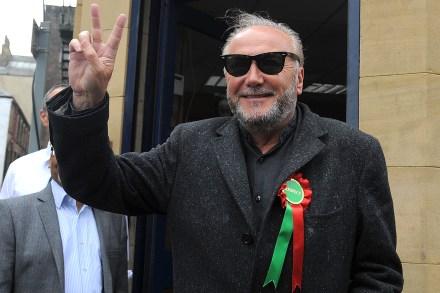
George Galloway’s victory last night is a reminder of a wider problem in British politics: the low regard in which all main political parties are held. By-elections can throw up quirky victories, usually ironed out in the general election. There won’t be an army of Galloway’s marching on parliament at the next election. It’s like Glasgow East: a classic Labour safe seat-cum-‘rotten borough’ taken for granted (and ignored) for so long that the ruling party’s apparatus had atrophied. Like John Mason in Glasgow East, Galloway won’t last long.    But the same phenomenon which took Galloway to victory last night, and humbled the main parties, is also at work in Scotland.

Cameron’s Message to the Scottish Tories: Man Up, You Wimps

On the Daily Politics today Andrew Neil asked David Mundell Why are the Scottish Tories so useless? It will not surprise veteran Mundell-watchers that the member for Dumfriesshire, Clydesdale and Tweeddale did not have a great answer to this blunt question. Nevertheless, Mr Neil's question was, in effect, the theme or premise of the Prime Minister's speech to the Scottish Tory Conference this morning. Much of Mr Cameron's speech was the usual conference boilerplate. All very well and good but not especially meaningful. There was one important passage, however: I say it's time we stood up even more strongly for what we believe in. Because when you make a strong argument, you know what? People listen. Not everyone will agree - but those who do will follow your lead.

The Department of Something Must Be Done & the Drink Police

Even if you accept that the government's plans for a minimum alcohol price in England and Wales are well-intentioned you can be pretty sure that it's a bad idea. How so? Well, the Conservatives, Labour and the Liberal Democrats each agree that something must be done and this kind of cross-party agreement tends to be a healthy indicator there's bipartisan foolishness afoot. Alcohol consumption is a complicated phenomenon and the price of drink is only one factor in a story that saw booze consumption fall for decades, rise again towards Victorian levels and then, in the past decade, actually begin to fall again. So is this legislation even necessary?

Let the Tax Competition Games Begin!

It is not right to say that this is the last United Kingdom budget. Far from it. Nevertheless, the times they be changing. Due to an unfortunate coincidence of parliamentary timing (though doubtless some will see a conspiracy in this) the Scotland Bill will be agreed today. It will, naturally, be lost amidst the budget brouhaha but it is a significant moment nevertheless. The SNP have made their peace with the coalition, recognising that the Calman Commission's recommendations, imperfect though they may be, are another step towards a more independent future. Significantly, the Scotland Bill accepts the proposition that it is perfectly feasible, and perhaps even proper, for the different parts of the United Kingdom to levy different rates of income tax.

The questions Alex Salmond can’t answer

Should Scotland be independent? I’d have thought that only a few people — most of them Scottish — would care enough about the question to come to a debate hosted by a think tank, but the Policy Exchange fight club was packed last night. The sole nationalist was the SNP’s Pete Wishart, allied with Sir Simon Jenkins making his English Nationalist points. Sir Malcolm Rifkind spoke against the motion, with yours truly his support act. As you might expect from a London audience, those opposed won easily. But two things struck me. The first is Sir Malcolm’s eloquence. He was brilliant, better than Salmond, a reminder of what was cut dead in the 1997 election — perhaps never to grow again.

Scottish Sectarianism: No Evidence Required for a Conviction

The question to be asked of the Offensive Behaviour at Football and Threatening Communication (Scotland) Act 2012 is whether it is iniquitous, merely pointless or, perhaps paradoxically, both. I vote for both. Here's why: Two Hibernian fans caught chanting offensive songs on the train back from a cup quarter-final have become the first people convicted under controversial new anti-bigotry laws. [...] The pair were travelling home after watching Hibs beat Ayr United on Saturday, to progress to the Scottish Cup semi-finals*, when the incident happened. They had boarded the 6:13pm train from Ayr to Glasgow Central when they were seen by British Transport Police officers chanting and singing songs that were “of a racially derogative nature” and were arrested.

Nicola Sturgeon: We Must Kill Britain to Save Britain

It is often said that the case for the United Kingdom needs to be made in a positive fashion. This is reasonable. Less remarked upon is the SNP's cheerful use of negative arguments for independence. Today, for example, there is the sillyness of Joan McAlpine's suggestion Scotland is somehow analagous to some ill-treated wife and, rather more importantly, Nicola Sturgeon's assertion that the Union is a threat to the welfare state. So here's another Scotch Irony: the advocates of change are the fiercest defenders of the status quo. Speaking last night, the Deputy First Minister promised there would be none of that reforming-the-NHS nonsense in Scotland and, no, there'll be no tinkering with welfare either. Not at all.

Salmond chooses the Brownite way

Can you trust someone like Alex Salmond to save Scotland from future crashes? The First Minister appeared on BBC1’s Sunday Politics earlier, where he was challenged about how he sees it. And it seems he may just be a graduate of the Gordon Brown school of Scottish financial mismanagement. In a Times debate on Friday,  SNP deputy leader Nicola Sturgeon said they’d use sterling — whether the Bank of England liked it or not — and would not need the Bank to be a lender of last resort because Scotland would be so sensible it wouldn’t need it. An interesting suggestion, given that the 1707 Union between Scotland and England is the result of a bailout.

Dinosaur Labour Is Back

Considering the audience to which it was aimed, I suppose one could say that Johann Lamont's first leaders' speech to the Scottish Labour party conference was a success. Expectations for Ms Lamont were not quite at Obama-levels. I suspect Labour types will have been pleased by it. Which means, naturally, it should terrify everyone else. It was, naturally, a Unionist speech largely because it reminded one that Scottish Labour would be a powerful force in an independent Scotland and, by god, that's enough to make one wary of the entire enterprise. England and Wales and Northern Ireland offer some protection, minimising the amount of damage Labour can do in Scotland.