Snp

Our debate on welfare reform is a dismal scandal – Spectator Blogs

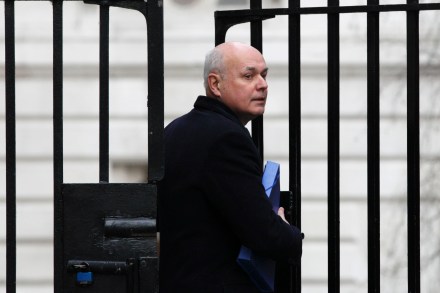
On balance, Iain Duncan Smith's spell as Tory leader can't be remembered as an unmitigated success. Be that as it may, sometimes there are second acts in political lives and, just occasionally, these are worth celebrating. IDS is one example of this. Nevertheless, even a man as palpably decent and well-meaning as IDS doesn't always pitch his argument about welfare reform in the best, most sensible or plausible fashion. This is unfortunate, not least because it allows his opponents to question his good faith. And good faith matters in politics. Especially when you're attempting to overhaul welfare. At the best of times this is a sensitive issue requiring a deft touch. And these are not the best of times.
Scottish independence referendum will be a single-question affair

'I don't think we can have a referendum on independence unless we have a single question'. Michael Moore was unequivocal this afternoon: the 2014 referendum on Scottish independence will be a single-question vote, or it won't happen at all. The Scottish Secretary made his determination quite clear when he appeared before the Scottish Affairs Select Committee, bandying about phrases such as the referendum is of 'huge political importance', it has to be 'fair and clear' and both sides are 'willing and able to come to an agreement'. He was upbeat about the progress of initial talks with Alex Salmond's administration, telling the MPs that he believed a deal on the terms of the vote could be struck as soon as 22 October.

Alex Salmond booed by crowd in Glasgow

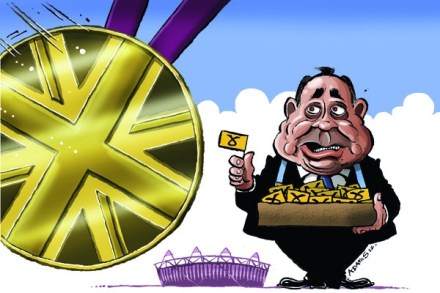
Roman emperors famously used to have a slave to ride behind them in their chariots during victory parades to remind them, by whispering in their ear, that they were only mortal. Alex Salmond must have experienced something of the same down-to-earth experience yesterday evening when he was booed by a crowd in Glasgow that had come to celebrate Britain’s Olympic success. The First Minister can’t have liked it very much. It can’t be a pleasant experience for anybody to get booed by a crowd but for Mr Salmond, it must have been galling. This was a Scottish crowd in Scotland’s biggest city, a country Mr Salmond regards as his fiefdom, where he commands a handsome majority and where he believes – until yesterday that is – that is really very popular.

Independent Scotland: socialist paradise or neo-liberal nirvana? – Spectator Blogs

Well, probably neither actually. But there's every reason to suppose that just as some Unionists are fooling themselves when they discount the possibility of dear old Scotia thriving as an independent entity so some backers of independence may be deluding themselves if they think independence is a one-way ticket to a socialist paradise. That's the premise of this week's Think Scotland column, written in the aftermath of Jim McColl's decision to be out for independence. McColl, Heid Neep at Clyde Blowers and reckoned worth a billion pounds or so, is Alex Salmond's latest boardroom success. Admittedly McColl's support is less than whole-hearted. It's predicated upon Unionist reluctance to move much beyond the recent Scotland Bill. Independence is McColl's preferred second prize.

Can Alex Salmond regain his lost momentum after Britain’s summer of fun?

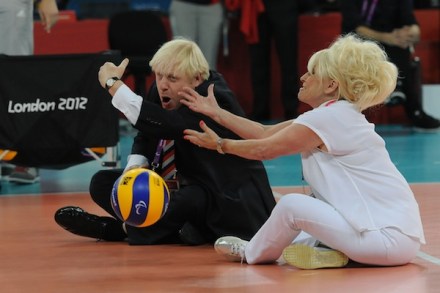
Alex Salmond has gone rather quiet this summer. Before Britain’s season of fun, the SNP leader appeared unstoppable in his quest for Scottish independence, but the Diamond Jubilee and Olympics have halted Salmond’s momentum. The Mayor of London crystallised this feeling yesterday during one of his #askboris sessions on Twitter: ‘The Scots are never going to vote for independence...these games have done for Salmond...

The SNP’s Slumbering Summer – Spectator Blogs

I have it on good authority that, as matters stand, some senior figures within the SNP are concerned by the way the party has lost - or is perceived to have lost - momentum this summer. Of course, the road to the independence referendum is a long one and there's ample time for the nationalists to up their game. Nevertheless, right now, their message is not cutting through as effectively as they would hope. That's the subject for a column I've written for today's Scotsman: Even so, the SNP’s message has become oddly blurred. What is independence actually designed to achieve? For months now, the party has reassured voters that much of what they hold dear about Britain will remain unchanged post-independence.

Is Gordon Brown a Scottish Nationalist?

In 1997 the Labour government tampered with the UK constitution. They then vetoed anyone reading the minutes of the cabinet meeting where it was agreed a parliament for Scotland would be implemented. Now Gordon Brown, one of the architects of the Scottish Parliament, is about to start spreading the Scottish nationalist view in a lecture entitled 'Scotland and Britain in 2025' at the Edinburgh International Book Festival today. This raises the question: is Gordon Brown a Scottish nationalist? Kim Howells' 'smoking' gun statement to the McKay Commission on 24 July 2012 revealed that Labour knew they would be creating an unstable UK. He acknowledged that the party knew the West Lothian question could not be answered without establishing an English Parliament.

Political games

Whilst everybody is enjoying the spectacle of the greatest Games on earth there is one group of people who are doing their level best to spoil it. If there was a gold medal for petty political nitpicking up there on the podium would be the anti-independence politicians and commentators. In rhetoric reminiscent of Labour claims that devolution would kill the SNP ‘stone dead’, time and again over the last two weeks we have heard claims the SNP are opposed to Team GB and that every medal marks a death blow to Scottish independence aspirations. They condemn the Scottish Government for wishing our Scottish athletes well. They then criticise us when a Scottish showcase is opened to fully engage with the Olympics.

Salmond’s stock is falling

'Poll shows support for UK split has dropped,' proclaims the Scotsman today . Looking at the actual poll , the headline may be over-reaching slightly: YouGov's latest figures are within the margin of error of the ones from January, and anyway the question is worded differently. But it should certainly be worrying for Alex Salmond and the Yes campaign that they don't appear to have made any headway at all. Indeed, as Marcus Roberts of the Fabian Society (who commissioned the poll) says, Salmond's halo seems to have slipped a little this year. The Spectator's Politician of the Year in 2011 has struggled to shrug off the critics who say he's fuzzy on what an independent Scotland would look like.

Cause for Unionists to applaud

Brian Monteith has revived his Think Scotland website and as part of all this I'm scribbling there on Tuesdays. This week I'm busy cheering the SNP's march to sanity on defence policy. Angus Robertson, the obvious candidate to combine the jobs of Foreign and Defence Secretary should Scotland become an independent state and remain governed by the SNP, has been busy leading the party back from the brink of student union yahooism and towards some kind of sweet sanity. Hence his proposal to abandon the SNP's longstanding anti-NATO stance. Scotia free and braw will join the alliance provided some deal is done to remove the nukes from Faslane. At some point. Anyway, all this is worth a cheer or two... Unionists have a stake in SNP policy too.

Is it time to let Scotland go?

Lloyd Evans rounds up the highlights of this week's Spectator debate on the future of the union. The motion was 'It's time to let Scotland go'. Margo Macdonald, MSP, opened on a friendly note and declared that she had no plans to fall out with anyone. She wants to preserve Scotland’s ‘social union’ with England. But her country can no longer ‘shackle itself to the shell of a declining empire’. Nor should Scotland send ‘broad-kilted laddies’ to fight wars in foreign lands, ‘using armoured vehicles that are more dangerous to our servicemen than to the enemy.’ England, she claimed, uses Scotland to maintain its ‘magic seat’ on the Security Council.

The Union is safe

The Union is safe — at least if last night’s Spectator debate was anything to go by. The motion ‘It’s time to let Scotland go’ was defeated by 254 votes to 43. The SNP weren’t present (they demanded two representatives on the panel, and we refused), but independent nationalist Margo MacDonald opened the debate. I thought CoffeeHousers may be interested in a summary of proceedings.   1) Margo MacDonald (for the motion) focused on foreign misadventures: Scottish soldiers should not fight American wars with British guns that were a greater threat to their own side than to the enemy. Money saved would go to essential social security.

Is Cameron just not that into Scotland?

Nearly a decade ago, a book called He's Just Not That Into You became what is termed a ‘publishing sensation. I don't know if this attempt to explain men to women was persuasive or not (the odds seem against it being so) but its title seemed pertinent to yesterday's launch of the Unionist campaign to preserve the United Kingdom in a more-or-less recognisable form. Why? Because of the man who wasn't there. David Cameron didn't attend the Better Together event held at Napier University. This was not a surprise but his absence was still telling. Perhaps the Prime Minister has been persuaded his presence in Scotland is more liable to galvanise nationalist opinion than enthuse Unionists.

What’s the SNP scared of?

The Battle for Britain is heating up this week, with the pro-union campaign launched in Edinburgh this morning and a Spectator debate on the union on Wednesday. We have, as ever, a strong lineup – but the Scottish National Party is noticeable by its absence. I thought CoffeeHousers may like to know why not.  We planned the debate ages ago, and from the offset wanted SNP to be on board. As Scottish separation would have implications for the whole of the UK we asked someone to make the case for English separation: Kelvin MacKenzie. And someone to speak up for the union: Sir Malcolm Rifkind. The Nats didn’t like this one bit.

A provocation to God

The notorious splitters in the Free Presbyterian Church are at it again. The Wee Wee Frees (who should not be confused with the more numerous Wee Frees) warn that Scottish independence is a risky ploy since the Act of Union copper-bottomed the protestant faith and any change to that, however well-intentioned, risks wrath and much else besides. It could be ‘a provocation to God’, no less. It might be, you know. Though the SNP has devoted much time and effort to wooing the Catholic hierarchy, the fact remains that modern Scottish nationalism is an almost exclusively secular business.

Miliband plays the national identity game

Ed Miliband's speech last week, in which he grappled with questions of Britishness, identity and Unionism, was a worthy effort. By which you will grasp that it was also, in the end, not quite good enough. The Labour leader spoke as though he had only recently appreciated — or had brought to his attention — that national identity on these islands is often a matter of choice and that — insert obligatory Whitman reference here, please — many people have multiple, layered identities that may, at times, even seem to contradict one another. Gosh, you think?   And, alas, he foundered in the Q&A when he told one inquisitor: ‘People can be Scottish and British, it's OK. And if they feel primarily Scottish that's fine too.

The SNP Beat a Retreat

Political stocks can go down as well as up. Shares in Alex Salmond are hardly slumping right now but they're off their peak and flat-lining. The market is becalmed. Perhaps the launch of the independence referendum campaign will reinvigorate the First Minister but it also carries the risk - unavoidable for sure, but still a risk - that concentrating attention on independence will remind voters that the SNP is, at heart, a single-issue party. And single-issue parties tend to run into trouble.  There is a theory that the SNP have over-extended themselves. Even though they still hold more council seats than Labour (and so could claim their local election "failure" has been exagerrated) they still contrived to lose the "expectations game" earlier this month.

Yes campaign launch will cause problems — for the independence movement

Some of those who queued outside the Cineworld multiplex in Edinburgh for this morning’s Yes for Independence launch found it hard to contain their chortles. There, hanging above the door through which Alex Salmond was due to arrive was a huge poster carrying just two words — The Dictator. And if that ad for Sacha Baron Cohen’s new movie wasn’t enough to send the First Minister into a fury with his PR team, there was more inside.

10 Pretty Unpersuasive Reasons for Scottish Independence

This week the SNP will launch their campaign for Scottish independence. Or, rather, it's the official beginning of what they term the 'Yes' campaign. Prefacing this, Joan McAlpine uses her column in the Daily Record to list ten reasons why Scots should endorse independence. It is an interesting list, not least because McAlpine, who is close to Alex Salmond, is one of the higher-profile SNP MSPs and someone to whom it is always worth paying attention. This is her list: 1. An independent Scotland would be the sixth wealthiest country on earth. According to the OECD, apparently. It's the Black Gold, silly. This is a very dubious statistic.

I See No Ships

There are times when the SNP's attempts to persuade us that there are no regrettable consequences to Scottish independence cross the line between worthy and absurd. The future of shipbuilding on the Clyde is one such case. According to the nationalists the suggestion that the Royal Navy (or what is left of it) might be less likely to place orders with Scottish yards is just the usual "scaremongering" put about by Unionist parties that want to put the frighteners on braw and brave Caledonia.  Aye right. It is, of course, true that an independent Scotland might have modest shipbuilding needs. True too that the Clyde yards, if they remained open, could bid for international business.