Snp

Is Brexit the beginning of the End of Britain?

So where are we now? Pretty much in the same position as the traveller who asks for directions to Limerick and is told, 'Well, I wouldn't start from here.' But we are where we are, for better or, more probably, for worse. Not before time it is slowly dawning on people in England that while this was very much their referendum it has consequences for the whole of the United Kingdom. They were warned this would be the case and, if it was not something that was ever uppermost in their thoughts, they cannot claim they were not told. Because they were. I don't dispute English voters' right to privilege their disgruntlement with the EU over their weakened preference for the United Kingdom to remain, well, just that. That's a choice but choices have consequences.
Brexit won’t hand victory to the SNP. A unionists’ breakdown just might.

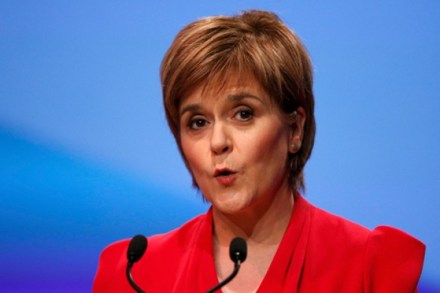
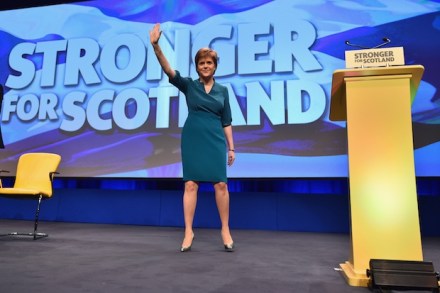
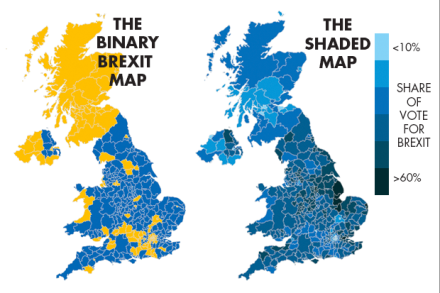
Over the last few years, Scots have had to get used to Nicola Sturgeon telling them what they think. When the SNP had its majority (one the voters stripped away in the recent Holyrood election) she was keen to present herself as the voice of the country: l’Ecosse, c’est moi. If the SNP wants X, then Scotland wants X. She’s at it again, saying that the UK has voted out of the European Union and Scotland has voted in – so the UK was voting ‘against the interests of the Scottish people’ and finally provided the provocation needed to launch a new referendum. In fact, two-in-five Scots – and even a third of SNP voters – supported Brexit.

The UK that Scotland voted to remain within ‘doesn’t exist anymore’

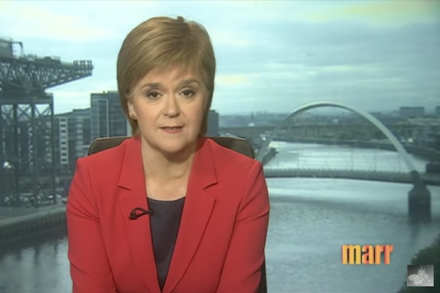
The First Minister gave an interview on Scotland's position in the UK after Brexit on the Andrew Marr Show this morning. Here's what she said: Andrew Marr: Can I ask first of all, is it your priority to have a negotiation as Scotland with Brussels to allow Scotland to more or less seamlessly stay inside the EU? Nicola Sturgeon: My short answer to that is yes, but let me perhaps expand on the position that I find myself in. Marr: Please do. Sturgeon: You know, the first thing I should say is that I didn't want to be in this position this weekend. I hoped very much and campaigned to help persuade people across the UK to stay in the EU, but obviously people in England have voted differently to people in Scotland.

Corbyn could have done wonders for his reputation, if he’d only made today’s speech shorter

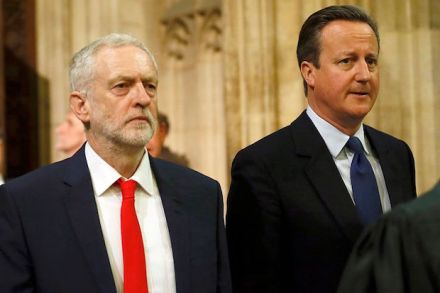
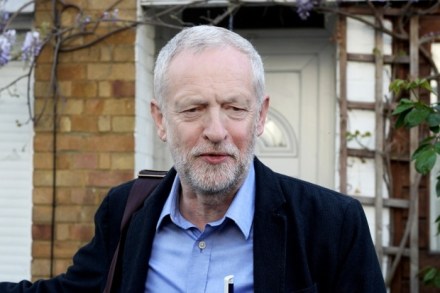
The speeches in the Commons which follow the Queen’s Speech blend together humour with some serious points. They are the Commons as its most clubbable, with lots of in jokes and the like. So, there was a fair amount of chatter about how Jeremy Corbyn – who is not the clubbable sort – would deal with the occasion. At first, the answer was surprisingly well. He was funny, and generous, about the proposer, Caroline Spelman, and the second, Philip Lee. The House was laughing with him, and even Cameron couldn’t help but chuckle at some rather good jokes including those at his own party’s expense. But then Corbyn turned serious, and it all went wrong. Corbyn simply went on and on and, to the fury of the Tory benches, he wouldn’t take any interventions.

Journalist caught in SNP love triangle admits she is a ‘nut magnet’

When the SNP 56 were elected to Parliament, they were heralded as a breath of fresh air in an otherwise archaic institution. The nationalists made clear that they were unhappy to be moved to Westminster, let alone indulge in its pleasures. Despite this, they appear to have grown accustomed to their surroundings over time, with reports surfacing of their taste for Parliament's many taxpayer-subsidised bars. Now it appears that other Westminster indulgences are also proving too hard to resist. The Daily Mail reports that Angus MacNeil and Stewart Hosie have both separated from their wives after enjoying the company of the same woman.

Will Labour never learn?

By now, Labour should be rather good at post-defeat inquests. Plenty have been conducted over the years and the drill has become familiar. The party goes into an election promising a certain vision of the future only to find out that it leaves the voters cold. A senior figure is then commissioned to state the obvious, and the report is sent back to the leader’s office, where it is filed and ignored. Then the party embarks upon a fresh misadventure — and the cycle of defeat begins again. This week Labour is digesting its worst result in Scotland since 1918, having lost not only to the nationalists but to the Tories.

These results have made Labour’s problems worse

As the dust settles on Thursday’s election, it becomes ever clearer that—with the exception of London—these were awful results for Labour. They were bad enough to suggest that the party is on course for a third successive general election defeat. But, as I say in The Sun, not disastrous enough to persuade the Labour membership that they need to dump Corbyn. One Tory Minister remarked to me yesterday, ‘Labour have done well enough to keep Corbyn. I can live with that.’ Before adding, ‘Corbyn’s survival is the single most important thing for 2020’. The result that should worry Labour most, though, is the Scottish one.

What will Labour moderates do now?

The election results that we’ve had through so far are a pretty potent combination for the Labour party. Diane Abbott said this morning that they show that Labour is on course to win the 2020 general election, while Jeremy Corbyn skirted around what they actually meant for the party in the long-term when he gave his reaction. The potency lies in the party’s devastation in Scotland that points to a long-term structural inability to win a majority coupled with English council results that, by being less bad than expected, deceive about the challenge the party faces in winning in those areas in 2020.

The SNP’s decline has finally begun

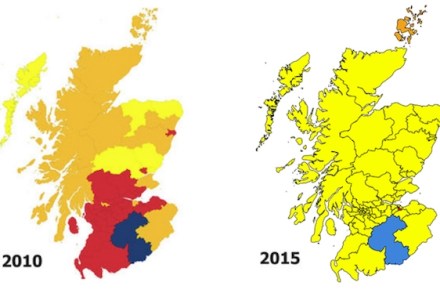
We are past peak SNP. The party has won a third successive Scottish Parliamentary election, an achievement that is not to be sniffed at, but it has lost its overall majority. There are signs that the normal rules of political gravity are beginning to apply in Scotland again. Equally telling is that the SNP is out of big ideas. Its manifesto was a thoroughly managerialist document. It also now seems highly unlikely that there will be another independence referendum before 2021, and the next Scottish Parliament elections. The SNP now faces a challenge of how to use the extensive powers that are coming the Scottish Parliament’s way. If it doesn’t use them, people will begin to ask what the point of the SNP is.

Election results: what you need to know

Summary: Sadiq Khan becomes Mayor of London. SNP fail to win a majority. Scottish Tories become second largest party in Scottish parliament; Scottish Labour in meltdown. Little change in England, Ukip gained seven seats in Wales. Scotland:  SNP fails to win majority; Scottish Labour in meltdown The SNP won 63 of the 129 seats at the Scottish Parliament. The Scottish Tories are now the second largest party. They gained 16 MSPs to reach 31 in total. Labour had its worst result since devolution with 24 MSPs, a loss of 13. Scottish Labour is in meltdown. Its new leader, Kezia Dugdale, failed to take Edinburgh East constituency from the SNP - while Ruth Davidson unexpectedly took Edinburgh Central.

The Spectator podcast: Erdogan’s Europe

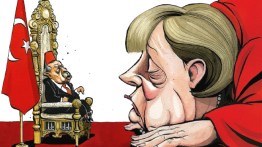
To subscribe to The Spectator’s weekly podcast, for free, visit the iTunes store or click here for our RSS feed. Alternatively, you can follow us on SoundCloud. Has Erdogan brought Europe to heel? In his Spectator cover piece, Douglas Murray argues that the Turkish President has used a mixture of intimidation, threats and blackmail to do just that and throw open the doors of Europe to Turkey. Douglas says Erdogan is a ‘wretched Islamist bully’ who has shown just how the EU works. But in pushing Europe around, is Erdogan now more powerful than Merkel, Juncker and Cameron? And how does the Turkish PM's resignation this week changed the country's relationship with the EU? Isabel Hardman speaks to Rem Korteweg, from the Centre for European Reform.

Letters | 5 May 2016

The EU gravy train Sir: Despite his splendid forename, your deputy editor Freddy Gray has a very tenuous grasp of human nature. Having accurately detected a simmering voter mutiny across much of Europe and the UK, he decrees that those heartily sick and tired of being constantly lied to and thus treated with contempt by the EU gravy-train-riding establishments must be either extreme right-wing or mad (‘A right mess’, 30 April). Actually, we are neither. Does he really believe it to be coincidental that 95 per cent of the UK establishment (there are still a few good ’uns in the mix) are screaming, desperate that their gravy train not be derailed by mere electors?

May 2016 elections: The Spectator guide

Britain goes to the polls this week, as electoral contests take place in London, Scotland, Wales and across England. They’re the elections which James Forsyth described in the Spectator last week as the ones ‘no one has even heard of’. So what will happen on Thursday night and when will the results be announced? Here’s The Spectator’s run-through of the May 2016 elections: London Mayoral election: Zac Goldsmith and Sadiq Khan go head-to-head in the London Mayoral contest. In 2012, Boris and Ken ran a close-fought race, with Boris getting 971,000 first-round votes to Ken’s 889,918. The relatively small margin between the two meant the result didn’t filter through until early evening.

The Spectator podcast: When the right goes wrong | 30 April 2016

To subscribe to The Spectator’s weekly podcast, for free, visit the iTunes store or click here for our RSS feed. Alternatively, you can follow us on SoundCloud. Is crazy all the rage in today’s politics and are conservatives going a little bit mad? That’s the topic for this week’s Spectator cover piece in which Freddy Gray argues that in America and in Britain, the right is tearing itself apart. Whilst Brits might be busy pointing and laughing at Donald Trump, all over the world conservatism is having a nervous breakdown, says Freddy. And the EU referendum is starting to prove that British Conservatives can be as barmy as everyone else.

Fear and loathing

Strange as it may seem, there are still people around David Cameron who regard the Scottish referendum campaign as a great success. Yes, they say, the nationalists didn’t like the original ‘Project Fear’ — the attempt to frighten Scotland into voting no — but it worked. Alex Salmond was defeated by a 10 per cent margin — proof, it’s argued, that relentless negativity works. Those who complain about it are either losers, or too squeamish to win. Andrew Cooper, chief of the Scottish ‘in’ campaign, said afterwards that the only criticism he would accept is that it was not negative enough. This attitude is a poison in the bloodstream of the Conservative party.

The Spectator podcast: When the right goes wrong

To subscribe to The Spectator’s weekly podcast, for free, visit the iTunes store or click here for our RSS feed. Alternatively, you can follow us on SoundCloud. Is crazy all the rage in today's politics and are conservatives going a little bit mad? That's the topic for this week's Spectator cover piece in which Freddy Gray argues that in America and in Britain, the right is tearing itself apart. Whilst Brits might be busy pointing and laughing at Donald Trump, all over the world conservatism is having a nervous breakdown, says Freddy. And the EU referendum is starting to prove that British Conservatives can be as barmy as everyone else. Freddy speaks to Lara Prendergast and is also joined on the podcast by Tom Slater, author of 'Unsafe Space', and deputy editor of Spiked.

Nicola Sturgeon borrows Thatcher’s election slogan

Although Nicola Sturgeon puts her career in politics down to Margaret Thatcher, she scarcely has anything positive to say about the Iron Lady. In fact, the SNP leader says that she entered politics as a result of her anger at the impact of Thatcher’s politics on Scotland. Still, she appears to have no qualms about borrowing one of the methods Thatcher used to help ensure success at the polls. The SNP's latest election advert bears the slogan 'don't just hope for a better Scotland, vote for one'. As Scottish Labour have since pointed out, this bears a strong resemblance to Thatcher's 1979 election slogan, which read: 'Don't just hope for a better life. Vote for one.

The SNP manifesto reveals a new approach to Scottish nationalism

Do you want to know what it looks like when one party has become the most dominant force in its country’s political history, when one in every 30-odd voters is a member of that party and when it is regularly topping 50 per cent in the polls? Then look no further than central Edinburgh this morning where Nicola Sturgeon was launching the SNP’s Holyrood election manifesto. The queues to get in to the Edinburgh International Conference Centre stretched back for several streets as supporters and party members waited eagerly in the warm spring sunshine for the chance to hear, and see, their leader in person.

Will Ruth Davidson’s ski-doo stunts pay off at the ballot box?

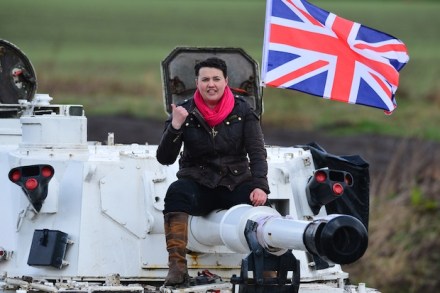
Just a few days into the official campaign for the Holyrood elections and Ruth Davidson has had to change her tactics. The plan had originally been for the Scottish Conservatives to run a serious campaign which has fewer tanks than the election campaign, and more serious speeches. ‘We tried that whole idea of you know we're going to do this really stripped down, just speeches, and just like listening to people bla bla bla,’ says Davidson. ‘And then kind of all the press went this is really boring and we went, yeah, it kind of is.’ And so Davidson has been playing ice hockey, racing blue and red cars, and driving a ski-doo. When we meet, she is touring a very serious looking factory.

Scotland is a self-confident nation – not a one-party state

Politics, as we know, makes the strangest of bedfellows. Step forward Tam Dalyell, Laird of The Binns and erstwhile Father of the House, and the editor of this estimable organ. In the space of this last week I have heard/read both sources refer to Scotland having a one-party state in the shape of the Scottish National Party; the former at Glasgow’s Aye Write! Book Festival and the latter in an editorial on Donald Trump. I would have expected better from both! At the last count there were certainly a handful of countries to whom that description could properly be applied. North Korea and the People’s Republic of China spring to mind. Even for someone with my fertile imagination, I find it difficult to think of Nicola Sturgeon as a supreme leader in the mould of Kim Jong Un.