Silicon valley

The Facebook ad boycott is a convenient virtue-signal

When the coronavirus pandemic hit, some industry pundits predicted that the ‘techlash’ — the souring of public opinion on huge technology companies like Facebook and Google — would cool off or even disappear entirely. After all, with everyone cooped up at home, surely we’d develop a newfound appreciation for the technologies that became the only way to connect with others?That was short-lived. Following extraordinary social pressure amid this summer’s heated civil unrest, an advertiser boycott of Facebook has taken hold. Under the moniker Stop Hate For Profit and backed by the Anti-Defamation League and NAACP, brands from Starbucks to Unilever to Coca-Cola have bravely pulled ads from Facebook for the month of July.

facebook

Don’t tell your friends to quit their ‘problematic’ tech jobs

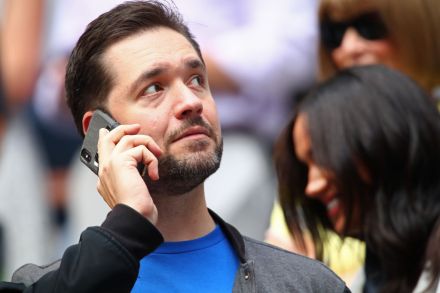
As civil unrest reverberated throughout virtually every corner of American life, culture, and industry this week, Reddit co-founder Alexis Ohanian announced that he was resigning from the company’s board of directors. He hopes that his seat will be filled by a black person. ‘I’m doing this for myself, for my family, and for my country,’ Ohanian (who is married to tennis legend Serena Williams) wrote on Twitter. ‘I’m saying this as a father who needs to be able to answer his black daughter when she asks, “What did you do?”’Later, Ohanian tweeted, ‘I'm seeing more and more people in tech who are frustrated and have been hitting a wall in their companies leaving!

tech

Dispatches from the Nerd-Hack war

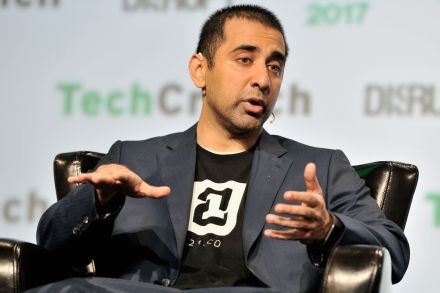
The Western COVID-19 crisis started with another skirmish in the Nerd-Hack war and the conflict has continued. Back in February, Vox published a rather snide piece about how Silicon Valley weirdos were not shaking hands for fear of picking up and passing on coronavirus. Balaji Srinivasan, a noted angel investor and entrepreneur, hit back with a detailed critique of the piece. The reader can decide for themselves who was more prescient, though I will pose one question — when did you last shake someone's hand?Nerd-Hack conflict has boiled up again this week. Marc Andreessen, the co-author of Mosaic, the granddaddy of web browsers, published a rousing call to build. ‘Our nation and our civilization,’ Andreessen writes:‘...were built on production, on building.

nerd-hack

Privacy or death — the final triumph of Big Tech

‘During that time it seemed no easy thing to see any man on the streets of Byzantium, but all who had the good fortune to be in health were sitting in their houses, either attending the sick or mourning the dead… and work of every description ceased, and all the trades were abandoned by the artisans, and all other work as well, such as each had in hand.’ That’s a passage from Procopius’s History of the Wars, describing the way the bubonic plague ravaged Byzantium in 541 AD. If you want to feel historical time collapse, and the distance of centuries evaporate, it is worth reading the whole account.

amazon silicon valley

In The US of A, it’s a woman’s, woman’s, woman’s world!

New York If Albanian television had shown the programme CBS did last week — with a woman who has sex on camera for a living describing how she had unprotected Bing-Bing with the president — I think even Albanians would feel so diminished they’d move to Kosovo. But this is America, and it’s a woman’s, woman’s, woman’s world! Or perhaps a frontal lobe is missing. The degree of reverence afforded to a porn actress by Anderson (kiss me) Cooper was astonishing. His smouldering gaze of restraint was touching, as was his phony squint of chagrin that no protection was used. See what I mean about moving to Kosovo? But this is not Albania but America, the Home of the Depraved.

Facebook now jails me for sharing my own Spectator columns

Welp, another 30 days in the gulag. How will I ever survive this time? About a year ago, I stopped using Facebook almost entirely, deleted the app from my phone, and ceased to accept new ‘friends,’ as a few thousand requests continue to pile up in my inbox. It got to a point that, even while self-censoring, nearly every time I opened my mouth on the platform I got slapped with a ban. There was nothing I could do: someone at Facebook clearly has me on a list and, really, Facebook is lame. I’m not sticking around some tyrant’s house if he doesn’t want me there. But friends encouraged me to say. I’m ‘letting them win’, my friends said, if I deleted my account, as though they haven’t already won.

chadwick moore spectator

Dave Rubin is here to solve ‘95 percent’ of the internet’s problems

The dream of a free internet — if it was ever more substantial than a fantasy — is crumbling. This decade began with the Arab Spring and the belief that technology powered movements for liberty across the globe could triumph over despotism. Instead the decade closes with the growing realization that technology is driving events in unpredictable ways. Confused, people are left feeling less not more in control of their lives. And a sketch is being made — however faintly — for a new form of despotism: Big Tech. Big Tech is unaccountable, opaque and deeply embedded within the lives of billions. Since 2016 it has been dumped on from both the left and the right, and former Big Tech workers.

locals dave rubin

Silicon Valley: the latest stage for political grandstanding

Silicon Valley can’t catch a break politically these days — from either party. Facebook CEO Mark Zuckerberg was grilled extensively by members of Congress this week in a hearing ostensibly about the company’s now-on-shaky-ground Libra cryptocurrency that turned into a broader scrutiny of its ethics and business practices. Democratic Rep. Alexandria Ocasio-Cortez’s questioning, predictably, went viral, with even a remix that replaces Zuckerberg with Cousin Greg from HBO’s Succession. But it’s not just Democrats — such as presidential candidate Elizabeth Warren, who’s made Zuckerberg a campaign trail bogeyman — assailing venture-backed billionaires these days. Republicans want a piece of the action, too.

Silicon Valley

WeWork is what happens when New York and Silicon Valley collide

When I moved to New York City in 2006 to take a job in digital media, it seemed like you could fit everyone who worked for a startup or online media outlet in the city into a single room. If you worked in 'technology', you probably worked for a telecom, Bloomberg LP, or maybe an advertising technology company. New York’s startups in the original tech boom had been notably flimsier than those in the Bay Area, so few had made it through the early 2000s, and then there had been the September 11 terrorist attacks. For those of us who actually did work for startups (or in proximity to them, as I was a satellite-office journalist covering the industry for a Bay Area-based outlet) we had a distinct inferiority complex in a city that notoriously likes to be second to no one else.

How Google’s tunnel vision cost us all

As a member of the marketing team for Google’s once-hyped Google+ social network (remember that?) I can recall only one occasion when I encountered concerns about objectionable or controversial content. It was circa 2012, and it involved beer. Craft breweries and homebrew enthusiasts had created a pleasant little home for themselves on Google+, using its Hangouts video technology to run tutorials and virtual tastings, even announcing new collaborations with other breweries around the world. To a product marketer, this was thrilling: actual user engagement!

google

Why did you participate in the FaceApp challenge?

Perhaps you’re one of the millions of people who decided to download FaceApp and participate in the '#FaceApp Challenge.' If so, I have just one question: why?As Kristina Libby, a writer for Popular Mechanics, notes, 'You may have unintentionally given access to your likeness to malicious actors … to do whatever they want with that content … for life.'FaceApp burst onto the scene in 2017, when it was downloaded more than 80 million times. Thanks to the 'make yourself older' challenge, the app is in recent days experiencing a renaissance of sorts. By using neural networks to simulate what an individual looks like as they age⁠ (adding wrinkles, sagging skin, yellowing teeth, etc), the company behind the app encourages users to share their images.

faceapp challenge

Silicon Valley loves Mayor Pete. He’s finished

If you spend a lot of time reading technology news and commentary on Twitter, you’ve probably heard about the ‘techlash’ – Silicon Valley’s alleged fall from favor in the public eye. From data breaches and Cambridge Analytica to the specter of job-stealing robots and an endless string of comparisons to Black Mirror, tech news has taken a turn for the dystopian. And public trust in these companies, especially Facebook, is legitimately dropping. But Silicon Valley’s media machine sometimes has a tendency to get caught up in its own hype, or in this case, its anti-hype. How real, and how lasting, is the ‘techlash?’ We may have a new litmus test in South Bend mayor Pete Buttigieg’s campaign for the presidency.

mayor pete silicon valley

The yin of Andrew Yang

Single issue campaigns are often built around whimsy. The Polish Beer Lovers’ Party springs deliciously to mind, as do Jimmy McMillan’s tireless efforts to remind New Yorkers that the rent was too damn high. Andrew Yang’s attempt to become the Democratic Party candidate for the 2020 elections is based on an idea that might seem whimsical and yet he is a deeply serious man. His campaign is to address the problem of automation: how, in other words, to make the best of a future where machines have rendered millions of jobs redundant. The first thing to be said is that Yang has about as much of a chance of becoming the Democrat nominee as this author has of becoming the UFC heavyweight champion.

andrew yang