Silicon valley

TikTok bill makes strange bedfellows

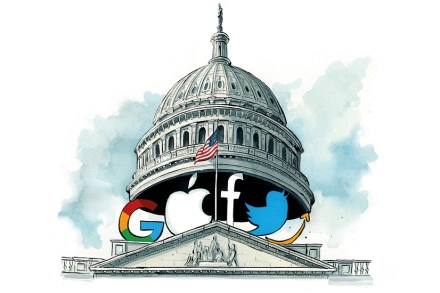
Congress struck a major blow against TikTok's Chinese ownership Thursday morning, by passing the Protecting Americans from Foreign Adversary Controlled Applications Act, which would require parent company ByteDance to sell its US entity within six months in order to retain access to American app stores and web hosting services. The bill, passed by a 352-65 margin, now heads to the Senate. It offered a rare time that former president Donald Trump found himself allied with progressive members of the Squad in opposition, while Representatives Mike Johnson and Hakeem Jeffries joined forces in voting for the bill, which would help combat the espionage concerns that intelligence officials in the Biden administration have repeatedly raised.

tiktok

The digital habit

In an era that claims to value the authentic, the direct and the natural, the word "processed" has negative connotations, as in “processed” food. Nevertheless, it describes exactly how perhaps nine-tenths of the human race — including, I imagine, the lost Indian tribes of the Amazonian wilderness — experience reality these days, which is to say processed through electronic media, social media and the oxymoronic smartphone.

digital

A history of intellect

It has it been widely noted that, as Western culture generally has grown steadily more materialistic in its values and interests (as if it were ever anything else, ungenerous critics might suggest) over the past half-century, it has become simultaneously more abstracted in its mental habits and orientation? Chesterton described a paradox as truth standing on its head to draw attention to itself. In this instance, we have an obvious example. But it’s a good question how this particular one came to be. Ancient Greece was an intensely intellectual world of ideas that were firmly grounded in empirical reality and in observed and confirmable truth.

intellect

Elon is offering us a raw deal with X

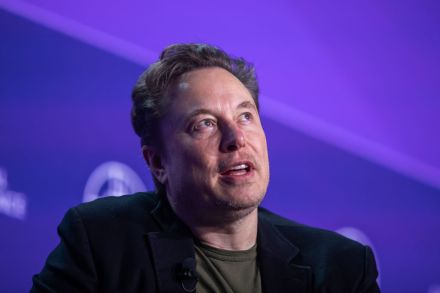
Elon Musk, the owner of X — once known as Twitter, may she rest in peace — is making Americans an offer that they must refuse. When he purchased the social media platform last year for a whopping $44 billion, he led us to believe he was doing it in order to save free speech, an ideal in regard to which he said was an absolutist. Today, what he is actually offering instead is a censorship regime slightly more friendly to the right than his predecessor. It’s a recipe for disaster. Back during the bad old Twitter days of Jack Dorsey, most of us had a fairly consistent idea of how the site should moderate its content.

elon musk

The new corporatism that’s killing capitalism

Over the years since the financial crisis, economic power and wealth has become ever more concentrated in fewer hands. This is something leaders have acknowledged, and policymakers have tried to do something about. And yet, despite brave talk of breaking up mega-giant companies, anti-trust efforts have been anemic, as most recently demonstrated by the failure to stop Microsoft from swallowing game maker Activision. The future looked a little brighter in the immediate aftermath of the pandemic. There were signs of a grassroots resurgence, with a strong uptick in new business formations in the United States. But since then, as interest rates have risen and regulatory pressures have increased, there has been a slackening off of new firms.

the new corporatism

How Elon Musk turned Twitter into the post-TV Fox News

Elon Musk has decided it's too much work for him to be the chief executive of Twitter, a fraying social network, in addition to running Tesla and SpaceX and a potpourri of other startups. He recently named Linda Yaccarino, an NBC ad executive, as the new CEO so that she could focus on business operations and he could focus on product design and new technologies. As an employee of Musk's, Yaccarino has an impossible mission — to stem the bleeding, appease the advertisers, and, of course, keep her new boss happy. Good luck to her, I say, for Twitter's current fortunes are going in only one direction — south. When Musk acquired Twitter, he paid $44 billion for a company that no one else wanted nearly as much. Since then, its value has fallen to almost $20 billion.

Make tech great again

Mark Zuckerberg has dubbed 2023 Meta’s “year of efficiency.” The slogan is a corporate euphemism for layoffs, of course — and not an especially subtle one. Zuckerberg’s company has parted ways with tens of thousands of employees this year. Other tech firms are following suit. Crunchbase estimates that US tech firms fired more than 118,000 employees in the first quarter of 2023. These are lean times in Silicon Valley — and, as Joel Kotkin explains in this month’s cover story, there is more to this tale than Big Tech belt-tightening after a pandemic-era hiring spree. The Valley, Kotkin explains, is in trouble. A place that America, and the world, once looked to for an ambitious and optimistic vision of the future, has grown sclerotic.

tech
Neumann

Inside the unlikely return of WeWork’s Adam Neumann

Imagine for a moment you are Adam Neumann, the slick, smooth-talking Israeli-born entrepreneur who took the world by storm thirteen years ago with WeWork, his ultimately failed effort to rethink the way we office. After your start up took a tumble and your IPO failed, you nonetheless walk away with roughly $600 million in cash, plus another $400 million loan, and a new lease on life. You head underground, lick your wounds and claim to be trying to learn from what went wrong, including the relentless overhyping, the mismanagement and the enormous losses that your investors suffered. When you re-emerge, you decide to start again and persuade one of Silicon Valley’s most respected investors to back you. Whoa.

Biden will never let Silicon Valley fail

After a bank run on Silicon Valley Bank left the institution in ruins, the Federal Reserve announced it would make whole the bank’s customers, including those with uninsured deposits in excess of $250,000, which should have made them ineligible for the Deposit Insurance Fund. President Biden promised the American people that this was not a bailout because no losses would be borne by taxpayers — a claim the Wall Street Journal assessed as a “whopper.” But the debate we should be having is not over the definition of the authorities' actions, but how to judge them morally — especially given how the Fed has been trying to tame inflation for the past two years.

svb silicon valley

SVB was more interested in virtue-signaling than sound banking

Even by the standards of bank runs, the collapse of Silicon Valley Bank was remarkable. In February, Forbes magazine had put it on its Best 100 Banks list. Yet on Thursday, depositors withdrew $48 billion. That’s $14 million a second. Lines formed outside the bank’s various branches, reminiscent of the Great Depression. California banking authorities shut it down and turned it over to the Federal Deposit Insurance Corporation (FDIC) for sale or liquidation. So what happened? Silicon Valley Bank had grown very quickly over the past few years, In early 2020, it had a deposit base of $55 billion. A mere two years later, its deposits had reached $220 billion. But that was more money than it could put into lending to its narrow base.

Can I now free the nipple on Instagram and Facebook?

It’s a funny old world. Cockburn noticed today that Facebook and Instagram have been told to overhaul their longstanding ban on exposed female nipples, as the policy impedes the right to expression for, wait for it, trans and nonbinary people. Isn’t it funny that more than a decade after breastfeeding mothers first held a “nurse-in” at Facebook’s headquarters to protest, Meta’s oversight board has called for an overhaul to the boob ban to satisfy the rights of people that insist they are now men. What a victory! “Lactivists,” otherwise known as women, spent an entire decade in the 2000s attempting to reverse the ban by explaining that images of breasts were not inherently sexual. This resulted in the campaign to #FreetheNipple, which went mainstream in 2013.

meta nipple

Is Mastodon the new Twitter?

It’s been less than two weeks since Elon Musk took over Twitter — and Cockburn is finding the app more chaotic than ever. The news of the tech takeover really separated the kids from the grown-ups. One by one, the haughtiest users have bravely announced their departure from the bird website. Ciao! The latest to go is the British actor Stephen Fry, who posted a picture of Scrabble letters spelling out "goodbye" to his 12.5 million followers. He’s since headed over to Mastodon. Never heard of it? Neither had Cockburn until he got his tech-savvy nieces to give him a hand. And now he can say, with authority, that it is even worse than Twitter. When signing up to Mastodon, users choose a "server," which is based on your interests. "Mindly.

mastodon

Let’s ban the metaverse and colonize space

The way I see it, there are two options for the future: a transplanetary society or a transhuman one. What got me thinking about this was right-wing billionaire Peter Thiel’s recent interview with Mary Harrington, which she wrote up in UnHerd. As Harrington puts it, Thiel’s diagnosis of modern social ills is not that “progress is inevitably self-destructive,” but that we’ve been making the wrong kind of progress. "We’ve had continued progress in the world of computers, bits, internet, mobile internet, but it’s a narrow zone of progress. And it’s been more interior, atomizing and inward-focused,” Thiel said. Meanwhile, “there’s been limited progress in the world of atoms.” So far, so good. But then the interview took a strange turn.

Why tech billionaires love testosterone

Testosterone is having a moment. At once a molecular vector for toxic masculinity and a health-optimizing supplement for middle-aged tycoons eager to project vigor, “T” is perhaps the most discussed hormone around. I blame Jeff Bezos, who has apparently aged in reverse since founding Amazon. After a tight-shirted appearance at the 2017 Sun Valley conference, his transformation from dweeby online-book-salesman to Vin Diesel-clone-with-alpha-swagger was unmistakable. Was he getting some hormonal help? Fast-forward a few years and he has acquired a hot Latina girlfriend and blasted himself into space in a giant metal penis. This left little room for doubt: surely he was marinated to a T, in T.

testosterone

Elon Musk is the wrong kind of billionaire

Oh, to have been a fly on the wall in the C-suite at Twitter on Thursday afternoon. The social media company’s San Francisco headquarters reportedly played host to an all-hands meeting in which concerned employees were given the chance to ask questions about billionaire Elon Musk’s offer to buy their company. Their panic is not entirely without merit — Musk has floated the idea of turning Twitter’s building into a homeless shelter. Yet it's worth noting that Twitter’s employees have been told they can work from home indefinitely, and their questions were delivered to a largely empty building via the messaging app Slack.

elon musk ketamine

Both parties want to control what you say on the internet

The long slog towards government regulation of social media is snaking its way towards reality. The House and Senate hold hearings this week on bills enacting rules on Facebook, Twitter, TikTok and YouTube. Many of these proposals revolve around Section 230 of the Communications Decency Act, a rather innocuous 1996 law protecting online platforms from civil liability for hosting and moderating third-party content. Section 230 includes language praising “the vibrant and competitive free market” existing for the internet and tech companies, without state or federal government rules. It’s all about to change twenty-five years later, with both major parties seeking to get their pound of ideological flesh from Big Tech.

control

Joe Biden’s digital serfs

The Biden administration intends to notify Facebook about ‘problematic’ postings, such as questioning the COVID-19 vaccine. Jen Psaki, the White House spokesperson, suggests that if you’re problematic on one social-media site, you should be banned from them all. Big Tech, meet Big Sister. I suppose this is still America. If Donald Trump had said he’d use extra-legal leverage over Big Tech, most of the media would be crying ‘fascism’. Brian Stelter would decry an unprecedented assault on the First Amendment. Jeffrey Toobin would bang one out about bypassing Congress and the law. Minor academics would op-ed in the New York Times about the classically fascist ‘collusion’ between government and big business.

digital

Last chance to end the tech tyranny

What would Adam Smith think of cancel culture? Many advocates of banning books now hide behind a veil of free-market purity: If Amazon bans a book, it’s not really banned because the online megalomart is, a private company. But it controls an outright majority of book sales in the United States, and even that remarkable measure may underestimate the power Jeff Bezos’s company wields over individual titles. Bestsellers can be found elsewhere perhaps, but most books have few other outlets. So Amazon doesn’t ban books. It just makes them much harder to buy and read. If a private company chooses to do that, who are you to complain?

oligarchy tech capitalist pigs

Prince Harry is here to help

Nothing duller for those of us not in therapy than listening to people who are in therapy talking about it, something they seem to like to do incessantly, at every opportunity. For this reason, my heart sank during the Oprah interview — which I’d been looking forward to tremendously — when early into his appearance, Prince Harry made an unsmiling reference to the ‘many years’ he had spent ‘doing the work — and doing my own learning’. Here we go, I thought. Sure enough, not long later he was telling the ludicrously softball interviewer of his family, his father, particularly: ‘they only know what they know. I’ve tried to educate them, through the process that I’ve been educated.’ Difficult to imagine how much the Windsors must have enjoyed that.

harry therapy

Milwaukee is a victory for Silicon Valley’s shadow state

The real venue for the Democratic National Convention will not be Milwaukee, but the online platforms that will facilitate and stream it: Zoom, YouTube, Amazon Prime Video, Apple TV and so on. Necessity is the mother of symbolic invention: Democratic politics and Big Tech have been merging for some time. Now COVID has rendered a political party indistinguishable from the Silicon Valley shadow state. Barack Obama, who will speak to the convention on Wednesday, made a sustained effort to connect Washington DC to Silicon Valley throughout his time as president. One measure of his success is that many former members of his administration have migrated to the tech industry. David Plouffe, a key campaign adviser, went on to work for Uber and the Chan Zuckerberg Initiative.

silicon valley