Sicily

The people from the sea

 Lampedusa The young hang about in packs or speed around town, two to a scooter. Old women group together on benches around the town square in front of the church. The men continually greet each other as though they haven’t met for years. The likelihood is small. With fewer than 6,000 inhabitants, and as close to Libya as it is to Italy, Lampedusa is the sort of place from which any ambitious young Italian would spend their life trying to escape. Yet every day hundreds and sometimes thousands of people are risking their lives to get here. ‘Please tell people we have nice beaches,’ one islander pleads.

An earthquake with a Baroque legacy in Sicily

Syracuse is a handsome place, steeped in a rich historical broth. At the tip sits Ortygia, an island offshoot, which has been the backdrop to many Mediterranean sagas: Hellenic, Christian, Medieval, Renaissance, Baroque — take your pick. By day, Via de Benedictis is filled with local men selling sea urchins, milky balls of ricotta and bunches of mint. At night, we went to the Piazza Duoma for aperitifs. The cathedral’s broken pediments and exuberant sculpture cast strange shadows on to the square and a zephyr blew. It was November and the place was empty, aside from a small boy on rollerskates and a dog. In summer it must swarm with people. An earthquake destroyed much of southern and eastern Sicily in 1693, and many of the towns were rebuilt in a Baroque style.

Prue Leith’s diary: I want to be green, but I’ve got some flights to take first…

‘Please God, make me good, but not yet.’ I know the feeling. As I get older and more deeply retired, I globe-trot more and my carbon footprint is horrendous. And guilt does not result in abstinence. The brain is persuaded but the flesh is weak. Years ago I chaired Jonathon Porritt’s sustainability organisation, Forum for the Future, and I remember holding a fund-raising dinner for rich Cotswolders and hoping no one would notice my gas-guzzling old car, toasty warm house, and melon with more air-miles than flavour. I’ve tried harder since then, but it’s not easy. A couple of years ago I converted my ancient barn into an eco-friendly house with heat-exchange pump, grey water collection, massive insulation, the lot.

Ancient & Modern: the rumour mill

Geoffrey Dickens’s ancient dossier of (alleged) paedophiles in high places cannot be found among the 138 miles of government files, and rumour immediately takes wing. The ancients knew all about rumour: phêmê in Greek, fama in Latin, both words relating to ‘speech’. In 415 bc, the Athenians sent an expedition to Sicily, and Syracuse was rife with rumours about it. In the Assembly, one speaker said it was all nonsense, stirred up by agitators wishing to create fear and thus gain power. It was a reasonable assumption: in 411 bc a revolution occurred in Athens as a result of rumour. Rumour has not lost its power as a modern political weapon either.

Keeping it real | 9 April 2011

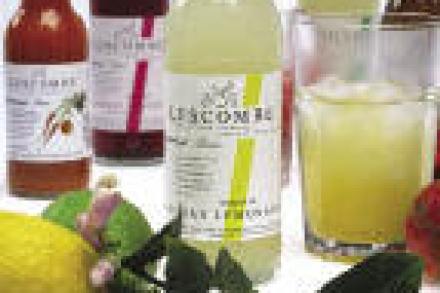
Italian food is about simplicity and seasonality, and in Sicily spring brings the fragrant lemon harvest – eagerly awaited in one corner of Devon. Hattie Ellis takes a trip to the mother country with a pioneer of real lemonade Do you remember when lemonade used to be just that harshly fizzy clear stuff you bought in big plastic bottles? Now you can find a fragrant, sweetly-sharp drink that’s the soft yellow of a summer’s evening. Often called Sicilian lemonade, it is similar to what you’d make at home. Add a slosh of gin, vodka or rum and it’s something else again. One of the best Sicilian lemonades is made by Luscombe Drinks in Devon, the pioneer of the trend, starting back in 1997.