Shakespeare

My letter from Chris Packham

From our UK edition

I do not know Chris Packham, the BBC nature broadcaster, personally, but he wrote me a letter last month, enclosing a book called Manifesto, The Battle for Green Britain by Dale Vince which, he tells me, ‘has something very important to say at this most important time’. In his letter, Chris says that ‘irrespective of any party politics’, ‘The coming election will be the most important of our lifetimes’ because we are ‘halfway through the last decade’ left to avoid ‘the worst of climate breakdown’. So ‘we must help young voters navigate the new voting rules’. Politics has ‘become the final frontier for a real greener Britain’. What Chris does not mention is that party politics is very important in this most important book.

Letters: Rod was right about Bob Marley

From our UK edition

Copping out Sir: Both the Police and Crime Commissioner Dr Andrew Billings and your recent correspondent John Pritchard are partly right (Letters, 16 and 23 March). Policing has gone wrong for two reasons. First, the massive cuts in staff instigated by Theresa May as home secretary resulted in a large number of the most experienced officers leaving. Even the replacement of these officers under Boris Johnson took time and could not make up for the loss of experience. Secondly, the inspection regime under the Inspectorate of Constabulary fails to address the crimes that matter to the public. During the years I was PCC for the Thames Valley, I made household burglary, theft, violence on the streets and rural crime our priorities. That was what the vast majority of the public wanted.

War on words: is Scotland ready for its new hate crime law?

From our UK edition

51 min listen

On the podcast: Scotland’s new hate crime law; the man who could be France’s next PM; and why do directors meddle with Shakespeare?  First up: Scotland is smothering free speech. Scotland is getting a new, modern blasphemy code in the form of the Hate Crime and Public Order (Scotland) Act, which takes effect from 1 April. The offence of ‘stirring up racial hatred’ will be extended to disability, religion, sexual orientation, age, transgender identity and variations in sex characteristics. The new law gives few assurances for protecting freedom of speech writes Lucy Hunter Blackburn, former senior Scottish civil servant. Lucy joins the podcast, alongside Baroness Claire Fox, unaffiliated peer and founder of the Academy of Ideas think tank.

An engrossing new two-hander about Benjamin Britten

From our UK edition

Ben and Imo are composer Benjamin Britten and his musical assistant, Imogen Holst. But those cosy pet names tell us where we stand – or at least, where we think we do. The illusion of being inside an artistic clique is at the heart of Mark Ravenhill’s new two-hander, which began life as a BBC radio drama and which he has now opened out into a two-act play about the pair. Alan Bennett did a Britten play a few years back but Ravenhill is sharper, and as directed by Erica Whyman, Ben and Imo just about supports its own length. His Benjamin Britten is bravura – neck stretching forward, then springing back, like a tortoise Which is more than can be said for its subject, Britten’s 1953 coronation opera Gloriana.

What America should heed from Julius Caesar’s assassination

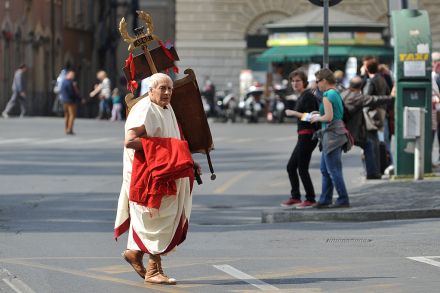
It being the Ides of March, I thought it might be worth reflecting briefly on the most famous event that occurred on this day: the assassination of Julius Caesar in 44 BC. One of the great ironies surrounding that bloody event is that, for all of the upheaval it occasioned, it failed utterly in its stated purpose. The conspirators sought — or said they sought — to overthrow a dictator and restore the Republic.  “The Republic,” “the Republic,” “the Republic”: that was the phrase they uttered ad nauseam. But the Roman Republic, devised to govern a city state, was overwhelmed by the cosmopolitan responsibilities of empire. By Caesar’s day, the Republic was a tottering and deeply corrupt edifice.

ides of march caesar

If only Caryl Churchill’s plays were as thrillingly macabre as her debut

From our UK edition

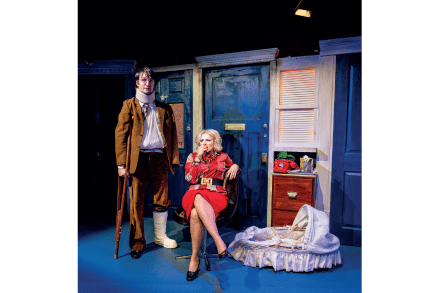
The first play by the pioneering feminist Caryl Churchill has been revived at the Jermyn Street Theatre. Owners, originally staged in 1972, feels very different from Churchill’s later work and it recalls the apprentice efforts of Brecht who started out writing middle-class comedies tinged with satirical anger. Churchill sets her play in the cut-throat London property market where prices are soaring and tenants are apt to be evicted if they can’t cover sudden rent rises. Marion is an estate agent who secretly buys a house occupied by her former lover Alec who is married to Lisa. Their third child is on the way. Marion hatches an evil plan to kick the family out and to claim Alec back as they sink into financial ruin.

Why do I need security guards so I can play Shylock?

From our UK edition

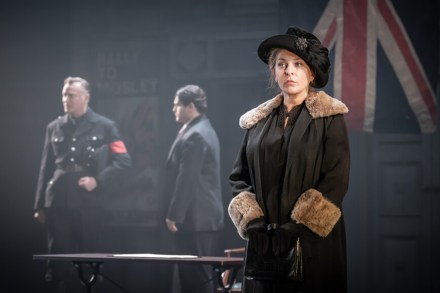
These are very odd times. The project of my life – The Merchant of Venice 1936, which sets Shakespeare’s play in East End London during the rise of Oswald Mosley’s Blackshirts – was postponed because of Covid, but is now alive and kicking. It’s kicking hard. We’re on a ten-week tour and I’ve been moved beyond words at the reactions of audiences and critics. Yet for the last week, the production has had to have security men around keeping an eye on things. It’s like a dystopian nightmare. A Jewish actress putting on a play about anti-Semitism which needs to be made secure because of Jew-hating extremists. As one reviewer said: ‘Written in 1600, set in 1936, as relevant today in 2023.’ Ain’t that the truth.

Has VR finally come of age?

From our UK edition

A heavily made-up Iranian woman in bra and knickers is dancing seductively before me. We’re in some vast warehouse, and she’s swaying barefoot. But then I look around. All the other men here are in military uniforms and leaning against walls or sitting at desks, smoking and looking at her impassively. I slowly realise we are in a torture chamber and this lithe, writhing woman is dancing, quite possibly, for her life. Me? I have become one of her tormentors. You can immerse yourself in war-ruined Ukraine, go on the run from the Holocaust, become a mushroom Welcome to The Fury, a bravura attempt by Iranian artist Shirin Neshat to use virtual technology in her art. ‘Have you ever experienced VR before?

The new Elon Musk biography lacks a clear vision

In the prologue to his biography of Elon Musk, Walter Isaacson evokes the Hero’s Journey in its most pop-culture incarnation: It’s one of the most resonant tropes in mythology. To what extent does the epic quest of the Star Wars hero require exorcising demons bequeathed by Darth Vader and wrestling with the dark side of the Force? Isaacson’s assumption is that Luke Skywalker is the hero of the original film A New Hope. His preamble is titled “Muse of Fire,” a reference to the most famous prologue in literature, the opening lines of Henry V. In Shakespeare’s play, the poet, recognizing the gargantuan feat before him, asks the Muse for help: O, for a muse of fire that would ascendThe brightest heaven of invention!

elon musk

Shakespeare in black and white

Sarah Karim-Cooper first came to public attention at the cosmetics counter. Her book on makeup in Renaissance theater, Cosmetics in Shakespearean and Renaissance Drama, was published in 2006. Its enduring popularity is not so much a testament to her scholarly insights on powdered hogs’ bones mixed with poppy oil — the old stage recipe for pale skin — or Shakespeare’s sardonic references to the kind of beauty “purchased by the weight” in The Merchant of Venice, as to Karim-Cooper’s celebrity: for more than a decade she’s been one of the leading racializers of Shakespeare’s work. Perhaps the key moment in her rise to fame was her 2018 curation of the Globe Theatre’s first “Shakespeare and Race Festival,” now held annually.

shakespeare

Hamlet fans will love this: Re-Member Me, at Hampstead Theatre, reviewed

From our UK edition

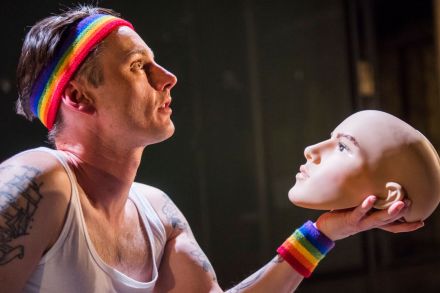
A puzzle at Hampstead Theatre. Literally, a brain teaser. Its new production, Re-member Me, is a one-man show written and performed by Dickie Beau, whose name is a punning allusion to a bow tie. The oddly spelled word, ‘re-member’ refers to the process of reassembling the separated limbs of a dramatic character during the rehearsal process. The poster for the production centres on Mr Beau dressed in 1980s sports gear and wearing a T-shirt blazoned with the logo of ‘Wittenberg University’, written in German. Enfolding his skull is a rainbow headband. These details tell us that the play examines the character of Hamlet with a particular focus on the travails of gay actors performing the role during the 1980s Aids epidemic.

Does Shakespeare tell us how Succession will end?

From our UK edition

The award-winning Succession is many things. Now in its fourth series, it has been compared with a Renaissance painting, a Greek tragedy, a Jane Austen novel, and a psychoanalytical allegory of trauma responses (Kendall – fight; Connor – flight; Shiv – fawn; Roman – freeze). Ultimately, however, it is a Shakespearean series. The writers may have swapped the battlefield for the boardroom and armies for anxious shareholders, but the show’s character studies and themes – power, family, politics, betrayal, revenge – are Shakespearean in their complexity and circularity. Only instead of soliloquies, we have a lot more raised eyebrows, death-stares and ‘uh-huhs'. There’s even a playwright called Willa.

& Juliet and Titanique: two newly minted cult classics

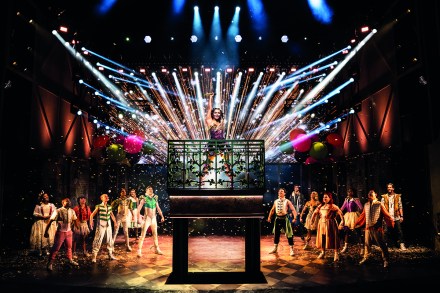
Fears that the new pop-parody musical & Juliet would be a vehicle for steamrolling Shakespeare are understandable but unfounded. It’s true that, on Broadway as in the rest of the arts, holding dead white males up for flagellation is now almost a cherished ritual — a recent example being last season’s Six, a glitzy feminist paean danced on the grave of Henry VIII. There’s a healthy dose of girl power in & Juliet, too, and I don’t doubt that a few heedless theatergoers came with tomatoes in hand, hoping to find the Bard pilloried. Let me tell you a secret: the theater world still adores Shakespeare, even in 2023. To renounce him is to swear off your mother’s milk.

Juliet

The barbarism of Canada’s euthanasia regime

“After a recent experience caring for a patient receiving medical assistance in dying, I felt distressed and uncomfortable. How should I manage these emotions?” According to the website of the College of Nurses of Ontario, that’s a frequently asked question for healthcare professionals involved in euthanasia. Perhaps Canadian health science programs ought to have some mandatory classes on Shakespeare. He wrote quite a bit about coping with the pangs of conscience, particularly after having been an accessory to the unnatural death of another.

The ups and downs of driving a Tesla

From our UK edition

I began the week in Miami, looking forward to what a friend of mine describes as ‘the finest sight in all Florida – the departure lounge’. That is a little unfair; a tour of Cape Canaveral is mind-blowing. But beyond that I confess I find the state brash and gaudy, a fitting place for Donald Trump’s retirement. If indeed the 45th President has retired. No one will be surprised if he runs again, nor if he is re-elected with the help of his Republican party which has been busy restricting voters’ rights and playing origami with constituency boundaries. I doubt he will win the popular vote, but nor does he need to with the Electoral College on his side. The 2020 election was a referendum on The Donald and so will the 2024 election prove to be.

Why Merseyside is the natural home for a Shakespearean theatre

From our UK edition

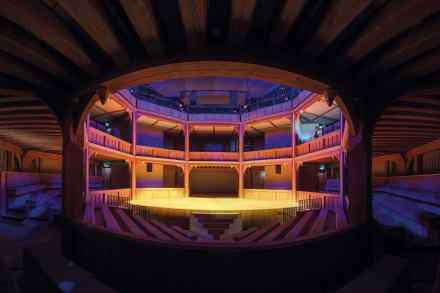
Prescot is a neglected little town in Merseyside noted for having Britain’s second narrowest street and for its Brazilian waxing salon. It’s now also home to Shakespeare North, a game-changing new theatre. This handsome, modern brick building overlooking a Jacobean church has a light, airy, unfussy interior – a stairway to heaven. You leave the modern world and enter an octagonal cocoon, modelled on a 1630 playhouse, built of slowly splitting green oak, the limbs all pegged together, not a nail in sight. The seats (two tiers) accommodate between 320 and 470 people, depending on the configuration of the stage. Its acoustic is spot-on and it feels cosy but not claustrophobic. The sound and lighting technology is modern but it can be candlelit if need be.

Stupendously good: Much Ado About Nothing, at the Lyttelton Theatre, reviewed

From our UK edition

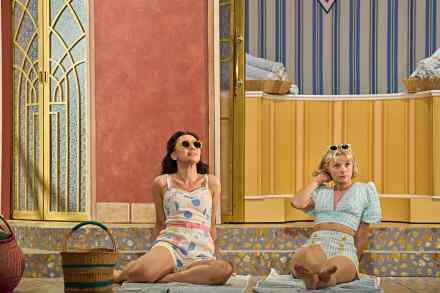
Simon Godwin’s Much Ado About Nothing is set in a steamy Italian holiday resort, the Hotel Messina, in the 1920s. A smart move, design-wise. The jazz age was one of those rare moments in history when every member of society, from the lowliest chambermaid to the richest aristocrat, dressed with impeccable style and flair. The show is stupendously good to look at it and it kicks off with a thrilling blast of rumba music from a jazz quartet on the hotel balcony. Even sceptics of jazz need not fear these players. The musical score is a triumph for one simple reason: there are no jazz solos. https://www.youtube.com/watch?

Macbeth on Broadway: a Very Modern Scottish play

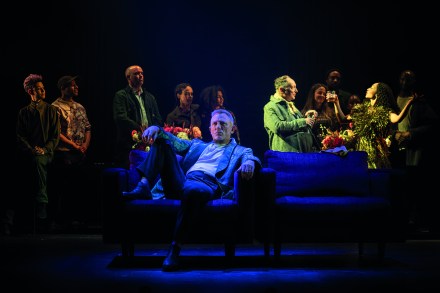
The new Macbeth on Broadway starring Daniel Craig ends up about where you’d expect: a Macbond unhinged and raving about Birnam Wood come to Dunsinane, splattering the castle walls with the gore of his enemies and pummeling Macduff mercilessly until the showstopping reveal that the latter was “of no woman born” but, in fact, “from his mother’s womb/ untimely ripped.” Omit the full-cast kumbaya circle at the end (a too-sweet cherry atop a bloody sundae), and the denouement essentially gives you Shakespearean drama at its most unimaginative — as a Hollywood action blockbuster. This isn’t to say that Shakespeare cries out for bold reimagining. Nor is there anything wrong with giving people what they came to see. It is Daniel Craig, after all.

Macbeth

The Victorian origins of ‘medieval’ folklore

From our UK edition

I would guess that contemporary pagans have a love-hate relationship with Ronald Hutton. With books such as The Triumph of the Moon and Stations of the Sun, scholarly accounts of the history of modern witchcraft and the ritual year in Britain, no one writes more sensitively about their worldview. On the other hand, as an academic, Hutton assiduously seeks to saw off the branch on which many of their fondest assumptions sit. The paradox can be explained. Queens of the Wild returns to one of Hutton’s key themes: the debunking of the idea that pagan practices and beliefs survived intact in Europe from archaic times.

Witches brew

Since its initial publication in the legendary 1623 First Folio, Shakespeare’s Macbeth — one of the Bard’s late tragedies, and among his greatest — has been reimagined in countless ways. By the late seventeenth century, it had already been updated by Sir William Davenant to meet changing tastes. It was supposedly restored (though still thoroughly altered) by David Garrick in the eighteenth; and it was further “cleaned up” by Thomas Bowdler (which gave us the term ‘bowdlerized’) for his Family Shakespeare collection in the nineteenth century, an era that also brought us Verdi’s enthralling operatic version.

Macbeth