Scotland

The ‘no’ campaign’s problem was that it sounded like me

Journalistically speaking, it’s been a good year to be Scottish and Jewish. Had I been a Welsh Zoroastrian, say, I doubt I’d have had nearly so much to say. In recent months, obviously, it’s been the Scottish thing that has really taken off. I used to be marginally Scottish, irrelevantly Scottish; never realising that a period of being helpfully Scottish was just around the corner. I suppose it’s a bit like the presumptions that some bilingual people have, that other people must, must be able to speak other languages really. I think I just assumed that the rest of London’s media knew plenty about Scotland, but tended not to talk about it. But no. They didn’t. At all. Imagine you’d been wearing the same jacket for a decade, and then saw it in Vogue. It’s been like that.

Santander’s secret: to conquer the world, stay like a small-town bank

Four years ago, I wrote that I knew no dark rumours about Santander, the rising force in UK high street banking, but that history taught me banks which expand rapidly and globally ‘always come unstuck in the end… partly because the challenge of risk control across such vast portfolios becomes impossible… Banks that have been driven by one powerful personality also tend to lose management grip, and start finding skeletons in cupboards, as the big man comes to the end of his tenure.’ The big man in question was third-generation chairman Emilio Botín — who died in post last week, aged 79.

Yes or no, I’ll never feel the same about the Scots

I doubt I’m alone among English readers of this magazine in having felt uncomfortable with our last issue. ‘Please stay with us’ was a plea I found faintly offensive to us English. Not only did it have a plaintive ring, but there seemed to be something grovelling, almost self-abasing, in the pitch. Why beg? A great many Scots have wanted to leave the Union; and by arranging a referendum Westminster has asked Scotland to make up her mind. Let her, then. When did England become a petitioner in this affair? ‘Please stay’ implied that the Scots were minded to go and we were pleading with them to relent of their intention. Yet I haven’t thought of this referendum as a bid to change Scotland’s mind, but as an exercise to discover a nation’s wishes.

Final polls put No ahead

The last YouGov poll of the campaign, which has a far larger than usual sample size, has No ahead 52-48. The last phone poll of the campaign, a Survation effort, has No up 53-47. So, the No campaign is ahead by a clear but small margin. [datawrapper chart="http://static.spectator.co.uk/3gFhn/index.html"] The Sun’s political editor Tom Newton Dunn reports that YouGov finds that men in Scotland favour independence 54 to 46 but women back the Union 57 to 43. Its numbers show that only 4 per cent of voters remain undecided. Interestingly, those from the rest of the UK who have moved to Scotland—those living the Union—are voting No by a 72 to 28 landslide. By contrast, Scottish born Scots are split 50/50 on the independence question.

The Scottish jobs miracle is an argument for Union, not independence

One of the more bizarre aspects of the Scottish independence debate is the idea that UK welfare reform somehow doesn’t fit Scotland. On the contrary, it was designed for Glasgow – the Easterhouse housing scheme, to be specific, after a visit which changed Iain Duncan Smith’s whole career. And the other point about these reforms is that they’re actually working. Today’s figures show that the number of Scots in employment is rising by almost 500 a day. A grand total of 2.62 million are now at work in Scotland – never in the country’s history has it had so many in work. And why? It's the same phenomenon that you see in England: the number of people available for work is rising far faster than the working-age population.

Salmond’s biggest myth

When I asked one leading SNP figure right at the start of this process how they would try and win this referendum, he told me that by the end of the campaign you’d barely be able to tell the difference between, what he called, independence-lite and devo max. This is why Salmond has put such emphasis on keeping the Queen as head of state, still using the pound and the idea that there won’t be any borders controls or customs posts.   Now, with the exception of the Queen remaining head of state these are distinctly dubious propositions. Scotland might choose to use the pound but, given that there isn’t going to be a currency union, it would be doing so in just the way that Panama uses the US dollar.

Two campaign styles: one from the head, one from the heart

Aside from the odd angry moment, campaigning with 'Yes' in Kelvin this morning was very pleasant. It was also rather different from yesterday's 'No' door knocking, and not just because the two areas are not at all similar. 'Yes' bussed their supporters from a campaign base out to their target streets. Then they split off in pairs to canvass different streets. This was entirely different to the 'board' set up that 'No' used yesterday in Rutherglen. The aim was to get leaflets through the door and chat to anyone who answered. There was no collection of data on voting intention or what time the person who answered the door intended to vote, which was what Labour were doing yesterday. Instead, the campaigners launched into lovely long debates with anyone who cared to chat to them.

Scotland could never prosper under the SNP, because they don’t understand business

No-nonsense businesspeople will be very much what’s needed in the aftermath of the Scottish Catastrophe, as it will surely come to be known whichever way the vote has fallen. No nation, independent or semi-autonomous, can hope to prosper on the basis of the wild welfare promises of the SNP, unsupported by any plan to attract investment and stimulate growth. Only a resurgent private sector can drag Scotland out of the tax-and-spend peat bog into which this referendum has driven it deeper than ever — and that will take quite some grit on the part of entrepreneurs, given the fundamental hostility of both the SNP and Scottish Labour. But grit —even granite ruthlessness — is a characteristic shared by the outstanding Scottish business builders of the past.

The public voices for Scotland’s no? Expats. Tory. Establishment. Posh. Why?

Journalistically speaking, it’s been a good year to be Scottish and Jewish. Had I been a Welsh Zoroastrian, say, I doubt I’d have had nearly so much to say. In recent months, obviously, it’s been the Scottish thing that has really taken off. I used to be marginally Scottish, irrelevantly Scottish; never realising that a period of being helpfully Scottish was just around the corner. I suppose it’s a bit like the presumptions that some bilingual people have, that other people must, must be able to speak other languages really. I think I just assumed that the rest of London’s media knew plenty about Scotland, but tended not to talk about it. But no. They didn’t. At all.

David Cameron’s draft resignation letter in the event of a Yes vote

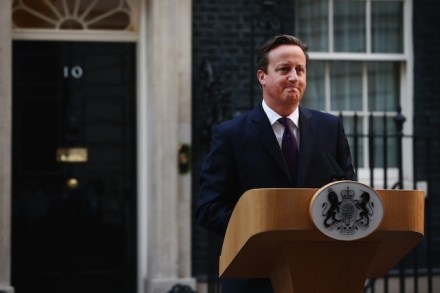
As told to Jonathan Foreman... To my fellow citizens I would like to apologise for the role I have played in the dismantling of the United Kingdom. I am sure there is little need for me to tell you that I never dreamed that my Prime Ministership would be the Union’s last, or that I would be the person ultimately responsible for the needless destruction of one of the most successful polities in the history of Europe and indeed the world. However, I must take responsibility for what has happened. First of all, the blame is mine for allowing the referendum question to be worded in a way that inevitably favoured the secessionist cause. As is obvious now, I should have insisted on wording such as: 'Do you think Scotland should leave the United Kingdom?

A 90-day patriot

One question before the independence vote on Thursday is where is the SNP’s most famous celebrity supporter? You might expect Sean Connery to be out rousing the faithful but so far there has been no sign of him. But is he planning a James Bond-style dramatic late entry into the campaign? Well, the Edinburgh Evening News tracked down his brother to ask and this is the reply they got: ‘There’s only a certain amount of days Sean can be in the country for tax reasons, so I know that he intends to use them wisely.’ It is good to know what Sir Sean thinks is a wise use of his time. Thanks to Andy Sparrow of the Guardian for reporting.

Is Scotland confident enough to vote No?

We hold this truth to be self-evident: we are not an oppressed people. We have some liberty to chart our own course. We are, after all, choosing our path this week. We do not crave self-determination because we have always had that power. And many others besides that significant liberty. We are a free people. This is obvious yet also something worth recalling in these final hours. I have my own reasons for voting No on Thursday and, in truth, they have little to do with very much that has been said by the official Better Together campaign. But this kind of choice, this kind of referendum, inevitably prods one towards endorsing one team or the other. It is Rangers or Celtic and, in the end, there's no room for Partick Thistle or Queens Park or anyone else.

Scottish nationalism: turning neighbours into foreigners

Nationalists build walls to keep their people in and the rest out. They create 'us' and 'them'. Friends and enemies. If you disagree, if you say they have no right to speak for you because not all Scots/Serbs/Germans/Russians/Israelis think the same or recognise their lines of the map, you become a traitor to the collective. The fashionable phrase 'the other' is one of the few pieces of sociological jargon that enriches thought. All enforcers of political, religious and nationalist taboos need an 'other' to define themselves against, and keep the tribe in line. The process of separation and vilification is depressing to watch but familiar enough. Scottish nationalists are preparing a rarer trick, last seen in the dying days of Yugoslavia and Czechoslovakia.

Yes Scotland are running a sneaky campaign

Here's a clever poster from the 'Yes' campaign. It was handed to me by an activist outside Glasgow Central Station who was asking people if they wanted 'more information for the referendum'. She wasn't wearing any Yes badges, and the outside of the leaflet doesn't give the game away either: And inside there is still no 'Yes' branding, but it's quite obvious from the design what sort of conclusion you're being led to: Which then leads to the centre of this leaflet, which folds out to make an A1 poster: It's a clever way of killing two birds with one stone: you hook someone in who might not pick up a 'Yes' branded leaflet, then if you've managed to make your case effectively, they've got a poster to stick in their window to spread the word.

It’s on! Come for tea at The Spectator before the 6pm #unity2014 rally in Trafalgar Square

Okay, so it’s going ahead: The Unity rally in Trafalgar Square, where people will come together to say how much the United Kingdom means to them, will take place 6pm Monday 15h September - Battle of Britain day, an appropriate time for the battle for Britain. And Spectator readers are welcome to come by for a cup of tea in the garden of our office at 22 Old Queen St, before we walk up together. Our garden isn’t massive (as anyone who has survived the crush at our summer party will attest) but if you'd like to come along, email editor@spectator.co.uk.  I know not everyone can get away at that time, and many would love to join us but can’t be in London.

The case for Britain is being made in Scotland, now it must be made in England too

At times in the last few months, it has seemed that if no one was making the case for Britain in Scotland. Too often it seemed that Better Together knew the price of separation but not the value of Britishness. But that is changing. Yes closing the gap, and taking the lead in a couple of polls, has prompting an outpouring of emotion about the United Kingdom from those on the No side. At a pro-Union event in Edinburgh on Friday night, I was struck by how speakers from Gordon Brown to Danny Alexander to George Galloway all talked about Britishness in raw, emotional terms. This focus on Britishness is long over-due. The Guardian’s ICM poll finds that among No voters the most popular reason for voting No is their feelings about the UK.

Who will revive Scottish Labour?

George Galloway announced his support for Gordon Brown as First Minister of Scotland last night. Galloway’s endorsement came as Brown turned up at an event at Usher Hall in Edinburgh that Galloway was compering. The endorsement was met with a broad grin by Brown. But behind the humour, there is a serious point, Scottish Labour knows that it has given Salmond and the SNP far too easy a ride at Holyrood. As the former Labour Minister Brian Wilson acknowledged at last night's event, this referendum is happening because the SNP managed to win a majority in the Scottish Parliament and Labour must take some of the blame for that. That this referendum is so close is also because so many traditional Labour voters are now backing independence.