Schools

The ballad of Randi Weingarten

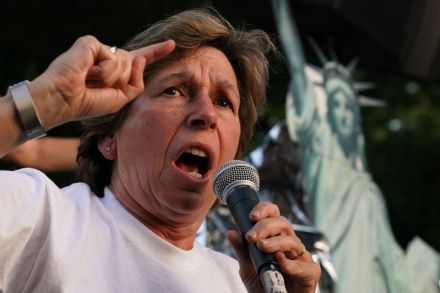
Shhh...quiet. Can you hear that? Listen closely. That’s the sound of backpedaling. Beautiful, isn’t it? The left’s panic is conspicuous as their woke figureheads try to reverse course on the lockdowns. The real unraveling began on Thursday morning when the New York Times ran a piece headlined ‘President of Key Teachers’ Union Shares Plea: “Schools Must Be Open” in Fall’. This ‘plea’ came from Randi Weingarten, president of the American Federation of Teachers. It likely came as quite a surprise for parents across America. After all, they had been pleading with the AFT’s head honcho to open schools for over a year now. But Weingarten was too busy flying all over the United States on Boutique Air flights to worry about valid concerns from desperate families.

weingarten

Why I picked an apprenticeship over a politics degree

From our UK edition

I’d always wanted to work in the media but had no idea how to get there. I would spend hours during sixth form trawling the pages of impressive journalists on Wikipedia, desperately trying to get some sense of what was required. My conclusion? An Oxbridge education tied most of them together. Inspired, I applied to various top universities. After getting a handful of offers, I picked a politics course at a leading institution, the University of Warwick. In the meantime, I started getting as much work experience as possible. The more I did, however, the more I realised that there were actually alternative paths into the industry. So many of the young journos I met weren’t graduates. Their route had been the government’s apprenticeship scheme.

The impact of lockdown on education

From our UK edition

Just how damaging has lockdown been to children’s education? An Oxford University study has tried to quantify it by analysing data from Dutch schoolchildren — who, unlike in Britain where exams were cancelled, took tests shortly before and shortly after the first lockdown last spring. The level of parental education was a big predictor of falling performance If any country’s children had managed to get through lockdown with their education unscathed, suggest the authors, it ought to be those in the Netherlands. There, schools were closed for a relatively short period — eight weeks — and the penetration of broadband in homes is higher than in any other country.

Do schools really have a problem with sexual violence?

From our UK edition

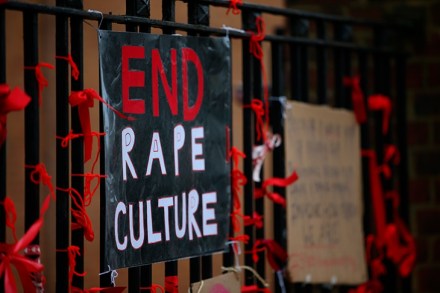
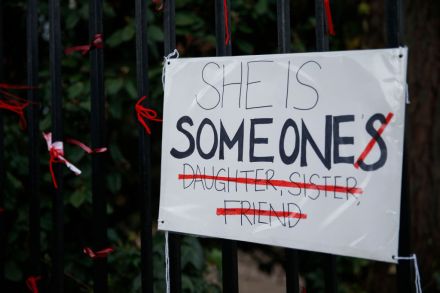
I hadn’t heard of Everyone’s Invited until a few weeks ago, despite being mother to a 15-year-old girl. I was a little surprised to learn that the forum making the front pages, on which predominantly teenaged schoolgirls share their experiences of every-day sexism, sexual harassment and worse, was actually founded in June last year. The site received no prominence until it went viral following the death of Sarah Everard. As I write, the testimonies of those Wikipedia is terming ‘survivors of rape culture’ number almost 14,000.

The facts about race and education

From our UK edition

Judging from the reaction to last week’s Commission on Race and Ethnic Disparities report, you’d think it had been written by a group of white supremacists who deliberately falsified the evidence about the prevalence of racism in contemporary Britain. Labour MP Clive Lewis tweeted a picture of the Ku Klux Klan alongside the hashtag #RaceReport, while Dr Priyamvada Gopal, a Cambridge University professor, compared the chairman of the Commission to Goebbels. In fact, only one of the report’s ten authors is white and the chairman, Dr Tony Sewell, says in the foreword: ‘We take the reality of racism seriously and we do not deny that it is a real force in the UK.

Has the school co-educational ‘experiment’ failed?

From our UK edition

Reading these reports of what has been happening in some co-educational public schools, it's clear that the trend began way back at the end of the 1960s. Back then, I was a guinea pig – and both I and the system have a lot to answer for. John Dancy, the headmaster of Marlborough College, known as a ‘progressive headmaster', thought it was wrong that his daughter could not benefit from the education enjoyed by the boys in his public school – so he proposed as an experiment that his daughter and daughters of other masters should be allowed to join the school in the sixth form. I joined the second year, the first year to allow a few outsiders in as well: there were 29 of us and 800 boys. What were the criteria for letting me in?

The misunderstood motto of Rishi Sunak’s old school

From our UK edition

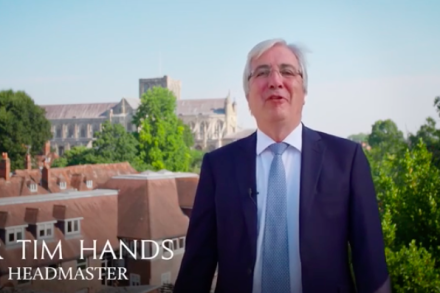
The first thing that Dr Tim Hands, headmaster of Winchester College, would like to clear up is his school’s world-famous motto, ‘Manners maketh man’. Whenever a Wykehamist makes the papers, this ancient phrase is wheeled out, referring to his (in)decent manners. But this isn’t quite right, says Hands. Two pieces of stained glass — one formerly in Bradford Peverell church near Dorchester, and another in the Warden’s Lodgings at New College Oxford (founded by Winchester’s founder Bishop William of Wykeham) — read ‘Manner maketh man’. This, says Hands, is the origin for the school’s motto. ‘“Manner” means what you are and what you do — not how you fold your handkerchief.

What my misspent youth taught me about handling ‘problem’ children

From our UK edition

I’m teaching a boy named Drayton. He’s from a typical Coventry family. I should know. I went to school in ‘Cov’. It seems like only the day before yesterday I was hopping the fence with Drayton’s older brother to go to KFC. But that was ten years ago. These days, Drayton orders an Uber Eats to be delivered through the palisade bars of the steel fence. And I’m the one in authority who is supposed to be reining him in. ‘Easy, Bossman. What we doing today?’ is how he addresses me as he enters my classroom. ‘Now, now, Drayton. It’s Sir, to you,’ I say. ‘Yeah, dat’s calm, innit.’ Which means that’s OK with him. He asks me for a pen, then a pencil and finally a ruler as he does his work.

Portrait of the week: Harry and Meghan’s interview, Piers Morgan’s resignation and Biden’s pets in the doghouse

From our UK edition

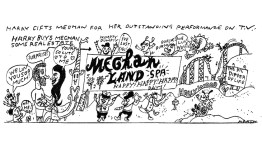
Home The world was agog, some in tears, some in synchronised toe-curling, as the Duchess of Sussex and her husband shared their sufferings with Oprah Winfrey. In America 17 million watched; in Britain 11 million. The Duchess spoke of Disney’s Little Mermaid; seeing it, she had exclaimed: ‘Oh my God she falls in love with the prince and because of that she loses her voice.’ She said that three days before her wedding at Windsor, she had been married ‘in our backyard’, with just three of them, including the Archbishop of Canterbury. She said she had considered suicide and that the royal family had taken her passport, keys and driving licence.

What did Spectator writers really get up to at school?

From our UK edition

Rod Liddle If you leave a Bunsen burner on for about ten minutes, then quickly put the rubber pipe over a water tap and turn it on full, you get a small explosion and a scalding stream of water to be directed at a boy called Harris. Similarly, if you attach crocodile clips to Harris’s jacket and then wire it up to a power source, it makes him jump about a lot. I loved physics lessons. Jeremy Clarke Snow in the playground. The tall caped figure of the headmaster appeared on a short outside staircase — a rare balcony appearance of a benign, reclusive demigod. One long-distance snowball among the flying hundreds, arcing higher than the rest, travelling through the air in slow time, apparently laser guided, is fixed in the memory of all who saw it.

Six rules for picking the wokest school

From our UK edition

One of the great advantages private schools offer is an ability to change with the times. While some hold on to traditional notions, many are adapting nimbly to the new woke world — expunging their problematic historical figures and educating pupils in the new equivalent of U and Non-U. But how do parents ensure their little treasures aren’t triggered and are always confined to the safest of spaces? Here, then, is our guide to the wokest schools. Rule one: lots of schools were woke decades ago At my alma mater, Westminster, the history curriculum was pretty much decolonialised in the 1970s by left-wing teachers.

The school trip that gave me my first act of rebellion

From our UK edition

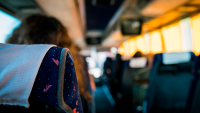
What I remember in most vivid detail about my school trips are the coach journeys. This may be testimony to the fact that the schools I went to never took me anywhere glamorous, not because they didn’t have the money (our parents were paying enough) but because it wasn’t really thought decent or necessary to take children somewhere exciting in those days. At St Joseph’s Convent, our most exotic outing was to Birmingham for a recorder festival, aged about six. Picture a coach-load of little girls in maroon blazers, maroon felt hats, maroon A-line skirts and beige gloves — yes gloves. We went everywhere in beige gloves. Maroon felt hats in winter, straw boaters in summer. But always beige gloves. We were young ladies. We did things properly.

Remote lessons have been an education for teachers like me

From our UK edition

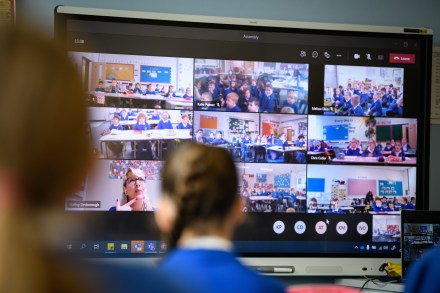
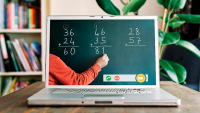
I had a Post-it note beside my laptop during the online lessons I taught during lockdown. It simply said ‘shut up’. I have spent 20 years teaching maths in urban comprehensives, reflecting and refining my methods and trying to train others. I thought I was doing a pretty decent job, but the pandemic and the necessity of teaching remotely has made me rethink the whole process. Early on in May I realised I had to work out, from scratch, what I actually wanted my students to become and how, in the world of screen-mediated learning, I could help them achieve this. What do I want my students to become? I want them to become autonomous problem-solvers, courageous in the face of the Unknown Problem.

School portraits: a snapshot of four notable schools

From our UK edition

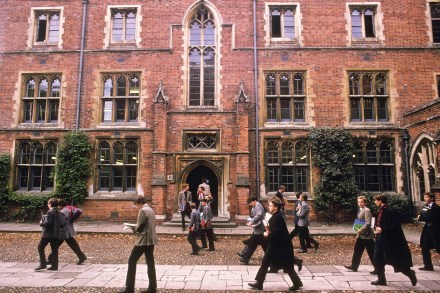
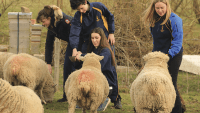
St Edward’s School, Oxford St Edward’s School has featured in these pages before, because of its North Wall performing arts centre which attracts (in ‘normal’ times) more than 20,000 public visitors a year to its exhibitions and performances. St Edward’s sets great store by being part of Oxford as a whole. ‘Beyond Teddies’ is the school’s community outreach programme, encompassing a community farm on school grounds where young people with learning disabilities and autism explore basic outdoor skills, marshalling the Oxford Half Marathon and visiting local care homes. Academically, the co-ed boarding and day school also thinks outside the box, with its pioneering ‘Pathways and Perspectives’ courses.

Winchester College and the sad demise of all-boys boarding schools

From our UK edition

There are just four remaining all-boys boarding schools in the UK. From September, there will be three: Winchester College has announced that it will start taking girls in the sixth-form. Girls will join the sixth-form as day pupils in a 50-50 split and are expected to be offered boarding places from 2024. Some have said that it's about time schools like Winchester got with the times. In fact, for Wkyehamists like me, this announcement which breaks a legacy going back 640 years is a great pity. The all-boys boarding education that Winchester College offers has stood the test of time and it continues to flourish in all areas. Yet by opting to become co-educational, Winchester is in danger of becoming yet another mixed-sex independent school.

Will reopening schools set back Boris’s lockdown timetable?

From our UK edition

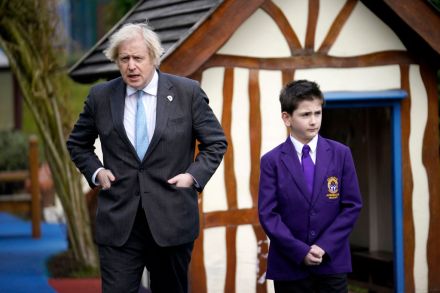
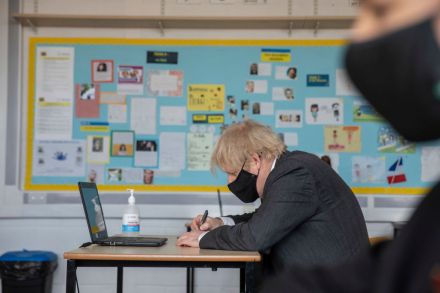
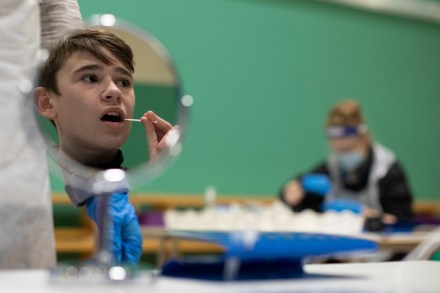
Schools in England have gone back today, with pupils taking lateral flow tests and being asked to wear masks in order to keep the risk of infections as low as possible.  Today Boris Johnson held a special press conference to mark what he described as an 'emotional' moment in the exit from lockdown. He said that the 'overwhelming feeling is one of relief' and that the 'greater risk now is keeping them out of school for a day longer'.  There are rumblings about whether the current plan for lifting restrictions is sustainable He praised teachers for getting schools ready and for teaching throughout the lockdown period, and parents for homeschooling while trying to hold down their own jobs.

What the return of classrooms means for Covid

From our UK edition

Will the return of schools reverse, or dramatically slow, the sharp downwards trend in new Covid-19 infections, which is currently falling at more than 30 per cent a week? No one knows for sure, but it seems unlikely that the mass return of schools today will not have some effect on infections in England, especially given that it involves a section of the population that has not been vaccinated.  While few children suffer serious symptoms of Covid-19, they can carry the disease — older children, especially. For that reason, a return of unvaccinated children to school is likely to have a greater effect on raw infection numbers than, say, a return of vaccinated over-70s to bowls clubs and whist drives.

School parents are mad as hell and they’re not going to take this anymore

This week, Matt Meyer did what many parents long to do. He dropped off his kid at school. That’s unusual in Berkeley, California, where he lives, because the schools there have been closed for a year, and the teachers’ union adamantly opposes their reopening. Parents like Mr. Meyer who can afford private schools, which are mostly open, send their kids there. His child has been there since last June. So he dropped off his child and drove off to his job. His job is head of the Berkeley teachers’ union. His main task there is to keep the public schools closed for everyone else. Matt’s job and that of other teachers’ union bosses is getting harder — and not just because the hypocrisy is so obvious. It’s getting harder because parents and kids across the country are fed up.

school

Spare a thought for students

From our UK edition

Spare a thought for those due to sit their A-Levels next summer. They have already had considerable disruption to their education. But today’s announcement that this year’s A-Level grades will be done by teacher assessment risks compounding their misfortune.  It means that the current lower sixth will be competing for university places — and jobs — against those who have received teacher assessed grades, which are bound to be more generous than those that an exam would produce. (For all sorts of understandable reasons, teachers will want to give their pupils the benefit of the doubt when awarding potentially life-changing marks). The disadvantage the current lower sixth cohort is being put at is so obvious that the government will have to address it.