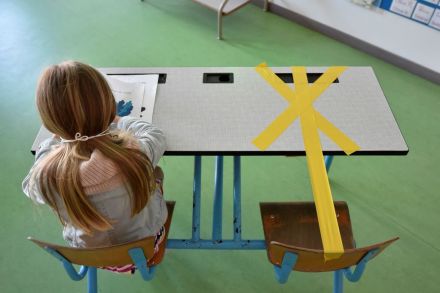
Schools

Spare a thought for next year’s A-level students

From our UK edition

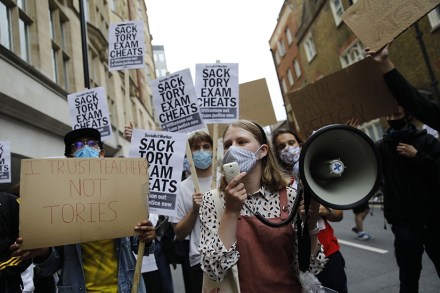
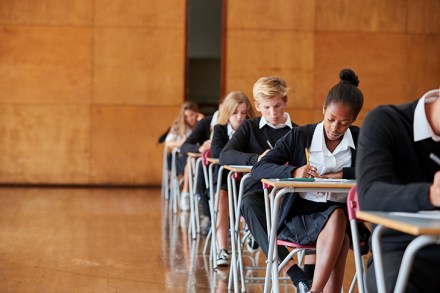
Three years ago I was contacted by an official at the Department for Education to see if I was interested in becoming a non-executive director of Ofqual, the exams regulator. There have been times since when I’ve regretted turning down that offer, but this week was not one of them. Ofqual was given the unenviable task of awarding A-level and GCSE grades to students in England who, thanks to the lockdown, had not sat their exams; and it was inevitably criticised by those children and their parents who felt they should have done better, not to mention various enemies of the government who treated Ofqual as a proxy for Gavin Williamson, the Education Secretary.

Inflated exam grades let the government ignore its own failures

From our UK edition

It was obvious that closing schools would hit the poorest hardest, inflicting permanent damage and deepening inequality. While many private schools and the best state schools maintained a full timetable of lessons throughout lockdown, a study by UCL in June found that 2.3 million pupils — one in five of the total — did virtually no schoolwork at all during the weeks of lockdown. The official response has been to turn a blind eye, and imagine that the damage can be covered up by simply awarding decent exam results. This year’s students are right to protest about the injustice of the system. From the moment the decision was taken to cancel exams, rather than carry out exams with social distancing, this year’s mess was guaranteed.

The rise of homeschooling

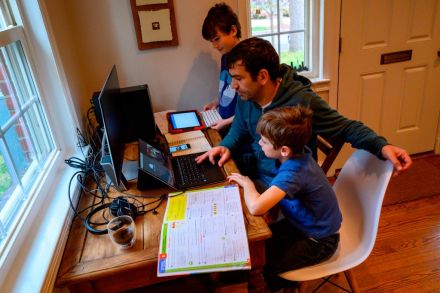
As school districts scramble to plan for the new school year during a global pandemic, many parents are taking matters into their own hands.States around the country, from Virginia to Kansas to Texas, have reported large rates of increased interest from parents in homeschooling their kids this fall. North Carolina’s homeschool application website recently crashed due to overwhelmingly high levels of submission. National and state polls show anywhere between 15 to 40 percent of families expressing a greater likelihood that they will homeschool during the COVID-19 pandemic.

homeschooling

Children of a lesser pod

As New York City schools grapple with how to handle a virus that has an under 1 percent infection rate in children, parenting boards frequented by the educated, monied-but-not-so-monied-as-to-send-their-kids-to-private-school set, are forming ‘pods’. A ‘pod’ will be a small group of children, usually no more than five, who will meet at each other’s homes in lieu of traditional schooling in September. You, and four other families in your same tax bracket, will hire a teacher to educate the five children in the pod. Parenting boards are overwhelmed with requests for these tutors. The families will agree to only interact with each other: an absurd and impossible promise that will surely be broken.

pod

Home advantage: not going to school was the making of me

From our UK edition

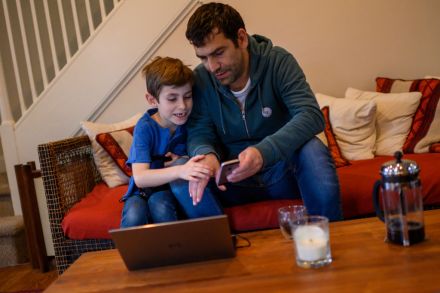
At last, school’s out for summer — although this might be a strange concept for children who have not set foot in a classroom for months. If social media is anything to go by, home-schooling is hell. Since March, the internet has been awash with panicked parents sharing mock timetables with slots for ‘mum quits’ and ‘dad starts drinking’. And who’s to say the madness will end after the summer? A recent survey showed that a quarter of parents don’t intend to send their children back to the classroom in September, and one in ten of those plans to home-school permanently — which at least offers certainty. It can also offer much more than that. And I speak from experience.

Does the curriculum really need ‘decolonising’?

From our UK edition

Layla Moran, the Lib Dems’ education spokesman, has written to Gavin Williamson urging him to do something about ‘systemic racism’ in schools. ‘Changes to the history curriculum, such as learning about non-white historical figures and addressing the darker sides of British history honestly, are a vital first step to tackling racism in our education system,’ she wrote. ‘This chasm in information only serves to present students with a one-sided view of the events in history.’ I’m not sure Moran knows very much about how the education system works. For one thing, Williamson cannot dictate how history is taught in free schools and academies — they don’t have to follow the national curriculum.

The private school advantage has never been greater than in lockdown

From our UK edition

When Boris Johnson announced the easing of lockdown this week, there was nothing for schools. Pubs, yes. Theme parks, even. But the education of children? There is no great rush for that, it seems. First things first. I have a 14-year-old daughter at a state grammar and like so many parents, I am in despair. The two-metre rule, which had presented such problems for schools, is finally being relaxed. But far from cheering the move as a crucial step towards getting children into the classroom, the teaching unions are still cavilling — advising headteachers to ensure they have contingency plans for bringing only half of pupils back, on a rotating basis. The Prime Minister has said all pupils should return in September.

Letters: Churches have risen to the challenge of lockdown

From our UK edition

Back to schools Sir: I share Lucy Kellaway’s enthusiasm for seeing school-life return and inequality gaps closed (‘A class apart’, 20 June). I was also glad that she debunked the myth that teachers have been on holiday during lockdown. It doesn’t feel like a holiday to me, as I sit contemplating a set of essays, the second set of predicted grades of the year and my annual Ucas references, not to mention daily work postings, live sessions on Microsoft Teams, Zoom staff meetings and a long list of emails. Where we depart is at Lucy’s call for a return to school at all costs, rather than the ‘blended learning’ approach she decries.

Britain must begin its recovery – before more damage is done

From our UK edition

The discovery in Britain that a £5 steroid, dexamethasone, can be effective in treating Covid marks a potential breakthrough in our understanding of the virus. Much remains to be learned about the wider potential of the drug but the claims made about its success are striking: that it reduces deaths by a third in patients on ventilators and by a fifth in patients receiving oxygen only. It has not been shown to benefit Covid patients who do not require oxygen. But this can still, in a global pandemic, mean thousands of lives saved. There are two further points to be made. With Covid-19, there is a better chance of finding a treatment for the virus than of finding a vaccine.

Made to measure: where did the metre come from?

From our UK edition

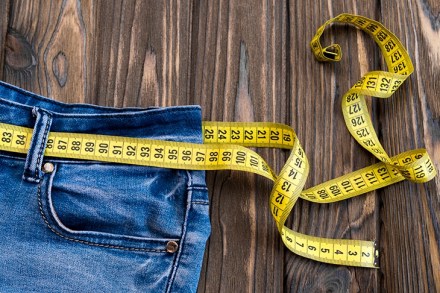
Made to measure The government started reviewing whether we should stay two metres apart while social distancing or whether one metre would do. What is a metre? — Since 1960 it has been defined as the distance travelled by light in a vacuum in 1/299,792,458th of a second. — But it was originally defined by the post-revolution French government as one ten-millionth of the distance between the Equator and the North Pole, on a meridian through Paris. — The signing of the Metre Convention on 20 May 1875 by representatives of 17 nations officially established the metre as an international unit of measurement. — If everyone in Britain joined the queue for Primark it would go 1.6 times round the Earth with social distancing at one metre, and 3.

School’s out: the true cost of classroom closures

From our UK edition

It’s Monday at 9 a.m. and secondary schools in England have just re-opened their gates to students in Years 10 and 12. I have been looking forward to this moment for 13 long weeks, since that frightening afternoon in March when my colleagues and I gathered around a computer in the staff room and saw a healthier-looking Boris Johnson declare he was shutting schools. But today I’m not at the comprehensive in Hackney where I teach economics welcoming back my students with a rousing lesson on the financial devastation caused by the crisis. I’m surplus to requirements and am still marooned at home.

Is it really necessary for schools to be closed?

From our UK edition

With Primark open, parents can once again buy cut-price school uniforms for their children. Whether those children will get to wear them before they grow out of them is an open question. The government has abandoned plans to get all primary school children back into the classroom before the end of term, and Matt Hancock has questioned whether secondary school children will even be back in September. But was it necessary to close schools at all? The Imperial College Report 9 of 16 March is credited with changing the government’s coronavirus policy and sending the country into lockdown. Yet the report did not really press for closing schools. Its data suggested that taking this action would only reduce total deaths by between 2 and 4 per cent.

Why it’s vital that schools are fully open by September

From our UK edition

Chris Whitty, the chief medical officer, was explicit at Wednesday’s press conference about how concerned he was about a second Covid-19 spike in the winter months. This would coincide with the flu season, placing maximum pressure on the NHS. One consequence of this is that if something is not open by the beginning of October, it isn’t going to be open until the end of February next year. As one of those at the heart of coronavirus policy-making warns: ‘If Sage are this cautious going into summer, then they are not going to want to be playing fast and loose with the R number heading into winter.’ This shows why it is so imperative that all year groups return to school in September.

Normality won’t return until schools do

From our UK edition

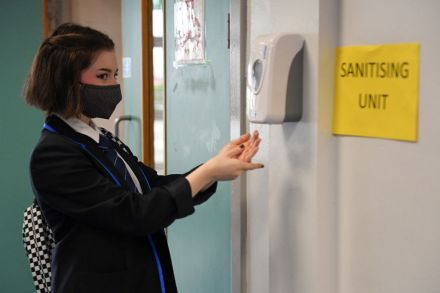
From Monday, you will be required by law to wear a face covering on public transport. Paradoxically, this is a sign that the government wants life to return to being as normal as possible. Ever since the start of the pandemic, there has been debate about whether the government should tell people to wear masks in public. The argument in favour was that it would help stop the spread of the virus by making it harder for people to pass on the disease. There were two main arguments against it. The first was that urging people to wear one could lead to a shortage of the medical-grade masks that health and social care professionals so desperately need.

What are the long-term effects of keeping schools closed?

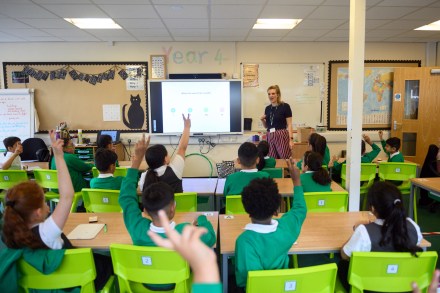
From the beginning of the lockdown in March, it became clear that children were going to have a very different experience depending on where they are educated. Many private schools and some of the best public schools immediately made arrangements for teaching to continue online, uninterrupted. For many other children, it has been a case of only being set the odd homework assignment.The quality in educational experience during the lockdown is going to have a very large impact on attainment. A rapid evidence assessment by the Education Endowment Foundation, a British think tank, has attempted to put a figure of just how the attainment gap could grow if children are kept out of the classroom until September.

schools learning

The evidence on school re-openings is being ignored

From our UK edition

One of the benefits of the UK exiting lockdown so slowly is supposedly that evidence from other countries can help mould our decisions. If liberalising parts of society in other countries doesn’t cause a Covid-19 flare-up, the UK can proceed with cautious optimism. If lockdown easing leads to a spike in infection rates, the UK can row back its plans before its too late, or put off making changes for a while longer. Around 50 per cent of people polled oppose the partial re-opening Based on this logic, the return of Reception, Year 1 and Year 6 to school today should be warmly embraced, as reports from Denmark over the weekend (which reopened daycare and schools for kids aged two to 12 in mid-April) confirmed that doing so has not led to an increase in infections.

As the primary schools go back, it’s the older kids who suffer

From our UK edition

It now appears that school’s out till after the summer for pretty much all secondary pupils. The loudest cries, an equal mix of exaltation and despair, come from those who were due to sit GCSE and A-l-evel exams this term: groups now split between delight at unstructured months of leisure time and anxiety that lackadaisical efforts in mock exams won’t prove enough to secure them the required grades. Yet my sympathies in this stalemate lie with those in Year 12, or the lower-sixth, the sandwich year between the two public exam groups. The Prime Minister has said that from 15 June, these 16- and 17-year-olds will be allowed ‘some contact’ with their teachers, but with just one quarter of the usual class permitted to be present at any one time.

Reopen schools now

My old boss Michael Chertoff, former secretary of the US Department of Homeland Security, went on Face the Nation this past weekend where he opined that K-12 schools should not reopen until there is a vaccine for the Wuhan virus. Now, I have enormous respect for Sec. Chertoff. I believe he is one of the smartest people I’ve ever known. But his opinions on this topic should carry no more weight than mine or yours. The reality is that it is time for the evidence and common sense to determine what states do in the fall in terms of reopening our public schools. Virtually all of the evidence on the Wuhan virus indicates it has little impact on the five-year-old to 18-year-old school age population. Most states have had few, if any, deaths of school-aged citizens.

schools

Letters: When is a sport not a sport?

From our UK edition

Save the children Sir: Your leading article is correct that the government should have evaluated the detriment caused by shutting schools, against the risk posed by Covid-19 (‘Class divide’, 16 May). This is not a glib trade-off between protecting lives and allowing children to go to school: the predicament foisted on young people will affect their future for decades. Exams were abruptly cancelled in March. This has left many schools dealing with apathetic individuals. The disparity between disadvantaged and affluent students is widening: middle-class schoolchildren are twice as likely to receive online tuition, and only 8 per cent of teachers in low-income communities report more than three-quarters of work being submitted, compared with 50 per cent in the private sector.

Why schools should stay shut

From our UK edition

Has the stock of any politician fallen more sharply, these past three or four years, than that of Shami Chakrabarti? As the leader of Liberty, and an almost weekly performer on the BBC’s Question Time, she was a respected purveyor of leftish sanctimony to the masses, a humourless voice of conscience and, I think, self-regard. The battles she fought then were at least, in the main, on the side of decency — and while we might have found her a little trying and even bumptious, there seemed no doubt that here was a young woman motivated by principle. That notion was swiftly expunged when she accepted a brief from Jeremy Corbyn to whitewash anti-Semitism in the Labour party via an ‘independent inquiry’ headed by herself.