Schools

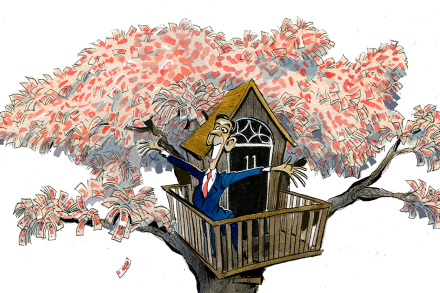
My dog and the NHS have a lot in common

From our UK edition

We are considering privatising or selling off our dog, Jessie. She seemed a rather wonderful idea when we got her nine years ago. But since then she has become a hideously bloated, entitled creature who almost by herself determines how we live our lives. In winter she is particularly tyrannical — she has three walks a day, and with darkness falling at four o’clock that means almost every hour of daylight is spent servicing her needs. We cannot go out by ourselves without ensuring she will not be unduly inconvenienced, and as she has grown older so the costs of keeping her have spiralled — and will continue to spiral. Is she grateful? Not a bit of it. The food and treats we give her are never sufficient and so she follows us around demanding more, outraged.
Ms. Work-to-Rule and our fading school standards

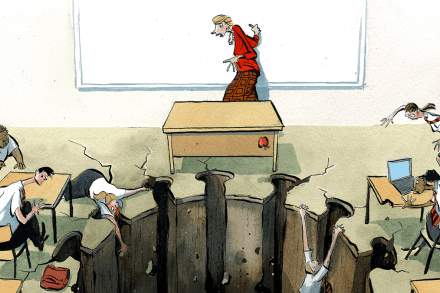
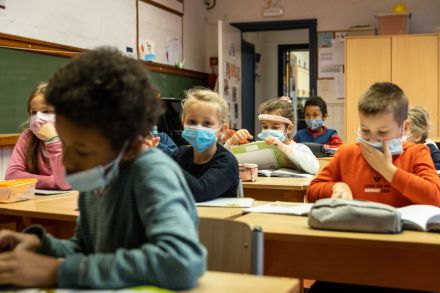
Ms. Work-to-Rule, chair of the local teacher’s union, smiles icily at the bezel. The weekly Zoom conference with the district superintendent and his many assistants is not going in the direction she would like. As schools across the country prepare to resume in-person classes, Covid purists insist on strict testing, vaccine proofs and other protections. If draconian demands are not met, a few big-city locals threaten teacher strikes. Some states require masks for students and teachers regardless of vaccination status. Others prohibit districts from requiring students to wear masks at all. School board meetings might be battlegrounds. The mild but highly contagious variant, Omicron, puts everyone — administrators, teachers, parents, and students — on edge.

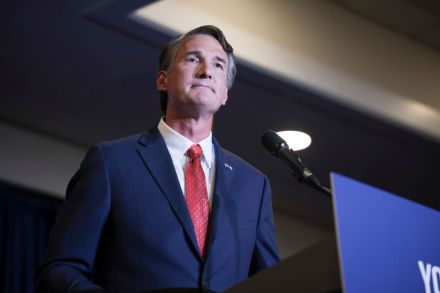
An inside account of how Glenn Youngkin won

In January, just a few days after Glenn Youngkin had launched his first ever campaign, and as parents were struggling with the possibility that their children might not be able to return to school full-time, one father stood up and told the Loudoun County School Board to do their jobs and “figure it out.” Within 24 hours, Brandon Michon’s earnest cry was heard around the country, and Youngkin was asking for Brandon’s phone number. He called Brandon and let him know that if he was elected Virginia governor, there would be someone fighting for him, and for parents across Virginia. In a moment when some would have let a simple tweet suffice, Youngkin took action. I witnessed much of this first-hand.

youngkin

The nationwide school revolt is on

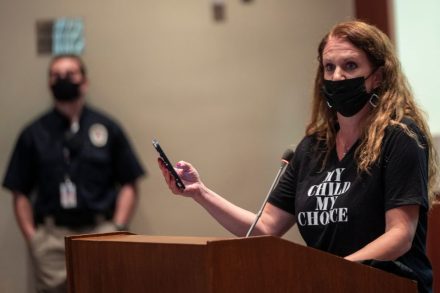
Most Americans want schools to promote knowledge and champion principles of human decency. They want schools to be safe. They do not want children race-shamed, or exposed to the anomic and depraved. A fourteen-year-old boy wandering around campus — any campus — wearing a floor-length dress doesn’t sound wholesome to them. What’s going on in “our” schools, some ask, and not in a sunny way. Too many know from experience, at least in metro and blue-liberal districts, that any parent who avows the Ten Commandments or praises the Boy Scout Law might get the fish-eye from the principal. If dad objects to critical race theory or transgender bathrooms, heads explode. A frosty diversity lecture might not suffice. Should we call security or 911?

loudoun

Actually Youngkin’s victory shows Trump is still strong

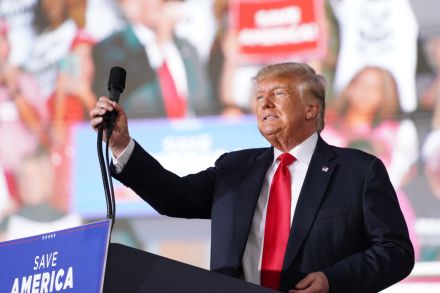
Eventually, November 2 will be seen as a key date in American history. I am not thinking of November 2, 2021, however, the day of Glenn Youngkin’s stunning, delicious, gratifying victory in the Virginia gubernatorial race. Important though Youngkin’s victory was and is, it was prepared for and defined by a preceding triumph. The date I am thinking of is November 2, 2020. That was the date on which Donald Trump signed the executive order establishing the 1776 Commission, the purpose of which was to “encourage our educators to teach our children about the miracle of American history and make plans to honor the 250th anniversary of our founding.” 1776, mind you, not 1619.

trump

Why Sunak’s wrong on teachers

From our UK edition

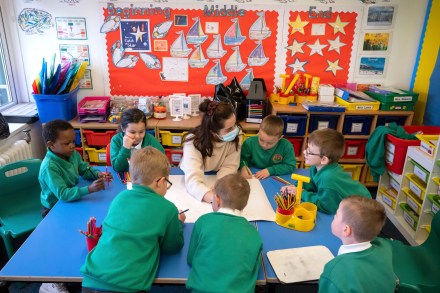
Pupils lost around a third of their face-to-face teaching during the Covid lockdowns. Downing Street has promised an extra £3 billion of catch-up funding, on top of around £100 billion spent on education in a normal year. Fixing a lack of teaching should involve doing a bit more of it — but when asked if he would extend the school day, Rishi Sunak said longer hours wouldn’t provide ‘value for money’. It’s one of few areas where, in tomorrow’s Budget, the spending taps will be turned off. But why, as the Children’s Commissioner recently noted, are British state schools routinely closing their gates at 2.30 p.m.? The length of the school day is now shorter than it was 50 years ago.

Will education be the big Budget loser?

From our UK edition

Which departments will fare the worst from this week's Budget? It won't be the Department for Health and Social Care. Over the past few days, new funding announcements have appeared in the papers meaning the NHS will be handed another £5.9 billion. That's in addition to the £12 billion a year investment it will receive as a result of the health and social care levy. Meanwhile, Whitehall sources suggest that Michael Gove has had some luck in his push for more funds for the levelling up agenda. Where the mood music is less positive is education.

Virtue signalling is really status signalling

From our UK edition

A £19,000-a-year London day school was in the news this week because it has started instructing its pupils about ‘white privilege’ and ‘microaggressions’. Apparently, St Dunstan’s in south London, which boasts Chuka Umunna among its alumni, teaches its well-heeled students that the royal family bolsters expectations of ‘inherited white privilege’, asks them to ‘explore’ why Meghan Markle faced ‘additional challenges’ compared with Kate Middleton when she married a prince, and tells them why it’s important for the National Trust to examine the colonial past of its country houses and links to the slave trade. I was surprised this story attracted so much press interest.

Why do parents support the mask regime?

I feel for Emily Dreyfuss. Really I do. Like millions of us, she is navigating parenthood in the midst of a pandemic. I feel even more for her son Huxley, the central figure of a piece she recently wrote for the Atlantic. Huxley is having difficulty negotiating the kindergarten social scene from behind the face mask mandated by his school. Dreyfuss writes that her son “couldn’t tell his new classmates apart; he had trouble hearing them; he wasn’t sure whether they could hear him; and he became especially disoriented around lunchtime, he said, because that was when all the kids took their masks off. Suddenly they looked like entirely new people.” The normally affable boy developed anxiety from all of that confusion.

mask

Terry McAuliffe’s faith in the experts

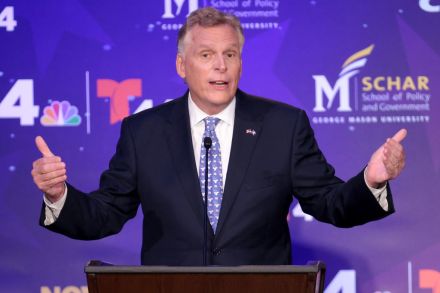
Terry McAuliffe, Virginia’s former governor and Democratic power broker, is seeking to return to his old job in 2021. Polls show him narrowly ahead of his Republican opponent, Glenn Youngkin, by a one- to four-point margin. That is by no means a safe distance for McAuliffe in a state that is widely understood to reflect national sentiment. Virginia’s 2021 gubernatorial race, one year ahead of the congressional midterms, will be the first major contest held in the blazing light of Biden’s constitutional bonfire. Many Americans believe that the government is absconding with their rights and liberties, and high on the list of stolen articles is their right to have some say in the education of their children.

mcauliffe

Letters: In defence of GPs

From our UK edition

Out of practice Sir: GPs are not ‘hiding behind their telephones’ (Leading article, 4 September). In-person appointments are the core of general practice, and practices have been delivering millions of them throughout the pandemic. GPs share patients’ frustrations with the limitations of telephone consulting, which can often take longer than a face-to-face appointment, and with longer waits to be seen. However, as with other areas of the NHS, practices continue to follow national infection control guidance to keep patients and staff safe. You talk of pubs and nightclubs reopening — but how many nightclubs force very sick people, many of them elderly and living with a number of long-term illnesses, into a confined space at the same time?

How ‘Xi Jinping Thought’ is taking over China’s classrooms

From our UK edition

From this month, in an extension of a personality cult not seen since Mao Zedong, ‘Xi Jinping Thought’ is being incorporated into China’s national curriculum. School textbooks are emblazoned with Xi’s smiling face, together with heartwarming slogans telling readers as young as six that their leader is watching over them. ‘Grandpa Xi Jinping is very busy with work, but no matter how busy he is, he still joins in our activities and cares about our growth,’ reads one. ‘Xi Jinping Thought’ must be taught at all levels of education, from primary school to graduate programmes, and there is special emphasis on capturing the minds of the youngest children.

Can schools return without disruption?

From our UK edition

A lot of people won’t want to take much notice of Mary Bousted, joint-general secretary of the National Education Union (NEU), who warns today that schools face significant disruption by the end of September as Covid-prevention measures have to be reintroduced. It was the NEU, after all, which not only opposed the return of schools after the first lockdown, but simultaneously advised its members not to take part in online lessons either. The NEU has often given the impression of being motivated first and foremost by a desire to obstruct the government’s plans.

Will Knowland, Eton and the problem with the teaching misconduct panel

From our UK edition

When Eton master Will Knowland was sacked last year over anti-feminist views contained in a YouTube video which he refused to take down, alumni and others rightly called out Eton’s small-mindedness and intellectual conformism. If the best-endowed schools in the land can’t stomach unorthodox opinion, what hope for UK education generally? They were, of course, entirely right. But there is a further, more serious, side to the story. This week’s widely-welcomed victory by Knowland is not the end of the matter. Eton, as it was required to do when dismissing a teacher for gross misconduct, had reported the circumstances to the professional body for teachers, the Teaching Regulation Agency.

When will exams get back to normal?

From our UK edition

It wouldn’t be credible to say that this year’s A-Levels grades are comparable with 2019's: almost 45 per cent of entries got an A or A* compared to 25 per cent two years ago. But, as I say in the magazine this week, the problem is that you can’t simply snap back to normal next year. Many of those who got their grades this year won’t go to university until next year. This — and the fact that the education of those in the year below has been disrupted too — means it wouldn’t be fair for exams to return to normal next year. That would leave the class of 2022 competing for university places against those who have benefitted from 2021’s more generous system.

Letters: Let the housing market collapse

From our UK edition

Treading the boards Sir: As a teacher, I was sorry Lloyd Evans did not include school productions in his excellent assessment of the cultural devastation inflicted by Covid-19 (‘Staged’, 3 July). While cancellation of West End shows is a tragedy, far more damage will be done to the thousands of children whose one chance to watch or perform in a play or musical has been taken away. These humble, often cheerfully disastrous, amateur productions bring pupils together in a way nothing else can. W. Sydney Robinson Oundle, Northamptonshire Big bad builders Sir: I enjoyed Liam Halligan’s comprehensive assessment of the appalling state of the UK building industry and the dire quality of much of what they produce (‘The house mafia’, 26 June).

It’s time to repair the damage done to the Covid generation’s education

From our UK edition

Aswitch of personnel at the Department of Health this week has brought a welcome change in the government’s tone. No longer, it seems, are ministers looking for reasons to delay the final stage of lifting lockdown restrictions. After 16 months of curtailments on liberty, 19 July is inked in as the day when society and the economy will finally throw off the shackles of Covid restrictions. The vaccines mean that the virus has been downgraded to the status of flu and pneumonia: nasty bugs, sometimes fatal, but not enough to warrant locking down society with all the immense collateral damage that entails. Yet as pubs, theatres and concert halls are allowed to fill again, it is important to remember that recovering from the pandemic is about more than just reopening society.

Incentives matter

Sometimes, just below the surface lie some very powerful connections among seemingly unrelated problems. That’s true for the seemingly unrelated problems of rising crime, the year-long closure of public schools, acute employee shortages, and parents’ outrage at kids being taught critical race theory. Substantively, these issues are vastly different. Conceptually, they are united by the crucial importance of incentives.  Bad incentives produce bad outcomes, and that’s exactly what is creating many of these problems.

incentives

The curious parable of Dartington

From our UK edition

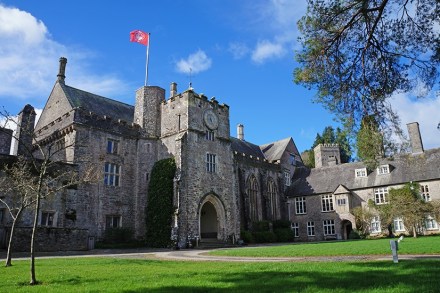
I spent last weekend in south Devon at Dartington, the former estate of Dorothy and Leonard Elmhirst, and now a charitable trust. I know the place quite well because my father was more or less adopted by the Elmhirsts when he was 14 and I spent four years there as a teenager while he was writing Dorothy and Leonard’s biography. He described it as his best book and I was pleased to see it on display behind the reception area at Dartington Hall, a Grade I listed building that is now a hotel, among other things. I’ve always thought the story of Dartington would make a good parable about the folly of left-wing idealism. When the Elmhirsts bought the estate in 1925, Dorothy was one of the richest women in the world, having inherited $15 million at the age of 17.

Education catch-up chief quits amid spending row

From our UK edition

The government's ambition to close the learning gap that has occurred as a result of the pandemic hit a stumbling block today. After the Department for Education announced plans for a £1.4bn programme in schools to help children catch up, ministers were criticised for not going further in their proposals. Now the government’s education catch-up chief has resigned. This evening, Sir Kevan Collins wrote to the Prime Minister to offer his resignation as education recovery commissioner. Collins cited the 'huge disruption to the lives of England's children' that the pandemic has caused, arguing that only a 'comprehensive and urgent' response would do.