Schools

James Delingpole: All students need a ‘sense of entitlement’ — ask my fundie friend Rupert 

From our UK edition

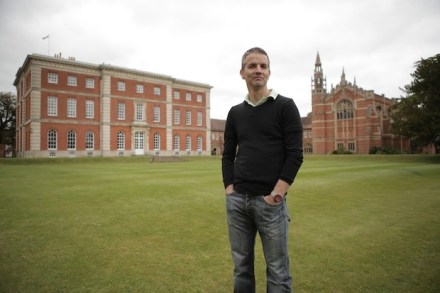
‘Life is what happens to you while you’re busy making other plans,’ said John Lennon. Quite apposite from a man who — presumably — meant to spend a ripe old age staging increasingly embarrassing art happenings with Yoko Ono, rather than be shot dead by a nutcase. It also applies to the two things that most grabbed me on TV this week: A Very English Education (BBC2, Sunday) and the Red Wedding episode of Game of Thrones (available via Blinkbox). The first, a follow up to Public School — the BBC’s 1979 fly-on-the-wall series about Radley — sought to find out what had become of its various stars. One of them, Rupert Gather, is now a very successful fund manager. Rupert is an old friend from way back.

Gove’s school choice can end social segregation. The old system entrenches it

From our UK edition

Like most foreigners who move to Britain, I was struck when I first arrived by how much people worry about which school their children go to. Even couples who don’t have kids seem to fret about where to send them. But now, working in the field of education reform, it makes sense to me. The disparity between a bad state school and a good one is huge, which in turn produces an enormous difference to the life chances of children attending them. It’s linked to money. To get into the good state schools here, you need to afford to live next to them. And if you live in a sink estate, the odds are that your children – no matter how bright – will be going to a sink school.

Educating Yorkshire was, for the most part, self-indulgent pap

From our UK edition

I don’t know if you’ve seen the documentary series, Educating Yorkshire, which has been as depressing as you might imagine from the title. Some of the teachers in the film were excellent, but the overall feeling one got was of inadequate individuals endlessly indulging their arrogant and stupid charges. As described here, rather brilliantly, in The Daily Mail. The headmaster in particular got my goat. I don’t think heads should address the pupils as ‘mate’ and suck up to them. There was an especially emetic final scene for the end of year address from the headmaster to the year 11 pupils, in which the staff all started crying.

Genes do influence children, and acknowledging that can make schools better

From our UK edition

Every September teachers up and down the land welcome new classes of children. Each child they see in front of them is visibly unique and will present them with different challenges as the year progresses. Some will learn easily and well while others will find learning new skills difficult and need additional support. Some, especially the youngest ones, will need the adults in the classroom to help them with reading and numbers, others with concentrating and sitting still, and still others with making friends. Particularly vulnerable children may need help in all of these areas. Children differ and it is important therefore that schools provide equal but different opportunities for them to learn and develop.

Why I want my schools to ban the burka (and the miniskirt)

From our UK edition

For most people, the question of whether to ban the burka is a purely theoretical one. Not for me. As the chairman of a charitable trust that sits above two schools, it’s something I’m obliged to consider. Usually, the heads of the schools fight tooth and nail to preserve their autonomy, claiming that such and such an issue is an ‘operational’ matter and therefore none of my beeswax. But in this case, they’re happy to kick the decision upstairs. It’s not a matter for me alone, but for the trust’s board of directors, of which I’m only one. And I can’t predict how the board will vote. Nevertheless, I will be arguing for a ban. I should begin by saying I’m not in favour of passing a law to ban the burka outright.

Dear Mary: How can I stop this bore reading his novel aloud?

From our UK edition

Q. Is there a polite way of halting a wannabe novelist from reading his oeuvre aloud to an unwilling audience? A neighbour on the residents’ committee happened to be leaving as friends were arriving for drinks and I felt I should invite him to join us. It was all going swimmingly until he told someone he was writing a novel, and she made the mistake of pretending she would be interested in reading it. No one had reckoned on this (very insensitive) man having a copy of the wretched thing on his iPhone and he read aloud at length, pausing only to laugh at his own genius. It killed the atmosphere stone dead. — S.R., London W2 A.

For the middle classes, things can only get worse

From our UK edition

In this week’s magazine Fraser Nelson and I look at the breaking of the English middle class, a subject so scary you’ll want to hold someone’s hand when reading it. The frightening thing is that in Britain, as in the United States, the middle class is not just squeezed but shrinking and sinking. Even before the Great Recession began, middle-class jobs in the law, media and accounting have been melting away, outsourced, unprofitable or obsolete, while salaries are falling behind prices. This is not a product of the credit crunch, and it will not be going away. Median hourly income in London is now below 2002 levels, real wages in Britain have not risen since 2005, and the median income has been static or in decline since 2004.

There is no conspiracy against state school students going to Oxford, honest

From our UK edition

On A-level results day it was inevitable really. Of the roughly 14,000 applicants not to have received a place at Oxford this year, one of them, Alastair Herron, has done astonishingly well in his A-levels, receiving 7 A* grades. He’s done so well in fact, that something fishy must be going on. How could Oxford reject such a brilliant student, thundered BBC Radio Ulster’s Stephen Nolan. 'On what planet do you turn someone down with seven A*s?' Presumably a planet in which over 17,000 pupils, most of them brilliant, are competing for 3,500 undergraduate places.

Mind your language: Who says there’s a ‘correct name’ for the penis?

From our UK edition

In a very rum letter to the Daily Telegraph, the Mother’s Union of all people joined with some other bodies to demand that ‘primary schools should teach the correct names for genitalia’. What can they mean? A confederate of the Mother’s Union in this campaign, the Sex Education Forum, says that by the age of seven, children should name ‘external genitalia’. From examples supplied, it seems to want us all to speak Latin. It’s as if we should no longer say womb but uterus, not skull but cranium, not big toe but hallux. By using Latin names for genitalia, the campaigners hope to avoid ‘perpetuating shame’. I wonder whether they haven’t got hold of the wrong end of the stick.

Can I turn the West London Free School into Fame Academy?

From our UK edition

‘Another opening, another show,’ sang five-year-old Charlie on his way to school this morning — and then proceeded to belt out the entire first verse of the famous Cole Porter song. No, it’s not what you’re thinking. All four of my children are deep into rehearsals of Kiss Me Kate, this year’s ‘summer production’ at their primary school, and they’re taking it very seriously. Even more seriously than last year, if that’s possible, when they did Oklahoma! I say Oklahoma! and Kiss Me Kate, but in fact they’re bowdlerised versions, rewritten by the headmaster.

Nigel Farndale’s diary: The dread moment when they announce next year’s school fees

From our UK edition

Next time I’m in a sauna I’m going to say: ‘It’s like a school sports hall on prize day in here.’ As the mothers fanned their faces with the programmes, one of the other fathers, Her Britannic Majesty’s Ambassador to Uruguay, leaned forward and whispered: ‘Rookie error, mate. Should have worn a white shirt.’ He was right. I was wearing a blue one, which meant I couldn’t take off my linen jacket. My interest in hearing from the headmaster about the school’s successes on the sporting field began to wane after the first three hours. I’m pleased for the Under 11Bs hockey team and all they achieved back in February, but given the humidity I think it would have been kinder if he had stuck to the highlights.

Leader: Ring-fencing the NHS is only making matters worse

From our UK edition

According to popular wisdom on the left — and even among some in the Conservative party — this ought to have been a tough week for the government. On Monday, the new £26,000 cap on benefits came into effect and with it a new principle: that no one on welfare should receive more than the average working family. Such a move, it was said, would expose the Conservatives to what is supposed to be their weak point: that they are the ‘nasty party’ who care about money, not people. Yet something remarkable has happened. Iain Duncan Smith’s welfare cap is turning out to be not just the boldest but the most popular reform undertaken by this government.

The rigour of the future that will deliver ‘secondary ready’ pupils

From our UK edition

On entering government in 1997, Tony Blair and David Blunkett set about transforming primary education. It was a sorry state of affairs that we inherited. In Maths and English, only 59% and 65% of pupils respectively, were reaching the expected level of learning outcomes in these core subjects. When we left government in 2010, the figures were 79% and 80%. This was great progress and indeed more needs to be done to raise achievement and aspiration for all young people. There is cross party agreement on this. We can all agree that raising standards during primary education increases the life chances for young people in later life. The disagreement comes in what we mean by ‘standards’ and how we achieve system wide improvements.

Finding Farage

From our UK edition

The old boys of Dulwich College have closed ranks, if their online presence is anything to go by. I hear that super-sleuth Michael Crick has been digging into the past of Ukip leader Nigel Farage. The pinstriped soak’s old girlfriends and early career in the city are of interest to Crick, but his main focus is Farage's school days. Channel Four’s top detective has found the College’s Friends Reunited page, and sneakily posted: ‘Does anyone have interesting memories of Nigel Farage? He was at Dulwich College from 1974-82?’ Six weeks on, there have been no responses.

It’s vital that children translate English to Latin at GCSE

From our UK edition

One of the most rewarding exercises a Latinist can attempt is to turn a piece of English prose into Latin. The reason is quite simple: it means getting under the surface of the English meaning — to ‘get beyond the word to the thought behind it’ (Gilbert Murray) — and transferring it into a form most closely corresponding to a Roman way of thinking and writing. It takes one to the very heart of how Romans made sense of their world. Only someone with a supreme understanding of the Latin language and its culture can do that effectively. That master prose-composer Colin Leach was once asked in an exam to translate ‘The hour brought forth the man’ into Latin. He came up with vir quantus, di boni, quanto in rei publicae discrimine!

To transform schools, sack bad teachers and hire great ones. It’ll transform education – and the economy

From our UK edition

The Labour years can, in retrospect, be seen as a massive experiment into the link between cash and education. Gordon Brown almost doubled spending per pupil over the past decade, the biggest money injection in the history of state schooling. But as he did so, England hurtled down the international league tables. It now languishes in 18th place, according to the Organisation for Economic Co-operation and Development (OECD). The plan didn’t work. Only now is the full cost of that failure becoming clear. In an age when ‘work’ is increasingly something done with the head rather than the hands, education standards determine the wealth of nations. There is now enough data to draw a direct relationship between the two and put a price on it. Smarter nations are richer nations.

Long life: Will we all be Old Etonians soon?

From our UK edition

When I was a child there was never any doubt that I would go to a boarding school. My father, my uncle and my elder brother had all gone to Eton, and it was assumed that I would eventually go there, too; but I would first be expected to board at a preparatory school with a good record for getting its pupils into that famous establishment. And so it was that from the age of 8 to 18 I spent more than half of every year away from home, living in communities of other boys in the care not of parents but of schoolmasters. My two sisters went to boarding schools, too, just as our mother had before them, and it didn’t seem to matter whether or not we children were happy boarders; boarding school was our inevitable fate, and nobody questioned that it was the best thing for us.

Don’t jump, Felipe!

From our UK edition

Peering over my son’s shoulder as he forced himself through a pile of practice IGCSE maths papers in readiness for this week’s exams, I was shocked both by the absence of pounds sterling and by the ardently international imaginary first names dreamed up by the question-setters. That ‘I’ stands for ‘international’ — and goodness, you’re not allowed to forget it. ‘Nyali paid $62 for a bicycle.’ ‘Alejandro goes to Europe for a holiday. He changes 500 pesos into euros at an exchange rate of…’ ‘Abdul invested $240…’ ‘At 05 06 Mr Ho bought 850 fish at a market for $2.62 each…’ ‘On 1 January 2000 Ashraf was x years old.

What Michael Gove should know about going to school in Singapore

From our UK edition

I like to tease my friend Wei about being a tiger mother. She once told me of an incident where her daughter Shu was making an artwork for a friend as a birthday present. Shu doodled for a few minutes, then showed her mother a sketch of a funny face. ‘I told her to knuckle down, spend more time, and come back with a far better drawing,’ said Wei. ‘It just wasn’t good enough.’ I said that was a bit harsh on her eight-year-old, especially since it was not schoolwork but part of Shu’s leisure time. Wei snorted. ‘It was a gift for her best mate, yet she hadn’t put any thought into it,’ she said. ‘She needs to know that you must make an effort for the things you really care about.