Nigel Farndale

Katy Balls, Douglas Murray and Nigel Farndale

From our UK edition

22 min listen

This week we’ll hear Katy Balls on the government’s dwindling COVID optimism (00:41), Douglas Murray’s prediction of a dull decade of arrested development (04:26) and finally Nigel Farndale of why we owe so much of what we love about the Olympics to the Nazis (12:50).

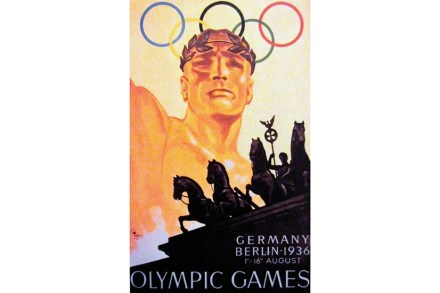
How Leni Riefenstahl shaped the modern Olympics

From our UK edition

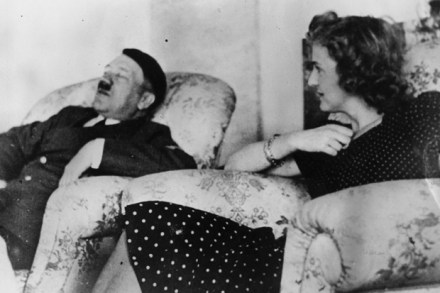
It’s an uncomfortable truth, but the Olympic Games in their modern form were pretty much invented by the Nazis. They came up with the idea of the torch relay, for example, the one that begins in Olympia and ends with the lighting of the cauldron at the opening ceremony. But it wasn’t the events at the 1936 Olympics that were new, so much as the way they were presented and filmed. Even today, the style of coverage owes much to Leni Riefenstahl, Hitler’s favourite filmmaker and arguably the most gifted and influential female director of the 20th century.

Writing obituaries can be strangely life-affirming

From our UK edition

In my line of work I sometimes owe a cock to Asclepius. The ancient Greeks believed that a sacrificial offering to Asclepius, the god of good health, could buy you time. Perhaps it worked in the case of Boris Johnson. On the night he was taken into intensive care, I had the digital team of the Times breathing down my neck. They wanted to know if I, the paper’s obituaries editor, had an obit ready to go straight up online, ahead of the print version. I was up until midnight making sure we had, updating and recasting our existing one, trying to get the tone right. The cock may have been metaphorical, but it was offered all the same.

Just join Germany

From our UK edition

An argument you sometimes hear from those sitting on the Brence (the Brexit fence) is that it’s a pity the EU couldn’t have stayed the same as it was when we first joined it in 1973. Back then, say the Brence-sitters, it was a trading bloc with only nine members, which made sense. Greece wasn’t a member, nor were Spain and Portugal, never mind Lithuania, Latvia and all those other countries ending in vowels. But if we could go back to that better arrangement — play fantasy politics, as it were — would we, with hindsight, want it to include France and Italy, two of the original nine? Their economies are both now looking pretty rackety. In fact, isn’t there only one country in Europe with which we would want to be BFF (Best Friends Forever)?

From Hitler to girls in pearls

From our UK edition

I’ve heard it said that the ‘countryside’ is an urban idea, a place invented by the late Victorians in order to escape industrialisation. If so, we’re craving it more than ever. Surveys suggest 80 per cent of us now dream of living in a rural idyll. Since foxhunting was banned, riding to hounds has never been more prevalent. Suddenly five million people — most of them city dwellers — are tuning into The Archers, and viewing figures for Countryfile are higher than for The X Factor. But perhaps the most revealing indicator of the allure of the countryside is the enduring appeal of Country Life magazine, which was founded in 1897 and is currently the subject of a three-part documentary on BBC2.

Out on the farm

From our UK edition

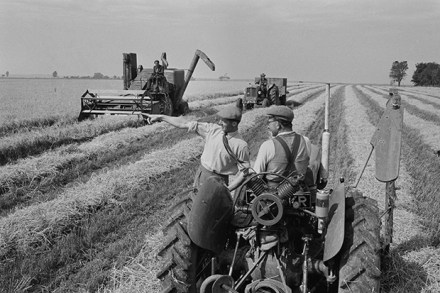
If the Church of England was once the Tory party at prayer, then the nation’s shotgun-owning farmers were the party’s armed wing. I grew up on a farm in the Yorkshire Dales and must have been about 18 before I met someone who didn’t identify as TBC (True Blue Conservative). Ours was one of the safest Tory seats in the country, with the local MP being Leon Brittan and then William Hague. And Margaret Thatcher was considered a hero in our ‘community’ not because of the Falklands war or her defeat of Arthur Scargill but because she liked to greet the dawn by listening to Farming Today on Radio 4 (true). But the Brexit debate is leaving our True Blue farmers deeply conflicted. On the one hand, without EU subsidies, many of them would go out of business.

Inside the new Navy

From our UK edition

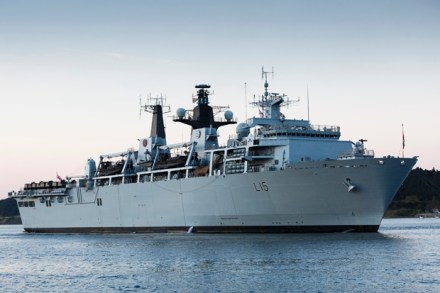
The Royal Navy is known as the Senior Service because of its illustrious history; Francis Drake and all that. But the days when it ruled the waves have long gone. In 1945 it had almost 900 warships and a million men. By the time of the Falklands War it was down to 70 warships and 70,000 men. Now it is less than half that, with more admirals than there are fighting ships. The arrival this year of HMS Queen Elizabeth, the much-heralded new aircraft carrier that has cost £6 billion (for 50-odd years of life), will draw unwelcome attention to the Navy’s significant manpower shortages. As one senior officer put it, the carrier will bring ‘new challenges, relearning old tricks perhaps, and some new — not least how to man it’.

Why it’s time for a Cad of the Year Award

From our UK edition

[audioplayer src="http://traffic.libsyn.com/spectator/TheViewFrom22_22_May_2014_v4.mp3" title="Harry Cole and Camilla Swift debate the return of the cad" startat=1527] Listen [/audioplayer]Plans are afoot to introduce the Flashman novels, those politically incorrect celebrations of cowardice, bad form and caddish behaviour, to a new generation of readers. But according to Sarah Montague on the Today programme, ‘Flashman is not typical of our times.’ Is she correct? I can think of quite a few latterday Flashmans off the top of my head, such as Fred ‘The Shred’ Goodwin, whose knighthood had to be prised from his cold Scottish fingers. Not only did Fred keep his pension millions when all about him were losing theirs, he also had an extramarital affair.

Is any kind of sex still taboo in literature?

From our UK edition

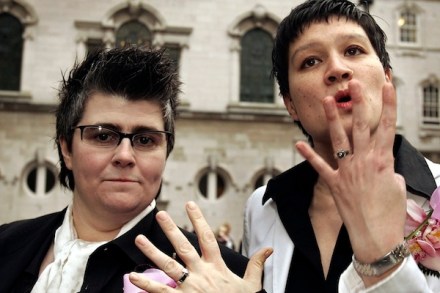
The first gay marriage will be conducted this Easter, and those who still object to the idea find themselves in a minority. The majority, according to polls, can’t see what all the fuss is about. How far we have travelled in a relatively short period of time. Until 1967, the punishment for homosexuality was a year in prison, or chemical castration, which was the option taken by Alan Turing, the Bletchley Park codebreaker. At least he has now been posthumously pardoned, so that’s OK. Extreme though attitudes to homosexuality have been in the past, I don’t think that, as a subject, it ever had the status of a taboo, not properly. Consider the way that, long before the new spirit of tolerance emerged, novelists were able to write about it without censure.

Don’t hug me! (Even though sometimes it’s rather nice)

From our UK edition

When, in 1957, Harold Macmillan accepted the Queen’s invitation to become prime minister, following the resignation of Sir Anthony Eden, he returned from the Palace, marched up Downing Street to where Eden was waiting for him, and gave his old rival a man-hug, right there in front of the Pathé news cameras. No, of course he didn’t. But we have come a long way since then. Indeed, at the party conferences they were all at it: MPs, ministers, party activists, hug, hug, hug — and not a hoodie in sight. After the Mayor of London delivered his speech he was rewarded with a bear-hug from the Prime Minister, no less. At least it was away from the cameras this time, unlike last year at the Olympics, when Boris and Dave had a manly embrace in full view.
The importance of not being called Nigel

From our UK edition

You know what the real problem with Nigel Farage is? It’s not his politics, for they are a matter of personal taste. No, it’s something more objective. His name. And not that improbable surname, either, the one that makes him sound like a Bond villain. It’s the Nigel. There’s a passage in Julian Barnes’s novel Talking It Over which summarises the problem nicely. One of the characters, Oliver, used to be called Nigel until he changed his name by deed poll. ‘You can’t go through the whole of your life being called Nigel, can you?’ he explains. ‘You can’t even go through a whole book being called Nigel. Some names simply aren’t appropriate after a while.’ How true.

The views that inspire writers

From our UK edition

Unimaginatively, I usually take the same route for a morning walk when on holiday in Cornwall, over the dunes to Brea Hill, inspiration for Betjeman’s poem ‘Back From Australia’. I know the scenery so well I no longer see it. But for a change the other day I walked along the other side of the estuary and it was like seeing an entirely new landscape: the gently scalloped sandbanks, the clarity and blueness of the water, the breadth of the sky where it met Pentire Point. There were no clouds, which emphasised the white of the sails, the seagulls, the cabbage butterflies. Imagine having this as the view from your study, I thought. How inspired you would feel.

Nigel Farndale’s diary: The dread moment when they announce next year’s school fees

From our UK edition

Next time I’m in a sauna I’m going to say: ‘It’s like a school sports hall on prize day in here.’ As the mothers fanned their faces with the programmes, one of the other fathers, Her Britannic Majesty’s Ambassador to Uruguay, leaned forward and whispered: ‘Rookie error, mate. Should have worn a white shirt.’ He was right. I was wearing a blue one, which meant I couldn’t take off my linen jacket. My interest in hearing from the headmaster about the school’s successes on the sporting field began to wane after the first three hours. I’m pleased for the Under 11Bs hockey team and all they achieved back in February, but given the humidity I think it would have been kinder if he had stuck to the highlights.

Diary – 27 May 2005

From our UK edition

An actor friend and I were worried that we were not being good male role models to our sons, of which we have three apiece. It was all very well taking them around National Trust properties, teaching them chess and explaining to them the difference between native and Pacific oysters, but what they needed were fathers who took them to football matches — especially the eldest, who are now pushing eight. As my friend lives in Chelsea, we decided Stamford Bridge would be the place. ‘Do you just turn up?’ he asked. ‘I’m pretty sure you have to book,’ I replied. ‘Right. I’ll get on to it,’ he said. ‘This Saturday?’ ‘Yes, this Saturday.