Schools

Why I was sacked from Eton

From our UK edition

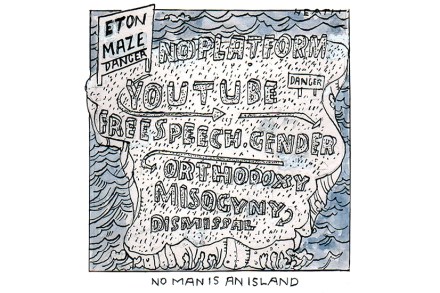
One of the things I’ll miss about teaching at Eton is the ever-present threat of an ironic riposte from one of the boys. ‘Cheer up,’ I told one who looked un-enthused by Milton in my first week at the school, nine years ago. ‘Two hundred years ago, you’d have been down a mine!’ ‘Sir,’ he replied deadpan, ‘we’d have owned the mines.’ The class erupted in self--deprecating laughter. I’d arrived. It was the boys themselves who suggested and named the YouTube channel Knowland Knows, which has since got me summarily dismissed.

Can Gavin Williamson limit the impact of school closures?

From our UK edition

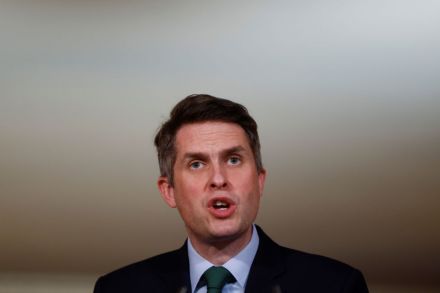
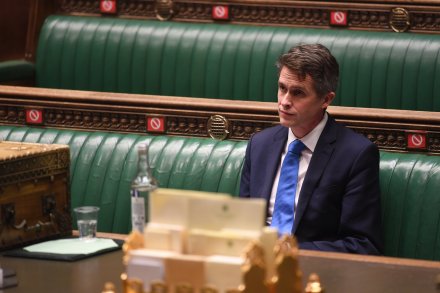
It is much harder being an embattled minister in the socially distanced Commons than in normal times. There is no group of supportive MPs to arrange behind you, no ability to organise sympathetic noises from the backbenches as you give your statement explaining why you've taken a last-minute decision to close all schools when you said you wouldn't and had been threatening councils who were trying to do so just before Christmas with legal action, and why you've spent the past few weeks insisting that exams would go ahead in the summer, only to cancel them this week too. On this charge sheet, Gavin Williamson would have struggled in any Commons setting when he explained why the government had changed its mind at the last minute.

Watch: Gavin Williamson’s schools opening gaffe

From our UK edition

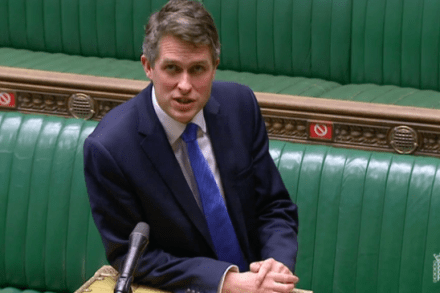
Oh dear. Education Secretary Gavin Williamson has not exactly been at the top of his game in recent weeks. Across the country teachers, children and parents have been thrown into turmoil by the government’s haphazard education plans, which have seen schools open up for a single day, and national exams cancelled, despite the Education Secretary’s insistence they would ‘absolutely’ go ahead. Still, Mr S hoped that Williamson would at least be clear in his mind about getting schools back open once again. Unfortunately, the minister seemed to rather struggle with that message when in Parliament today.

Closing schools was inevitable. But cancelling exams is a mistake

From our UK edition

On Sunday morning, Boris Johnson told us that schools were safe but, tellingly, did not rule out further closures. By Monday evening he had shut every school in England to most pupils. By then, of course, many primary schools had opened for just one day. Children mingled – as they do – and went home not to return. But after those bubbles were mixed, fewer grandparents may be willing to look after them. When will they return? Johnson said not until half term, at least. But when policy can reverse so quickly in less than 36 hours, just about the only certainty is that it is far easier to close schools than it is it reopen them again.

Covid statistics suggest schools are likely to be closed soon

From our UK edition

Here are the numbers that show why schools are very unlikely to re-open any time soon in London and the south east, and why within a week or so the whole country may be in a lockdown that includes school closures. Tier 4, the so-called "stay-at-home tier", is broadly equivalent to the two-week circuit-breaking lockdown that was imposed in November. It did not include school closures, but it suppressed the rate of transmission of Covid-19 to 0.85 or 0.9. In other words it led to the infection gradually shrinking in the community. Unfortunately, since then we’ve witnessed the explosive growth of the new strain of Covid-19.

Schools should stay shut

From our UK edition

­­During the battle against Covid-19, the government’s priority has been to ensure that schools remain open. Their rationale has been that closing schools would threaten children’s life chances. Covid’s risk to children, ministers argued, is relatively low while the cost of stunted learning is severe. But the new variant has changed that calculation. Prior to this mutation, children accounted for only a small percentage of Covid-19 infections and therefore keeping schools open was a reasonably safe course of action. Now case rates are rapidly increasing to previously unseen heights, leaving the NHS creaking at its seams.

Sunday shows round-up: primary school children should ‘absolutely’ return, says Boris Johnson

From our UK edition

Boris Johnson - Restrictions 'probably about to get tougher' The Andrew Marr Show returned this morning, and with it came an in-depth interview with the Prime Minister. It will surprise no one to hear that the bulk of the interview focused on the coronavirus, and Boris Johnson signalled throughout that the new year could see fresh restrictions being brought into place. He did not go into any detail about what measures could be introduced under a potential 'Tier 5', but it was clear enough that his 5pm Downing Street press conferences were not yet a thing of the past: https://twitter.com/BBCPolitics/status/1345670653463191552?ref_src=twsrc%5Etfw BJ: It may be that we need to do things in the next few weeks that will be tougher in many parts of the country.

The unending confusion at the Department for Education

From our UK edition

It used to be the case that the only things that were certain in life were death and taxes. To that list we can now add unending turmoil and confusion at the Department for Education. Today Gavin Williamson U-turned on the government’s previous pledge to keep schools open, announcing that a number of schools in Covid ‘hotspots’ would not be going back as planned next week. Primaries in some areas – including a slightly random patchwork of London boroughs – will not reopen next week. Those in lower tiers and some Tier 4 areas will start term as planned. The following week, years 11 and 13 will return to secondary schools, and from the week beginning 18 January, all year groups will return.

The school closures debate exposes Britain’s class divide

From our UK edition

There have been many shocking sights in this cursed year. For me, one of the most shocking has been the sight of comfortably off, Oxbridge-educated experts and journalists agitating for the closure of schools even though they know this will hit poor kids hardest. This alarmingly cavalier attitude towards the education of the less well-off has exposed the class tensions that lurk behind the lockdown. Once again, depressingly, school closures are back on the agenda. SAGE says the only way we can get the current wave of Covid infections under control is by enforcing a proper lockdown, including the closure of schools and universities. Many in the media, long smitten with SAGE, agree.

Cornflake tart: a retro dish that conjures up British schooldays

When we talk to guests on The Spectator’s food and drink podcast, Table Talk, school dinners never fail to elicit strong opinions: from those who loved spam fritters, stodgy crumble and vats of custard, to others who shudder at the mere thought of a gloopy, tepid rice pudding. One dish that seems to have the fewest detractors is cornflake tart: a cheap and cheerful pudding, that required little more than store cupboard staples to make, and satisfied generations of children with its sky-high sugar levels. Food has the power to evoke nostalgia like almost nothing else. Dishes can be a shorthand to memory, to shared experience — good and bad; smells and tastes bringing back things we thought we’d forgotten.

Finally America is realizing that Andrew Cuomo is a putz

In a sane world, Andrew Cuomo would be America's least popular politician, a welcome target for a primary campaign or a robust Republican challenge in 2022. Yet the anti-Cuomo chorus has included precious few voices this year. The New York Post has been unrelenting in its criticism, as have conservatives in publications such as this one. ProPublica and the Associated Press rigorously reported out the nursing home debacle. But Cuomo's performance has been largely been lauded by liberal New Yorkers and pundits in the mainstream media. In July the New York governor was the 'politician of the moment', according to the New York Times.

cuomo

The country’s biggest teaching union would deny kids their education

From our UK edition

Britain’s first lockdown hammered our kids. Being away from school for months widened the educational gap between rich and poor and harmed the prospects and wellbeing of children from low-income homes. Knowing that, what do you call people who want to close schools again? Here’s the punchline, although it’s not funny: teachers. Or more accurately, teachers’ unions. You might have missed this on a grim Saturday afternoon, but even before Boris Johnson had confirmed Lockdown 2, the National Education Union was calling for schools to be included. That would mean another month (at least) away from school for millions of kids, followed by reduced schooling.

Bring back small high schools

Batavia, New York I’m scribbling this on the porch as I stare at the chain-sawed remains of our massive and ancient (by American standards, which are the only standards I know) front-yard maple tree, which split in a windstorm and crushed my car. I had hoped to be a good custodian and pass along these sylvan sentinels intact to those who come after, but like America...well, I won’t go for a cheap and inexact analogy. Oh, 2020, you most annus horribilis. But I am an inveterate looker-on-the-bright-side, and among the reasons for hope in this darksome time is the potential for new, or renewed, growth on the branches of the learning tree. (If I may borrow a line from the Jackson 5.

schools

The Dragon school’s bizarre decision to ban Gunga Din

From our UK edition

Why should radical leftists bother destroying institutions when the establishment will do the work for them? The governors of the Dragon, the prep school in north Oxford, have decreed that one of its boarding houses, Gunga Din, shall now be known as Dragon House. Presumably no consultancy fees were incurred for that name. In a letter to Old Dragons, which as an alumnus I received, the chair of governors, Andrew Webb, sets out the wonderful contortions that led the board to the decision. The name was originally chosen by ‘Hum’ Lynam, headmaster from 1920 to 1942, from Rudyard Kipling’s 1890 poem. The poem’s hero is a regimental bhisti (a water-carrier) in the service of the British military in India, whose activities are narrated from the view of a British soldier.

Downside’s downfall: the dissolution of a monastery

From our UK edition

The monks of Downside Abbey in Somerset elected a new abbot last Thursday, according to sixth-century rules laid down by St Benedict. The next day, they sent an email notification saying they had voted ‘to make a new start and to seek a new place to live’. It was a shock to those who know the place. The monks will leave behind a beautiful abbey church built in the Gothic Revival style — its 166ft tower visible for miles around — a monastery and cloisters, the largest monastic library in Britain and a grand-looking public school with more than 300 pupils. It’s as if a piece of English Catholicism, like a decaying chunk of church masonry, has fallen away. But it has been a long time coming.

Children who died of Covid-19 were already seriously ill, new study shows

From our UK edition

It has been clear from the start of the Covid-19 crisis – from Wuhan’s experience, before cases were confirmed in Britain – that it was a disease with relatively little impact on children. A broad study led by Liverpool University and published in the British Medical Journal today confirms that – and sheds a lot more light on how Covid-19 affects children. The study looks at data from 260 hospitals in England, Scotland and Wales, to which 69,516 patients were admitted with Covid symptoms between 17 January and 3 July. Of these, 651 were aged under 19 and 225 were aged under 12 months. Serious underlying medical conditions were present in 42 per cent of the children.

The Romans wouldn’t have understood our exam obsession

From our UK edition

Many commentators have argued that the recent grading controversy indicates just how important public examinations are. Up to a point, Lord Copper. Romans did jobs, not ‘education’. Most who went to school (there was no state provision) probably learnt not much more than the basic three Rs (peasant families — the majority of the population — needed their children to work the land). A freed slave in Petronius’s Satyricon boasts that he knows ‘no geometry or fancy criticism or any such meaningless drivel, but I do know the alphabet and I can work out percentages and measures and currency’; Horace mocked pupils for being asked what is left from 1/12th subtracted from 5/12ths. One option for children was to be sent away as apprentices.

Portrait of the week: BBC drops songs, museum drops Sloane, and KFC and John Lewis drop slogans

From our UK edition

Home Nicola Sturgeon, the First Minister of Scotland, made pupils wear face-coverings in school corridors. It didn’t take long for the UK government to follow suit in England, for secondary pupils in areas of high transmission. The chief medical officers of England, Scotland, Northern Ireland and Wales said that the fatality rate for those aged five to 14 infected with coronavirus was 14 per million, lower than for most seasonal flu infections. Sally Collier resigned as chief regulator of Ofqual, which had been caught up in the chaotic assessment of A-level and GCSE candidates. It was ‘vitally important’ for children to go back to school, said Boris Johnson, the Prime Minister.

Will the next U-turn be on face masks at work?

From our UK edition

There’s a new trend emerging when it comes to Covid-19 policy: where Scotland leads, England follows. In recent weeks, decisions taken by Nicola Sturgeon have – eventually – been adopted by the UK government for England: first, the U-turn on how A-level and GCSE results would be attributed, and today another U-turn on face masks in schools.When Scotland announced face masks would be made mandatory for pupils earlier in the week, the government remained adamant that this would not be required in English schools. But within days, the advice quite substantially changed, now requiring secondary school students in local lockdown areas to wear them in the corridors and communal areas.

What does the evidence say on re-opening schools?

From our UK edition

It is still far from clear whether schools will succeed in re-opening next week, as government ministers, education authorities and unions battle it out over safety – or supposed safety – concerns. Now, as back in May, when the government first proposed re-opening schools, the unions have demanded evidence that it will be safe for children to return to the classroom. The difference now is that we do have real-world evidence on the spread of Covid-19 in schools. Public Health England (PHE) has analysed what happened when over a million children finally returned to school in June. In the subsequent weeks until the end of term, 70 children and 128 staff tested positive for Covid-19.