Saudi arabia

Should Khashoggi have been warned?

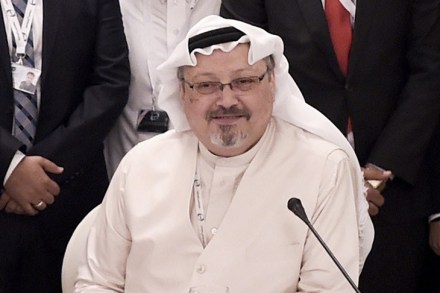
An executive in charge of a security company based in Arkansas has given the New York Times a document confirming that they trained four members of Saudi Arabia’s so-called Tiger Squad, responsible for murdering the dissident journalist Jamal Khashoggi. As has now been established by several different investigations, Khashoggi was lured to the Saudi consulate in Istanbul, injected with a drug — perhaps morphine — and suffocated with a plastic bag, his body then cut into pieces, apparently on the Saudi deputy consul’s desk. This latest information raises the question of what the US might have known about the Tiger Squad and its operations. Could the US intelligence agencies have warned Khashoggi not to go to Istanbul?

Jamal Khashoggi TIME person of the year

Biden’s Saudi problem

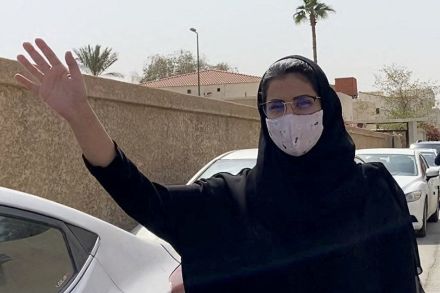
A few weeks ago, the Saudi human rights activist Loujain al-Hathloul was summoned to the offices of the General Directorate of Investigation at the Interior Ministry in Riyadh. Ostensibly, the Saudi secret police — the Mabahith — simply wanted to tell her that her appeal against her conviction for ‘treason and terrorism’ had been turned down. But her brother, Walid told me it was really a warning: Keep quiet, we’re watching you; the Americans may have got you out of prison; we can send you back whenever we want. She has been out of prison since February, serving the rest of her sentence on probation. Though aged 31, her long black hair is now streaked with gray, the outward sign perhaps of what her family say was an attempt to ‘break’ her in prison.

loujain al-hathloul

How China won over the Middle East

From our UK edition

In April, Chinese Foreign Minister Wang Yi embarked on a six-nation Middle Eastern tour to Saudi Arabia, Turkey, Iran, the United Arab Emirates, Bahrain and Oman. ‘Belt and Road’ cooperation, economic development and the Covid pandemic were the topics of discussion. The treatment of China’s Muslim Uighur population in detention camps, which some in the West have described as genocidal, didn’t come up. Both China and Saudi Arabia cleave to the belief that internal affairs are nobody else’s business — or at least as long as there are overriding economic interests at stake. Compare the silence of Muslim countries on the Uighur issue with the loud faux anger when the Danish newspaper Jyllands--Posten published caricatures of the Prophet Mohammed in 2005.

Happy corporate wokewash month!

It’s June and the biggest corporations on the planet want you to know that they are celebrating gay Pride — unless you live somewhere like Saudi Arabia in which case they couldn’t care less. On their main Twitter page, Procter & Gamble have put a Pride flag in their banner and in their pinned Tweet they proudly proclaim: 'We strive to be a champion of #LGBTQVisibility year-round, using our voice to drive acceptance, inclusion and a love for humanity.' I guess there are no gay people in Saudi Arabia to champion, which must be why P&G’s Saudi Twitter handle has not a single rainbow flag in sight and a pinned tweet simply wishing people a blessed Ramadan. But that is the beauty of corporate wokewashing.

pride wokewashing corporate

The strange tale of NEOM: Saudi Arabia’s struggling desert megacity

From our UK edition

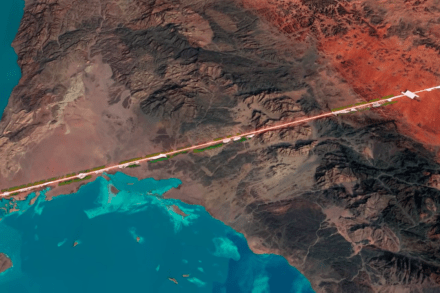
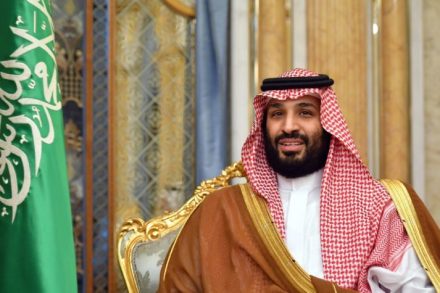
Prince Mohammed bin Salman is desperate to shake Saudi Arabia’s addiction to oil. Its price has still not recovered from an American fracking boom seven years ago, and decades of excess have left the world’s largest exporter now needing £55 a barrel to balance the books — more than Iraq, Libya, Oman, Kuwait, Qatar, and the UAE. Looking to reinvent his kingdom, MBS is building a new city, NEOM. Sold as a rival to neighbouring Dubai, which has long been the capital of business and tourism in the Middle East, the city will cost £360 billion, will be the size of Belgium and is expected to be completed by 2030. Or at least that's the idea.

What the Khashoggi murder report means for US-Saudi relations

From our UK edition

Today, after pressure from senior US lawmakers and staring at an impending statutory deadline, the Biden administration authorised the release of a declassified intelligence report on one of the most grisly state-sanctioned murders in recent history. The killing of Saudi dissident and Washington Post columnist Jamal Khashoggi may have occurred 16 months ago, but the murder has hung around the US-Saudi relationship like a wet blanket. The US intelligence community’s assessment that Crown Prince Mohammed bin Salman, the heir to the throne, was intricately involved in Khashoggi’s death was a bombshell heard around the world. And yet media reactions notwithstanding, MbS’s role in Khashoggi’s demise was hardly a surprise. This was the worst-kept secret on the planet.

Bryan Fogel on turning Jamal Khashoggi’s murder into a film

From our UK edition

Bryan Fogel seems to have done it all. It’s hard to think of a showbiz figure with a more varied career. He began as a stand-up and moved to play-writing and then to directing movies. In 2013, he reinvented himself as the producer of hard-hitting documentaries that focus on international scandals and cover-ups. He talks to me via Zoom from Los Angeles about his latest movie, The Dissident. ‘I was seeking what my next film was going to be – something that spoke to human rights and freedom of expression. It checked all those boxes’. The subject is the death of Jamal Khashoggi, the dissident journalist who was murdered in the Saudi embassy in Istanbul in 2018. ‘He’d left his country to be able to speak freely.

Could an Israeli-Saudi peace deal be imminent?

From our UK edition

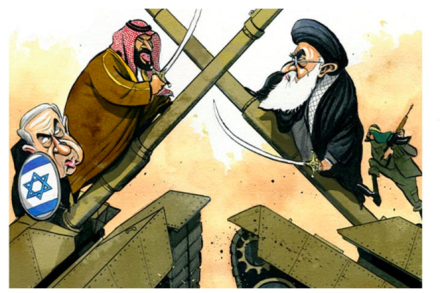
The Israeli-Saudi peace deal is, to coin a phrase, oven-ready, a source close to the negotiations told me this week. After many months of covert meetings, the detail has been agreed and the Israelis are ready to commit. All that’s needed is for the Saudis to sign on the dotted line. This means that an alliance could be sealed within six months. Of all the Arab-Israeli peace agreements, a Saudi deal would be the most significant. The Gulf kingdom is a huge country that comes close to bordering Israel, and, as such, is of great strategic weight. It is the largest economy in the Middle East. And as the custodian of Islam’s two holiest sites – Mecca and Medina – it is a serious contender for the title of leader of the Muslim world, and the main counterweight to Iran.

The UK must stop arming Saudi Arabia

From our UK edition

We have both proudly served Her Majesty’s government — one of us as an army officer and defence attaché to the British Embassy in Saudi Arabia, the other as a lawyer advising successive foreign secretaries on arms exports to Saudi Arabia. We did not undertake this work with illusions about the reality and cost of armed conflict. We did however work on the understanding that the relevant law — including in the Geneva Conventions and long-standing rules on arms exports — would be adhered to by our government. But that is not currently the case, and we are shocked at the British government’s conduct when it comes to arms sales.

Women need to take control and take the wheel

From our UK edition

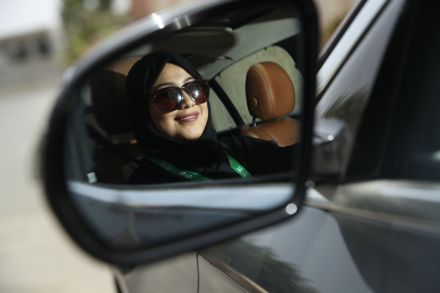
There is a Saudi Arabian film that I love. It is called Wadjda and is about a young girl who longs to have her own bike, so that she can play outside and ride wherever and with whomsoever she likes. Yet Riyadh’s restrictive patriarchy frowns upon women having agency over their means of transport, even bicycles, ensuring that they are forever at the mercy of capricious and often irascible male drivers.  I have thought about this film and its message a lot this year, when the many benefits of having our own independent methods of transport, primarily cars, have been amply highlighted.

What Bahrain’s deal with Israel really means

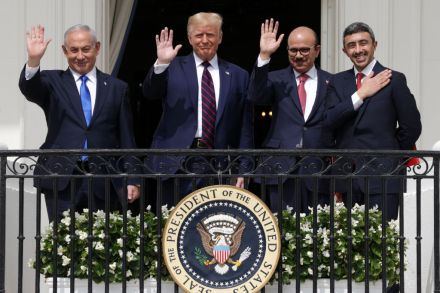
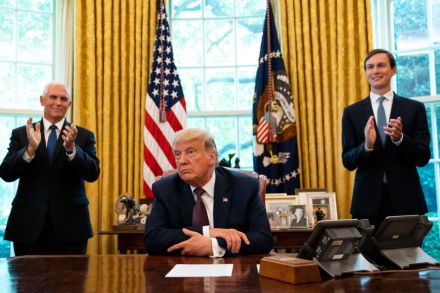
On September 15, representatives from the oil-rich Kingdom of Bahrain will meet Israeli leaders at the White House to sign a historic peace deal. It will normalize relations between the Muslim state and the Jewish one, not long after the United Arab Emirates concluded a similar pact. Expect more such 'normalization deals'. They supplement other White House initiatives, such as the deal it brokered between Serbia and Kosovo, which includes both countries establishing closer relations with Israel. The deals are significant for several reasons. First, they represent a common regional front against the Iranian threat, which has been developing beneath the surface for some time.

bahrain

Pilgrimage in the age of pandemic

From our UK edition

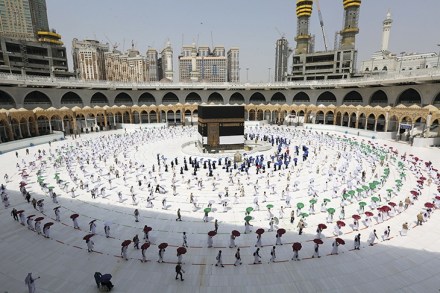
To complete the Hajj is the pinnacle of Islamic worship, required once in the lifetime of every able-bodied Muslim who can afford the journey. In its 1,400-year history, the annual pilgrimage has been cancelled dozens of times, by wars, political strife and pandemics. As I found out when I made the journey, it is a swirling sea of humanity: some 2.5 million visiting Mecca over a few days, from all over the world. When the Covid crisis came, worship was suspended. But then something was attempted that would have once seemed impossible: carrying on the tradition, but under digitally monitored social distancing. The results were extraordinary.

The art of being a mistress

From our UK edition

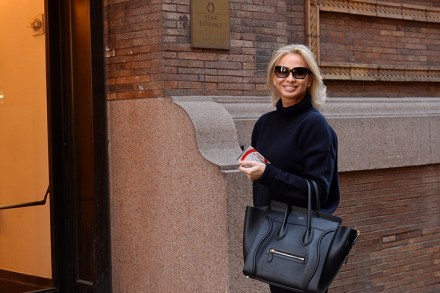
Gstaad The jokes about keeping a mistress are old and I’ve yet to hear a truly funny one (‘The difference between a wife and a mistress is like day and night,’ and so on). Like many other good things, mistresses have fallen out of fashion, the closing pay gap between the sexes being one of the main reasons for their demise. History tells us a lot about great men who had mistresses, which most great men did. Beauty and physical attributes aside, the most important quality for a kept woman was her discretion, with a capital D. Which brings me to the downfall of ex-King Juan Carlos of Spain, whose wife Queen Sofia I count as a very good friend. I first met him before he had become head of state-in-waiting under Franco.

Oil on troubled waters: the US-Saudi alliance is crumbling

From our UK edition

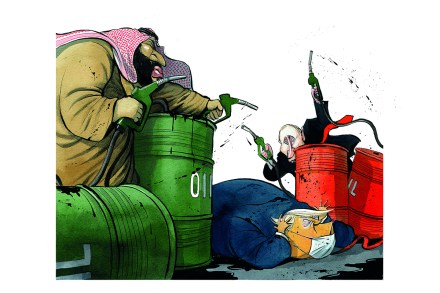
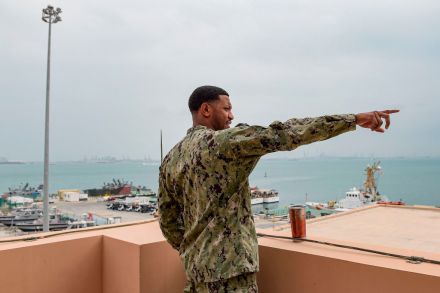
Donald Trump said in October 2018 that the Saudi royal family ‘wouldn’t last two weeks’ without American military support. Last week, on the back of the collapse of the US fracking industry, he finally acted on his long-standing anti--Saudi instincts. He ordered the immediate withdrawal of two patriot air defence batteries, sent to defend the kingdom’s oil infrastructure in September after a missile attack blamed on the Iranians. He also recalled hundreds of US troops and said the US Navy presence in the Persian Gulf would be scaled back. Leaving with the ships were dozens of US fighter jets, which would have been crucial for defending against any full-scale Iranian assault.

Has Trump finally decided to dump Saudi?

From our UK edition

In a dramatic move even by his own mercurial standards, Donald Trump has authorised the withdrawal of two Patriot missile systems guarding Saudi Arabia's oil facilities, accompanied by hundreds of American military troops operating them. They were deployed last September after a massive cruise missile and drone attack on the Saudi oil infrastructure – blamed on the Iranians but claimed by their allies the Houthi rebels in Yemen – that knocked about half of the kingdom's production capacity offline. Now Saudi Arabia has just two Patriot batteries, located at Prince Sultan Air Base in the middle of the Saudi desert. They are not there to protect the royal family and its economic resources, but rather the estimated 2,500 American soldiers stationed at the remote military hub.

Could President Trump lose the oil war?

In a cover story for The Spectator that appeared just after Saudi Arabia launched an oil war against Russia in March, I wrote: 'One wonders how Donald Trump — who hates personal disloyalty more than anything — will react when he wakes up to the fact that the Saudi leader he has stuck with through thick and thin is now out to destroy the domestic industry Trump is most proud of.' Well, now we know. By the first week of April, Trump was so concerned about the impact of dramatically lower prices on the domestic fracking industry that he called the Saudi leaders and gave them a stark ultimatum. Unless they pressured OPEC members to cut oil production, he would be powerless to stop lawmakers from passing legislation to withdraw US troops from the kingdom.

oil

What is the US Navy doing in the Persian Gulf?

American alliances and security commitments tend to live on long after the world has changed. Many of our far flung military bases are legacies of a Cold War that ended decades ago. With the collapse of the Soviet Union, the Nato alliance became all but obsolete, so it eagerly embraced conflicts in the Balkans, Libya, Syria and other locations far from the Central European theater it was originally designed to protect. However, none of these holdover security commitments seem as absurd as US military operations in the Persian Gulf during a COVID-19 oil market.As recently as last month, the United States was keeping two aircraft carrier battle groups deployed near the Persian Gulf.

navy persian gulf

Saudi may have won an oil truce – but a greater conflict now looms

From our UK edition

For the first time in months, the coronavirus panic was briefly demoted as the main news story on Sunday when OPEC and oil-producing non-OPEC nations agreed a deal to cut oil production by 9.7 million barrels a day – initially to stabilise and then hopefully increase prices. It is the most dramatic production cut in history and of course not unrelated to the pandemic itself. Last month, demand collapsed as the global economy began to shut down but Russia shot down a Saudi opening proposal fearing it would give a boost to the American fracking industry.

Crude tactics: Russia and Saudi Arabia are at war over oil prices

From our UK edition

It all started at what every-one thought would be a routine meeting between Opec and non-Opec nations in Vienna. There were the usual fake smiles and firm handshakes in front of the cameras from the dignitaries. Bored journalists roused themselves to prepare to write stories they expected never to be read, before they could at last head to the pub. And then, out of nowhere, came a bombshell. Downward pressure on oil prices from the coronavirus panic was posing an obvious risk to Saudi Arabia’s still heavily oil-dependent economy. And this is what a cartel like Opec is for: to agree to release less oil into the market, pushing the price back up. A Saudi-led motion proposed a cut of 1.5 million barrels per day. To everyone’s shock, Russia rejected this outright.

Andy Khawaja: ‘the whistleblower’

It’s after 2 a.m. in Club 38, a nightspot in an old railway shed in Beirut. The DJ is in the cab of a rusty train. Lights sweep across a dense crowd below. My host is Andy Khawaja, a Lebanese-American businessman. We’re sitting at the club’s VIP table and he’s scrolling through photographs on his phone. Here he is with Hillary Clinton at a fundraiser. Here, he’s shaking hands with President Trump in the Oval Office. The men he’s with in the club have shaved heads, bushy beards, tattoos. I wonder if they’re mafia, militia, or mukhabarat (secret police). When I get up and walk to the restroom, a burly minder with a Glock in his waistband follows a step behind. He turns on the tap and hands me a towel.

khawaja