Saudi arabia

How the Saudis embarrassed Biden over oil prices

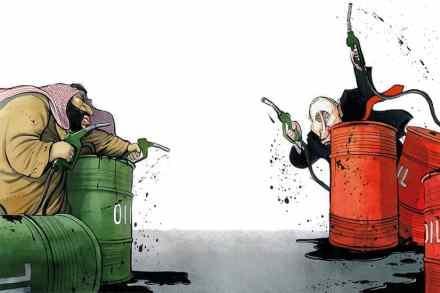
As Americans confront high inflation rates, tumbling prices at the gas pump are at least giving them a little relief. Brent Crude, the global benchmark for oil, has declined by 27 percent from its $127 peak six months ago. Gas prices in the United States, which were averaging just over $5 a gallon earlier in the summer, are now in the $3.72 range. That means Americans are saving $10 to $15 every time they fill up their tanks. Yet crude is a global commodity, and its price can fluctuate for any number of reasons — war, recession, and an economic slowdown in China to name but a few.

The Mar-a-Lago raid’s Saudi connection

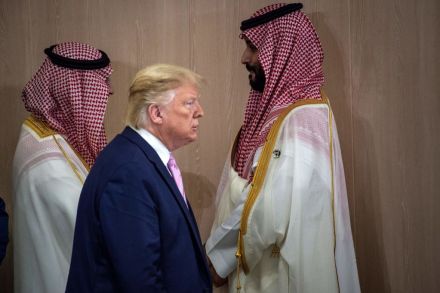
It appears that the FBI’s search of Donald Trump’s Florida residence was just the tip of the iceberg. Indeed, the Bureau's probe has been underway for months, and its decision to interview former White House lawyers suggests that law enforcement is not only interested in what was in the more than 700 pages of documents that Trump took, but also why he took them. The Washington Post recently alleged that some of those documents are related to nuclear weapons. This has shone a light on Trump’s prior attempts to share sensitive nuclear technology with Saudi Arabia, a country that has flirted with building nuclear weapons. Could Trump’s friends in Riyadh have been due for one of his infamous quid pro quos? History provides a guide. As early as 2016, Donald Trump Jr.

Blaming Saudi Arabia won’t make energy cheaper

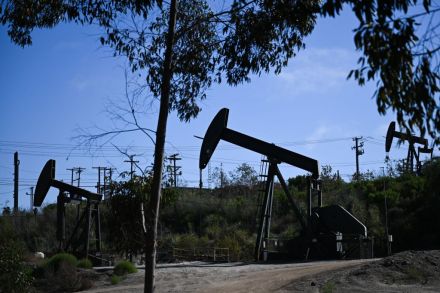
How outraged should we be that Saudi Aramco has reported a world-record quarterly profit of $48 billion, representing a giant bonus from the global oil price spike provoked by the war in Ukraine? Well, that’s how the cookie crumbles when you’re sitting on oil reserves so abundant and so easily accessible that your marginal cost of producing the next barrel is less than $10 when the market price has just doubled to $130 — as it did in March, before settling back to around $95 today. And you might think that this recent price retreat is likely to continue as oil demand begins to shrink with the onset of recession in developed economies – just as you worry that your own reserves will one day dwindle.

saudi arabia

How Biden made the energy crisis worse

During the course of my daily media interviews, one of the most frequent questions I hear is, “when will things get better?” Being the bearer of bad news is frustrating, but unfortunately that’s all I see for the next few years. Following the basic laws of economics, energy prices can only come down based on two factors: increase the supply or decrease the demand. They may not like to admit it, but President Joe Biden and his team understand the need for a supply increase. It explains the president's trip to Saudi Arabia to ask their king to increase oil production. He has dispatched envoys to Venezuela and Iran for the same purpose. Unfathomably, his administration continues its relentless attacks on domestic oil production.

energy

Is Biden ready to let MBS get away with murder?

From our UK edition

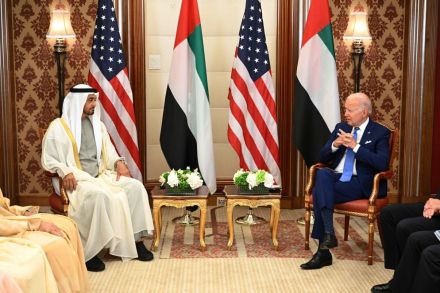
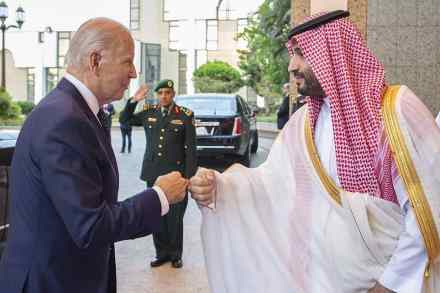
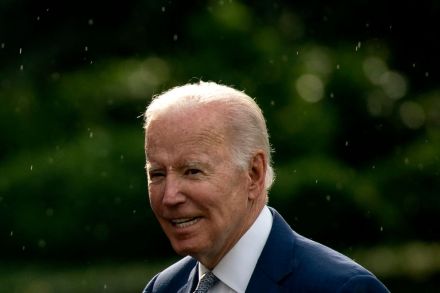
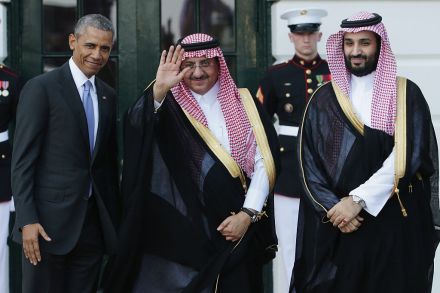
President Joe Biden will have only himself to blame if he feels a little uncomfortable this week when he sits down with the man who runs Saudi Arabia, Crown Prince Mohammed ‘Bone Saw’ bin Salman (MBS). After the CIA accused MBS of ordering the murder of the dissident journalist Jamal Khashoggi – dismembered with a bone saw – Biden said Saudi Arabia had ‘no redeeming social feature’ and should be made ‘a pariah’. This was a satisfying bit of moral posturing during a presidential election campaign, but costly now, in a world where Americans are paying $5 a gallon for gas and Russia is funding its war in Ukraine by selling oil at $100 a barrel. The US needs the Saudis to crank up production.

Russia is sidestepping American oil sanctions

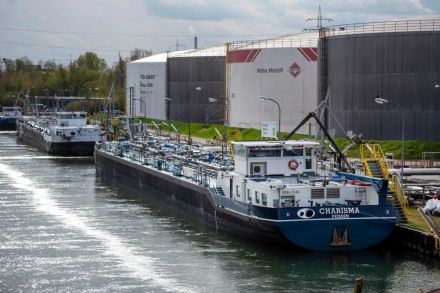
When the European Union finally made the decision to ban 90 percent of Russia’s crude oil imports by the end of the year, the bureaucrats in Brussels were jubilant. The EU’s adoption of oil sanctions was thought be a big blow to Russian President Vladimir Putin, who depends on the revenue generated by his country's oil exports to fund his war in Ukraine. It doesn’t take a genius to figure out why European officials were so thrilled. The EU imported 2.2 million barrels per day of Russian crude last year, amounting to tens of billions of dollars in profits for the Kremlin every month.

Biden of Arabia

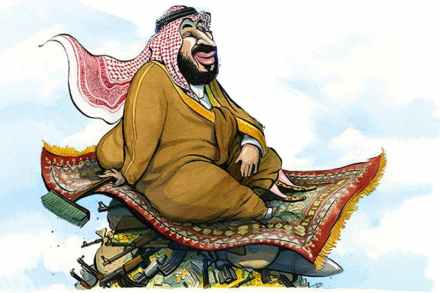
When news broke that President Biden was planning a trip to Saudi Arabia to visit the crown prince Mohammed bin Salman (known as MbS), members of his party were horrified. Representative Adam Schiff, the chairman of the House Intelligence Committee, was especially disturbed and recommended the White House cancel it outright. "I wouldn't go. I wouldn't shake his hand,” Schiff told CBS on June 5. "This is someone who butchered an American resident, cut him up into pieces in the most terrible and pre-meditated way.” That resident was Jamal Khashoggi, a former Saudi royal family insider who used his perch as a columnist at the Washington Post to raise awareness about the crown prince’s ruthless ways.

arabia

‘America or chaos’ is a false choice

There is an age-old dogma in the US foreign policy establishment: when America pulls back, chaos ensues. Like an anti-inflammatory that keeps arthritis under control, Washington’s presence in this or that region keeps enemies cowed, partners reassured, and the barbarians at the gates. Of course, just because an argument is popular doesn’t mean it’s accurate. There are several problems with the “America must be everywhere, at all times” line of thinking, the most poignant of which is that it turns the US military into an agency of global rent-a-cops.

Why Saudi Arabia is trying to take over the world of golf

From our UK edition

Golf came to Saudi Arabia in the 1930s. American expats, working in the nascent oil industry, brought their clubs with them and made courses in the dunes. They worked out that if you sprayed oil onto a patch of sand and then packed it down, you could make a vaguely puttable surface. ‘Occasionally, a herd of camels ambles over our greens,’ one engineer wrote for Aramco Weekly. ‘The terms “fairway” and “rough” employ a distinction that is theoretical only.’ Today, Saudi Arabia wants to take over the sport.

Washington’s dirtiest war at last goes silent

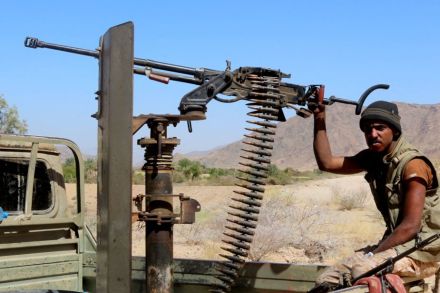
Something strange, but miraculous, is happening in Yemen right now: no bombs are falling from the sky. According to the Yemen Data Project, an independent group keeping track of the violence in the Arab world’s poorest country, there hasn’t been a single Saudi coalition airstrike over the last week. This is the first time since Yemen’s civil-turned-proxy war began that an airstrike hasn’t been recorded, an unprecedented and welcome development for the millions of Yemenis who have lost so much as their rich Saudi neighbors seek to drive the Houthi-led rebel movement to the negotiating table.

What’s the difference between Yemen and Ukraine?

Millions of innocent civilians uprooted from their homes. Residential areas turned into dust, rubble and wire. Thousands of people killed in errant airstrikes. Store shelves emptied of basic staples. A humanitarian crisis dominating the everyday lives of a large swath of the population, who just want to escape the shelling and the fighting. This is the scene the world now equates with Ukraine, which has been subjected to a barbaric war of choice courtesy of Russian president Vladimir Putin. Yet for one poverty-stricken nation more than 2,400 miles to the south, this has been the grim reality for years.

yemen

Boris is right to ask for Saudi oil

From our UK edition

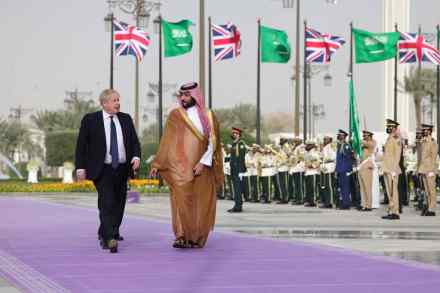
War and virtue don’t mix well, especially when it comes to the dirty business of energy supplies. As soon as the Ukraine situation turned nasty the UK government quietly did a turn on winding down North Sea gas, and may possibly do the same on fracking. And, having sworn off Russian hydrocarbons, Boris is now looking for urgent supplies. In doing so he is talking to some pretty doubtful regimes. Yesterday he visited Saudi Arabia and Abu Dhabi; he has also put out feelers to Qatar. Opposition parties have made hay. In Scotland, opposition to North Sea gas and ‘extreme fossil fuel ideology’ has come from both Nicola Sturgeon and her delightfully titled ‘minister for zero carbon buildings, active travel and tenants’ rights’, Patrick Harvie.

Rayner grills Raab over Lebedev and Saudi oil

From our UK edition

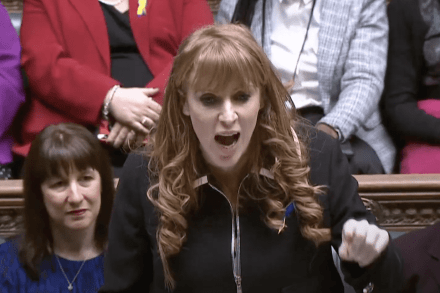
When Angela Rayner faces Boris Johnson at Prime Minister's Questions, it is obvious that both sides rather enjoy the exchanges. When she's up against Deputy Prime Minister Dominic Raab, as she was today, it feels like more of a grudge match. The session naturally centred around Ukraine, but as is Rayner's habit, it was more political than previous PMQs. Labour's deputy made her theme the government's failure to ensure Britain's oil security and links to Russian oligarchs. Much of her attack was about flaws in the absent Prime Minister's own character: the first question was whether Johnson's comments about Nazanin Zaghari-Ratcliffe when he was Foreign Secretary had made the situation worse.

The West has to bite its lip for Saudi oil

From our UK edition

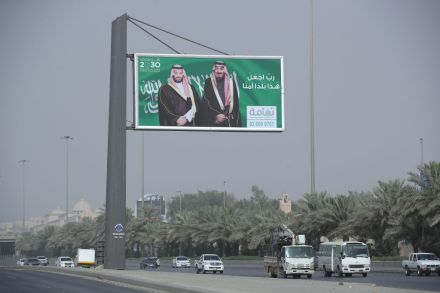
It would be ridiculous to claim that Boris Johnson’s visit to Saudi Arabia is not morally problematic. He is going to a country which held a mass execution for 81 people this weekend – a record number – and to visit a man who US intelligence blames for the brutal murder of the journalist Jamal Khashoggi. Yet, if the West wishes to reduce Vladimir Putin’s leverage – and stabilise the oil market – then it needs Saudi Arabia to pump more; no country has more spare capacity than Saudi Arabia, which could produce another 1.5 to 2 million barrels a day if it wanted to.

Can Boris get the Saudis to pump more oil?

From our UK edition

The oil price is up by more than 40 per cent since the start of the year. It is being driven up by the Russian invasion of Ukraine, the lack of investment in oil and turning the world economy on and off again: US production is still not back to pre-pandemic levels. In the immediate term, as I say in the Times today, pretty much the only way to bring the price down is to get Saudi Arabia – which has 1.5 to 2 million barrels a day of spare capacity – to pump more. The West’s relationship with Saudi Arabia has always been morally problematic.

Why would the Saudis bail out Biden?

From our UK edition

Is Saudi Arabia shunning Washington? Mohammed bin Salman has reportedly been refusing to phone Joe Biden, who wants the kingdom to turn on its oil taps as the West desperately seeks alternatives to the Russian energy market.  Riyadh – the world’s largest oil exporter – has so far failed to accommodate Washington’s pleas. Ahead of the Russian invasion in mid-February, the US asked the Opec+ cartel – of which Saudi Arabia is the most important member – to produce more oil to slow the already rising prices. Opec+ stood firm, and said they would increase production by 400,000 barrels a day in April, a rise agreed before the threat of a Russian invasion of Ukraine.

Saudi Arabia’s burgeoning art scene

From our UK edition

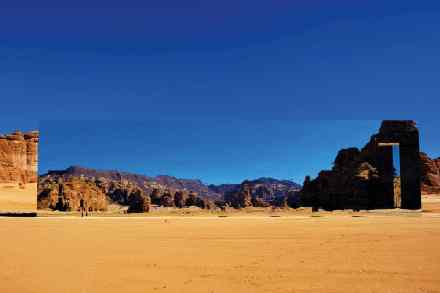
A little more than a century ago, a charismatic British army captain called T.E. Lawrence and fearsome Bedouin warriors swept through the sublime canyons around the desert city of Al-’Ula where I stroll today. They blew up the Hejaz railway, built to transport hajjis from Damascus towards Mecca but repurposed during the first world war by Turks to ferry munitions and troops. Such was the 1916-18 Arab Revolt that threw off Arabia’s Ottoman yoke. Today a very different kind of Arab uprising is sweeping through Al-’Ula. The canyons resonate not with bombs but with art. Dubai-based Zeinab Alhashemi has constructed boulders made from camel hides for a piece called ‘Camouflage 2.0’.

Why I should never look at Twitter

From our UK edition

Foreign trips can offer a sense of perspective. Heading to Saudi Arabia, I prepare for my first stint of diplomacy. While most of the world has been fixated on Ukraine, a different subject has dominated the news in Britain for the past few weeks. I wonder how, if asked, I’d explain to a Saudi minister the British media’s interest in whether an open packet of crisps and a length of mauve tinsel constitutes a party. My first problem is more practical: what clothes does a feminist pack when visiting Saudi Arabia? Ministerial briefing packs are not terribly helpful on this point. As a mother of three adult daughters, I’m not exactly a shrinking violet when it comes to defending women’s rights, and I’m not sure what to expect from the trip. I seek advice.

The fantasy of an Israeli-Palestinian ‘peace’

Long-time readers of this site may be aware that yours truly has not only applauded the Trump administration’s successful efforts to normalize Israel’s relationship with several Arab countries but has also proposed awarding the Nobel Peace Prize to Jared Kushner, the architect of the Abraham Accords. There were many reasons for my bullish sentiments regarding the Trump administration’s Middle East policy. First and foremost, as I pointed out, it disrupted the old American paradigm that held that any effort towards rapprochement between Arabs and Israelis hostage to the ultimatums of the radical Palestinian leadership.

peace palestinian

In Israel, there’s never an easy fix

From our UK edition

From an Israeli army base on the border with Lebanon, I can see the village of Maroun al-Ras. An Iranian flag flies from the dome of the mosque. Nearby, strapped to a post, is a 20ft cutout of the late Iranian general Qassem Soleimani, which was put there earlier this year by Hezbollah after he was killed by an American air strike. His right arm and index finger are stretched out, pointing menacingly over the valley at Israel. Hezbollah, backed by Tehran, control Maroun al-Ras, and I can hear the buzz of a drone watching them. Some Israeli officials say Iran could have enough enriched uranium for a nuclear bomb in just a few weeks. I’m here with Bicom, the Britain-Israel Communications and Research Centre.