Saudi arabia

The Middle East’s own 30 Years War has just begun

From our UK edition

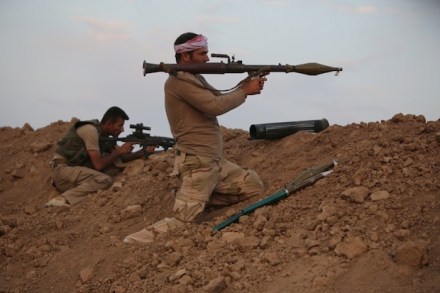
In January, Douglas Murray explained in The Spectator how relations in the Middle East were becoming increasingly tense. With northern Iraq now in turmoil, following the advance of Islamist militant group Isis, Douglas's insight seems prescient. Syria has fallen apart. Major cities in Iraq have fallen to al-Qa’eda. Egypt may have stabilised slightly after a counter-coup. But Lebanon is starting once again to fragment. Beneath all these facts — beneath all the explosions, exhortations and blood — certain themes are emerging. Some years ago, before the Arab ‘Spring’ ever sprung, I remember asking one top security official about the region. What, I wondered, was their single biggest fear?

The end of snow? Not in Gstaad

From our UK edition

 Gstaad The American newspaper that prints only news it sees fit to poison good things recently announced ‘The end of snow’. ‘The planet has warmed 1.4 degrees Fahrenheit since the 1800s, and, as a result, snow is melting...’ Bring on the Pulitzers, snow melts! The Big Bagel Times also thundered that Europe has lost half its Alpine glacial ice since the 1850s — yes, the 1850s, when private jets ferried people such as Abe Lincoln around America, Otto von Bismarck polluted German resorts in his supercharged Mercedes-Benz, and young Taki steamed around the Med in a 100 mph speedboat powered by black slaves. Well, I for one don’t believe a word the Times writes, and, as I live in Gstaad, I have something of a first-hand knowledge of snow.

Iran, Saudi Arabia, and the Middle East’s 30 year war

From our UK edition

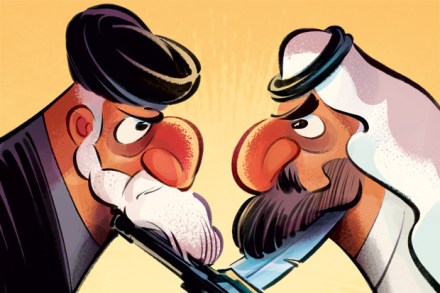
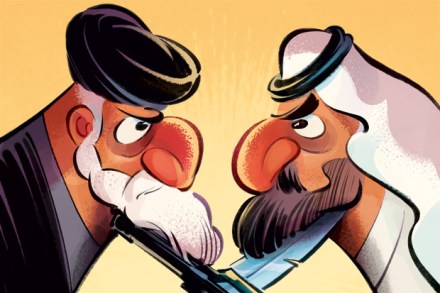
[audioplayer src="http://traffic.libsyn.com/spectator/TheViewFrom22_23_January_2014_v4.mp3" title="Douglas Murray discuss Islam's 30 year war with former solider Thomas Tugendhat"] Listen [/audioplayer]Syria has fallen apart. Major cities in Iraq have fallen to al-Qa’eda. Egypt may have stabilised slightly after a counter-coup. But Lebanon is starting once again to fragment. Beneath all these facts — beneath all the explosions, exhortations and blood — certain themes are emerging. Some years ago, before the Arab ‘Spring’ ever sprung, I remember asking one top security official about the region. What, I wondered, was their single biggest fear? The answer was striking and precise: ‘That the region will clarify.

When I played softball for Esquire, against Screw

From our UK edition

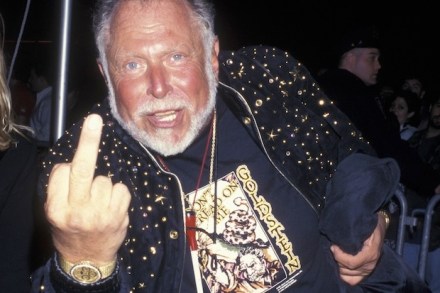
Al Goldstein, who died recently and made the front page of the New York Times, was among the world’s most disgusting men. But hardly as repellent as Charles Saatchi and certainly without the coward’s bullying manner — against women, that is. Goldstein founded Screw magazine during the Sixties and pushed hard-core porn into the mainstream without the usual excuses of it being art disguised as porn, or vice versa. He apologised for nothing and took no prisoners and gave the finger to an outraged establishment who thought him rather vulgar, to say the least. I met him once and it was on a baseball diamond.

Taki: our leaders are weak and powerless in the face of religious fanatics

From our UK edition

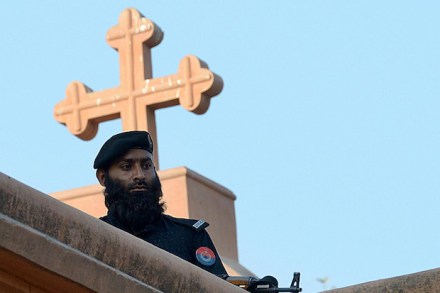
This Christmas our thoughts need to be with our fellow Christians who are being threatened in the Bible lands. No ifs or buts about it, they are being told either to join the Sunni-led opposition to Assad and renounce Christianity or die. After decades of protection by a secular-leaning dictatorship, Christians are being given ultimatums by the Saudi-financed jihadists and face a very dark future.  There has already been Christian cleansing in Syria, especially in Homs, where 90 per cent of the Christians have fled the city for Assad-controlled areas near the Lebanese border. In Iraq things are not much better. Cities such as Mosul and Tikrit, Saddam’s home town, were once vital centres of Christianity. No longer.

You have to admire the chutzpah of the Saudis in protesting religious intolerance

From our UK edition

Further to yesterday’s post on Britain’s apathy about Christian persecution, the main question people asked in response was: what can Britain do, without military means? Taking aside that our military power helped to bring about persecution in Iraq and almost certainly would have done in Syria had this government got its way, there are lots of ways you can peacefully influence a country’s politics, including financial and moral pressure. That is what Saudi Arabia does, after all. The Organisation Islamic Co-operation (OIC), for example, a bloc of 57 Muslim countries dominated by the Saudis, has just released the latest edition of its annual ‘Islamophobia report’.

William Hague: We will need to reassure Saudi Arabia and Israel about Iran deal

From our UK edition

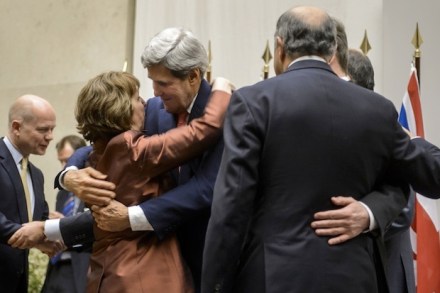
The Commons was in congratulatory mode this afternoon when William Hague gave his statement on the deal with Iran. Baroness Ashton, not familiar with heaps of praise falling on her, came in for congratulations from across the House, particularly from Hague and Douglas Alexander. Both men also agreed that this deal is the first step towards what Alexander called 'that more difficult and complex agreement' that will secure long-term stability in the region.

The Malala phenomenon – as seen from Pakistan

From our UK edition

Mixed emotions stirred here in Pakistan when Malala Yousafzai came within kissing distance of the Nobel Prize. The reaction was reminiscent of how we felt when Sharmeen Chinoy's Saving Face was up for an Oscar: great to be noticed by the world, but how tragic that the path to such recognition was paved with acid burnt faces. The deplorable act of attacking Malala increased the aversion felt for the Taliban among ordinary Pakistanis. But terrorists do not feed on public support; their demented ideology is sustenance enough. Pakistanis wept when Malala was battling for her life, and heaved a sigh of relief when she survived. We are proud that she has thrived. As for her moving to England, it affirms our view that the West has an equal penchant for inflicting and preventing pain.

The Saudis spread their ideas around the world – why don’t we?

From our UK edition

The persecution of Christians, the greatest story never told in the Western media, is finally building momentum as a story, after a year which has seen villagers massacred in Syria, dozens of churches burned down in Egypt’s worst religious violence for centuries, and the Peshawar atrocity in which the suicide-bombing of a church killed more than 80 people. Earlier this week several MPs discussed the issue in Parliament, Fiona Bruce saying that 'We should be crying out with the same abhorrence and horror that we feel about the atrocities towards Jews on Kristallnacht.' And Baroness Warsi will say in a speech in Washington today that: 'A mass exodus is taking place, on a Biblical scale. In some places, there is a real danger that Christianity will become extinct.

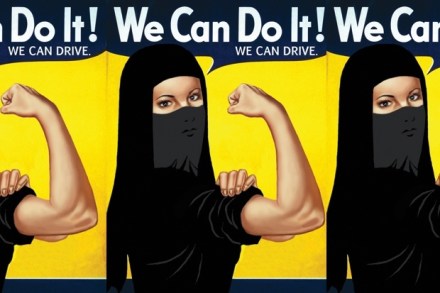
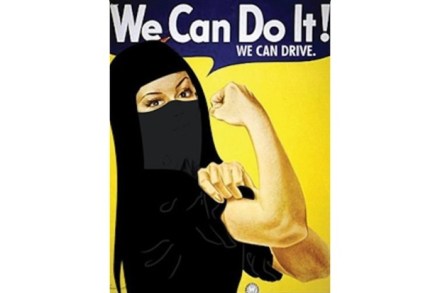
Should Saudi men be allowed to drive?

From our UK edition

It’s important that newspapers make themselves sounding boards for unpopular opinions, especially in an age when identity is sacred and people are judged by having the right views rather than the right behaviour. But we still reserve the right to mock if they are badly argued, such as this Guardian piece arguing that since most Saudi women oppose lifting the driving ban, we should not be campaigning for it. It concludes: ‘People in Saudi Arabia have their own moral views and needs. What works in other societies may not fit in Saudi, and the reverse.

Hugo Rifkind: What is Facebook? 

From our UK edition

I’d never noticed that there aren’t any tits on Facebook. The place always seems brimming with right tits to me. But no. According to this week’s mumbling bien-pensant scandal, the world’s largest social network has decided to allow newsy videos of murder and beheading and all the rest, but still not tits, and this is an outrage. Strangely enough, it’s mainly regarded as an outrage by the sort of people who are normally to be found slamming publications such as men’s mags and the Sun because they minimise the proper news and have tits all over the place. Honestly. Anybody would think these people just like to be cross, or something. In fact there’s very little to get properly cross about on Facebook.

Why do the Saudis think they can lecture the United Nations about human rights?

From our UK edition

A curious lack of prominence, this week, given over to the news that Saudi Arabia has rejected the chance of a two-year seat on the UN Security Council. Mainly, the Saudis are miffed that nobody has bombed Syria yet. According to the Saudi Foreign Ministry, this inaction sanctions  “the mechanisms of action and double standards existing in the Security Council [which] prevent it from performing its duties and assuming its responsibilities towards preserving international peace and security... The failure of the Security Council to make the Middle East a free zone of all weapons of mass destruction…or to prevent any country in the region from possessing nuclear weapons is [more] irrefutable evidence and proof of its inability to carry out its duties.

The Saudis oppress their people and expect visitors to look the other way

From our UK edition

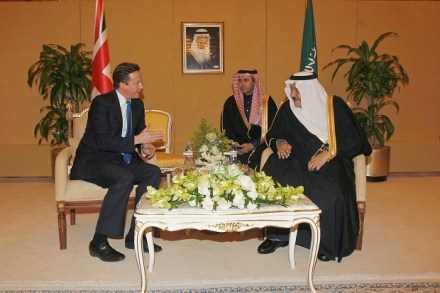
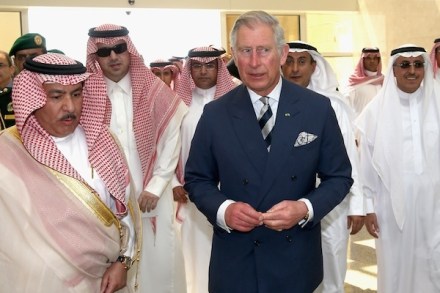
Prince Charles visited Saudi Arabia this week; one of several high-profile visitors to the kingdom in recent weeks, following separate trips by John Kerry and US Attorney General Eric Holder. Most repressive states usually try to behave when hosting Western dignitaries – but not the Saudis. Despite all these visits, the country executed seven men by firing squad for a robbery committed while they were still juveniles. One had originally been sentenced to death by crucifixion although King Abdullah intervened to bring his sentence in line with that of his peers. Then, courts in Riyadh also handed draconian prison sentences to two founders of the Saudi Civil and Political Rights Association. Both were given 10 year sentences along with five year travel bans on their release.

The febrile atmosphere within Saudi Arabia

From our UK edition

A Saudi court has sentenced Khaled al-Johani to 18 months in prison for protesting against the regime. His troubles started two years ago when Saudi activists inspired by the revolutions in Tunisia and Egypt had planned a ‘Day of Rage'. Fearing a popular revolt, the government instructed mosques across the country to warn their congregations against protesting. They also exploited Saudi’s still powerful tribal structure to ensure the incipient rebel movement was undermined. On the day, as police, Special Forces, and intelligence officers swarmed the area no one turned up – except Johani. Johani then launched a one man protest and denounced the government to an assembled scrum of journalists. He bemoaned the lack of freedom, democracy, and social support.

Thinly veiled threats

From our UK edition

No one could ever accuse Shereen El Feki of lacking in courage. To spend five years travelling around the Arab world in search of dildos, questioning women about foreplay and anal sex, is not a task many writers would relish. Sex and the Citadel is a bold, meticulously researched mini Kinsey Report, rich in anecdote and statistics. El Feki’s father is Egyptian and a devout Muslim, her mother a Welsh Baptist, who converted early to Islam. An only child, with fair northern features, she grew up in Canada and was raised as a Muslim.

A long road ahead for equal rights in Saudi Arabia

From our UK edition

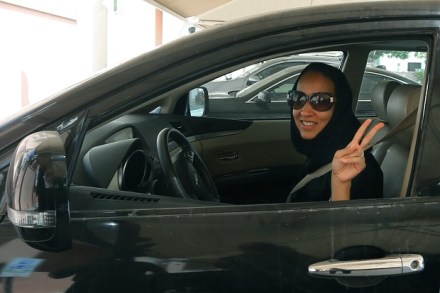
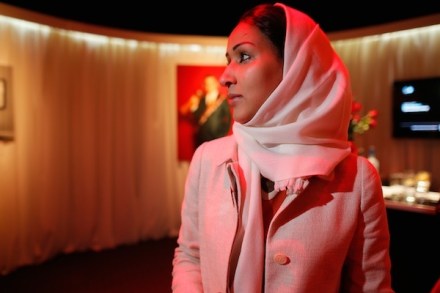
Great news for Manal al-Sharif, the Saudi activist who rose to prominence after footage of her driving on the Kingdom’s roads went viral on YouTube last year. She was arrested, of course, and spent time in jail for defying the authorities, but a small and committed campaign emerged nonetheless. Their tactics were simple: Sharif and her cohorts repeatedly applied to the General Directorate of Traffic for a driving licence, only to be refused on each occasion. That seemed to change yesterday when a euphoric Sharif tweeted a picture of her new driving licence. The only downside is that it was issued by the United Arab Emirates. Saudi women still face a long road ahead in their quest for equal rights.

Philip Hammond’s Iranian justification for keeping Trident

From our UK edition

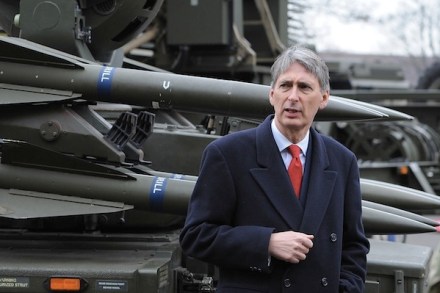
The Sunday shows have been dominated today by the aftermath of George Entwistle’s resignation. But Phillip Hammond gave a significant and combative interview on the Sunday Politics. Pressed by Andrew Neil on Michael Portillo’s criticisms of renewing Trident, Hammond dismissed them with the line that the former Defence Secretary ‘doesn’t have access to the information that would allow him to make that judgement on a sound basis.’ He then went on to argue that Trident is a necessary insurance policy in a world that will see an ‘an arms race in the Middle East’ if Iran does get the bomb. Iran, and the dangers it poses, was also Hammond’s justification for selling arms to Saudi Arabia.

Saudi Arabia is the early victor of the Arab Spring

From our UK edition

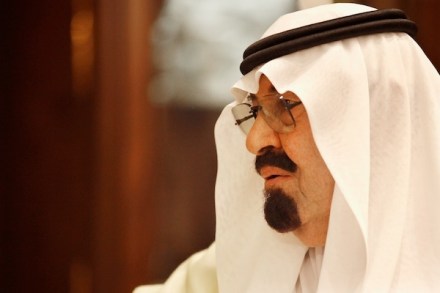
King Abdullah opened an emergency session of the Organisation of Islamic Cooperation in Saudi Arabia today to address ongoing instability in the Middle East. Syria is high on their list of priorities, with other member states already voting to suspend its membership of the OIC until Bashar al-Assad gives up power. The OIC is a famously ineffectual institution but there is significant posturing taking place behind the scenes. Saudi Arabia had only hosted the OIC once since its inception in 1969 until King Abdullah took power in 2005. Since then, at his request, it has hosted it a further two times. This chimes with Abdullah’s plans to project himself as the region’s leading statesman, particularly now that all his competitor grotesques are gone.

The revival of Prince Bandar bin Sultan

From our UK edition

Keep an eye on Saudi Arabia’s newly appointed spymaster, Prince Bandar bin Sultan. After a long stint in Washington where he served as ambassador for 22 years, the prince was recalled to Riyadh in 2005 and then largely sank from public view. Reinstated to frontline politics last month, both King Abdullah and Barak Obama are investing their hopes in Prince Bandar to achieve mutual Saudi-American interests in response to ongoing unrest in the Middle East. Known for his flamboyant and maverick approach to politics, he has a unique opportunity to secure the vital interests of Saudi and its western allies. Perhaps Saudi Arabia’s most skilled political operator, Bandar has a reputation for getting things done.

Our enemy’s enemy

From our UK edition

It’s unusual for The Guardian and The Spectator to agree on anything, but Seamus Milne and our own John R Bradley are sceptical about these Syrian rebels whom we’re being invited to support. Bradley was alone in predicting the Egyptian revolution, and argues in today’s magazine that the conventional wisdom is once again wrong. Who’s backing the rebels? The Qataris, keen to depose the last secular regime in the Arab world. And the Saudis and Israelis, whose hatred of Iran eclipses all other considerations: this isn’t about the Syrian people, but about depriving the ayatollahs of an ally. Some in the West also take the view that the enemy’s enemy is my friend — so the rebels must be good eggs.