Saudi arabia

An historic day for Iran and a horrifying one for Israel

From our UK edition

When the Shah of Iran gave the order to create the Atomic Energy Organisation of Iran (AEOI) in 1974 it is unlikely that he had any idea of just how controversial his move would ultimately prove. The AEOI brought order to what had hitherto been a disorganised programme and set the country on the path to an eventual clash with the world’s leading western powers. That clash began in 2002, when at a public press conference in Washington DC, an Iranian opposition group, the Mojahedin-e-Khalq (MKO) exposed details of undeclared Iranian nuclear activities, which had progressed much further than anyone had suspected. At least, almost anyone.

Shifting sands in Saudi

From our UK edition

Whatever happened to America’s desert kingdom? In the four months since Salman bin Abdulaziz al Saud became king of Saudi Arabia, everything we thought we knew about this supposedly risk-averse US ally has been turned on its head. In a ruling house long known for geriatric leadership, the new king has pushed aside elder statesmen and seasoned technocrats alike in favour of an impetuous and uncredentialled son, Mohammed bin Salman, who may be in his late twenties. Now the world’s youngest defence minister, the princeling is already second in line for the throne, prompting grumbles from Iran’s supreme leader, Ali Khamenei, about ‘inexperienced youngsters’.

Portrait of the week | 30 April 2015

From our UK edition

Home The British economy grew by 0.3 per cent in the first quarter of 2015, the slowest quarterly growth for two years. The Institute for Fiscal Studies pointed out many absurdities in party election promises, noting that most people would see tax and benefit changes that reduced their income; it said that the Conservative and Liberal Democrat plan to increase the personal allowance to £12,500 would not help the 44 per cent of people who now pay no tax, that Labour’s promised 10p tax band would be ‘worth a princely 50 pence a week to most income-tax payers’ and that it could not be sure whether the reintroduction of a 50p rate for high earners would raise any extra money for the Treasury.

Britain might want a holiday from history, but we’re not going to get one

From our UK edition

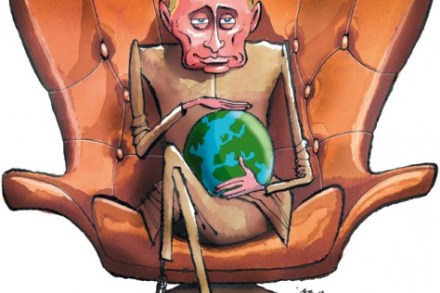
The more I think about the debate on Thursday night, the more I think it was a disgrace that there was no question on either defence or Britain’s role in the world. This country might want a holiday from history. But, sadly, we don’t look like getting one on. On Europe’s Eastern border, the Russians are behaving in an increasingly aggressive fashion. The Times' account of a recent meeting between ex-intelligence officials from Russia and the US shows just how bellicose Putin is and reveal that Britain might well soon have to decide whether to honour its Nato Article 5 obligations to the Baltic states. On Europe’s Southern border, Islamic State is a threat to the civilised order.

The last thing Yemen needs is more war. But that is what it’s getting

From our UK edition

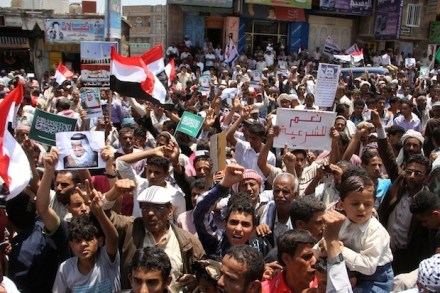
After years of hearing how terrible Western interventions are in the Middle East (Exhibits A, B and C the fiascos of Iraq, Afghanistan and post-Gaddafi Libya), it will be interesting to see how a Saudi-led all-Muslim intervention fares in Yemen. My prediction is it won’t be much better than those of the infidels. For a start we are dealing with the poorest country in the Arab world. Whereas Iraq sits on a lake of oil, squandering the proceeds with a venality that is ghastly to behold, Yemen is running out of water, let alone oil. With an estimated GDP per capita of $2,500, the country comes 187th in the world. The figure for Saudi Arabia, incidentally, is $31,300. The last thing Yemen needs is more war.

Sweden’s feminist foreign minister has dared to tell the truth about Saudi Arabia. What happens now concerns us all

From our UK edition

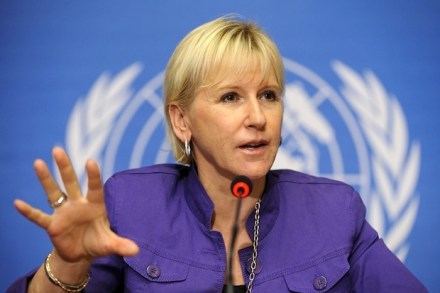
If the cries of ‘Je suis Charlie’ were sincere, the western world would be convulsed with worry and anger about the Wallström affair. It has all the ingredients for a clash-of-civilisations confrontation. A few weeks ago Margot Wallström, the Swedish foreign minister, denounced the subjugation of women in Saudi Arabia. As the theocratic kingdom prevents women from travelling, conducting official business or marrying without the permission of male guardians, and as girls can be forced into child marriages where they are effectively raped by old men, she was telling no more than the truth.

Meet Saudi Arabia’s top cleric. Like Isis, he also thinks churches should be destroyed

From our UK edition

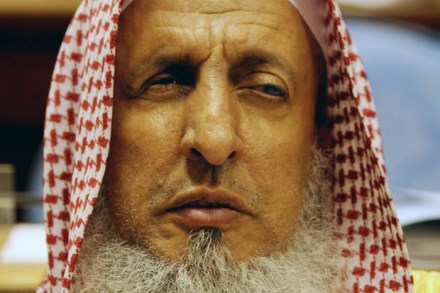
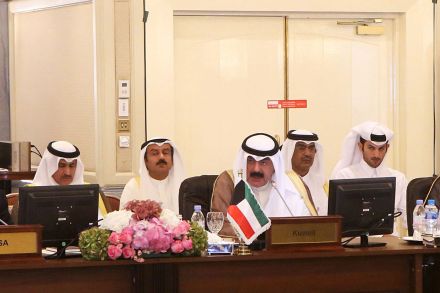
Today a quick game of 'spot the difference.' First, here are some photos, released yesterday, of Isis pulling down the crosses on ancient churches and desecrating Christian holy sites in Mosul, Iraq. They admit to doing this because they wish to destroy all records of pre-Islamic civilisation and because, they say, they are following Islamic law. And then secondly we have Saudi Arabia's Grand Mufti speaking at a conference in Kuwait on Tuesday. There Saudi Arabia's top cleric, Sheikh Abdul Aziz bin Abdullah, called for the destruction of all churches on the Arabian peninsula. He explained that this is necessitated by Islamic law. So perhaps the first part of the game should be 'spot the difference'. The second part might be: 'and which one is our ally?' Answers below.

Those ancient Greeks were bores — but things are looking up

From our UK edition

Thick snow is falling hard and heavy, muffling sounds and turning the picturesque village postcard beautiful. I am lying in bed listening to a Mozart version of ‘Ave Maria’, a heavenly soprano almost bringing tears to my eyes with the loveliness of it. This is the civilisation of our ancestors — one that gave us Mozart, Schubert and Beethoven and built cathedrals all over the most wondrous continent in the world. It is now being replaced by a higher one in which distinctions of ethnicity and religion will no longer be tolerated. The human race has a limitless capacity for self-improvement, and it shows where architecture, the arts and music are concerned, not to mention literature.

Portrait of the week | 29 January 2015

From our UK edition

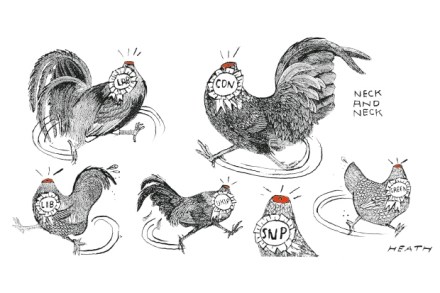
Home Party leaders mercilessly launched 100 days of campaigning before the general election on 7 May. David Cameron, the Conservative leader, said he would reduce the annual maximum household receipt of welfare to £23,000 from the current limit of £26,000. Ed Miliband announced a ten-year plan for the National Health Service, but Alan Milburn, a former Labour health secretary, said: ‘You’ve got a pale imitation actually of the 1992 general election campaign and maybe it will have the same outcome.’ Amjad Bashir, a Ukip MEP, switched to the Conservative party, upon which Ukip said he was being investigated over ‘unanswered financial and employment questions’, allegations he denied.

A state of terror: Islamic State longs to be left alone to establish its blood-stained utopia

From our UK edition

The Sykes-Picot agreement will be 100 years old next year, but there will be no congratulatory telegrams winging their way to the Middle East from London, or from Paris on high alert. The Islamic State, the world’s most powerful jihadist group, has filmed its men bulldozing border posts between Syria and Iraq, dealing perhaps the final blow to those Anglo-French cartological ambitions of a century ago. The ‘Caliphate’ is inhabited by some six million people and is now larger than the United Kingdom. In the words of Patrick Cockburn, ‘a new and terrifying state has been born that will not easily disappear’. Yet far from appearing out of the blue in 2014, IS was fostered for years by those who profess to oppose it, as this book argues convincingly.

I don’t want to live under Islamic blasphemy law. That doesn’t make me racist

From our UK edition

I have spent most of the last fortnight debating Islam and blasphemy and wanted to take the opportunity to put down a few unwritten thoughts. In the immediate aftermath of the Paris atrocities most of the people who thought the journalists and cartoonists in some sense ‘had it coming to them’ kept their heads down.  I encountered a few who did not, including Asghar Bukhari from the MPAC (Muslim Public Affairs Committee).  In the aftermath of the atrocity Asghar was immediately eager to smear the cartoonists and editors of Charlie Hebdo as racists.

Louise Mensch blasts David Cameron for King Abdullah tribute

From our UK edition

Although Louise Mensch was once heralded as a 'Cameron Cutie,' the former Conservative MP's relationship with the Prime Minister has soured after he paid tribute to the late King Abdullah. The Saudi Arabia monarch's death was announced yesterday, with the cause of death thought to be a lung infection. Speaking following the news, Cameron gushed that he would be remembered for his 'commitment to peace and for strengthening understanding between faiths'. However, the fact that his reign in Saudi Arabia has seen a higher number of beheadings than those carried out by Isis appears to have not escaped Mensch's attention.

The Saudis are playing a clever game with oil supplies. Here’s how to understand it

From our UK edition

As oil prices continue to plummet, the rather sterile debate over Saudi intentions drags on. Some believe the Saudis are locked into a secret conspiracy with Washington to stiff Russia and Iran. Others prefer to take the Saudi oil minister at his word and believe that it’s all about market share. The truth is that the debate is founded on a false dichotomy: the Saudis are doing both things at once, and several other things as well. The best way to understand this is to try to step into the shoes (or sandals, rather) of a senior member of the al-Saud family. Your neighbourhood is convulsed in war and revolution, and you have seen apparently stable regimes in Tunisia and Egypt swept away, while your own vassal state of Bahrain is on the verge of civil war.

Mecca: from shrine to shopping mall

From our UK edition

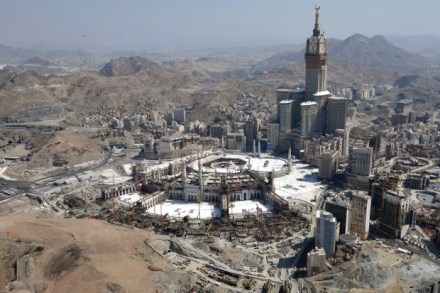
Mecca is the greatest paradox of the Islamic world. Home to the Kaaba, a pagan-era cube of black granite said to have been built by Abraham and his son Ishmael, it is the lodestar to which 1.6 billion Muslims direct their five daily prayers. Mecca is the single point on the planet around which Muslims revolve — quite literally for those able to perform the once gruelling, now simply expensive, pilgrimage or haj. Yet the prodigious, world-illuminating gifts of Islamic civilisation in the arts and sciences, from architecture to astronomy, physics to philosophy, came not from Mecca but from cities such as Damascus, Baghdad, Cairo and Istanbul.

The US won’t beat Isis alone; Qatar and other Gulf allies must help in Iraq

From our UK edition

Revelations keep pouring in about the uneasy relationship between Western aid givers and ISIS operators: from bribes given by humanitarian convoys to secure access in war-torn Syria, to food and medical equipment appropriated by Islamists and used to provide basic services to the population under its control. Moreover, USAID personnel working in the area have to be vetted by ISIS: “There is always at least one ISIS person on the payroll; they force people on us” one aid worker told the Daily Beast earlier this month. This is just the start. As the Islamic State makes inroads into Iraqi and Syrian territory, it’s becoming increasingly clear that American promises to 'degrade, and ultimately destroy' the jihadists ring ever more hollow.

Isis and Islamophobes: what a lousy time to be a British Muslim

From our UK edition

Just over a week ago I wrote a piece in the Spectator asking if we were on the verge of an anti-Muslim backlash that could spread beyond the strongholds of the aggrieved white working class in Barking and Rochdale and into the home counties. After the gloating videotaped murder of David Haines, a British aid worker, the answer is increasingly likely to be yes. The Telegraph is carrying a piece by the international affairs analyst Shashank Joshi headed: ‘Where does the Islamic State's fetish with beheading people come from?’ He begins: ‘Of course, the practice of beheading is invoked in the Koran, but only the most extreme Islamic militants carry it out in the modern day.’ Really?

Why is Britain arming countries that support terror in the Middle East?

From our UK edition

Why is the UK still supplying arms to those who helped fund the so-called Islamic State, and what leverage does it bring? In the Prime Minister’s statement to the House of Commons following the Nato summit over the weekend, he spoke of seeking a broad base of support through the UN. Yet there was no mention of military action—as opposed to diplomatic assistance—from Gulf States. Islamic State has been bankrolled by wealthy Gulf individuals from Saudi Arabia, Qatar, and Kuwait, and their Governments have failed to act to prevent it. In March 2014, Nouri al-Maliki, the outgoing Iraqi Prime Minister, accused Saudi Arabia and Qatar of being ‘at war with Iraq’. Six names were added the latest UN sanctions list, issued on the 14th August.

What’s the difference between Isis and Saudi Arabia? It’s a matter of degrees

From our UK edition

There are now thought to be more British-born members of Isis than there are Muslims in the British Army, leading lots of people to ask how they could hate us so much. After all, we did everything right: we imported low-skilled migrants from among the most clannish and socially conservative societies on earth to do badly-paid industrial jobs that were disappearing, ensuring their children grew up in unemployment; then we taught those children that our culture was decadent and worthless and our history tarnished with the blood of their ancestors; then we encouraged them to retreat into their religion through financial subsidies to the most openly sectarian and reactionary members of their community. What did we do wrong?

After 100 years, the mess we made of the Middle East is coming full circle

From our UK edition

When I hear the words Sykes-Picot I more often than not feel like punching an Englishman or a Frog — any Englishman, any Frog — in the mouth, but then I think of François Georges-Picot’s granddaughter Olga, and my pugilistic thoughts turn to romantic mush. More about those two arrogant and ignorant fools later, but first Olga. I was 22 and she was 19 or 20 and we met in New York where she was studying acting and I was studying girls. It was love at first sight and we swore we’d never ever look at anyone else ever but then the summer ended and we never saw each other again. Well, I did see her but she was 20 feet tall and in Technicolor.