Sanctions

Is Britain prepared for the cost of sanctions?

Sanctions hit both sides: this is a point that Joe Biden has made to Americans and Olaf Scholz is making to Germans. But Boris Johnson is not (so far) talking about the economic implications of this war. They will be — and in fact, already are — profound.  When Russian tanks moved into Ukraine, the price of gas for next-day delivery in the UK shot up 40 per cent. A study by Investec yesterday suggested this means typical household energy bills — already expected to approach £2,000 in April — could end up closer to £3,000. Quite a hit for a country already facing a cost-of-living crisis. And this is just one way in which the conflict could impact household budgets.
biden

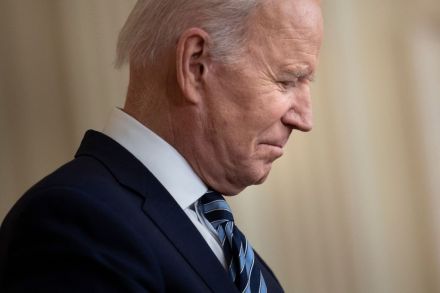
What happened to Tough Guy Joe Biden?

From our US edition

If you watched President Joe Biden’s press conference on Thursday afternoon, you wouldn’t know you were looking at the same man who allegedly looked Vladimir Putin in the eyes and told him he had no soul. Hell, based on Biden’s weak performance you might start to question whether or not he actually confronted and defeated a straight-razor-carrying bad dude named Corn Pop outside of a Delaware swimming pool in 1962. The president seemed to want to follow the theme of his last press conference: “Saying the Quiet Part Loud.” Who can forget the recent two-hour presser in which Biden essentially green-lit a “minor incursion” by Russia into Ukraine.

Sanctions won’t stop Putin

The Lithuanian prime minister, Ingrida Šimonyte, put it well yesterday: 'the way we respond will define us for the generations to come'. The invasion of Ukraine started last night with Vladimir Putin’s order to send troops into eastern Ukraine. He had earlier recognised the breakaway provinces of Donetsk and Luhansk, which together constitute the Donbas region, as independent republics. The two self-proclaimed states declared their independence — something neither Kiev nor any other third country save Russia has yet recognised — following 2014 following the Maidan revolution. The US, UK and EU say they will announce fresh sanctions as early as today. What we know is that the technicalities have been drawn up.

Sanctions on Russia won’t work

From our US edition

Another battle in the West’s sanctions war against Russia is set to begin. The US and its NATO allies have put together what they’re calling a strong package of economic restrictions on Russia in response to its military buildup near Ukraine’s border. What’s in the package remains a secret but it appears to focus on Russia’s energy sector. A State Department spokesperson told NPR on Thursday that the Nord Stream 2 pipeline from Russia to Germany would remain inoperable if an invasion happened. The Financial Times suggested that other new Russian gas developments are also on the sanctions list. The UK wants Russia booted from SWIFT, the Belgian financial messenger services company, while the West also floated the idea of sanctioning Russian President Vladimir Putin.

Biden must encourage Ukraine to negotiate

From our US edition

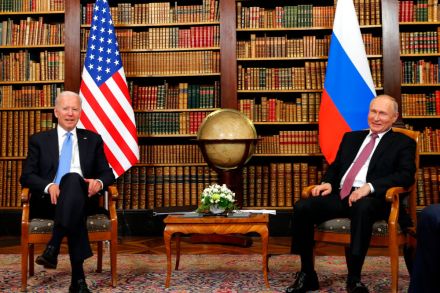
President Joe Biden spoke with Russian President Vladimir Putin today via video conference for just over two hours, the second time in six months that the two leaders have engaged in a face-to-face conversation. For Biden, the message he sought to deliver was strict and to the point: if you, Mr. Putin, go ahead and order a second invasion of Ukraine in nearly eight years, you can expect a raft of economic penalties that will negatively effect everything from Russia’s access to the SWIFT payment system to the ability of Russian banks to convert rubles into dollars. For the security-minded Putin, the meeting was an opportunity to press Biden on his principal demand: a written legal guarantee from Washington and the rest of NATO that Ukraine will not be invited into the alliance.

Beijing’s cruel attempt to stop fleeing Hongkongers

The Chinese Communist party regime likes to portray itself as the new superpower, displaying its strength on the world stage. In reality it is an extraordinarily fragile, sensitive, fearful, petty and vindictive snowflake of a dictatorship that is so surprisingly un-self-confident that it responds to any criticism with aggression, any dissenting or disloyal idea with repression, and any perceived slight with tit-for-tat retaliation. We have seen this last week with the decision by Beijing to impose sanctions on nine British citizens — politicians, lawyers and an academic — and four entities, including the Conservative party Human Rights Commission, which I co-founded and serve as deputy chair.

The diplomat expulsion game is a pointless charade

Diplomats are poker chips. The pomp and mystery that accrues to the diplomatic and intelligence services en poste overseas conceal a simple truth: in today’s world, journalists, bankers, NGOs and bloggers are, far more often than not, better informed than diplomats about the countries in which they operate. I know this to be true in Russia – I speak to senior British and US diplomats in Moscow regularly. Believe me when I say that I can think of half a dozen veteran foreign correspondents in Russia who have considerably more extensive, diverse and senior contacts in the Russian establishment than any Western diplomatic mission.

Why does China think it can bully backbench MPs like me?

Does the Chinese Communist Party understand how our parliamentary democracy works? The evidence from the last 24 hours suggests not. Along with some of my Conservative colleagues in the House of Commons – Sir Iain Duncan Smith, Tim Loughton, Tom Tugendhat and Neil O’Brien – as well as two peers, a QC and an academic, I have been banned from entering China, had any assets in China frozen (not that I have any there) and have had Chinese citizens and institutions prohibited from doing business with me. All because I have voiced well-evidenced concerns about the persecution of the Uyghur Muslim minority by the Chinese government.

MPs facing Chinese sanctions deserve our solidarity

The sanctions that China is imposing on various politicians, academics and think tanks in the democratic world are designed to intimidate. Their aim is to make people, and particularly firms, think twice about criticising China over its human rights record and in particular its treatment of the Uighurs. Last night, China slapped sanctions on a bunch of British parliamentarians, and some academics, in retaliation for Britain putting sanctions on four Chinese officials working on the Xinjiang internment policy. It is imperative that this country stands behind these individuals and groups. We cannot allow a situation where China can determine the contours of debate in this country.

Russian sanctions are futile

During the 2020 presidential campaign, Joe Biden promised to approach Russia and its irascible President Vladimir Putin with a new sense of toughness and purpose. Now calling the shots in the White House, President Biden appears to have made good on that promise — at least symbolically. On Tuesday, the Biden administration announced several sets of sanctions against Moscow for last summer's attempted assassination of the Russian activist Alexei Navalny, a plot that involved the Soviet-era nerve agent Novichok. The sanctions, taken in concert with the European Union’s own measures, included asset freezes and travel bans on seven Russian officials deemed responsible for the poisoning, imprisonment, and prosecution of Navalny.

Britain’s Magnitsky sanctions will hit Putin where it hurts

It’s rare for a Government minister to make an announcement that is universally welcomed in the House of Commons. But that’s exactly what happened on Monday, when the foreign secretary Dominic Raab introduced long-awaited sanctions against human-rights abusers. Raab’s announcement appeared on the Commons’ Order Paper under the rather mundane title ‘Introduction of the Global Human Rights sanctions regime’, but what he said will have far-reaching consequences. The measures Raab announced include asset freezes and travel bans against individuals who not only commit human-rights abuses but also those who benefit and profit from them. The names of such individuals will be made public, in a so-called ‘Magnitsky List’.