Andrew Foxall

Dr Andrew Foxall is Director of Research at the Henry Jackson Society, the international affairs think tank

It’s time for the West to ditch its Russian playbook

From our UK edition

We have been here before. Russia is at the centre of an international crisis of its own creation. And we know how it plays out: briefly there is shock in Western capitals, quickly followed by outrage. This is entirely justified given that Alexey Navalny, Russia’s most prominent opposition figure – and the second most popular politician in the country – is lying in a coma in a Berlin hospital having been poisoned, according to the German government, by the nerve-agent Novichok. In diplomatic language, this is expressed as ‘deep concern’ with Russia’s ‘shocking and irresponsible’ behaviour, which is condemned ‘in the strongest terms’. Next comes Russia’s disinformation onslaught.
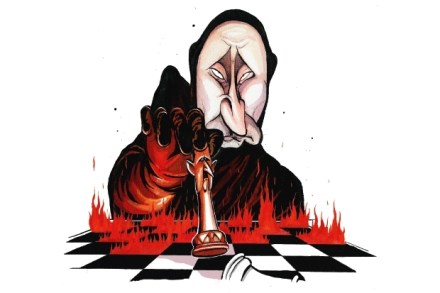
Why Putin might not be to blame for poisoning Alexey Navalny

From our UK edition

In news that should surprise nobody, the German government says there is a 'certain likelihood' Alexey Navalny, the Russian opposition figure who fell ill while on a domestic flight last week and was evacuated to Germany on the weekend, was poisoned. According to doctors treating him, Navalny was poisoned by an unknown substance from 'within the group of cholinesterase inhibitors', indicating he is likely the victim of a nerve agent attack. For many (perhaps too many), this already has Vladimir Putin’s finger prints all over it. Yet over the last two decades of being in power, Putin has blurred the boundaries between state, quasi-state, and non-state to the point where determining what is carried out by the state and what is carried out for the state has become almost impossible.

Putin’s ‘Black PR’ has arrived in Britain

From our UK edition

Christopher Steele, the author of the (in)famous Trump dossier, is right to say Britain has been ‘behind the curve’ when it comes to combating the threat posed by Russia. The UK’s political parties are being targeted by the Kremlin, he told Tory MP Damian Collins on his ‘Infotagion’ podcast, in a bid ‘to create great polarity, great partisanship, and divisions within political life’. But while dodgy donations and cyber-hacking of our parties has been well covered, Steele also touched on a lesser-know but equally malign influence Russia is playing in Britain. ‘Black PR,’ he said, has ‘grown and spread like a contagion’ from Russia ‘out into Western Europe, and into the Western world and Western democracies.

Britain’s Magnitsky sanctions will hit Putin where it hurts

From our UK edition

It’s rare for a Government minister to make an announcement that is universally welcomed in the House of Commons. But that’s exactly what happened on Monday, when the foreign secretary Dominic Raab introduced long-awaited sanctions against human-rights abusers. Raab’s announcement appeared on the Commons’ Order Paper under the rather mundane title ‘Introduction of the Global Human Rights sanctions regime’, but what he said will have far-reaching consequences. The measures Raab announced include asset freezes and travel bans against individuals who not only commit human-rights abuses but also those who benefit and profit from them. The names of such individuals will be made public, in a so-called ‘Magnitsky List’.

Coronavirus has spoiled Vladimir Putin’s coronation party

From our UK edition

Vladimir Putin’s traditional ways of dealing with crises don’t work with Covid-19. Unlike previous opponents he has faced, the coronavirus cannot be co-opted, jailed, invaded, bought off, forced into exile, or bullied into submission. And if this weren’t bad enough, it is fast becoming apparent that, in the fight against the pandemic, one of the Kremlin’s biggest problems is itself. Russia has been accused of spreading disinformation abroad, but disinformation is now hampering its response at home. Russia’s response to coronavirus was initially impressive, shutting its 2,600 mile or so border with China in late January. But it has since been undermined by the nature of the system Putin has built in Russia.

Where is Britain’s China strategy?

From our UK edition

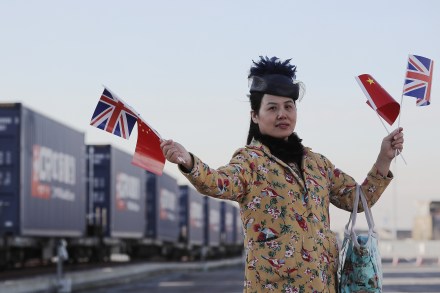
The UK doesn’t have a China strategy. We have not had one since George Osborne declared a 'golden era' of Sino-British relations on a trip to Beijing in 2015. In hindsight, Osborne’s 'era' looks more like an ‘error’. Yet, Covid-19 makes clear that the UK needs to adopt one. The death and destruction caused by the coronavirus are partly a result of the bullying and lies that characterised the Chinese Communist Party’s efforts to cover up the initial outbreak. Not only has China sought to dodge the blame for the pandemic, but it has also sought to take credit for dealing with it. Throughout Western capitals, long overdue assessments are now taking place about how to deal with China. Such a strategy will have to be multi-faceted.

Covid-19 is testing Putin’s regime

From our UK edition

Vladimir Putin is observing the old adage that you should never let a good crisis go to waste. With the world’s attention focused on halting the spread of Covid-19, the Kremlin is grandstanding on the international stage. Russia has sent medical aid to Italy, sold medical aid to the US, and proposed a draft UN General Assembly resolution calling for global solidarity (and an end to economic sanctions) in the effort to combat coronavirus. At home, however, Russia is in crisis. While the Kremlin acted decisively in the early stages of the coronavirus outbreak, its response since has mostly focused on harassing doctors who dare speak the truth about the scale of the pandemic.

Don’t be fooled by China’s coronavirus propaganda

From our UK edition

As the world wages war on coronavirus, China is in full propaganda mode. Its foreign ministry spokesman Zhao Lijian has claimed the US military might have brought Covid-19 to Wuhan, a lie parroted by several embassy Twitter accounts. It has also sent doctors and medical supplies to Europe and to the United States. Never one to let a good crisis go to waste, China's leader Xi Jinping has reportedly suggested that the aid Beijing has provided could form the basis of a 'health silk road' connecting Europe to China. But make no mistake: China’s activities are designed to distract from its own culpability.

Putin’s plan to exploit coronavirus

From our UK edition

Vladimir Putin knows a thing or two about a crisis, having caused a number of them over recent years. And he now appears, belatedly, to be beginning to confront the latest: the coronavirus pandemic. After claiming last week that the situation in Russia was 'under control', Putin used a live televised address this week to announce a series of emergency measures to limit the spread of the virus, including a nationwide week-long holiday. Russia’s authorities now admit there have been four deaths and at least 1,036 confirmed cases, in a country of 144 million. The pandemic will no doubt pose challenges to a country which over recent decades has preferred to wage wars with its neighbours rather than invest in its public health system.

Putin benefits from the refusal to publish the Russian meddling report

From our UK edition

It should be a national scandal, but it isn’t. Downing Street’s decision not to release the intelligence and security committee’s report on Russia ahead of the election has generated predictable and understandable anger and confusion. Speaking in the Commons on Tuesday, Emily Thornberry asked the government what it had “to hide” by not releasing the report. That is a fair question, for much is already known about Russia’s involvement in – if not, influence on – the UK’s democratic processes.  Most obviously, in 2012 Russia’s embassy hosted the launch party of a group called ‘Conservative Friends of Russia'.