Sanctions

The West can’t afford to shun Russian oil

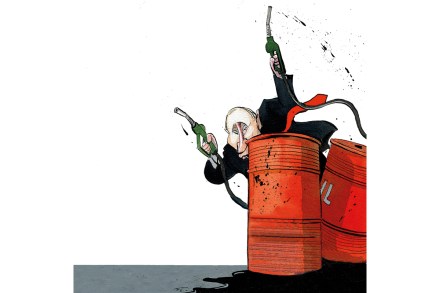
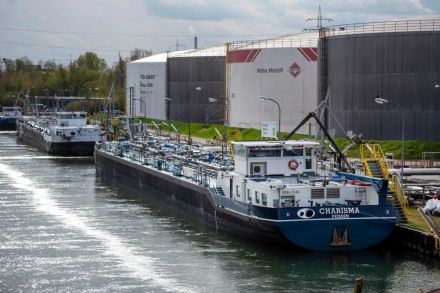
Donald Trump is a radical foreign-policy innovator. Over the past few decades, the US has tried a range of non-military means to nudge, squeeze and occasionally strangle its adversaries. These range from travel bans and banking restrictions, to export controls and trade limitations. But never has the US – or indeed anyone – tried to use import tariffs as a species of economic sanction. Trump has threatened Vladimir Putin with introducing “secondary sanctions” against countries that import Russian oil – a threat intended to strike at the heart of Russia’s war economy. And on August 4, Trump appeared, for the first time, to make good on that threat.

oil

Is Putin taking Trump for a ride?

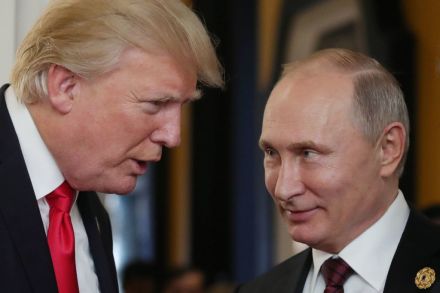
Already the Kremlin is setting the terms of the forthcoming summit between Donald Trump and Vladimir Putin. Steve Witkoff, Trump's emissary, set the meeting in motion with his mission to Moscow on Wednesday, which Trump called “highly productive.” But productive of what? Putin’s foreign-policy adviser Yuri Ushakov stated today that it was the White House, not the Kremlin, that wanted the meeting. He went on to dismiss Trump's proposal that Ukrainian President Volodymyr Zelensky could take part in a tripartite negotiation, noting that “for this to happen, certain conditions must be created. Unfortunately, such conditions are far away yet.” Those conditions remain the complete surrender of Ukraine.  The Kremlin, in other words, has a strategic plan.

Is Trump’s unified Republican front fracturing over Russia?

For the most part, President Trump hasn’t had to worry too much about the loyalty of his fellow Republicans on Capitol Hill. Sure, he needed to make a trip to the other side of Pennsylvania Avenue to pressure a few Republican holdouts to support his “big, beautiful” package of tax cuts and spending cuts, but the rank-and-file has tended to blindly follow whatever the White House wants.  Yet over the last several days, a slight divide has emerged between Trump and Republicans – or more specifically, Trump and Senate Republicans – on Ukraine and Russia policy.

russia republican

Will Putin give peace a chance?

At a summit meeting in Moscow, Ronald Reagan was asked about his basic approach. He famously answered, “Here’s my strategy on the Cold War: we win, they lose.” Vladimir Putin has the same strategy for Ukraine. That is certainly his first response to President Trump’s offer to mediate an end to the war and bring a reluctant Ukraine to the negotiating table. If “we win, they lose” is Putin’s final response, then the war cannot end without Ukraine’s surrender or Russia’s collapse. Putin’s initial reply, filled with his maximalist demands, indicates he is still committed to the conquest of his neighbor, whose independence and sovereignty he has long rejected.

putin

Biden must decide the environment’s price tag

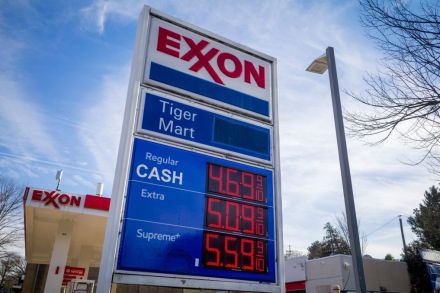
Boris Johnson is considering doing something that should be a duty for every leader. In the wake of sanctions poised to disrupt the 8 percent of domestic oil and 18 percent of diesel the UK imports from Russia, Johnson is reportedly toying with the idea of putting his country first and on the road to self-sufficiency by lifting the UK’s moratorium on fracking. The British government banned hydraulic fracturing, or “fracking,” in 2019. Fracking is a method of extracting oil and natural gas by drilling deep underground and fracturing shale rock with a fluid mixture (99 percent water and sand) that allows fossil fuels to flow out, be captured, processed and used to myriad ends (including gasoline).

Are sanctions against Russia actually working?

Six months ago this week, the United States and its European allies enacted one of the most comprehensive, stringent sanctions regimes against a major economy in history. Russia’s unprovoked invasion of Ukraine on February 24 not only shocked the West’s sensibilities, but pushed Washington and Brussels to take actions that would have been unthinkable only a few weeks prior. As far as the West is concerned, Vladimir Putin’s Russia is nothing less than a dangerous pariah state — and its aggression against a neighboring country meant it had to be treated as one.

Iran and Russia: the new Axis of Evil?

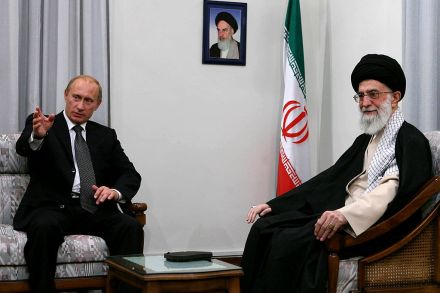
Russian President Vladimir Putin’s visit to Tehran last week brought attention to a growing partnership between Russia and Iran. The Russian shook hands with Iranian Supreme Leader Ali Khamenei, a rare gesture since both men are notorious coronaphobes. The old cleric expressed support for the Russian invasion of Ukraine, while the old KGB man offered Iran supplies of grain. US intelligence even claims Iran will open its drone arsenals to Russia. This strange friendship has its limits, but its growth could spell trouble. History does not suggest this is a natural partnership. The list of grievances between Iran and Russia is long. Great powers are often rough with middle-power neighbors.

Russia is sidestepping American oil sanctions

When the European Union finally made the decision to ban 90 percent of Russia’s crude oil imports by the end of the year, the bureaucrats in Brussels were jubilant. The EU’s adoption of oil sanctions was thought be a big blow to Russian President Vladimir Putin, who depends on the revenue generated by his country's oil exports to fund his war in Ukraine. It doesn’t take a genius to figure out why European officials were so thrilled. The EU imported 2.2 million barrels per day of Russian crude last year, amounting to tens of billions of dollars in profits for the Kremlin every month.

Remember Afghanistan?

For Americans, neglecting Afghanistan has long been the norm. Almost from its inception, it was the forgotten war, fought “over there so we do not have to face them” here, as President George W. Bush once put it. It was a campaign to crush the Taliban only to abruptly become a democratic nation building project and then just as quickly be sidelined for the “real war” in Iraq. Even as far back as 2009, when the United States still had 62,000 troops in the country, David Folkenflik, NPR’s media correspondent, was asking, “Hey, Media: Where’s the Afghanistan Coverage?” This all appeared to change last August — at least for a time.

What’s the difference between Yemen and Ukraine?

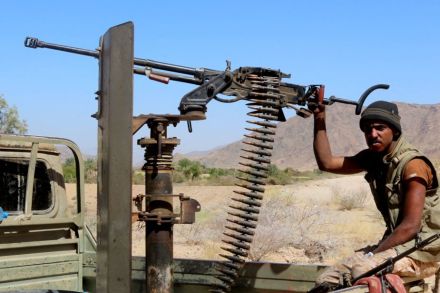
Millions of innocent civilians uprooted from their homes. Residential areas turned into dust, rubble and wire. Thousands of people killed in errant airstrikes. Store shelves emptied of basic staples. A humanitarian crisis dominating the everyday lives of a large swath of the population, who just want to escape the shelling and the fighting. This is the scene the world now equates with Ukraine, which has been subjected to a barbaric war of choice courtesy of Russian president Vladimir Putin. Yet for one poverty-stricken nation more than 2,400 miles to the south, this has been the grim reality for years.

yemen

Make China pay for its quiet support of Putin’s war

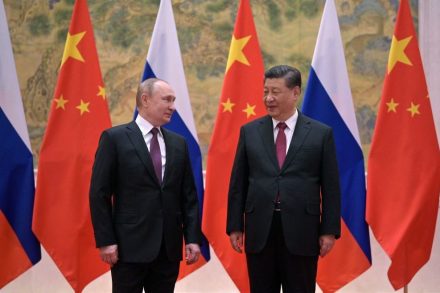
China is tacitly backing Putin’s aggression against Ukraine. The Biden administration should combat this by imposing economic costs on China through the corporate Environmental, Social and Governance disclosure requirements that are already in place. Xi Jinping and Vladimir Putin met in February at the Beijing Olympics, their thirty-eighth visit in the nine years since Xi took power. In a 5,000-word statement on February 4, Xi and Putin proclaimed their friendship with “no limits” and “no forbidden areas of cooperation.” Just weeks before the invasion, China signed agreements to buy from Russia energy and agricultural products worth over $200 billion.

support

Sanctions on Russia will shake the world economy for years

The war in Ukraine will dominate the news for the foreseeable future. But while the bombings will eventually cease, the economic consequences for the world have just begun. That’s because in an era of increasing interconnectedness, economic impacts don’t stop at borders. Most attention has been focused on the immediate impacts of sanctions on Russia, and they are significant. In the past, sanctions have proven largely ineffective at punishing foreign enemies. President Barack Obama, for example, failed to use them effectively in 2014 during the last Ukrainian-Russian dispute. But this time, the actions taken against Russia were largely unprecedented, with even traditionally neutral countries like Switzerland and Sweden calling for restrictions that are “as big as they can be.

economy

Putin will escalate

“I can’t tell you how this ends. All I can tell you is that I just hope millions of people don’t die, or that both Ukraine and Russia aren’t both destroyed in some way thanks to this war.” Those words, spoken to me on an encrypted smartphone app yesterday, are from a Ukrainian commander actively fighting Russian soldiers that I have known for years thanks to wargames I helped organize that brought together national experts, military officials, and policymakers from around the world.

Putin’s endgame is preserving ‘his’ Russia

Vladimir Putin’s war in Ukraine does not appear to be going well, and the Russian economy is about to experience the full force of Western sanctions. American social media is already in a celebratory mood. But caution is in order — it’s never smart to underestimate your opponent. Putin was expecting sanctions, and he and his war planners could not have discounted Ukrainian resistance, even if they underestimated its intensity. Maybe they did expect the invasion to be a cakewalk and are taken aback by how difficult it’s proved to be in just these first few days. But as of now the invasion still seems to be on its timetable, and its military objectives are achievable. Russians are surrounding Kyiv.

Biden’s confusion over sanctions

Russia’s military aggression against Ukraine requires a swift and effective Western response. But according to neoconservative and liberal internationalist pundits like columnist Walter Russell Mead, the invasion marks nothing less than an assault on the “world order” akin to Nazi aggression at the opening of World War II. “Not since Hitler attacked the Soviet Union in 1941 has a European leader committed an act of aggression as brutal or as nakedly cynical as Mr. Putin’s unprovoked attack on Ukraine,” Mead writes in the Wall Street Journal.

What happened to Tough Guy Joe Biden?

If you watched President Joe Biden’s press conference on Thursday afternoon, you wouldn’t know you were looking at the same man who allegedly looked Vladimir Putin in the eyes and told him he had no soul. Hell, based on Biden’s weak performance you might start to question whether or not he actually confronted and defeated a straight-razor-carrying bad dude named Corn Pop outside of a Delaware swimming pool in 1962. The president seemed to want to follow the theme of his last press conference: “Saying the Quiet Part Loud.” Who can forget the recent two-hour presser in which Biden essentially green-lit a “minor incursion” by Russia into Ukraine.

biden

Sanctions on Russia won’t work

Another battle in the West’s sanctions war against Russia is set to begin. The US and its NATO allies have put together what they’re calling a strong package of economic restrictions on Russia in response to its military buildup near Ukraine’s border. What’s in the package remains a secret but it appears to focus on Russia’s energy sector. A State Department spokesperson told NPR on Thursday that the Nord Stream 2 pipeline from Russia to Germany would remain inoperable if an invasion happened. The Financial Times suggested that other new Russian gas developments are also on the sanctions list. The UK wants Russia booted from SWIFT, the Belgian financial messenger services company, while the West also floated the idea of sanctioning Russian President Vladimir Putin.

Biden must encourage Ukraine to negotiate

President Joe Biden spoke with Russian President Vladimir Putin today via video conference for just over two hours, the second time in six months that the two leaders have engaged in a face-to-face conversation. For Biden, the message he sought to deliver was strict and to the point: if you, Mr. Putin, go ahead and order a second invasion of Ukraine in nearly eight years, you can expect a raft of economic penalties that will negatively effect everything from Russia’s access to the SWIFT payment system to the ability of Russian banks to convert rubles into dollars. For the security-minded Putin, the meeting was an opportunity to press Biden on his principal demand: a written legal guarantee from Washington and the rest of NATO that Ukraine will not be invited into the alliance.

The diplomat expulsion game is a pointless charade

Diplomats are poker chips. The pomp and mystery that accrues to the diplomatic and intelligence services en poste overseas conceal a simple truth: in today’s world, journalists, bankers, NGOs and bloggers are, far more often than not, better informed than diplomats about the countries in which they operate. I know this to be true in Russia – I speak to senior British and US diplomats in Moscow regularly. Believe me when I say that I can think of half a dozen veteran foreign correspondents in Russia who have considerably more extensive, diverse and senior contacts in the Russian establishment than any Western diplomatic mission.