Salman rushdie

Hasn’t Salman Rushdie suffered enough?

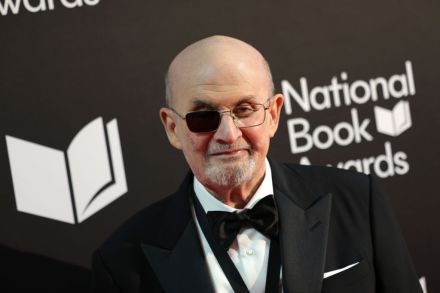
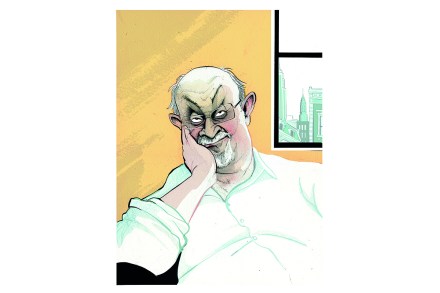
I used to run into Salman Rushdie at London literary parties a couple of decades ago, before he became a US citizen in 2016 and largely made his life there afterwards. He was always charming and likable company, during the brief conversations that we had, and the worst that I would say of him is that he was all too aware of his own fame and reputation. Certainly, I was not the only one in a long line of admirers and acolytes wishing for a couple of moments with the great man, and Rushdie certainly paid rather more attention to the attractive women or girls than he did to the rather gauche young men who had read Midnight’s Children or The Satanic Verses.

The courage of Salman Rushdie

I know that our readers have led varied and colorful lives, but I would suggest that few, if indeed any, of you have spent decades cowering under the daily terror of a fatwah imposed upon you by a totalitarian state because of a literary novel that you once wrote. I would also suggest that, when Salman Rushdie — for he had that dubious privilege — emerged from a lengthy, frightening and tedious period of hiding, he chose to immerse himself in the social life of both London and the United States to show that he was not afraid, and that the threats and grimacing of extremists did not mean that he was not entitled to lead his own version of his best life. He was right to do so.

salman rushdie

Salman Rushdie’s memoir is a devastating and powerful account of near-death

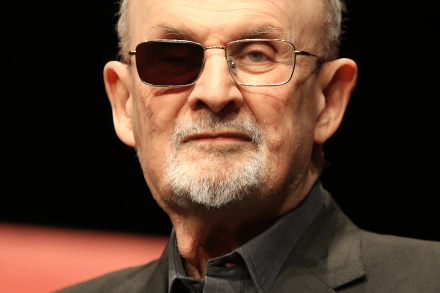
In late summer 2022, at the Chautauqua Institute in upstate New York, the celebrated novelist Sir Salman Rushdie was stabbed many times as he was about to give a lecture, the subject of which, ironically, was keeping authors safe. The attack sent shockwaves throughout the literary establishment, and the world. It seemed as if civilization itself was under threat, as if our fundamental freedoms to create, associate and speak as we wish were defunct, reduced to the point of a knife. His new memoir, Knife, examines the attack and its implications for him, and for such freedoms generally.

Rushdie

Remembering the postmodern Paul Auster

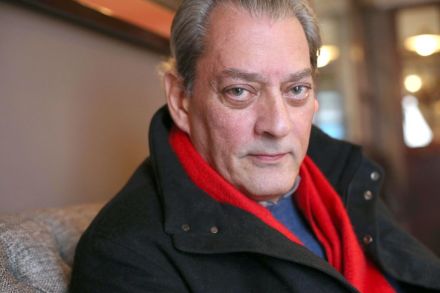
In Salman Rushdie’s new memoir Knife, there is a powerful and moving moment — amid the many other powerful and moving moments — in which Rushdie visits his ailing friend Paul Auster at the latter’s house in Brooklyn and describes his sorrow at seeing him so reduced by illness. It may have been that the extent of the cancer that killed Auster had not been made public knowledge, although a statement was released about his condition, until Rushdie’s description of his encounter — and some might accuse him of indiscretion or indelicacy. Yet the news of Auster’s death, anticipated though it undoubtedly was, has meant that such questions recede almost immediately — and instead a consideration of his legacy as a writer, rather than an invalid, can begin.

paul auster

Books to look forward to in 2024

Ah, welcome back. In our previous look at some of the major books of the year, I highlighted titles that went on to be acclaimed bestsellers and the most talked-about volumes of the past twelve months, as well — inevitably — as a few that failed to live up to the high expectations that we’d placed upon them. It is interesting that, just as Prince Harry’s Spare was indeed the most discussed book of last year, another hotly tipped memoir is undoubtedly the major release of 2024.

substack

Stacking up

"It feels almost like there is money in writing again.” So the historian and New York Times bestselling author Dan Jones tells me. Is he referring to increased book sales, or lucrative adaptation deals? Not this time. Instead, he’s discussing Substack, which launched in 2017. It has now become the platform of choice for writers to develop their careers on their own terms, without having to give substantial percentages away to agents, publishers and lawyers. For years, authors have felt that they have been little more than galley slaves, flogging themselves and their wares for the profit of multinational corporations. Now, finally, they have been given an opportunity to take back control of their own careers and destinies. The format is a simple one.

Free expression after the Rushdie attack

In an interview with Stern magazine at the end of July, Sir Salman Rushdie was asked about the current circumstances of his life. Given that this is a question that he has faced since 1989, Rushdie might have been expected to respond with boredom, even irritation — as, understandably, he has done in other public conversations, when the subject of the fatwa that he has been under for nearly three and a half decades has been raised by an inquisitive or prurient journalist — but he responded with reasonably good cheer. Describing his everyday existence as “very normal,” he even ventured a light-hearted remark, saying, “A fatwa is a serious thing. Luckily we didn’t have the internet back then. The Iranians had to send the fatwa to the mosques by fax.

Rushdie

The Greatest Living American Writer on Salman Rushdie

In the late 1990s, author Neal Pollack developed an alter-ego character, "The Greatest Living American Writer," for the McSweeneys website, to satirize a generation of pretentious authors, particularly Norman Mailer and Gore Vidal, as well as macho literary journalists. That character formed the basis of Pollack's first book, the cult classic The Neal Pollack Anthology of American Literature. The GLAW has since appeared in numerous other publications,  left- and right-wing and completely apolitical, surfacing and de-surfacing as the times demand. Now he's back in The Spectator World, until we get tired of him.  I have been the Greatest Living American Writer across eight decades of world literature and have seen many shocking acts of violence.

greatest living american writer salman rushdie

The attack on Salman Rushdie is an ominous warning

The news coming from New York State that the author Salman Rushdie has been stabbed onstage is both frightening and grim. It is frightening because, without full details of how seriously injured Rushdie has been, it is tempting to fear the worst. Media reports initially suggested that Rushdie was well enough to walk off stage, but the news that he has been transported by air ambulance to a hospital after being stabbed in the neck suggests his injuries are severe. It is grim because any violence being done to a public figure is abhorrent, but in the case of Rushdie, it is almost inevitable that this particular incident has been occasioned by one of the most notorious cause celébrès that has ever been seen in the publishing world, namely the publication of The Satanic Verses in 1988.

The fatwa artists

On June 3, the New York Times published a very bad op-ed. By itself, this is not breaking news. The Times opinion page has long been a kind of stagnant water cooler for conventional center-left opinion, a hospice care ward for America’s remaining pleats-panted, open-collar Blairites. Sure, they’ll occasionally publish something interesting — an essay by the deputy leader of the Taliban, for example, or an admission by David Brooks that he once tried the ganja. But generally the Gray Lady’s opiners tend to be tucked in bed by nine, dreaming of the things globalization might accomplish the next day.This piece was not that. It was, first of all, written by a Republican, Sen.

fatwa twitter

The wisdom of Salman

‘Things that would have seemed utterly improbable now happen on a daily basis,’ Sir Salman Rushdie tells me. ‘The implausible has now become everyday.’ Isn’t this a problem for a writer whose books derive from the fantastical traditions of magic realism and science fiction, where crazy stuff happening is what sets them apart? ‘It is.’ The active threat to Rushdie’s life from radical Islam is two decades behind him. His novels have a way of dealing in sour, sometimes apocalyptic ironies. His latest, the Booker-shortlisted Quichotte, is set in what it describes as ‘the Age of Anything-Can-Happen’.

salman rushdie